

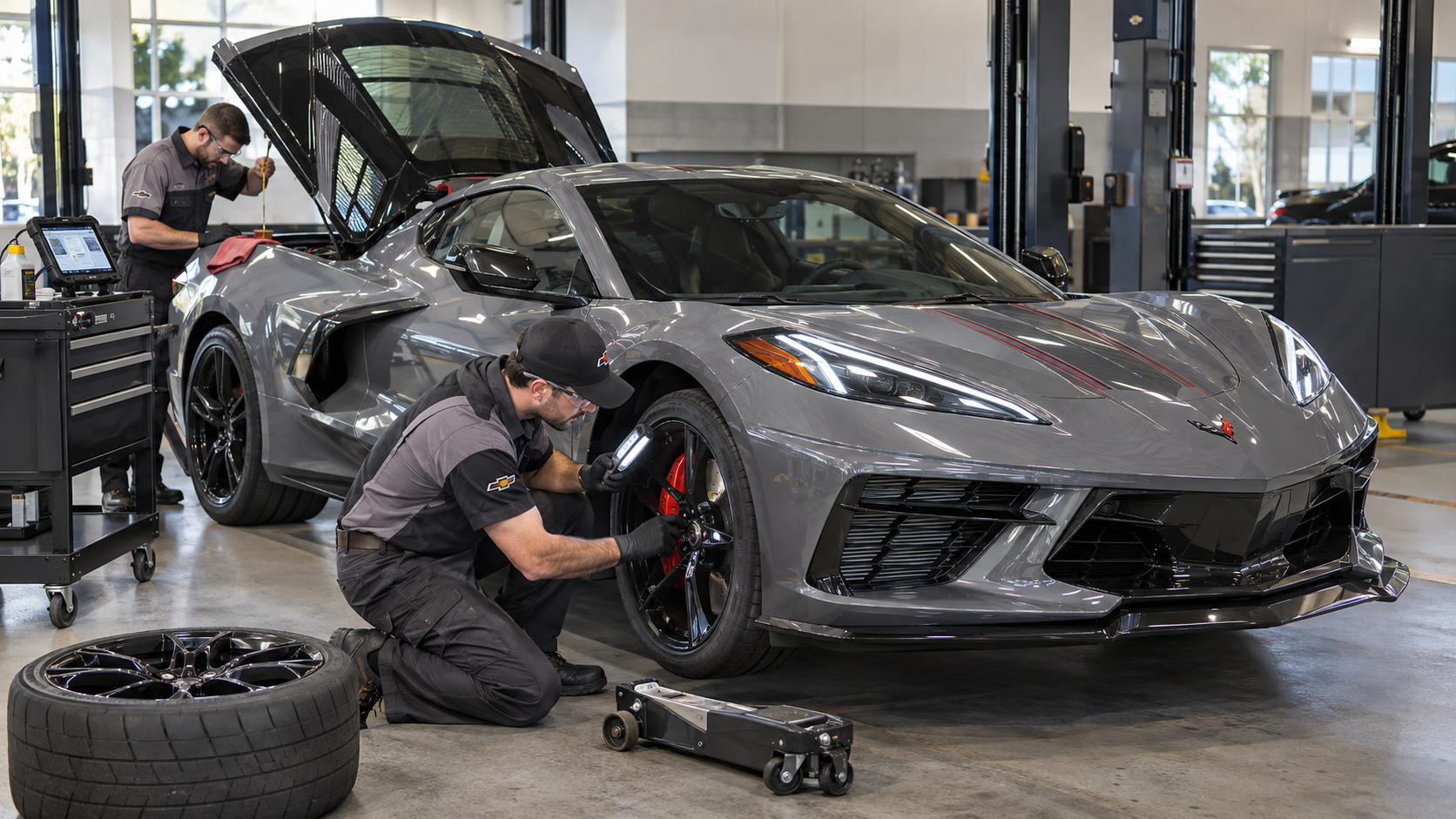
A Corvette used for weekend drives needs care that reflects its mileage and the demands on its mechanical components. The 2026 Corvette maintenance schedule combines fixed service milestones with dashboard reminders and time limits. Track driving adds separate requirements, including transmission servicing measured in hours. Knowing which rule applies lets you plan care without guessing at oil changes or transmission work.
Chevrolet identifies scheduled inspections, replacement milestones, and vehicle alerts for the 2026 Corvette. For this reason, a mileage checkpoint may call for inspection without requiring every fluid to be replaced. Furthermore, time limits still apply when a Corvette covers relatively few miles. Therefore, use the owner's manual for your exact configuration before arranging service.
The main scheduled milestones include the following requirements:
- Initial 7,500 miles: Replace the dual-clutch transmission external canister filter during its first service period. Chevrolet warns that missing this service can damage the transmission.
- Every 7,500 miles: Complete the scheduled tire and multi-point service checks, including engine oil level, oil life, and coolant level. Follow the vehicle's oil message when an earlier change is necessary.
- At 22,500 miles: Replace the cabin air filter, unless its 24-month limit arrives first. Also replace the external transmission filter and check the transmission fluid-life reading.
- At 45,000 miles: Replace the transmission fluid and external canister filter. The external filter also follows 22,500-mile replacement intervals after the initial service.
- Longer milestones: Replace spark plugs at 97,500 miles and service engine coolant at 150,000 miles or six years. Additional component-specific and time-based requirements remain in the manual.
However, these checkpoints are not interchangeable. For this reason, a record of the last completed task matters as much as the odometer reading. The manual also specifies brake fluid replacement every five years and front lift fluid replacement at that interval when equipped. Confirm any earlier requirement shown by the vehicle or its applicable service documentation.
Engine Oil Life and Routine Corvette Care
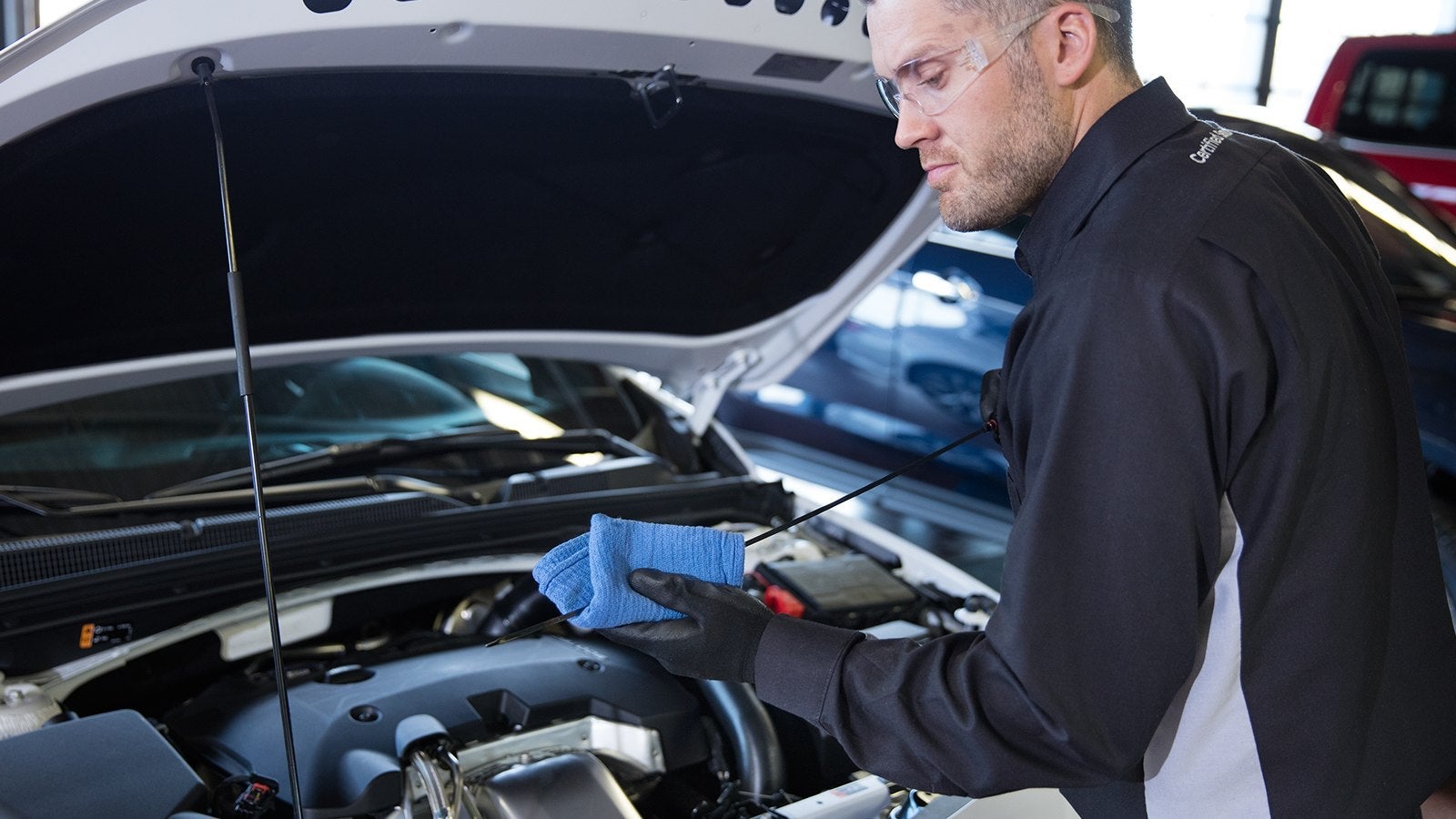
Does the 7,500-mile checkpoint mean your Corvette needs oil at exactly that mileage? No. Chevrolet uses an engine oil-life monitor and requires engine oil and filter replacement at least annually. The monitor estimates remaining oil life from vehicle operation, so an alert may arrive before the scheduled inspection.
When CHANGE ENGINE OIL SOON appears, Chevrolet requires the oil and filter change within the next 600 miles. Additionally, the oil-life display must be reset after the work is complete. A reset without an oil change can leave an inaccurate reading. Therefore, record the service date and mileage instead of relying only on the display.
Additionally, routine care includes checking tire wear, inflation, coolant level, and signs of fluid leakage. The engine air filter-life display may request replacement at the next oil change or sooner. However, the cabin air filter has its own mileage and time limit. These filters perform different jobs and should not share one assumed interval.
Furthermore, Corvette variants require the correct engine oil specification and servicing procedure. For this reason, verify approved fluids for the exact engine and model. A Z06, Stingray, and E-Ray should not receive a service plan copied from another vehicle without checking its documentation.
Corvette Dual-Clutch Transmission Maintenance
The Corvette's dual-clutch transmission uses separate clutches to manage gear changes and an external canister filter to clean its fluid. That filter has an important early replacement milestone. Chevrolet requires its initial change at 7,500 miles, even if another service was completed much earlier.
After the initial change, the external filter is due at 22,500 miles and then at repeating 22,500-mile intervals. However, transmission fluid follows a different schedule. Chevrolet requires a fluid and external filter change at 45,000 miles or at least every three years. A fluid-life alert can require service sooner.
For this reason, at the 22,500-mile filter service, check the transmission fluid-life percentage. If it is below 10%, Chevrolet directs replacement of both fluid and the external filter. Furthermore, a CHANGE TRANSMISSION FLUID SOON message calls for service within the next 600 miles. The transmission fluid-life display must be reset after fluid replacement.
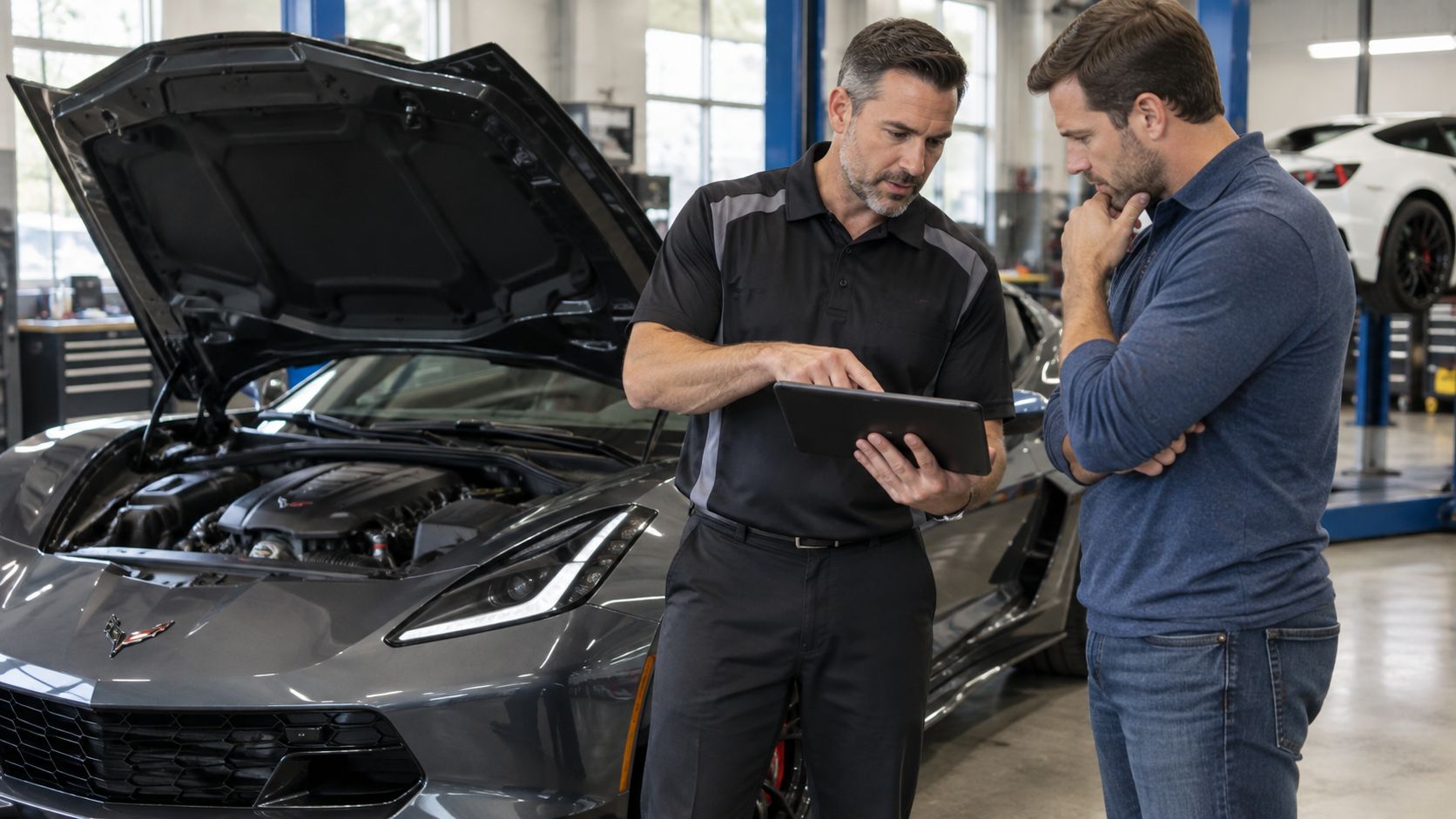
Furthermore, these tasks call for specific fluid, handling, and level-setting procedures. Consequently, Chevrolet advises using trained dealer technicians for the external filter and fluid work. Keep separate records for filter changes and fluid changes. That distinction prevents a recent filter replacement from being mistaken for a complete fluid service.
Street Driving Versus Track Maintenance
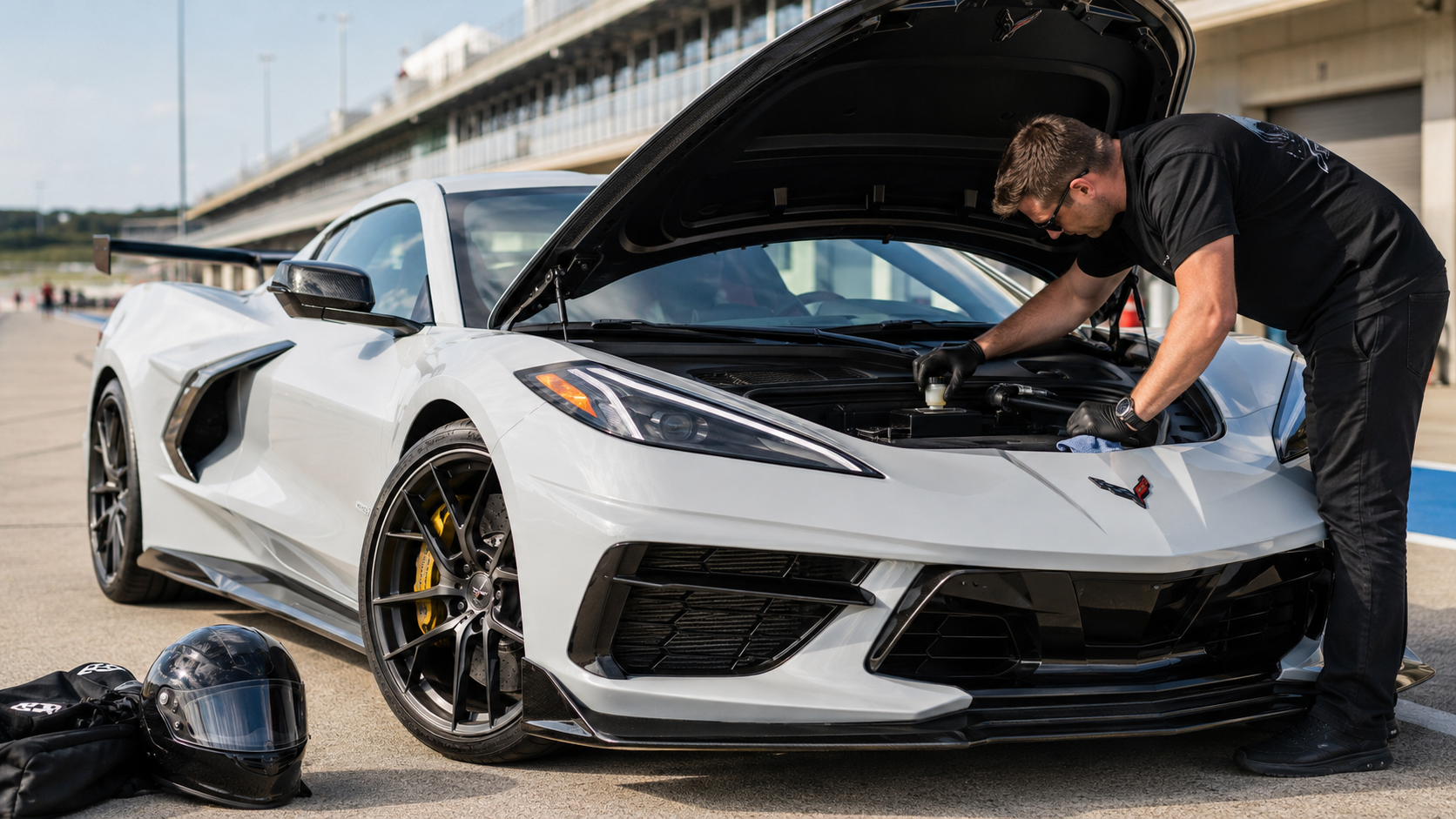
Normal road use and circuit driving do not place the same demands on a Corvette. As a result, repeated acceleration, braking, and sustained high engine loads raise component temperatures. Therefore, Chevrolet provides track preparation instructions in addition to the standard mileage schedule. Those instructions apply to the exact Corvette model and its equipment.
How does track driving change transmission maintenance? Chevrolet specifies DCT fluid and external filter replacement after every 24 hours of track use. This is an additional track requirement, not a replacement for earlier mileage, time, or vehicle-alert triggers. Track hours should therefore be recorded alongside ordinary mileage.
Additionally, the E-Ray adds a front hybrid drive unit with its own fluid requirements. Chevrolet specifies front drive unit fluid replacement after every 15 hours of track use. Its severe-service schedule also identifies a 45,000-mile drive unit fluid change. Because this procedure is complex, Chevrolet directs owners to dealer service.
Therefore, before a track event, consult the model-specific preparation instructions for brakes, tires, cooling, and engine oil. After driving, inspect the vehicle for wear, leaks, and damage before further road travel. However, an inspection alone cannot substitute for a required fluid replacement. Use the manual's instructions instead of applying a single track schedule to every Corvette variant.
Inspections and Corvette-Specific Service
However, scheduled replacement and condition-based inspection answer different service questions. A replacement interval identifies when Chevrolet calls for a particular task. By contrast, inspection checks whether a component needs attention before that milestone. Tires, brake components, and cooling hardware deserve closer examination after harder driving.
For this reason, check pad wear, rotor condition, and any unusual noise or vibration. Tires need checks for damage, tread wear, and correct inflation. In addition, inspect visible areas for fluid leaks once components have cooled. Never open a hot pressurized cooling circuit to check fluid.
Corvette cooling layouts also change across engine and hybrid configurations. The Stingray, Z06, and E-Ray do not share every heat-management component. Consequently, owners should identify the applicable circuit before discussing coolant service. The dealership's C8 cooling explanation covers those hardware distinctions in greater depth.
Additionally, a technician familiar with Corvette equipment can evaluate concerns that a dashboard service alert cannot fully describe. For additional preparation and inspection detail, read the Corvette track day inspection guide. It addresses track checks without replacing the scheduled maintenance requirements in the owner's manual.
Planning Your 2026 Corvette Service Schedule
For this reason, a clear service history connects mileage, elapsed time, dashboard notifications, and track hours. Start with the 2026 owner's manual and the last completed maintenance record. Then compare those records with the current odometer and the vehicle's maintenance displays. This approach avoids assuming that one oil change covered unrelated transmission tasks.
Use a short record for each service visit:
- Date and mileage: Record when the work took place and the odometer reading. Include track hours separately when the car attends circuit events.
- Service completed: Identify oil, DCT fluid, DCT external filter, inspections, and other work as individual entries. Keep receipts showing approved parts and fluids.
- Next requirement: Note the next mileage checkpoint, time limit, or monitor alert. Verify special requirements for your exact Corvette model before scheduling.
Additionally, if you are considering another model or comparing current equipment, browse new Corvette inventory at Ross Downing Corvettes. Still, the care plan for a Corvette you already own should begin with its manual and service history. Keep those records current, and consult Corvette-trained service staff whenever an alert or inspection reveals a concern. That routine gives you a dependable way to plan each scheduled visit.