2005
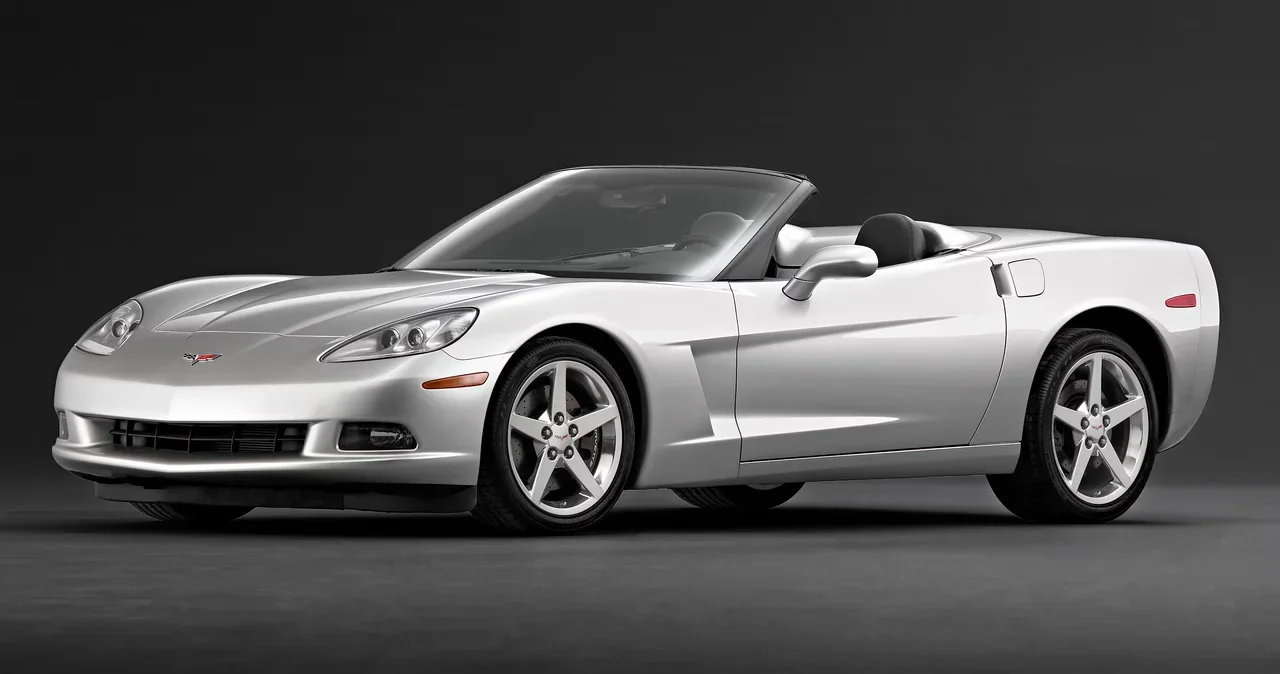
The sixth generation launched as a coupe and a convertible with the 400-horsepower 6.0L LS2, a six-speed manual or a four-speed automatic, and three suspension choices. Navigation, OnStar and a head-up display joined the options list.


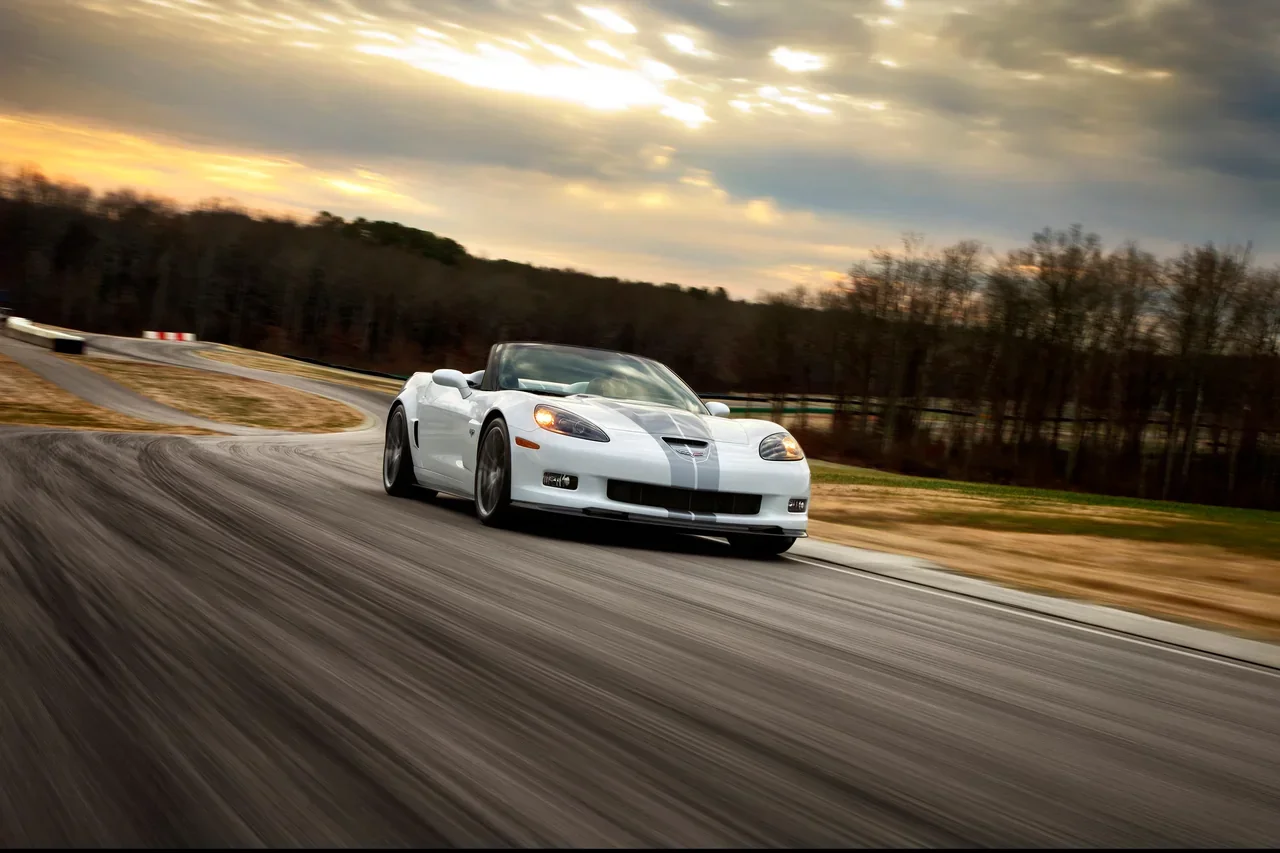
Chevrolet built the sixth-generation Corvette for nine model years. It opened for 2005 as a coupe and a convertible with a 400-horsepower LS2 V8, and by 2009 the family reached 638 horsepower in the supercharged ZR1.
Fuel economy from EPA and recalls from NHTSA, checked November 10, 2026.
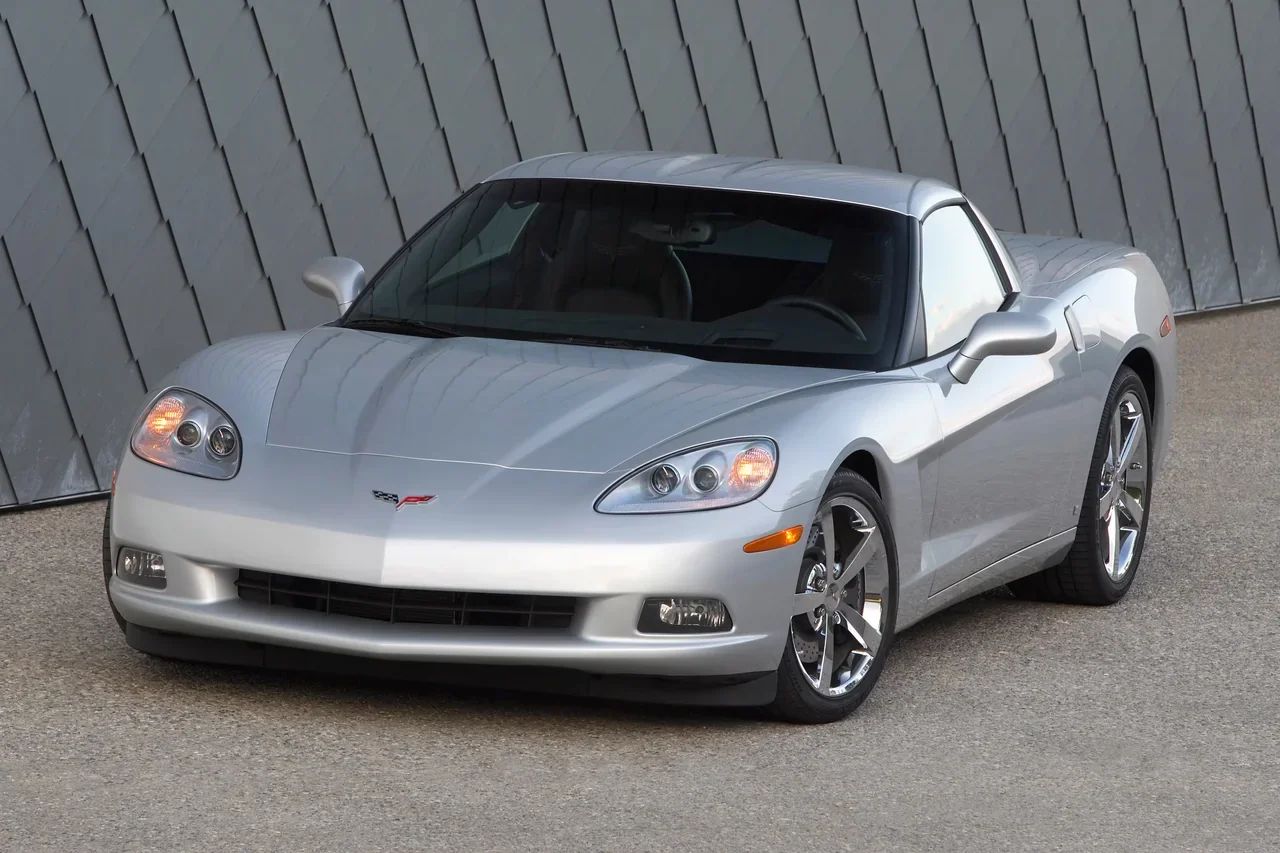
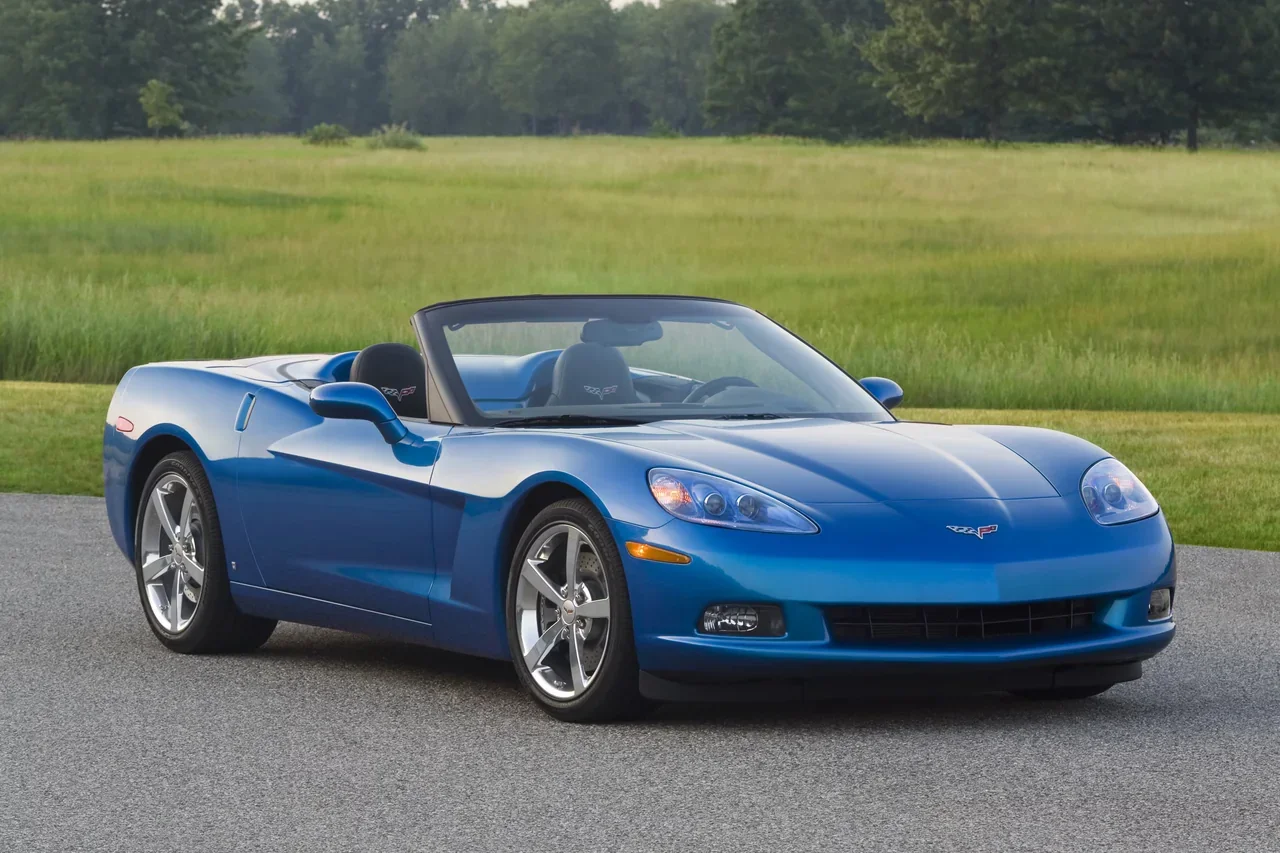
The C6 Corvette is the sixth generation of the Chevrolet Corvette, covering the 2005 through 2013 model years and built in Bowling Green, Kentucky. It kept the front-engine, rear-drive, two-seat layout and added fixed headlamps, a shorter body and, over time, the Z06, ZR1, Grand Sport and 427 Convertible.
Production of the 2005 coupe began in the summer of 2004, and the convertible followed that fall. GM said it wanted a performance car that felt at home in almost any setting.
The family grew in steps: the 505-horsepower Z06 for 2006, the LS3 V8 for 2008, the supercharged ZR1 for 2009, the wide-body Grand Sport for 2010 and the 427 Convertible Collector Edition for 2013, the final year of the generation.
The C6 shared its basic chassis layout with the C5. Even with added safety features, weight-saving work left the car roughly 20 pounds from the weight of the 1997 Corvette, according to GM.
| Item | Detail |
|---|---|
| Generation | Sixth |
| Model years | 2005 to 2013 |
| Layout | Front engine, rear-wheel drive, two seats |
| Plant | Bowling Green, Kentucky |
| Body styles | Coupe with a removable roof panel, convertible, and fixed-roof coupe (Z06 and ZR1) |
| Construction | Composite body panels on a hydroformed steel frame; aluminum frame on the Z06 and ZR1 |
| Standard engine | 6.0L LS2 V8 (2005 to 2007), 6.2L LS3 V8 (2008 to 2013) |
| Models | Coupe, Convertible, Z06, ZR1, Grand Sport, 427 Convertible |
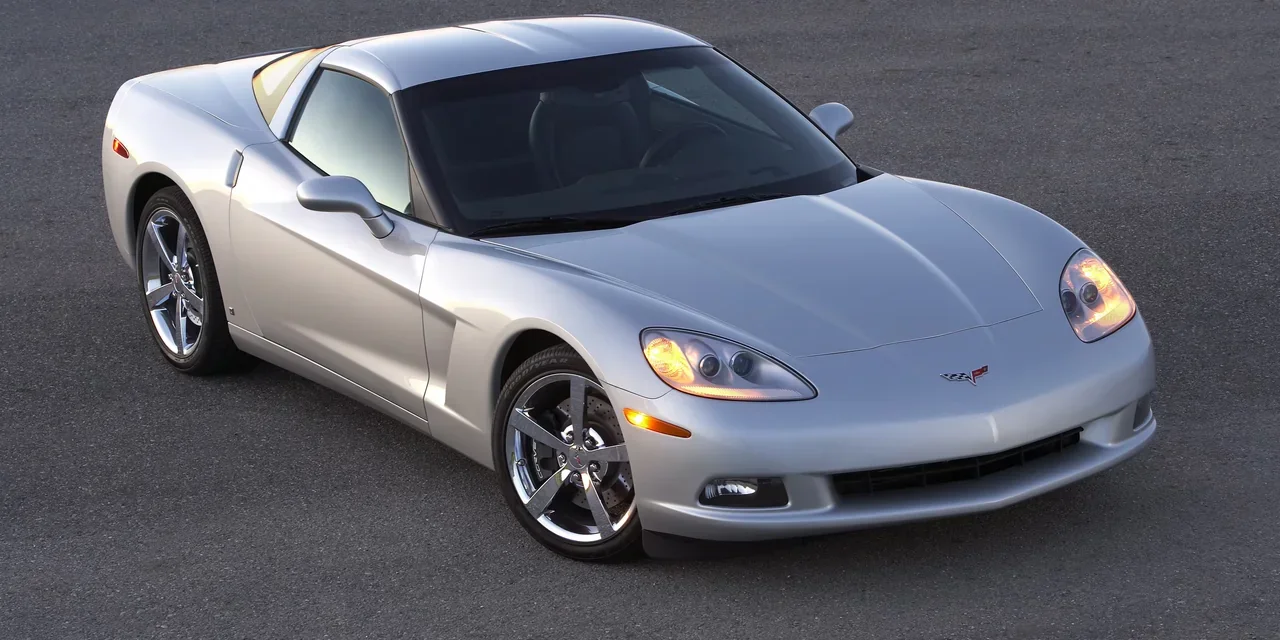
The C6 was 5 inches shorter and about 1 inch narrower than the C5, wore fixed headlamps for the first time since 1962 and cut drag to a 0.28 coefficient. Under the skin it kept the C5 layout: a hydroformed steel backbone with the transmission at the rear.
Five inches came out of the length and about 1 inch out of the width, while the wheels grew to 18 inches in front and 19 inches at the rear.
Exposed headlamps returned to Corvette for the first time since 1962. GM said the fixed lamps cut weight, complexity and aerodynamic drag.
More than 400 hours of wind tunnel testing produced a 0.28 drag coefficient, which GM called the most aerodynamic Corvette to that point.
Keyless Access swapped the mechanical door and hatch handles for solenoids and electronic actuators, which kept the body lines smooth.
The coupe kept its removable roof panel, now 15 percent larger and only 1 pound heavier, with the same structural stiffness as before.
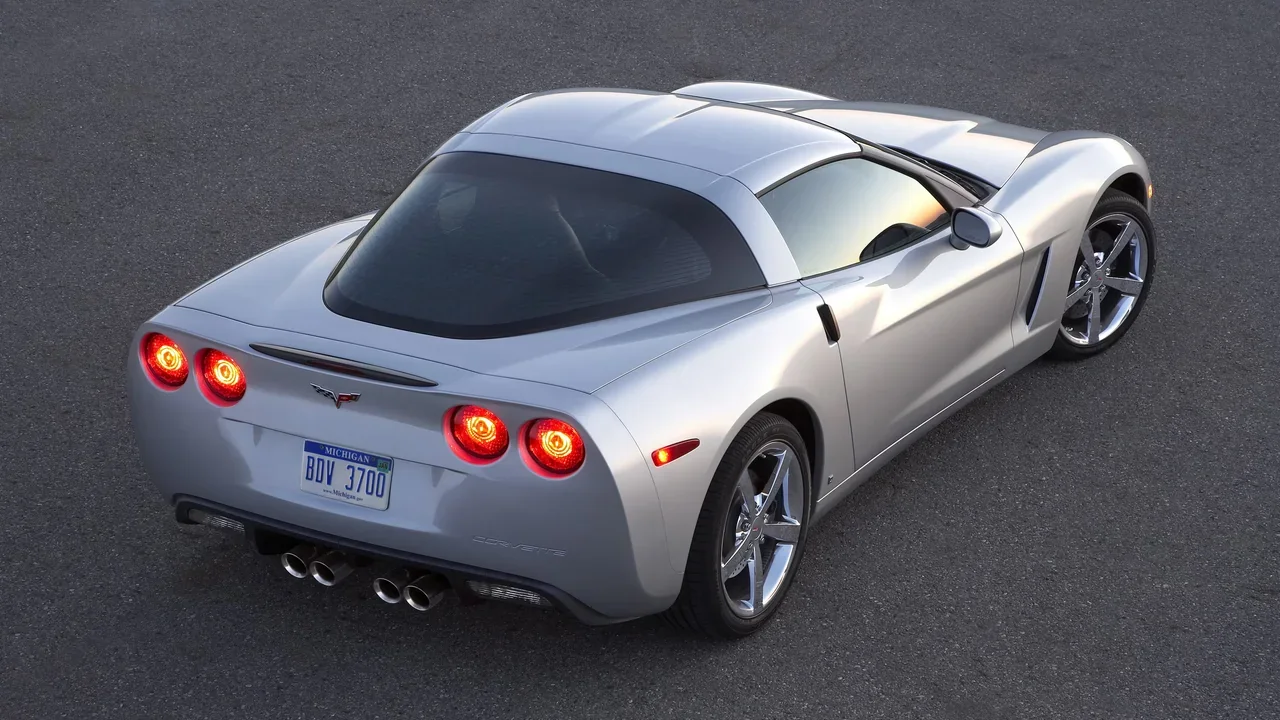
A tapered rear deck and fascia improved high-speed performance, finished with round taillamps and a center-exit exhaust.
Designers kept the round taillamps and the dual-cockpit cabin, and GM said the aim was to distill the passion of the mid-year Corvettes of 1963 to 1967.
The structure carried over in concept: hydroformed steel rails, cored composite floors, an enclosed center tunnel and an aluminum cockpit structure. GM redesigned the suspension from the cradles and control arms to the springs, dampers, stabilizer bars and steering gear.
| Item | Change |
|---|---|
| Overall length | 5 inches (127 mm) shorter |
| Overall width | About 1 inch (25 mm) narrower |
| Headlamps | Fixed and exposed, with Xenon high-intensity discharge lamps |
| Drag coefficient | 0.28 |
| Wheels | 18-inch front, 19-inch rear |
| Removable roof panel | 15 percent larger |
| Automatic transmission | 4L65-E, an upgraded version of the C5 unit |
| Curb weight | Roughly 20 pounds from the 1997 Corvette |
GM changed the C6 almost every model year. The Z06 arrived for 2006, the LS3 engine for 2008, the ZR1 for 2009 and the Grand Sport for 2010, and the run closed in 2013 with the 427 Convertible and a 60th Anniversary package.
The sixth generation launched as a coupe and a convertible with the 400-horsepower 6.0L LS2, a six-speed manual or a four-speed automatic, and three suspension choices. Navigation, OnStar and a head-up display joined the options list.
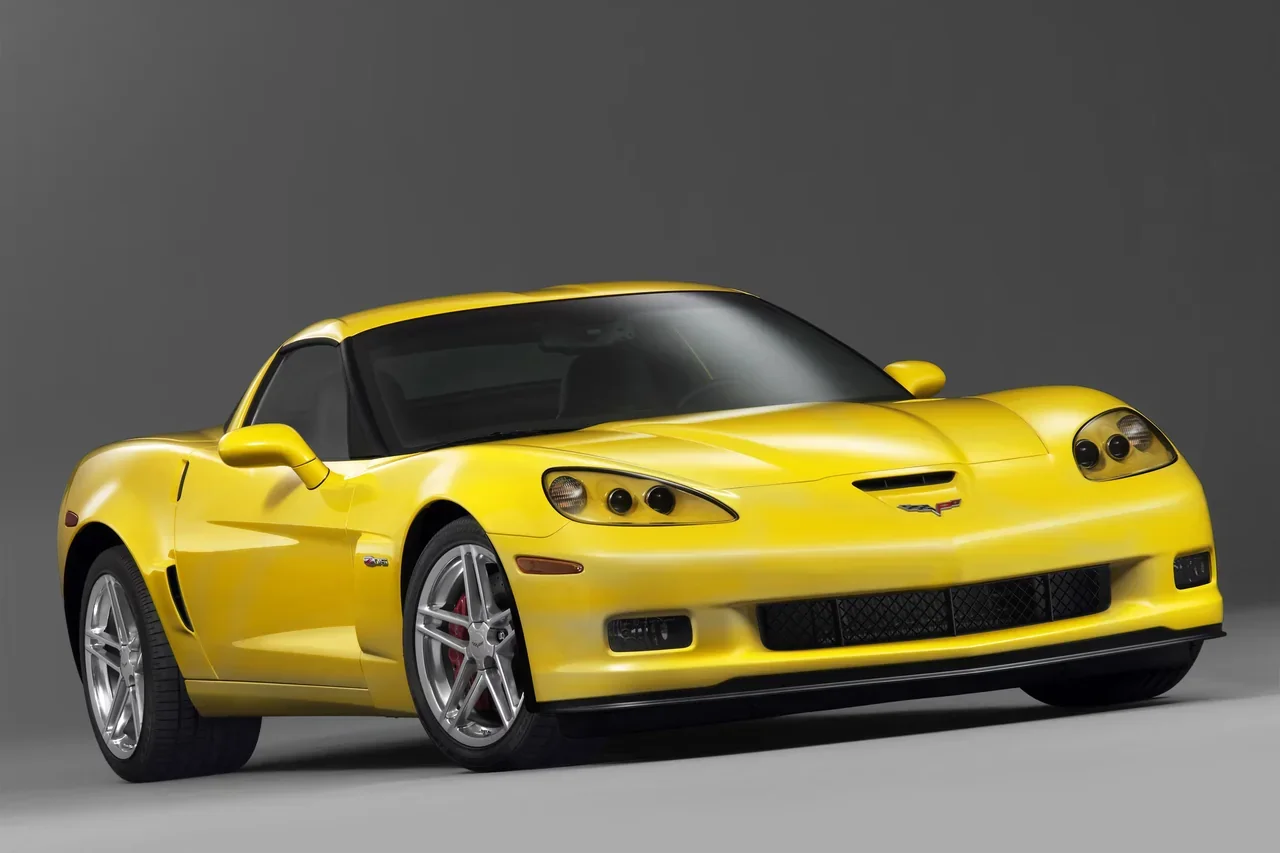
The Z06 returned with the 505-horsepower 7.0L LS7, an aluminum frame and a fixed roof. Coupes and convertibles gained a six-speed paddle-shift automatic, a smaller three-spoke steering wheel and new Velocity Yellow and Monterey Red paint.
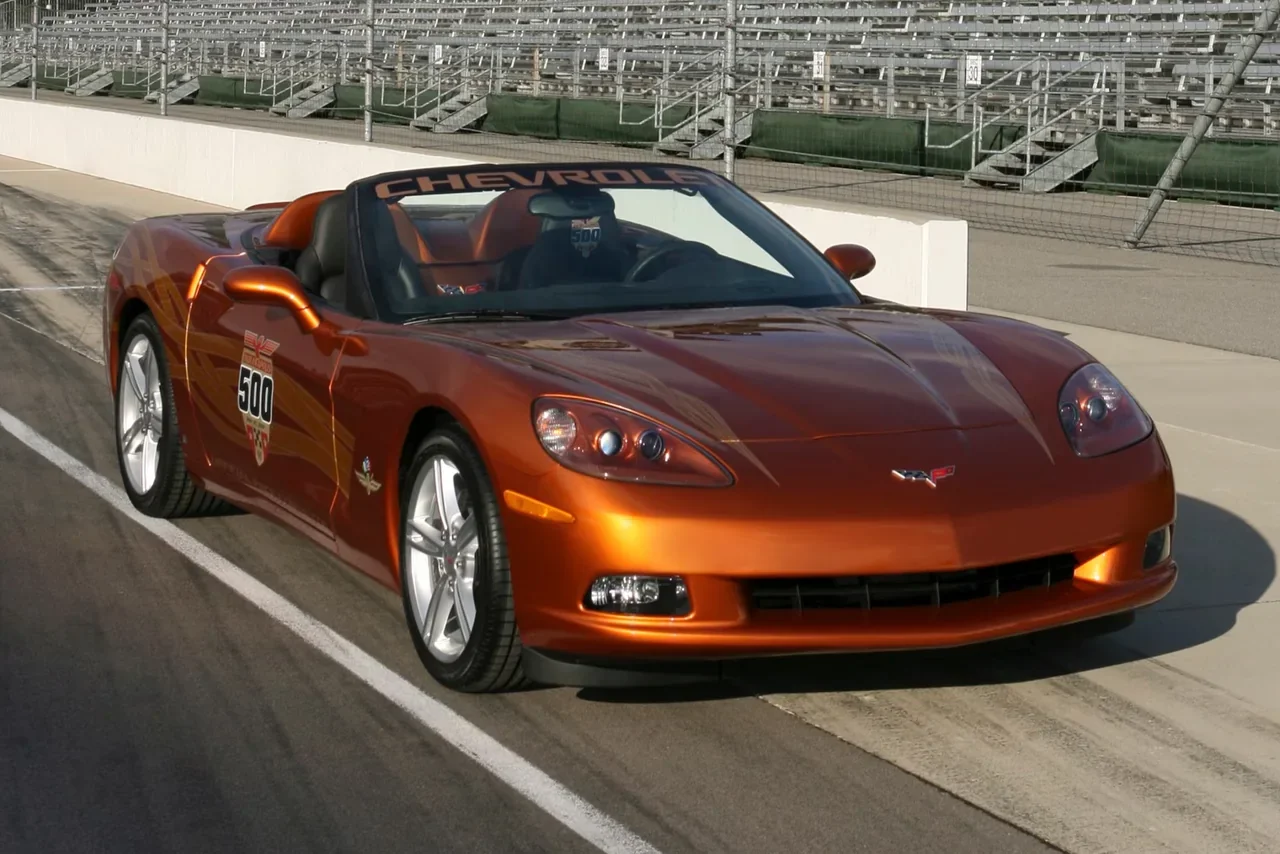
The coupe, convertible and Z06 carried on with the LS2 and LS7. EPA rated the 6.0L car at 16 mpg city and 26 highway with the manual, and the 7.0L Z06 at 14 and 24.
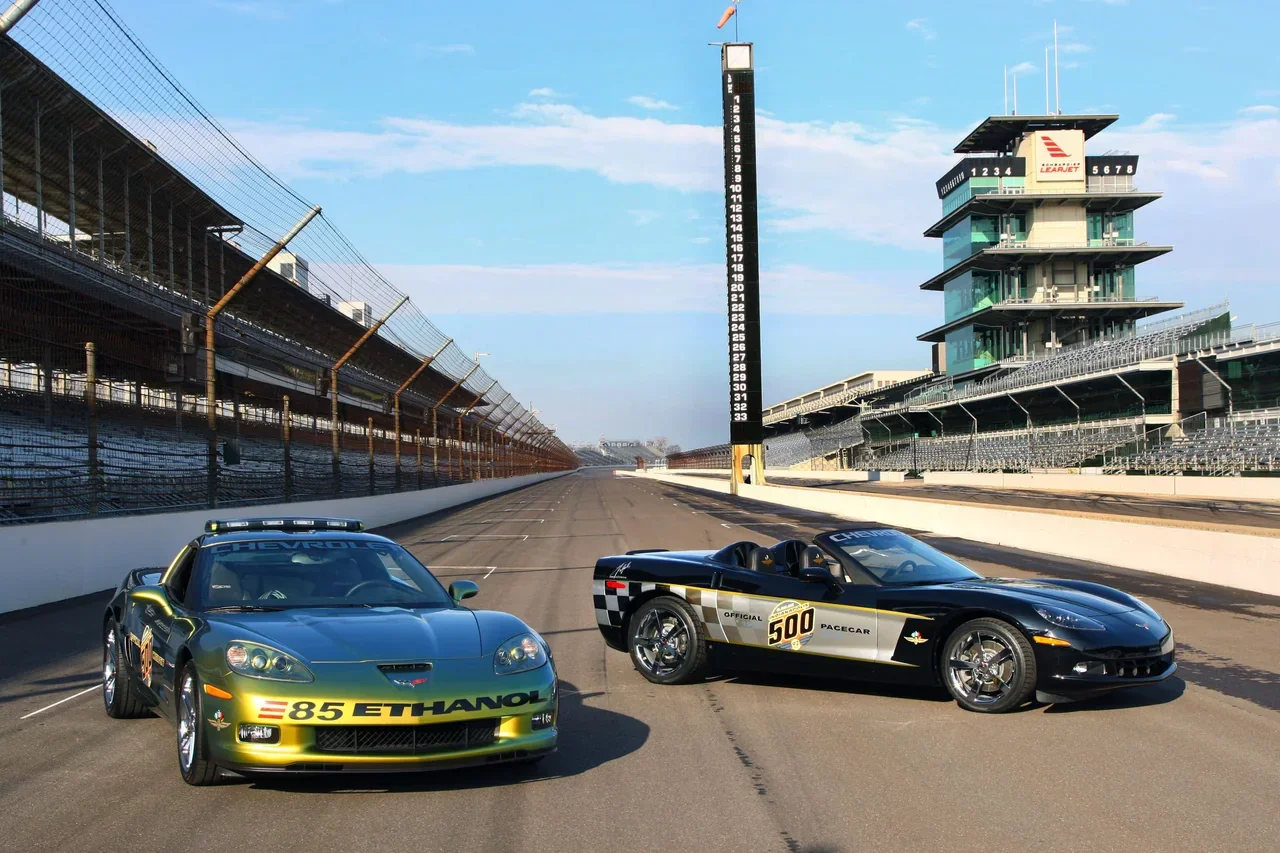
The 6.2L LS3 became the standard engine. GM also added a custom leather-wrapped interior and improved the shift feel of both six-speed transmissions.
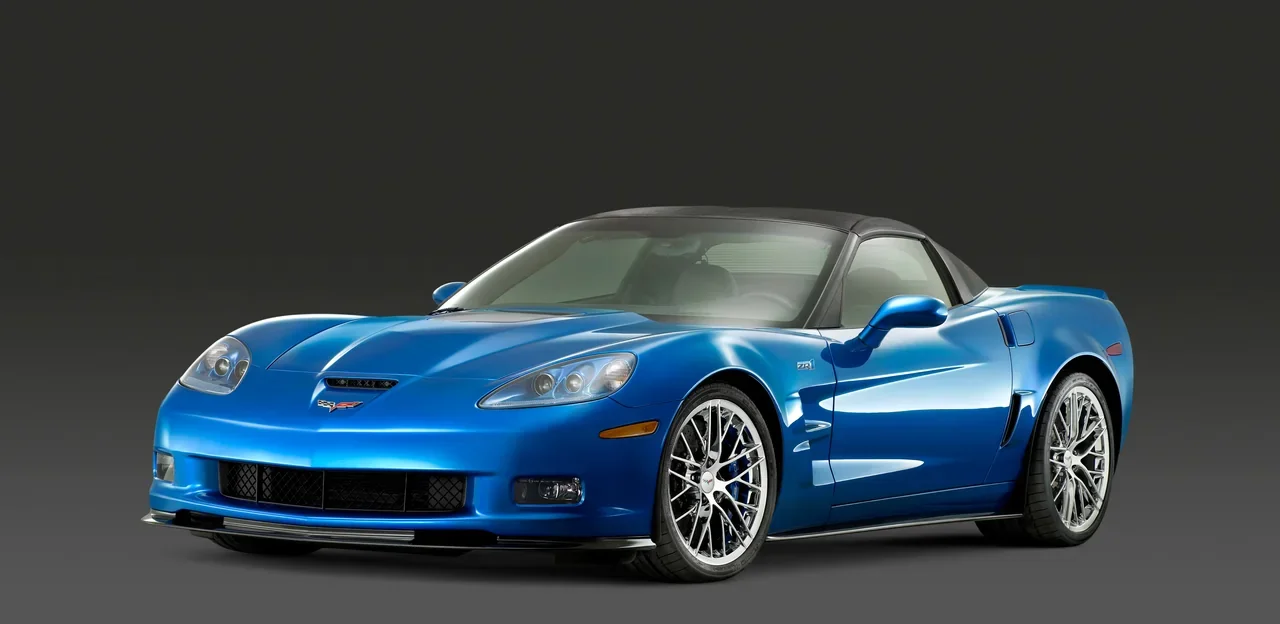
The ZR1 arrived with the supercharged 638-horsepower LS9 and a 205 mph top speed. The rest of the line gained Bluetooth, standard variable-ratio steering, a new 1LT convertible and two new colors, which took the palette to nine.
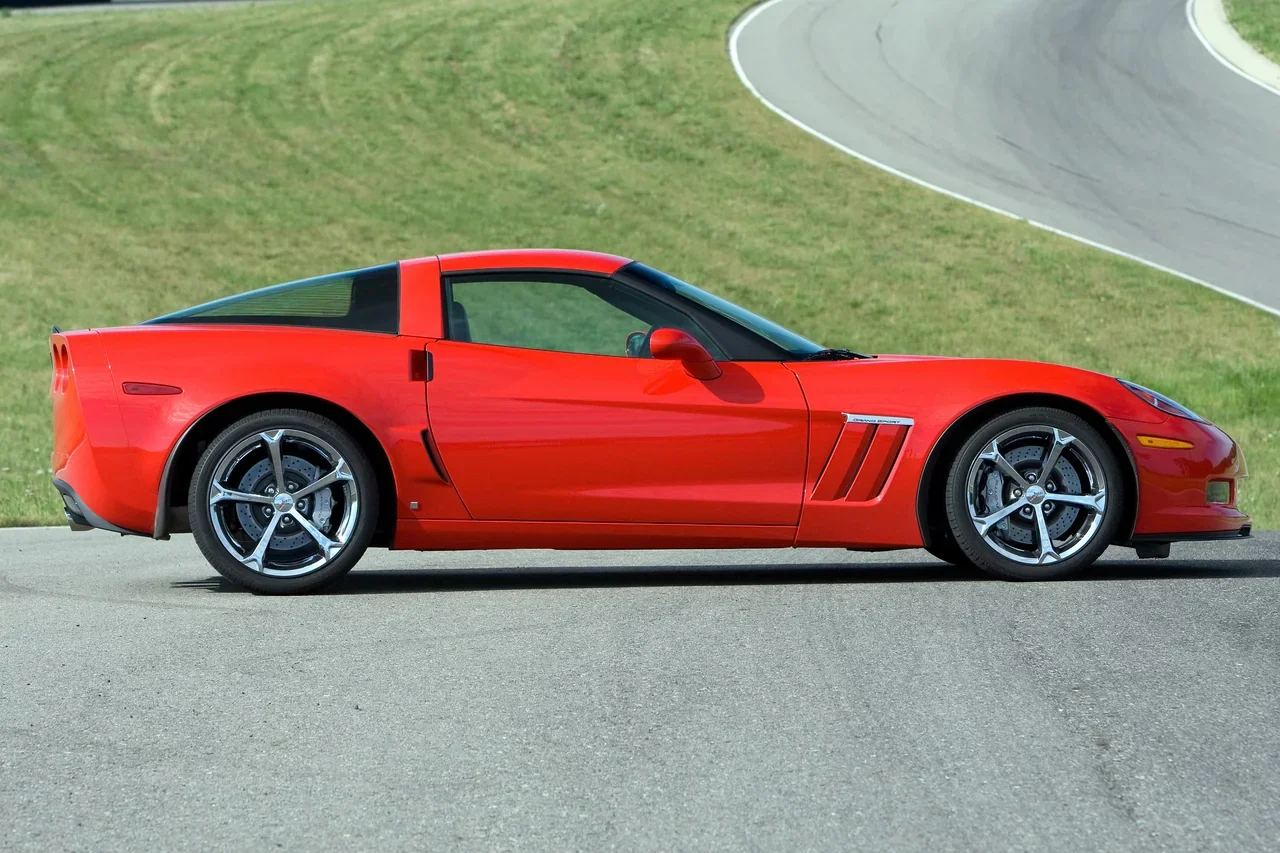
The Grand Sport joined as a coupe and a convertible and replaced the Z51 package. Launch control became standard with the manual transmission, side air bags became standard on every model, and the ZR1 gained Performance Traction Management.
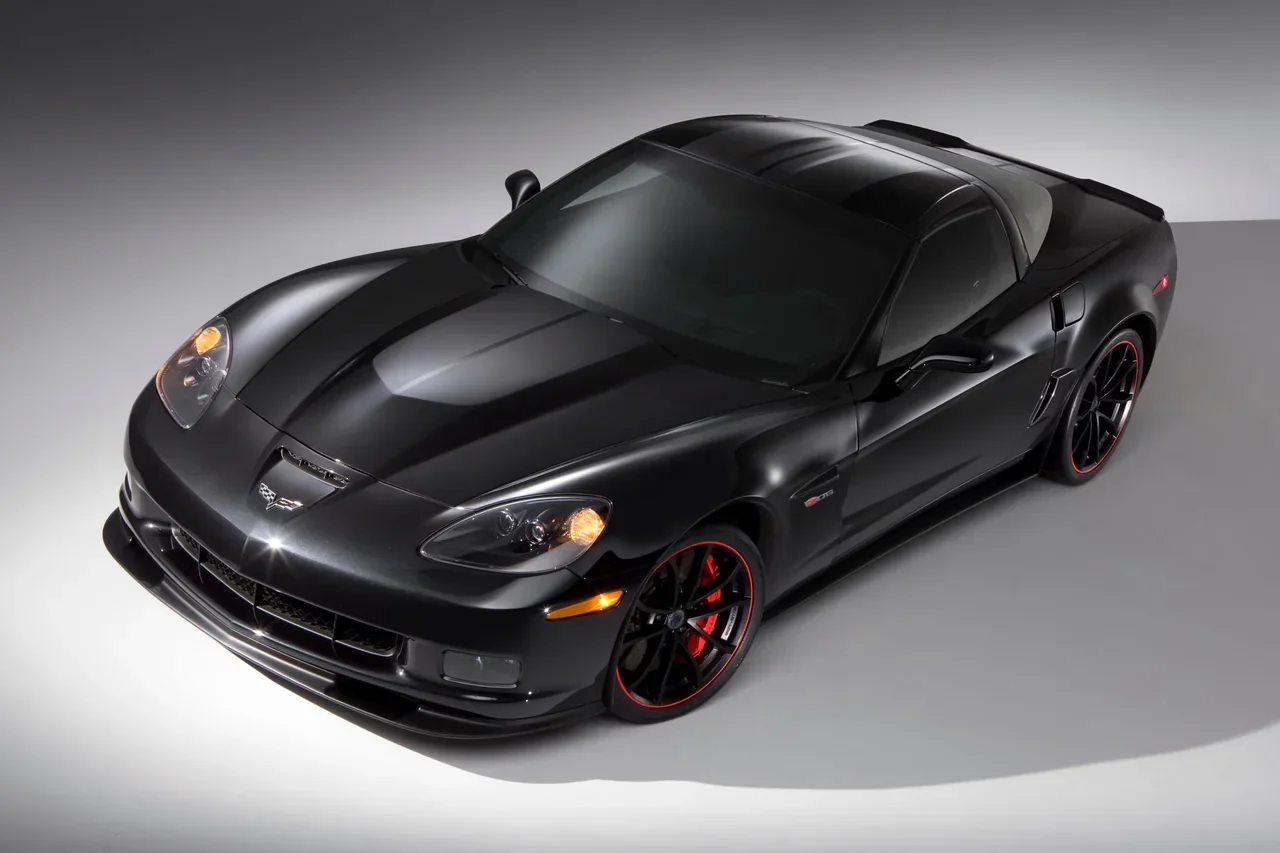
The Z06 gained the Z07 Performance Package, the CFZ Carbon Fiber Package and the Z06 Carbon limited edition, capped at 500 cars. Inferno Orange and Supersonic Blue brought the color count to 10, and Magnetic Ride Control became an option on the Grand Sport.
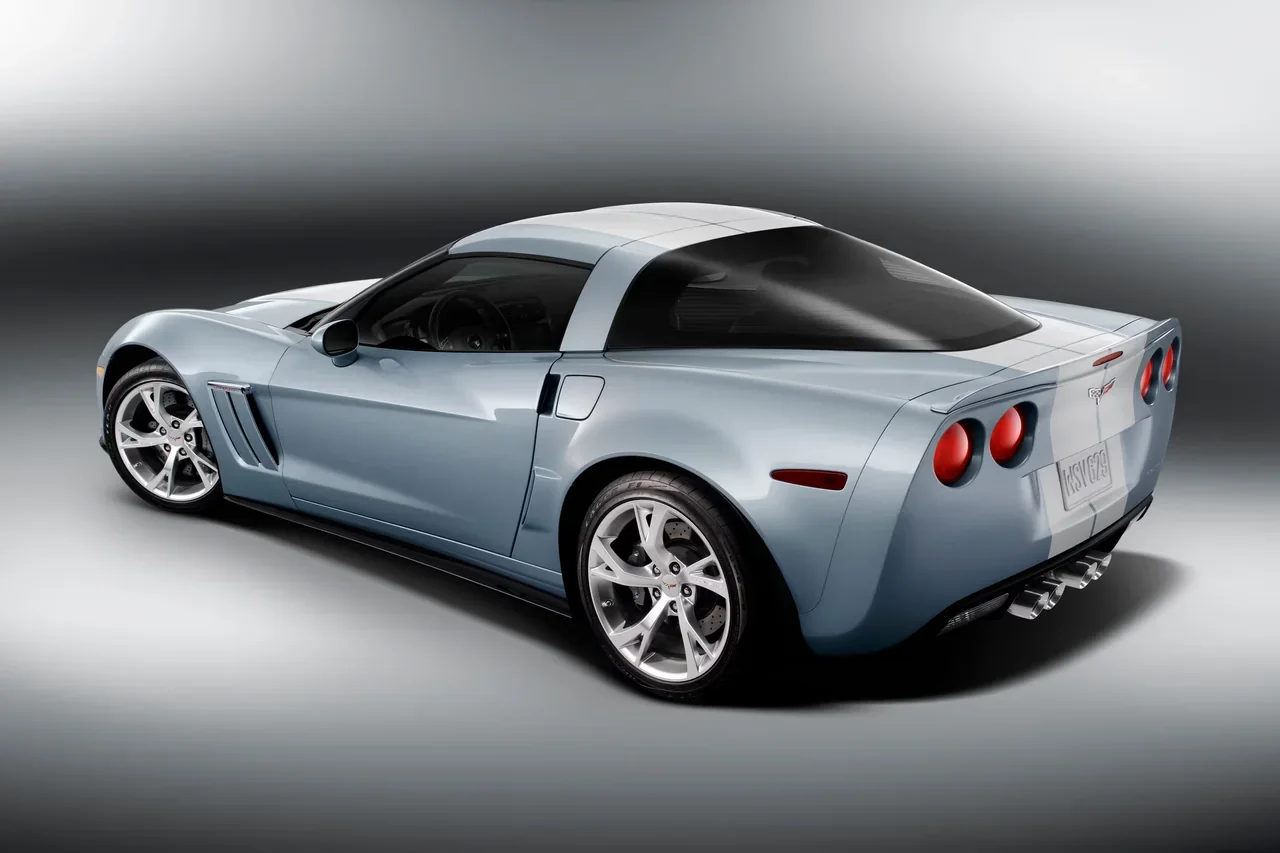
New seats with larger bolsters, a new steering wheel and a nine-speaker Bose system updated the cabin. The Chevrolet Centennial Edition, in Carbon Flash Metallic, was offered on every model, and Carlisle Blue Metallic joined the palette.
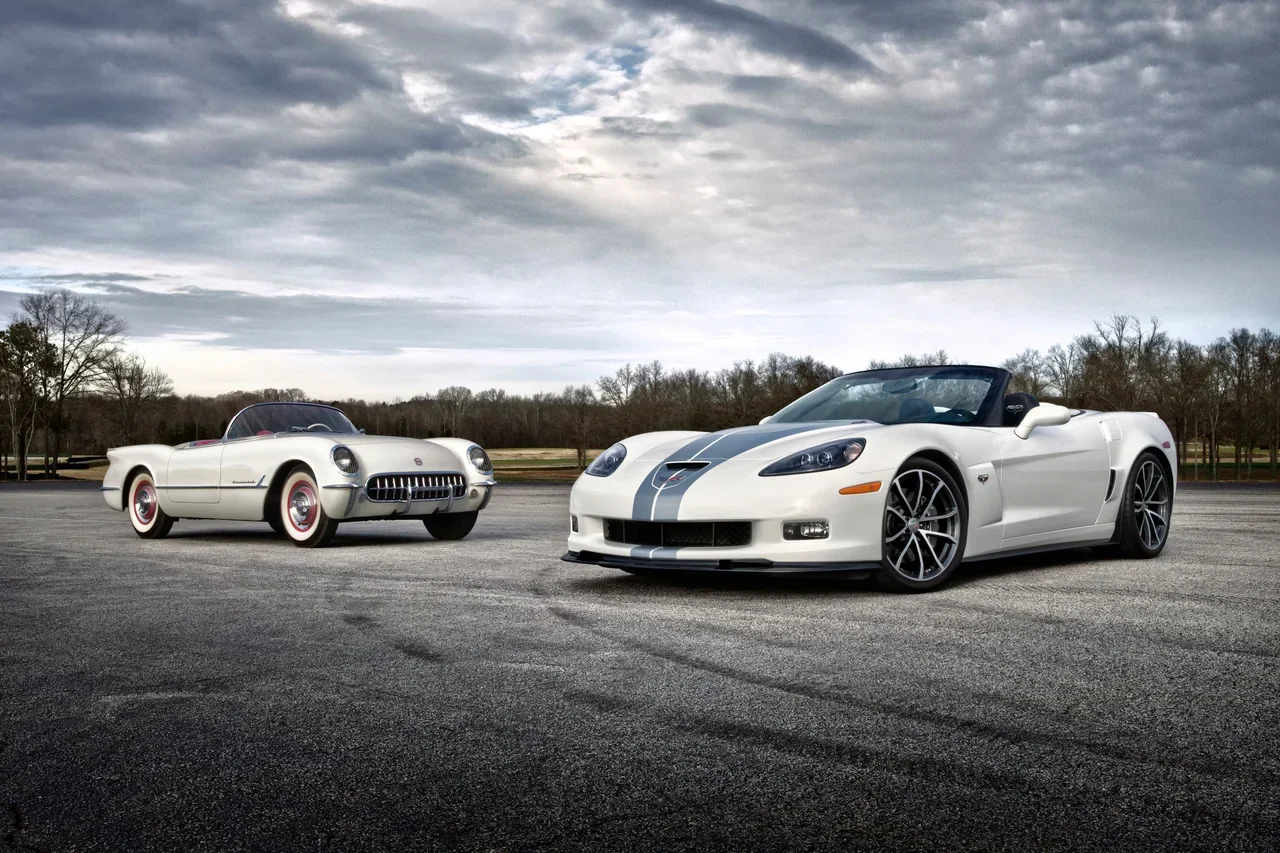
The final year brought the 427 Convertible Collector Edition with the 505-horsepower LS7 and a 60th Anniversary Design Package for every model. Black returned to the palette, joined by the new Night Race Blue Metallic.
Five models shared the C6 platform by 2013. The coupe and convertible used the standard V8, the Grand Sport added a wide body and Z06-size brakes, the Z06 and 427 Convertible used the 505-horsepower LS7, and the ZR1 topped the range with 638 supercharged horsepower.
Every C6 was a two-seat car built in Bowling Green, and every one sent power through a rear-mounted transmission. What separated the models was the engine, the frame material and how much carbon fiber GM used.
| Model | Years | Engine | Power | Structure |
|---|---|---|---|---|
| Coupe and Convertible | 2005 to 2013 | 6.0L LS2, then 6.2L LS3 | 400 hp, then 430 hp | Steel frame, removable roof panel or soft top |
| Z06 | 2006 to 2013 | 7.0L LS7 | 505 hp | Aluminum frame, fixed roof |
| ZR1 | 2009 to 2013 | 6.2L supercharged LS9 | 638 hp | Aluminum frame, fixed roof, carbon fiber roof panel |
| Grand Sport | 2010 to 2013 | 6.2L LS3 | 430 hp | Steel frame, wide body, coupe or convertible |
| 427 Convertible | 2013 | 7.0L LS7 | 505 hp | Steel frame, carbon fiber hood, fenders and floors |
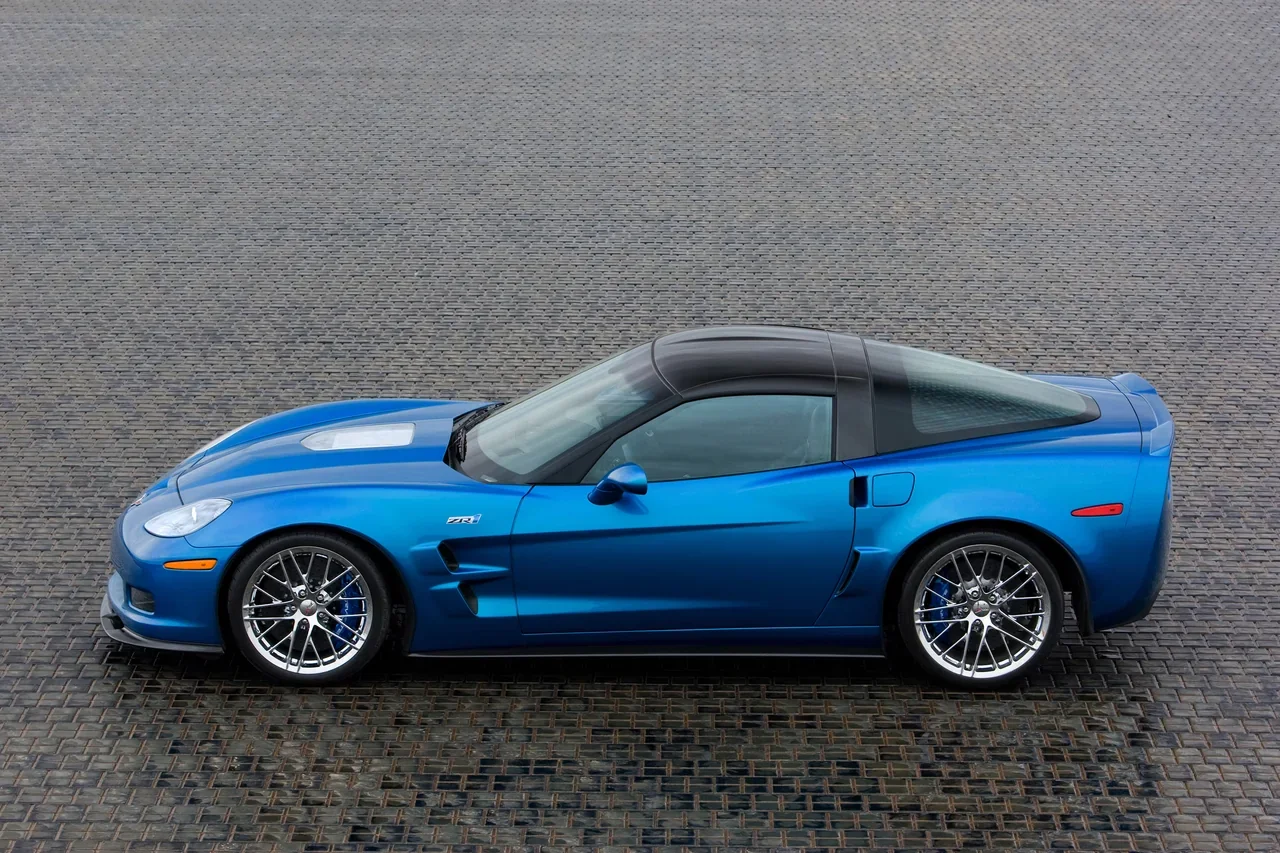
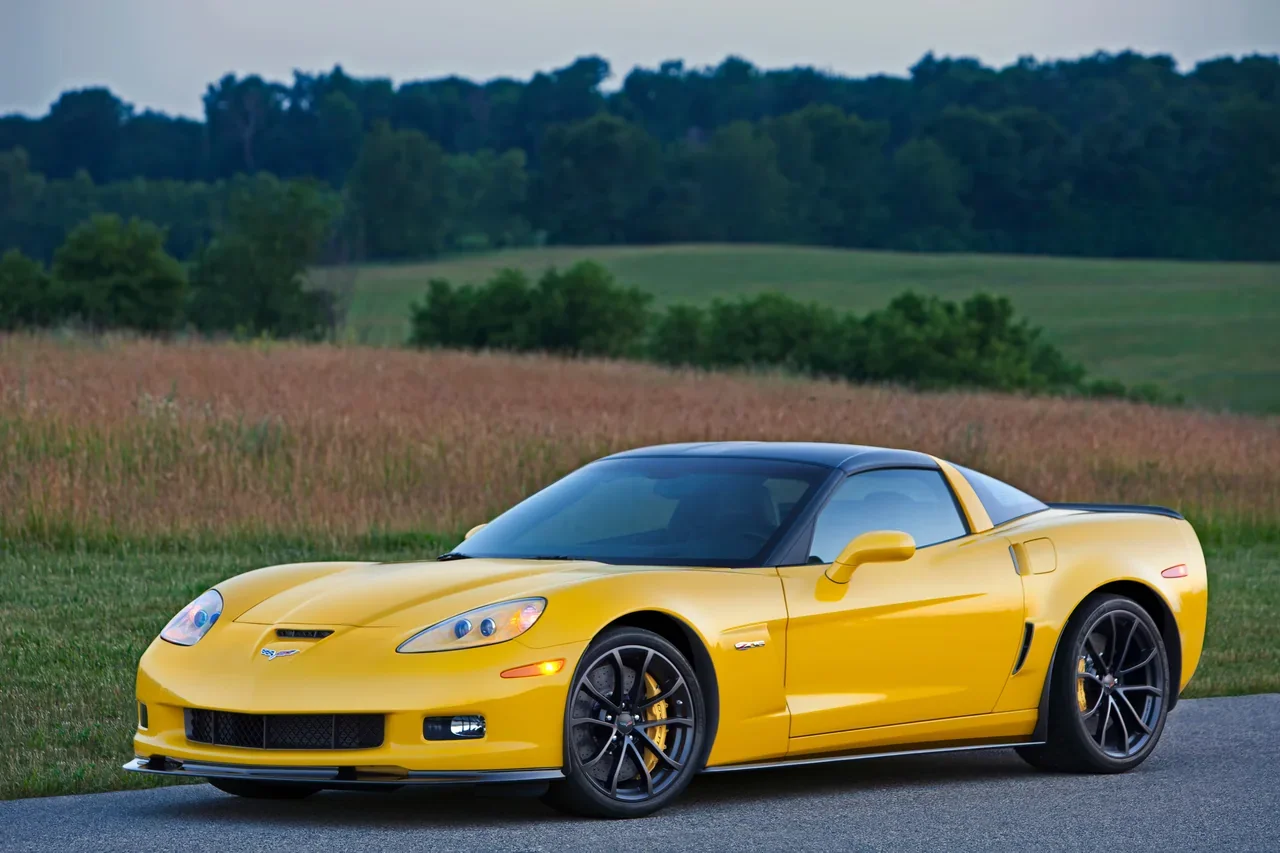
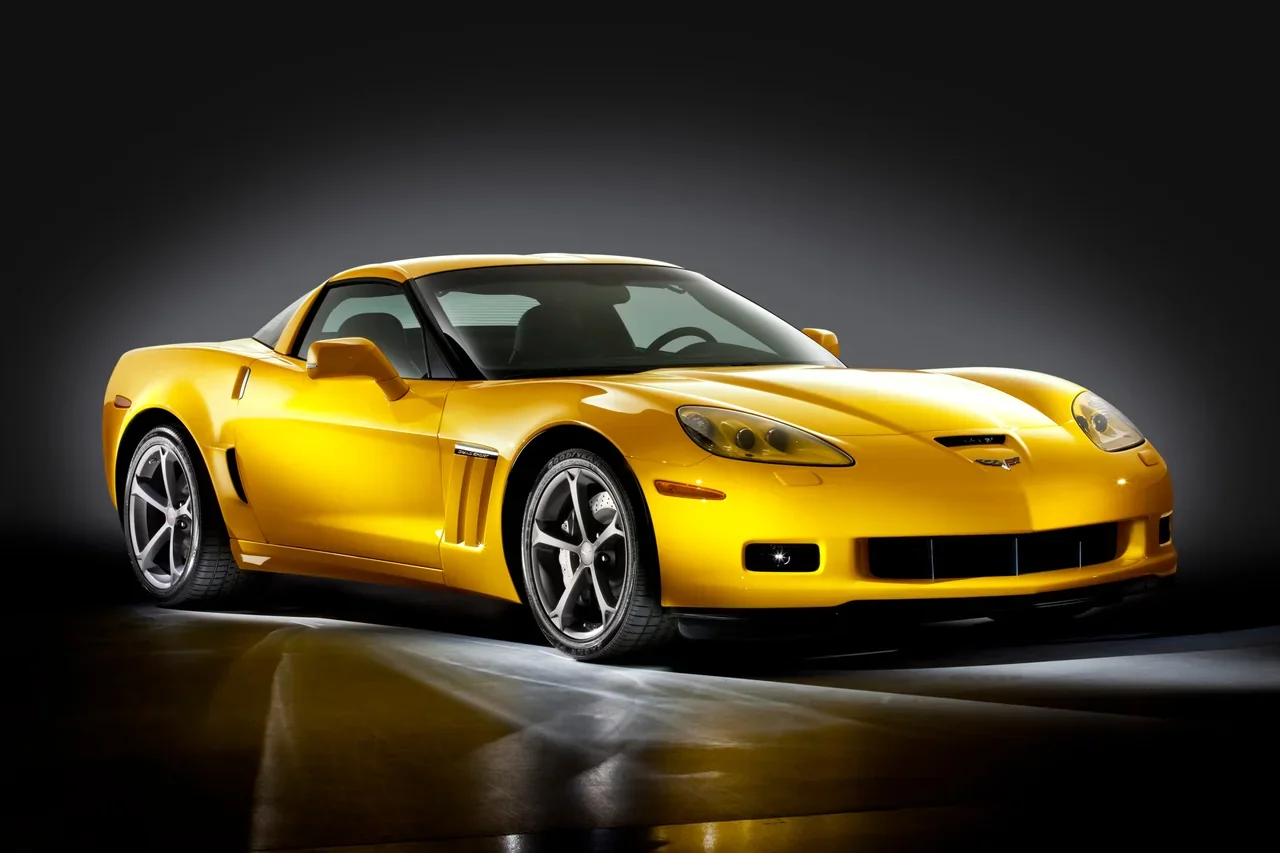
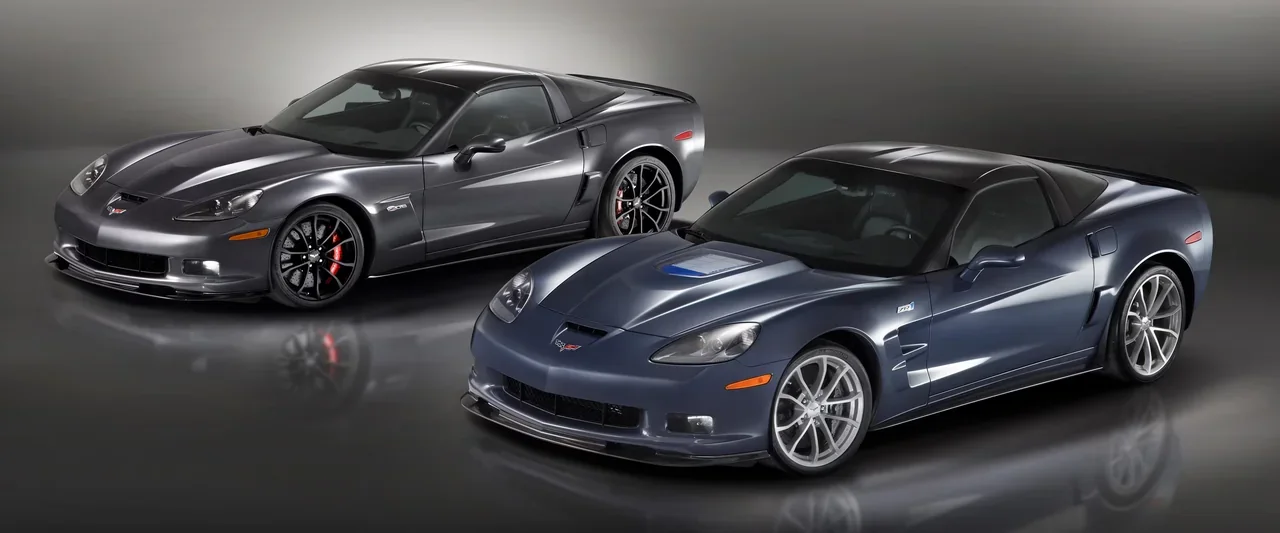
Four small-block V8s powered the C6: the 6.0L LS2 with 400 horsepower, the 6.2L LS3 with 430, the 7.0L LS7 with 505 and the supercharged 6.2L LS9 with 638. All four were overhead-valve engines with aluminum blocks.
The LS2 came from GM's Gen IV small-block family, and GM called it the most powerful standard small-block offered in a Corvette to that point. It used cylinder heads derived from the C5 Z06, a 10.9:1 compression ratio and exhaust manifolds 34 percent lighter than before.
The LS3 replaced it for 2008 with 6.2 liters, larger valves and heads based on the LS7 design. It made 430 horsepower and 424 lb-ft of torque, or 436 horsepower and 428 lb-ft with the optional dual-mode exhaust.
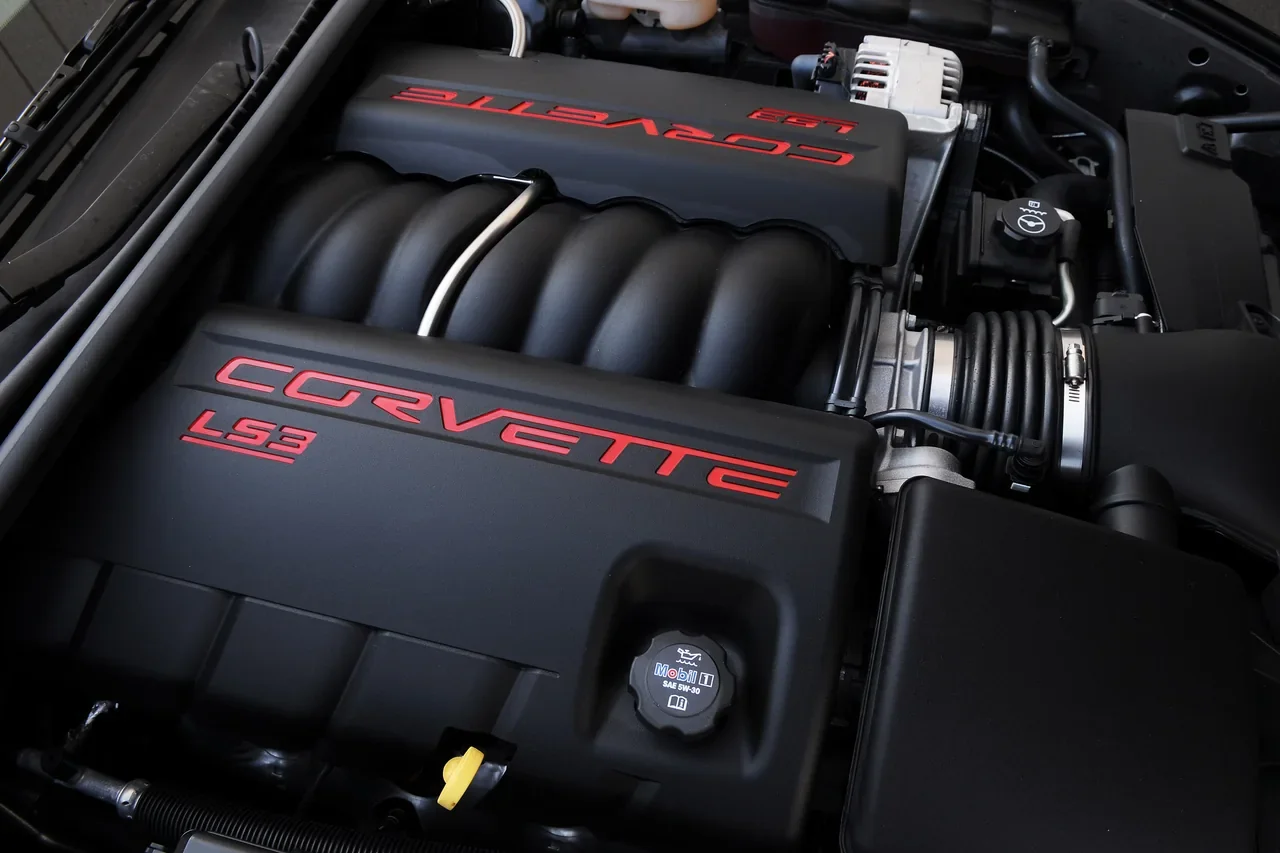
The LS7 brought the 427-cubic-inch displacement back to Corvette as a small-block. It used titanium connecting rods and intake valves, an 11.0:1 compression ratio, a 7,000 rpm redline and a dry-sump oiling system. GM said its connecting rods weighed 464 grams each.
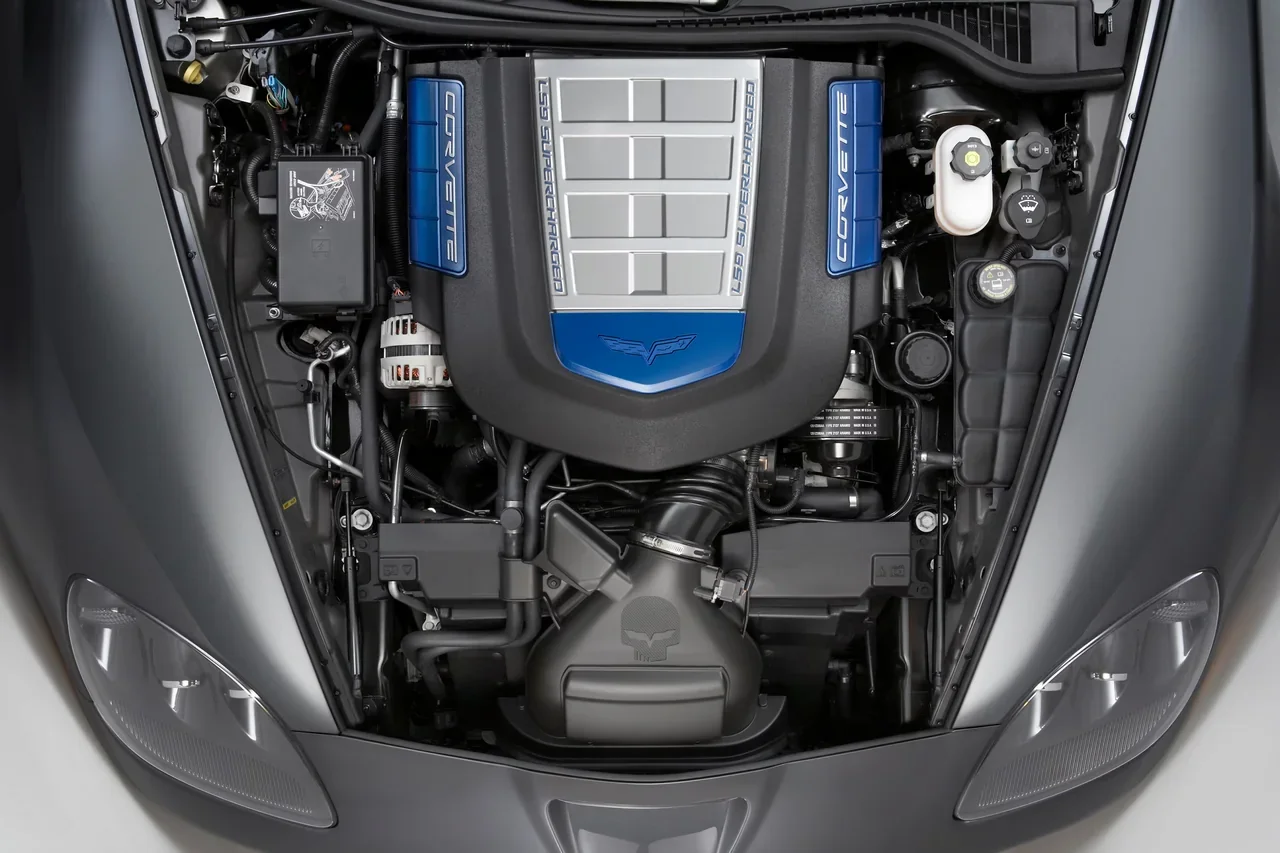
The LS9 added a Roots-type supercharger with a four-lobe rotor design and an integrated charge cooler. It was built by hand at the GM Performance Build Center in Wixom, Michigan, and rated at 638 horsepower and 604 lb-ft of torque.
| Engine | Displacement | Power | Torque | Used in |
|---|---|---|---|---|
| LS2 | 6.0L (364 cu in) | 400 hp at 6,000 rpm | 400 lb-ft at 4,400 rpm | 2005 to 2007 coupe and convertible |
| LS3 | 6.2L (376 cu in) | 430 hp at 5,900 rpm (436 with dual-mode exhaust) | 424 lb-ft at 4,600 rpm (428) | 2008 to 2013 coupe and convertible, Grand Sport |
| LS7 | 7.0L (427 cu in) | 505 hp at 6,300 rpm | 470 lb-ft at 4,800 rpm | Z06, 2013 427 Convertible |
| LS9 | 6.2L supercharged (376 cu in) | 638 hp at 6,500 rpm | 604 lb-ft at 3,800 rpm | ZR1 |
A six-speed manual was offered on every C6, and it was the only choice in the Z06, ZR1 and 427 Convertible. The 2005 automatic was the four-speed 4L65-E. For 2006 GM replaced it with a six-speed paddle-shift automatic with Drive, Sport and Paddle Shift modes.
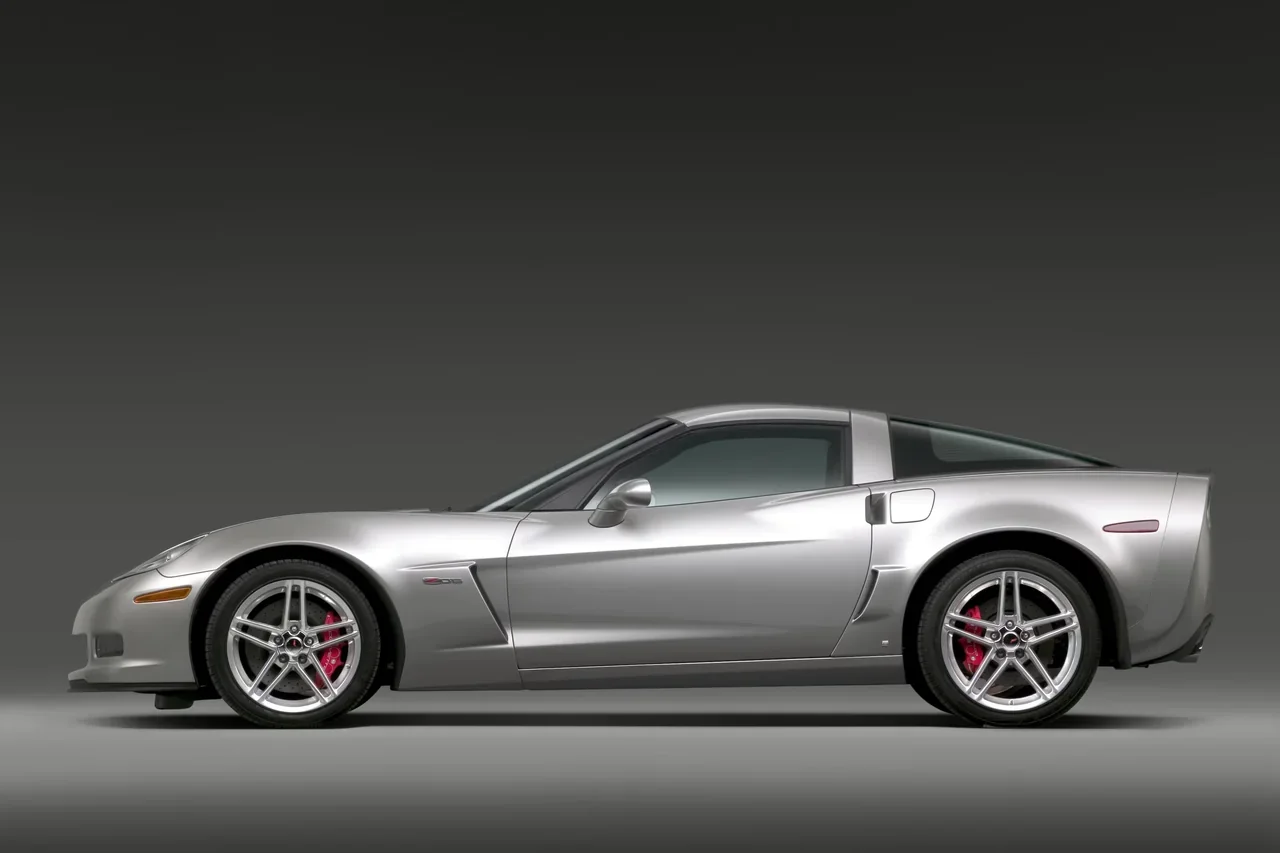
The C6 Z06 was a different car under the skin. Launched for 2006, it paired the 505-horsepower LS7 with an aluminum frame, a magnesium engine cradle, carbon fiber fenders and a fixed roof, and it was 3 inches wider than the other models.
GM developed the Z06 alongside the C6.R race car. Earlier Z06 models, from the 1963 original to the C5 version, added suspension or engine upgrades to the standard Corvette. This one had its own body structure.
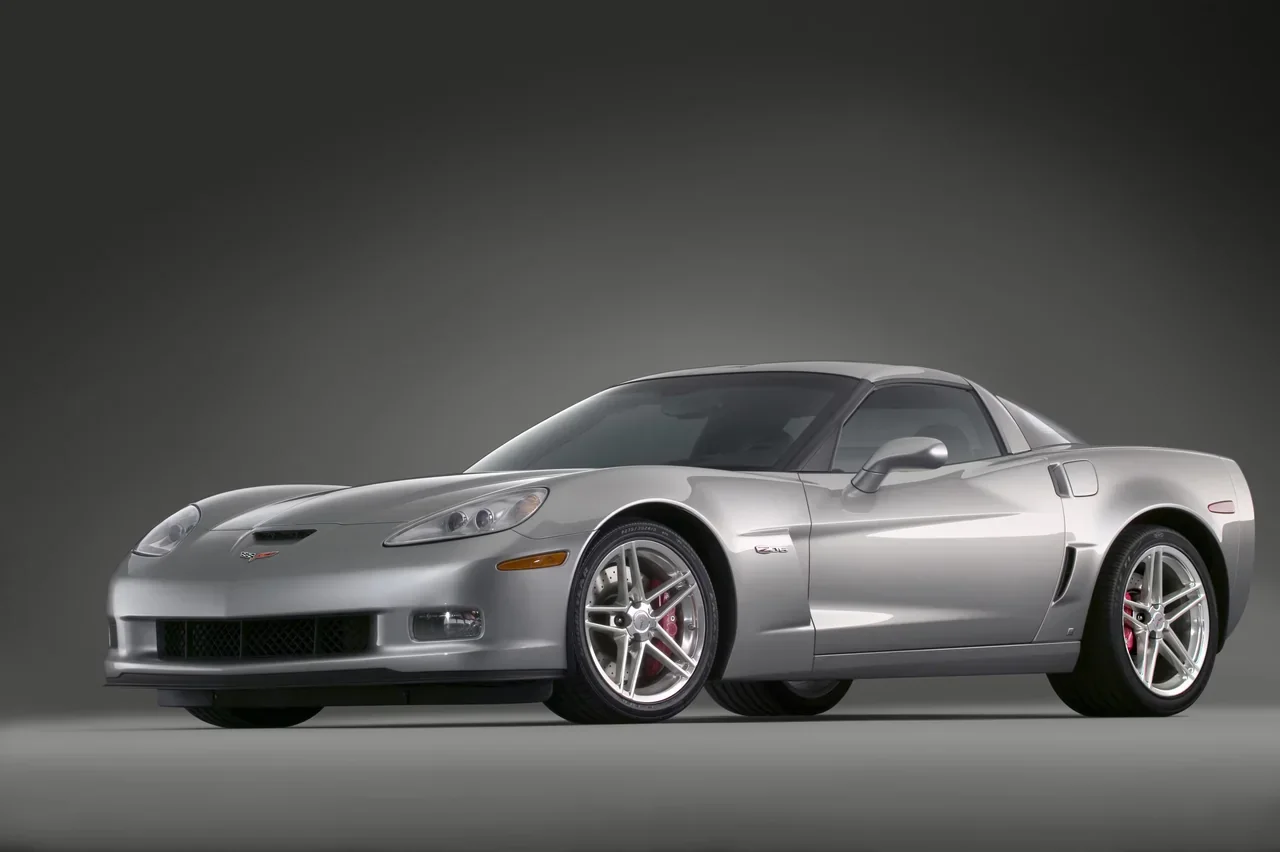
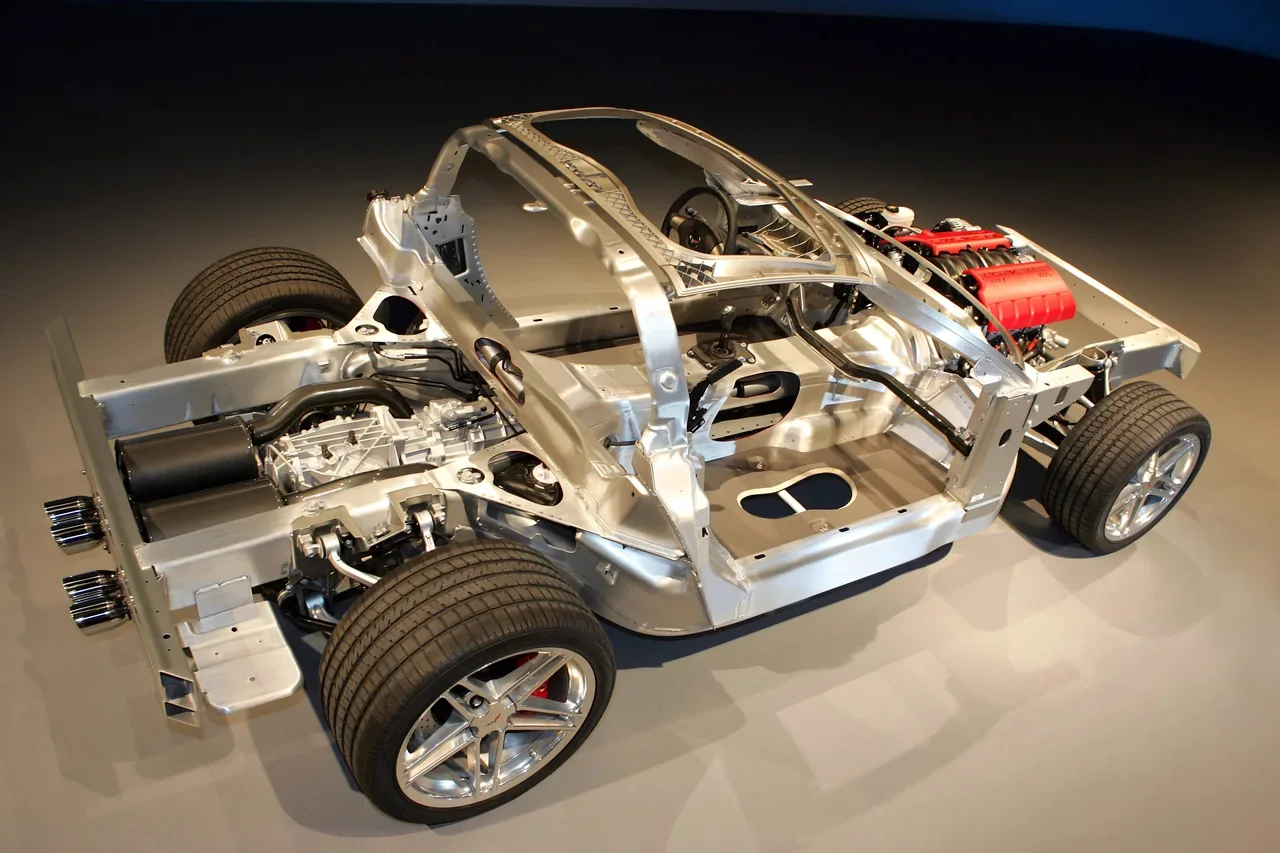
One-piece hydroformed aluminum rails replaced the steel frame, and GM later said the aluminum frame weighed nearly one-third less. The front fenders, front wheelhouses and floor panels were carbon fiber, and the floors used a balsa wood core. The battery moved to the rear to improve weight balance.
The 7.0L LS7 made 505 horsepower at 6,300 rpm and 470 lb-ft of torque at 4,800 rpm. Red engine covers with black lettering marked it under the hood. For 2009 GM enlarged the dry-sump system from 8 quarts to 10.5.
For 2011 the Z07 Performance Package added Brembo ceramic brakes, Magnetic Ride Control and Michelin Pilot Sport 2 tires on 19-inch front and 20-inch rear wheels. The CFZ package added a carbon fiber splitter, rockers and roof panel. The Z06 Carbon limited edition combined both, and Chevrolet capped it at 500 cars.
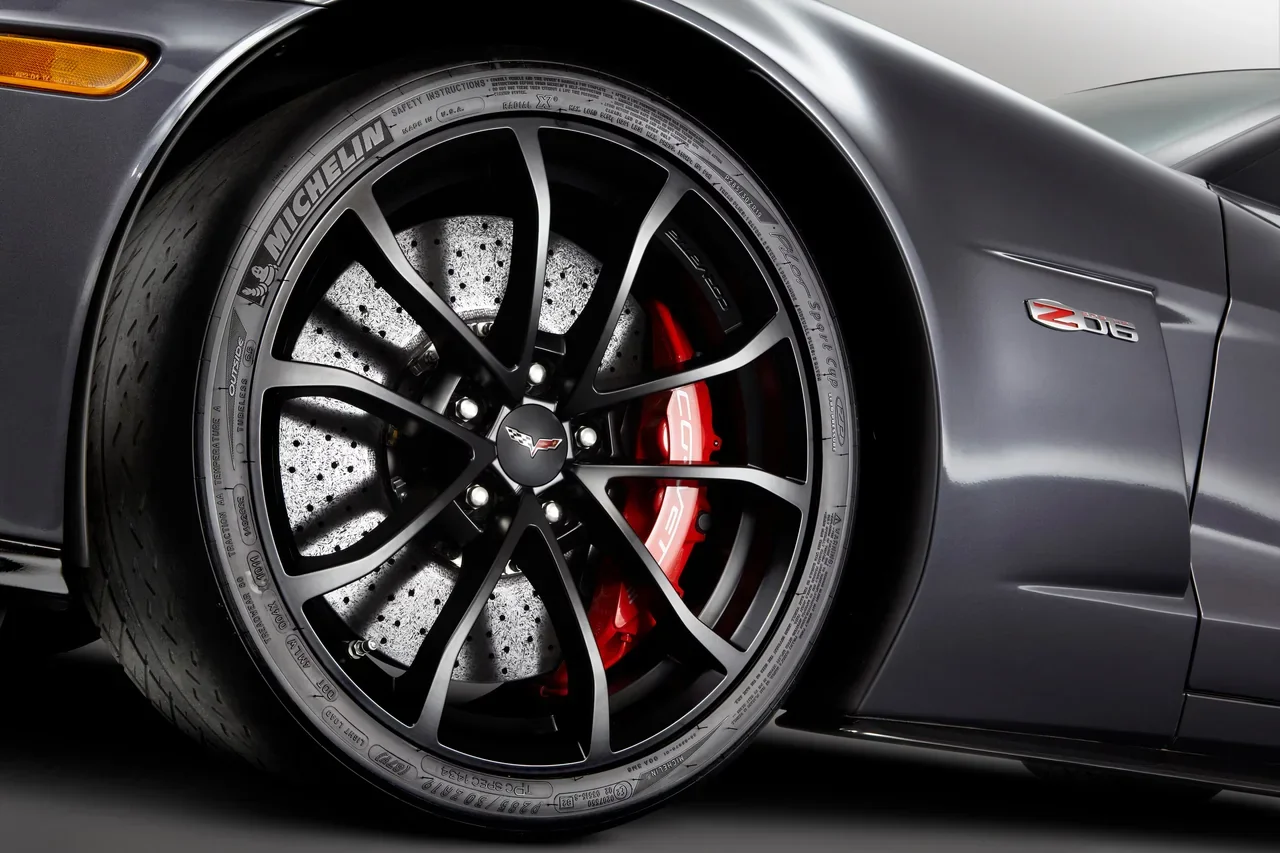
The Z06 used 14-inch front rotors with six-piston calipers and 13.4-inch rear rotors with four-piston calipers. Its 18 x 9.5-inch front and 19 x 12-inch rear wheels carried 275/35ZR18 and 325/30ZR19 tires, which GM called the largest wheel-and-tire combination offered on a Corvette to that point.
GM listed the 2006 car at about 3,130 pounds. By 2009 it quoted 0 to 60 mph in 3.7 seconds, the quarter mile in 11.7 seconds at 125 mph and a 198 mph top speed.
The ZR1 was the top C6 model, sold from 2009 to 2013. Its supercharged 6.2L LS9 made 638 horsepower, and GM called it the most powerful and fastest car it had produced, with a top speed of 205 mph.
The ZR1 shared the aluminum frame of the Z06 and added more carbon fiber, including the roof panel. Only two options were offered at launch: chrome wheels and an upgraded interior package.
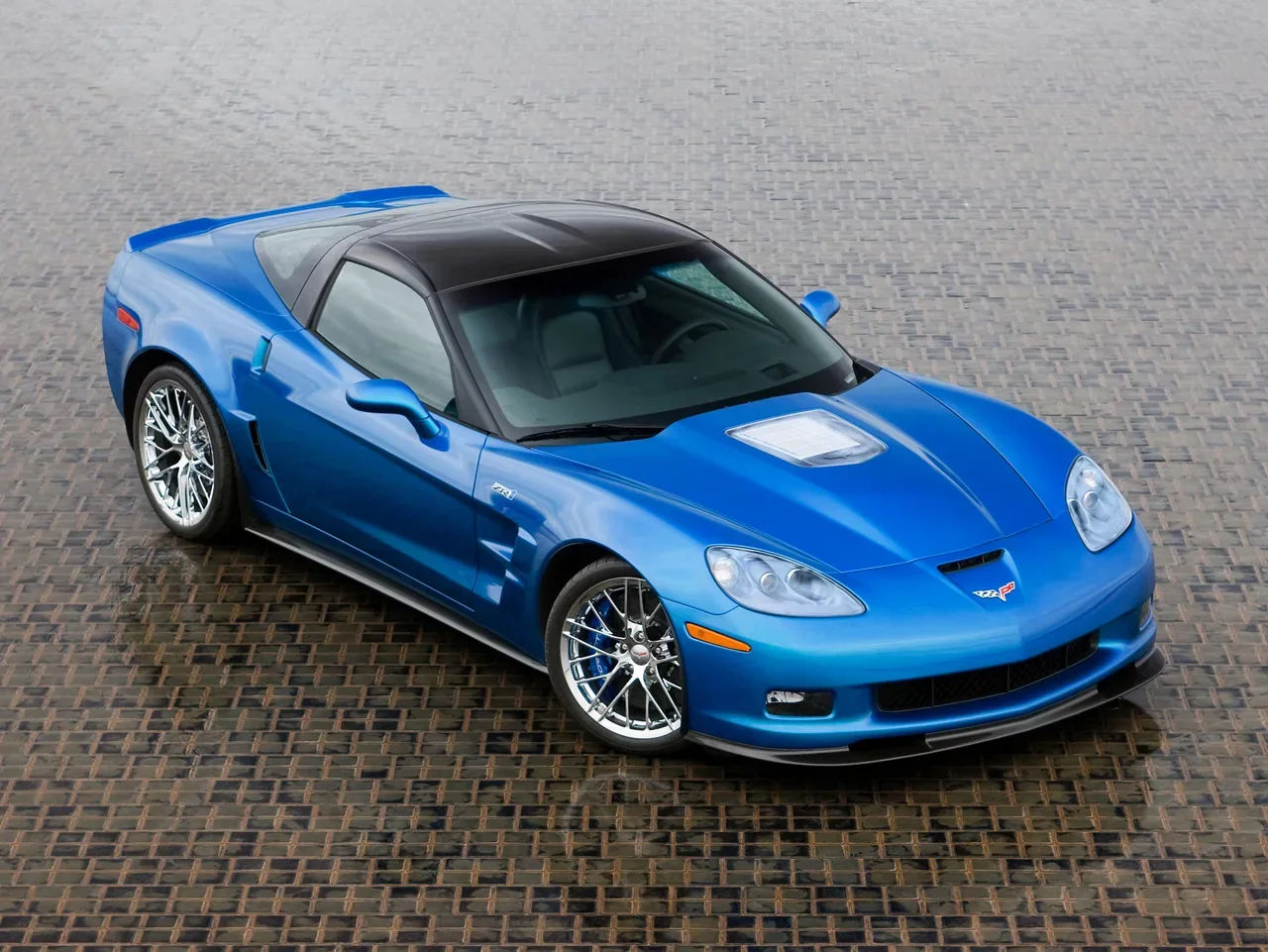
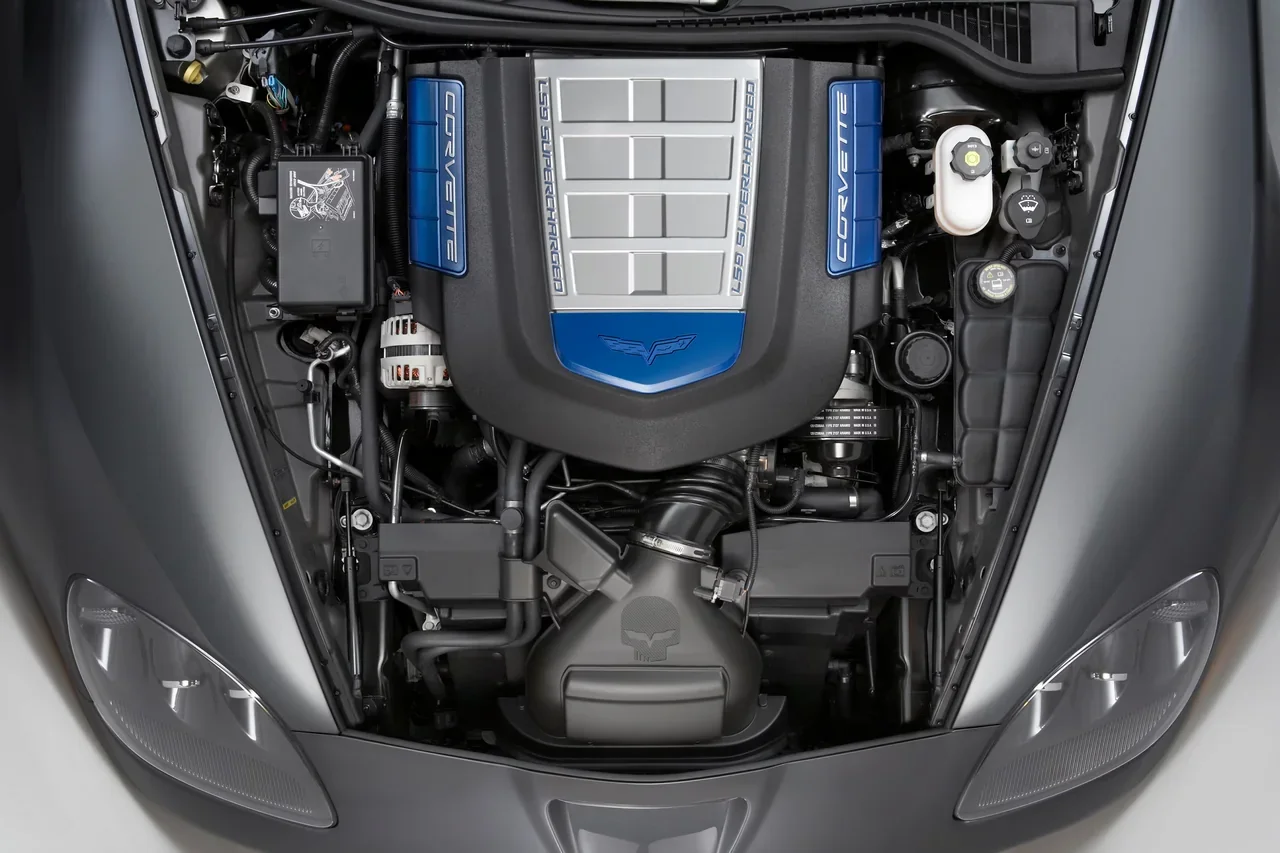
A Roots-type supercharger with an integrated charge cooler sat on the 6.2L V8, under a carbon fiber hood with a clear polycarbonate window. Each engine was assembled by hand in Wixom, Michigan.
The hood, front fenders, roof panel, roof bow, front splitter and rocker moldings were carbon fiber. The wider front fenders carried dual ports, and a full-width spoiler in body color sat at the rear.
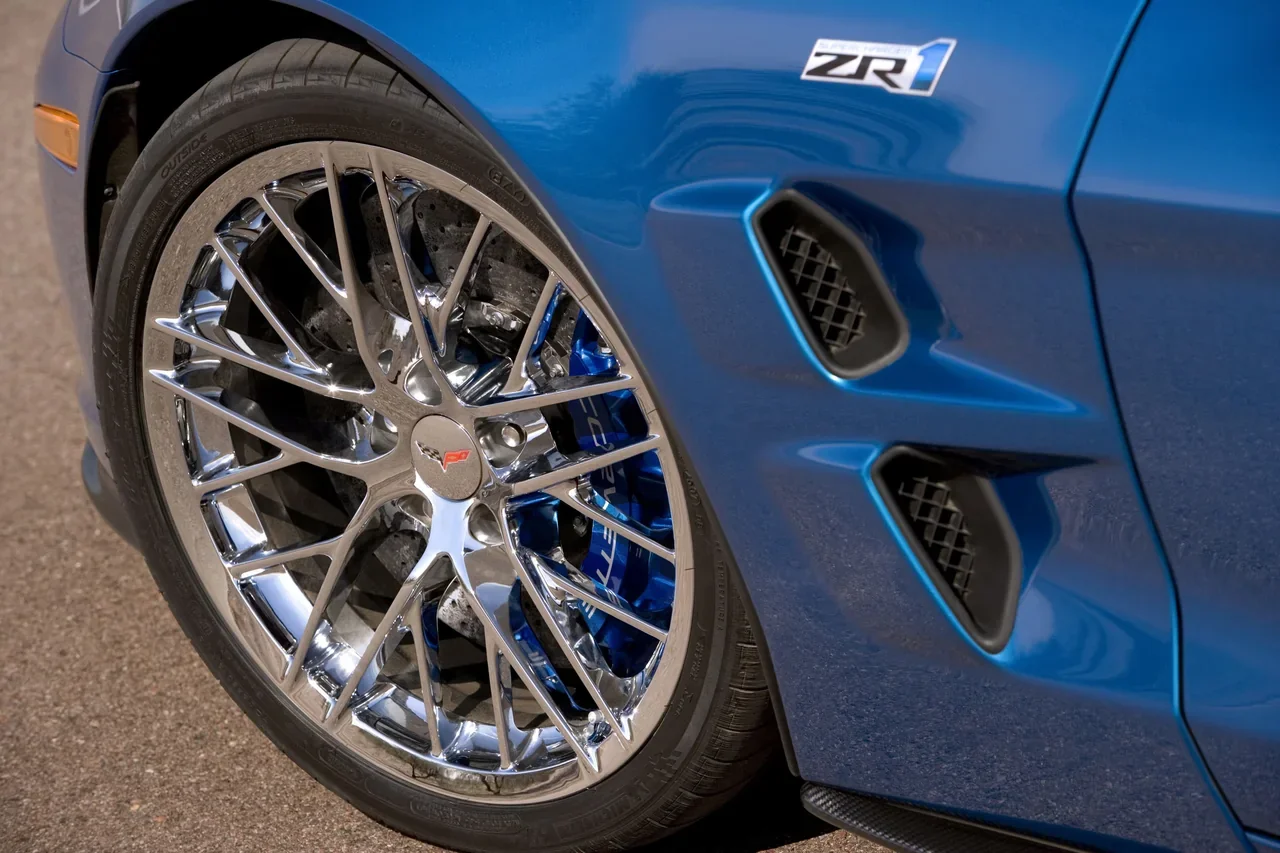
Brembo carbon-ceramic rotors measured 15.5 inches in front and 15 inches at the rear, with six-piston front and four-piston rear calipers painted blue. The 19-inch front and 20-inch rear wheels wore Michelin Pilot Sport 2 tires, P285/30ZR19 and P335/25ZR20.
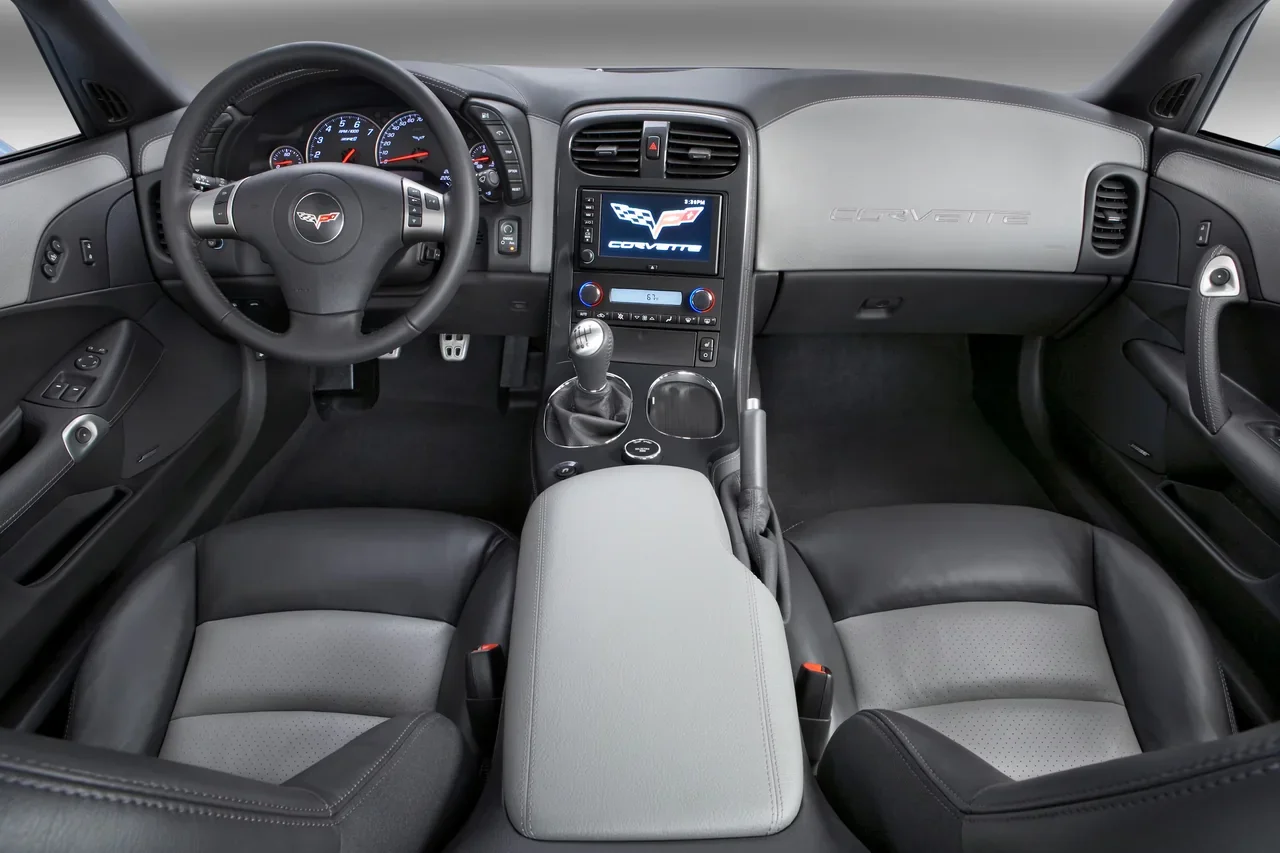
The cluster added a boost gauge and a 220 mph speedometer, and the head-up display showed boost as well. Sill plates and headrests carried the ZR1 logo.
The ZR1 weighed 3,324 pounds, used a twin-disc clutch and reached its top speed in sixth gear. Magnetic Selective Ride Control was standard. Performance Traction Management arrived for 2010, and the PDE package for 2012 added Michelin Pilot Sport Cup tires and a full-width rear spoiler.
At the Nürburgring, GM recorded 7:26.4 in 2008 and 7:19.63 with the 2012 car. GM noted that lap times there are unofficial.


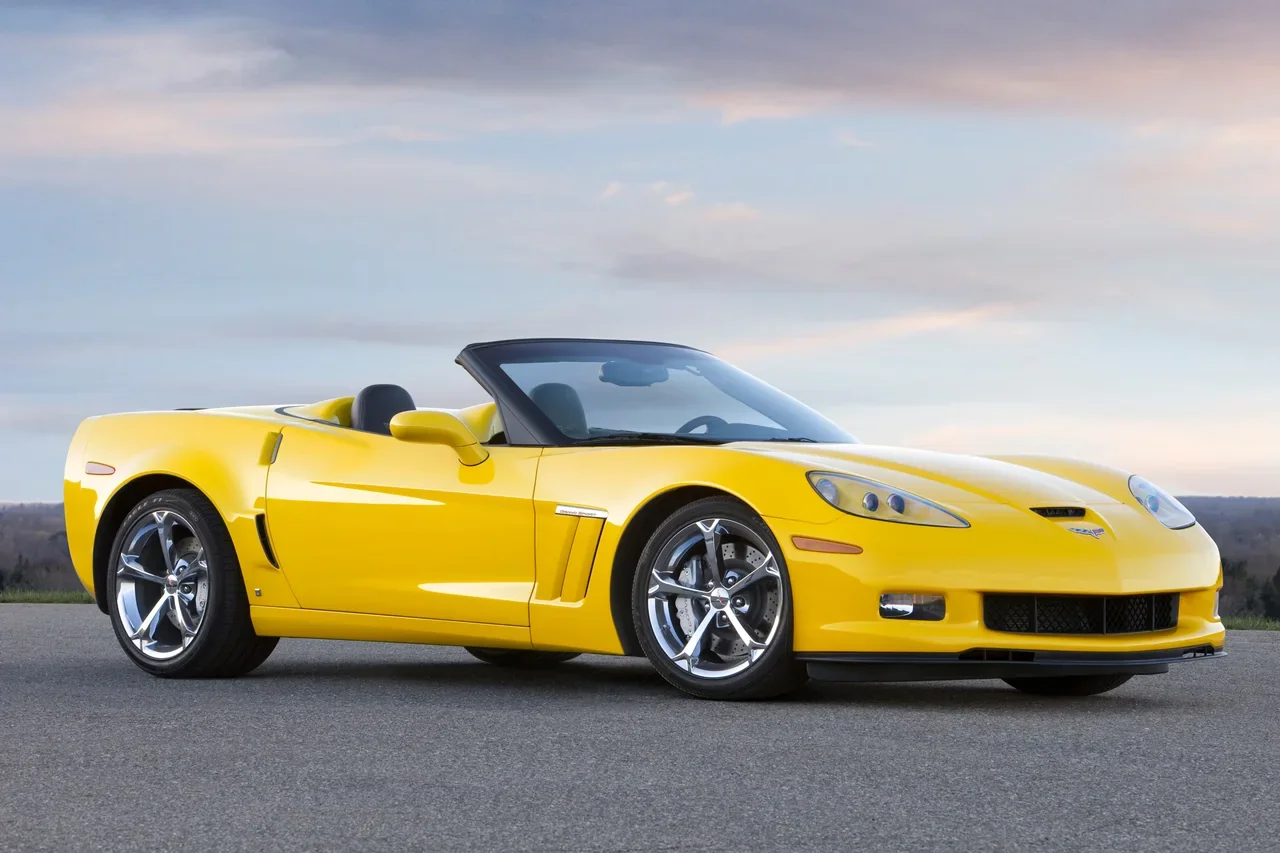
The Grand Sport joined the C6 line for 2010 as a coupe and a convertible. It combined the 430-horsepower LS3 with wide-body styling, Z06-size brakes and wider wheels and tires, and it replaced the Z51 package.
Its 18 x 9.5-inch front and 19 x 12-inch rear wheels carried 275/35ZR18 and 325/30ZR19 tires, and its brakes matched the Z06: 14-inch front rotors with six-piston calipers and 13.4-inch rear rotors with four-piston calipers. GM quoted 0 to 60 mph in four seconds and 1 g on the skid pad.
Unlike the Z06, the Grand Sport kept a removable roof panel on coupes and offered the paddle-shift automatic. Coupes with the manual transmission added a dry-sump oiling system, a differential cooler and a rear-mounted battery for track use.
The name came from five race prototypes built in 1963 and a 1,000-car edition in 1996. An optional Heritage package added front fender hash marks in four colors. In its first year the Grand Sport made up about half of coupe sales and 70 percent of convertible sales.
| Item | Detail |
|---|---|
| Engine | 6.2L LS3, 430 hp (436 with dual-mode exhaust) |
| Curb weight | 3,311 lb coupe, 3,289 lb convertible |
| Overall width | 75.9 in |
| Brakes | 14-inch front rotors, 13.4-inch rear |
| Wheels | 18 x 9.5-inch front, 19 x 12-inch rear |
| Added for 2011 | Optional Magnetic Ride Control |


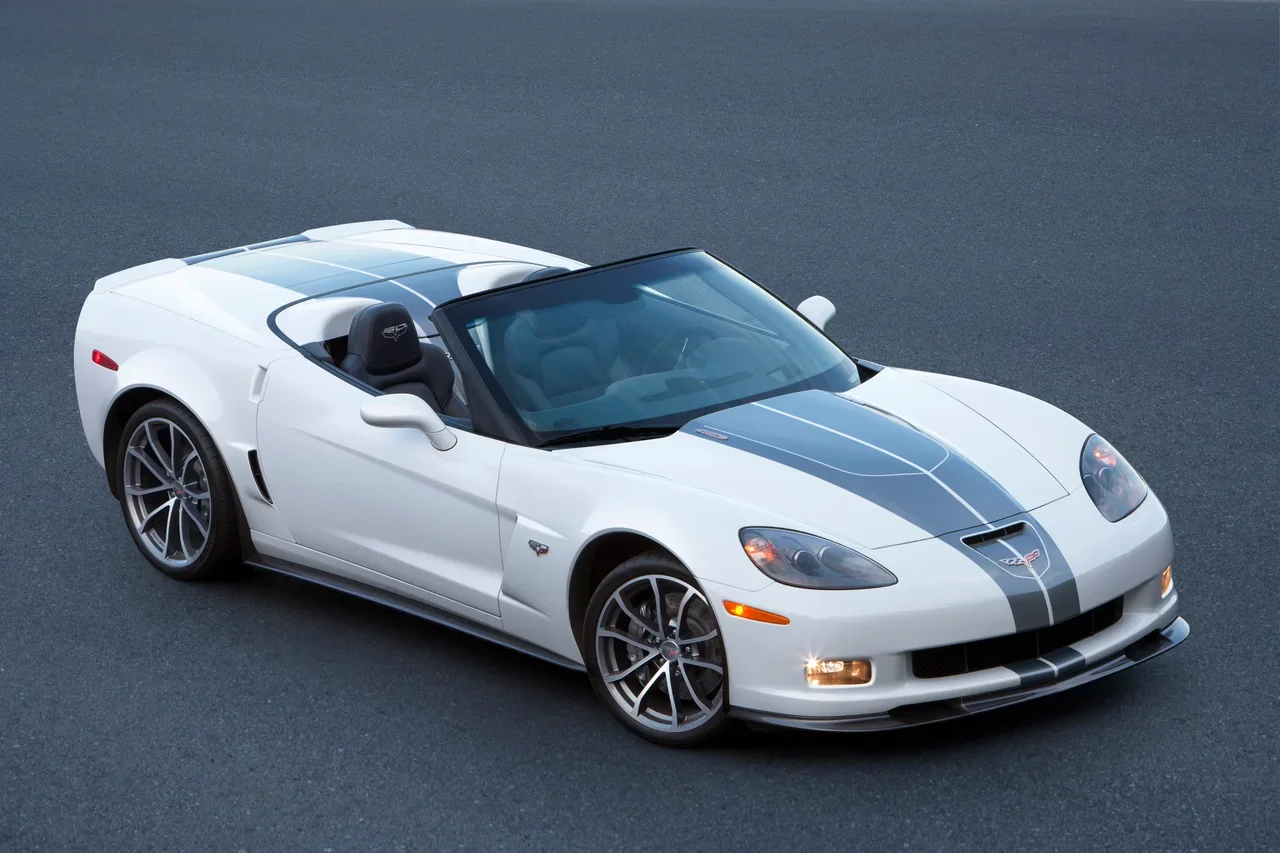
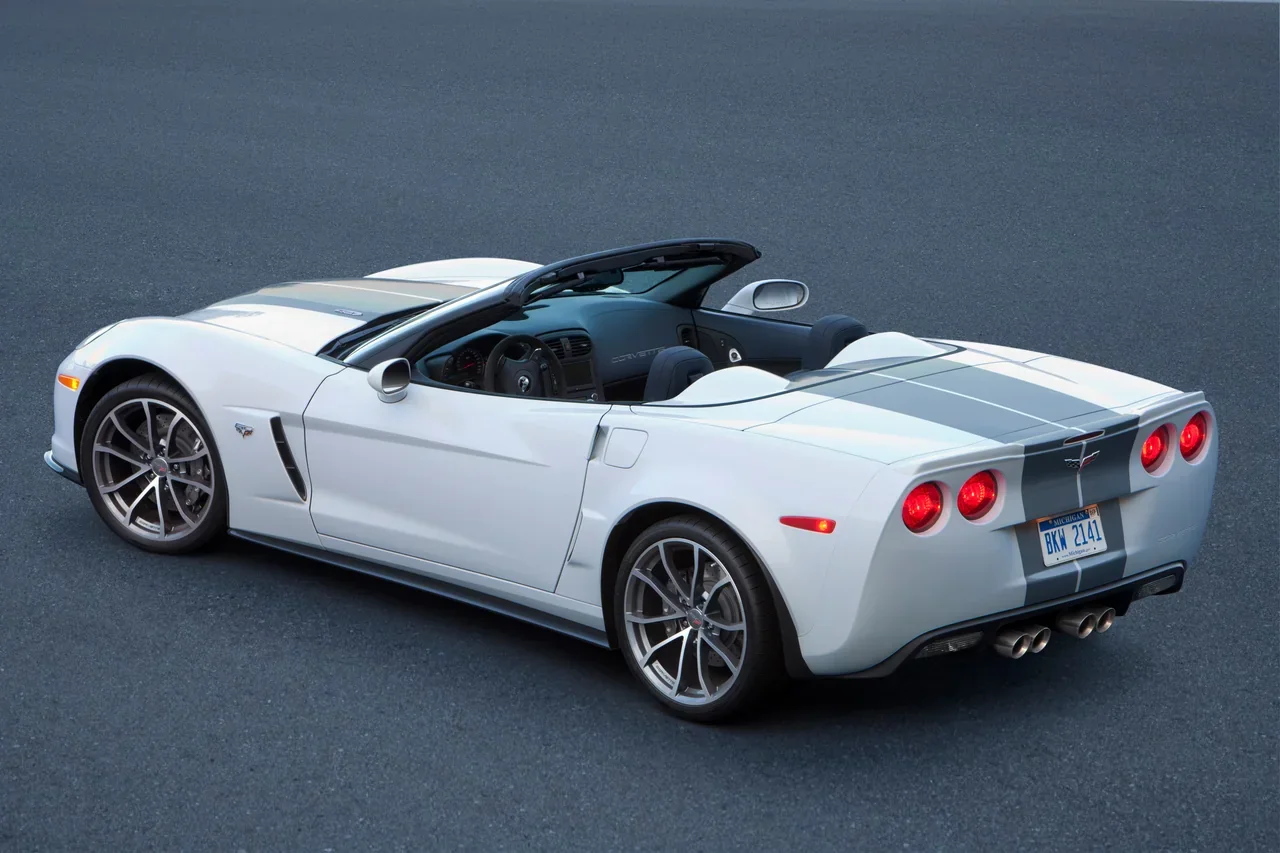
The 427 Convertible Collector Edition was a 2013 model that put the 505-horsepower LS7 from the Z06 into a convertible for the first time. GM called it the fastest and most capable convertible in Corvette history to that point.
It combined the Z06 driveline and rear axle with a rear-mounted battery, standard Magnetic Selective Ride Control and ZR1-style Michelin tires on 19-inch front and 20-inch rear wheels. The raised hood, the fenders and the floor panels were carbon fiber, and a six-speed manual was the only transmission.
GM estimated a top speed above 190 mph and 1.04 g of lateral grip. Buyers could add an option to help build the LS7 for their own car.


Every C6 used short and long arm suspension with transverse composite leaf springs at both ends. Brakes and tires grew with each model, from 12.8-inch front rotors on the base car to 15.5-inch carbon-ceramic rotors on the ZR1.
Three suspension setups were offered at launch: the standard suspension, the Z51 Performance Package and F55 Magnetic Selective Ride Control, which used magneto-rheological dampers to adjust damping almost instantly. Anti-lock brakes, traction control and Active Handling were standard.
The C6 launched on Goodyear Extended Mobility run-flat tires, which removed the need for a spare. The Z06 moved to Goodyear F1 Supercar Gen 2 tires for 2011, and the ZR1 used Michelin Pilot Sport 2 tires developed for it.
| Model | Front rotors | Rear rotors | Wheels, front and rear | Tires, front and rear |
|---|---|---|---|---|
| Coupe and Convertible (2005) | 12.8 in | 12 in | 18 x 8.5 and 19 x 10 | P245/40ZR18 and P285/35ZR19 |
| Z51 package (2005) | 13.4 in | 13 in | 18 x 8.5 and 19 x 10 | P245/40ZR18 and P285/35ZR19 |
| Z06 | 14 in | 13.4 in | 18 x 9.5 and 19 x 12 | P275/35ZR18 and P325/30ZR19 |
| Grand Sport | 14 in | 13.4 in | 18 x 9.5 and 19 x 12 | P275/35ZR18 and P325/30ZR19 |
| ZR1 | 15.5 in, carbon-ceramic | 15 in, carbon-ceramic | 19 x 10 and 20 x 12 | P285/30ZR19 and P335/25ZR20 |
The C6 cabin followed Corvette's dual-cockpit theme in a smaller body with the same usable room. It launched with a keyless access and start system, and for the first time Corvette offered onboard navigation, on a 6.5-inch touch screen.
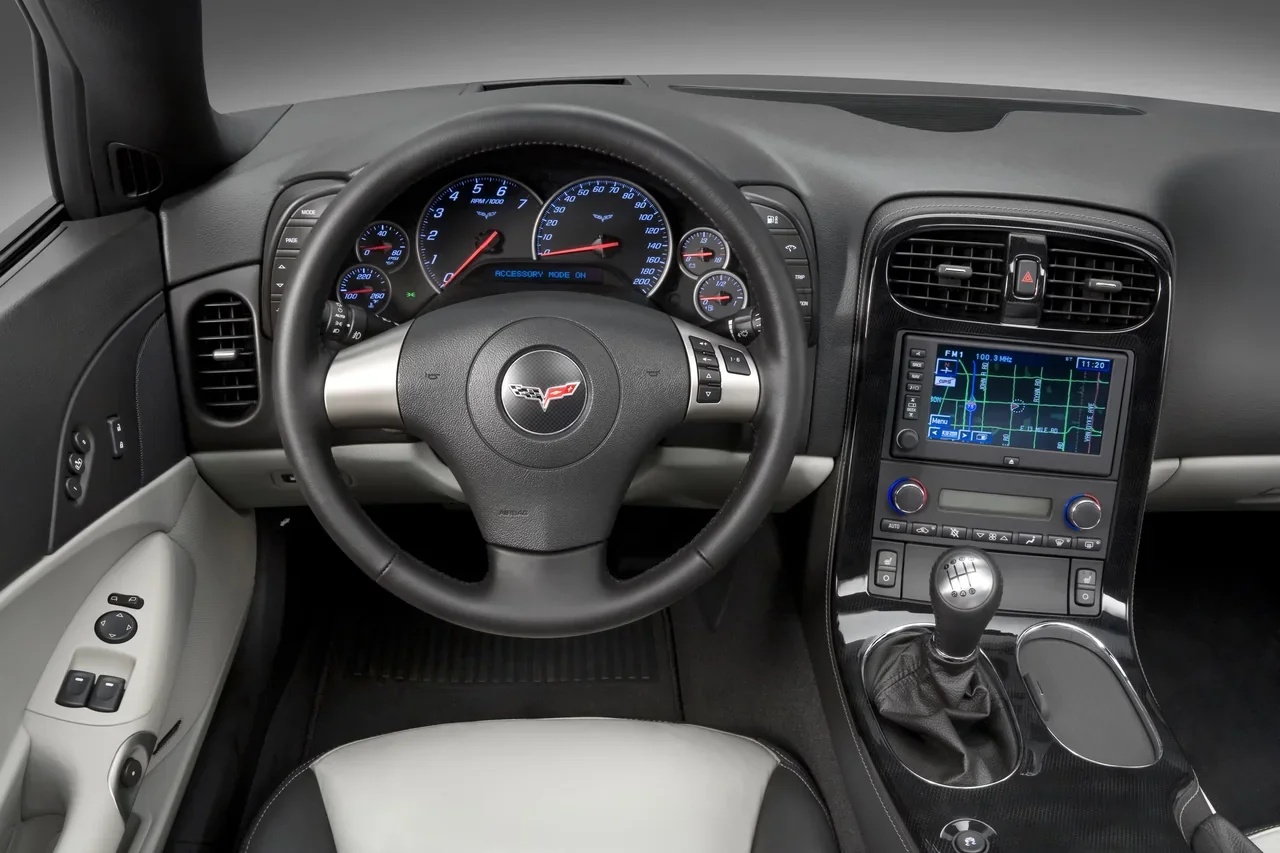
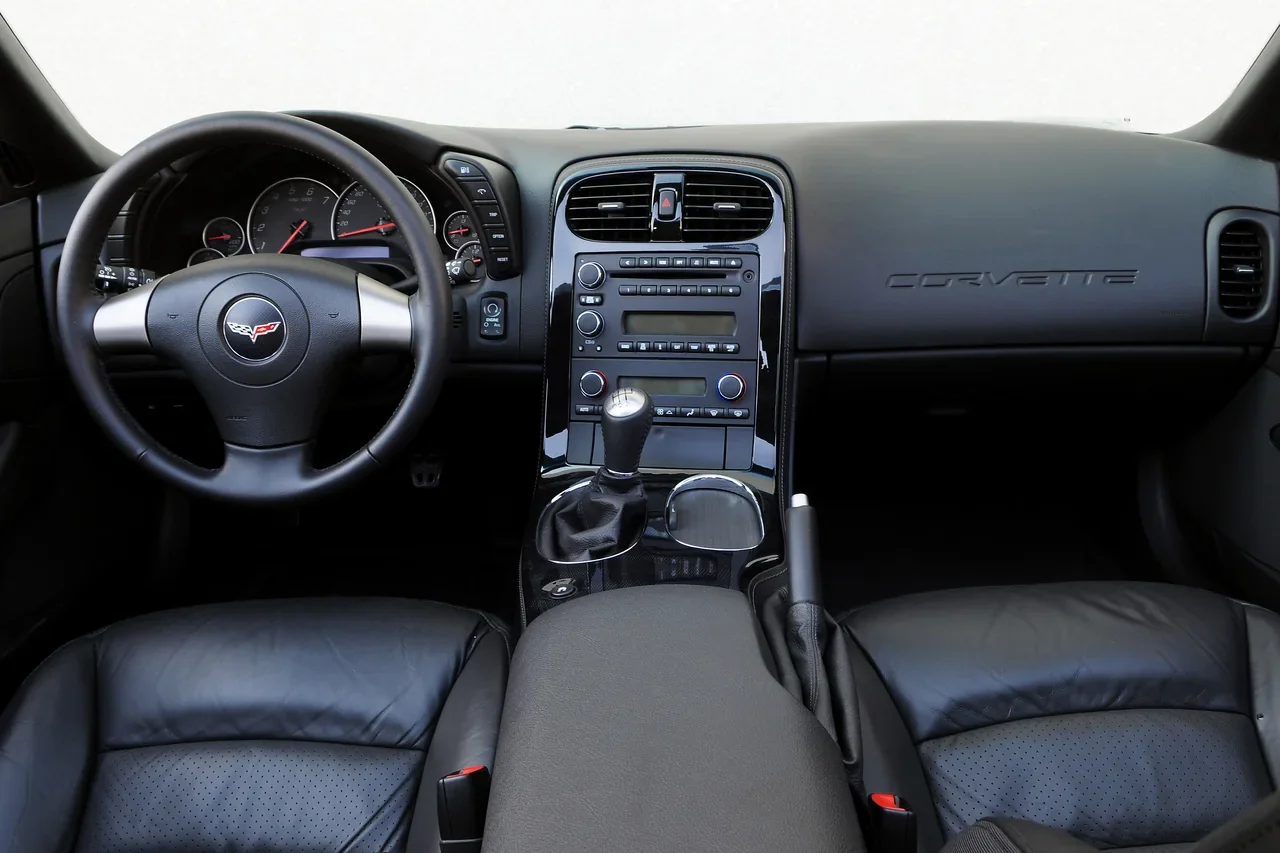
Passenger space stayed the same across the line: 52 cubic feet of interior volume, 38 inches of headroom and 43 inches of legroom. The coupe held 22 cubic feet of cargo, and the convertible held 11 cubic feet with the top up.
For 2006 GM fitted a smaller 370 mm three-spoke steering wheel and replaced the manual passenger air bag switch with a sensing system.
GM closed the C6 run with a series of special editions: the 2011 Z06 Carbon, the 2012 Chevrolet Centennial Edition and the 2013 60th Anniversary Design Package. The 2013 427 Convertible Collector Edition was a separate model.
| Edition | Model year | What it was |
|---|---|---|
| Z06 Carbon | 2011 | Z07 and carbon fiber packages combined, a raised carbon fiber hood, Supersonic Blue or Inferno Orange paint, no more than 500 built |
| Chevrolet Centennial Edition | 2012 | Carbon Flash Metallic paint, satin-black graphics and wheels, red calipers and Magnetic Selective Ride Control, offered on every model |
| 60th Anniversary Design Package | 2013 | Arctic White paint, Blue Diamond leather interior, a blue top on convertibles and optional Pearl Silver Blue stripes, offered on every model |
| 427 Convertible Collector Edition | 2013 | LS7 convertible with a carbon fiber hood, fenders and floors |
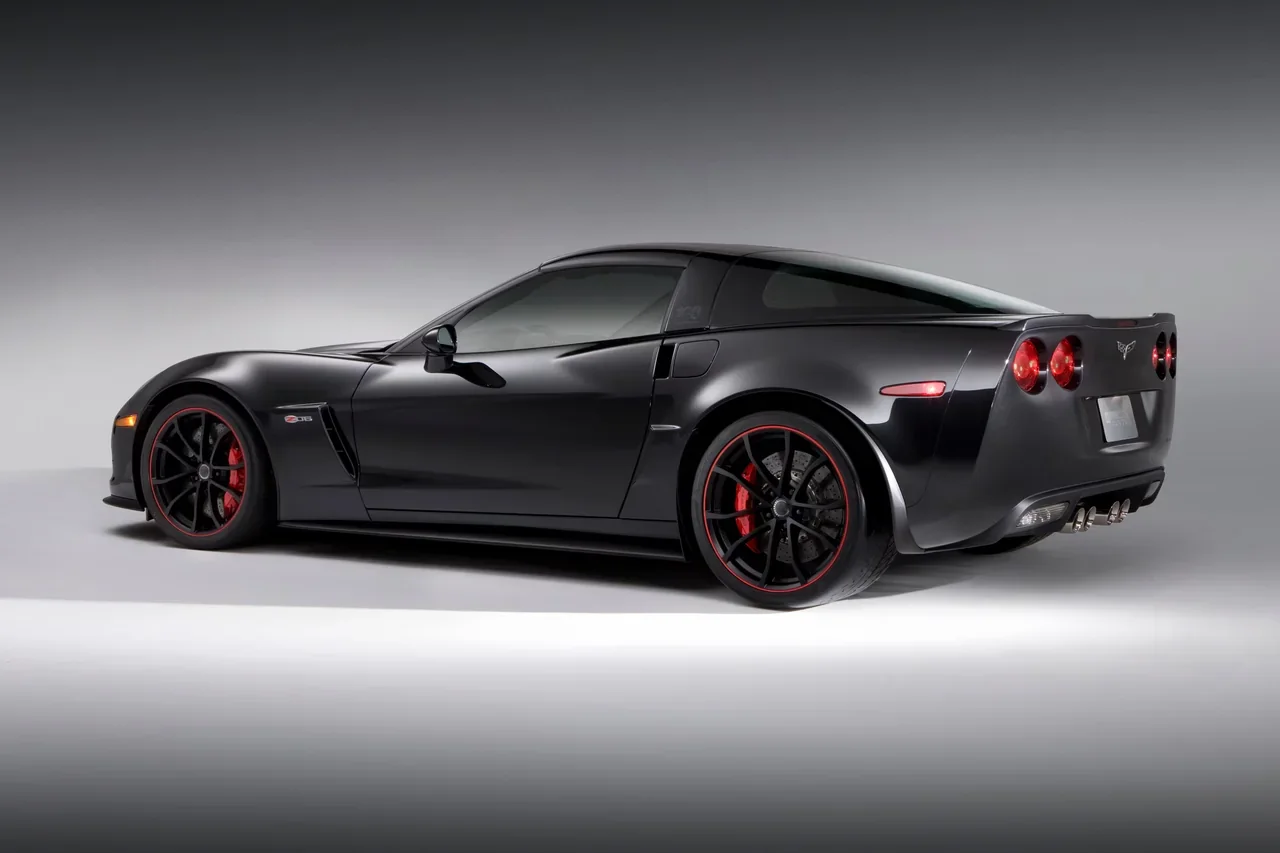
Built to mark Chevrolet's centennial, the package used a black color scheme and swapped the fleur-de-lis in the crossed flags badge for the number 100. Chevrolet announced it in April 2011.
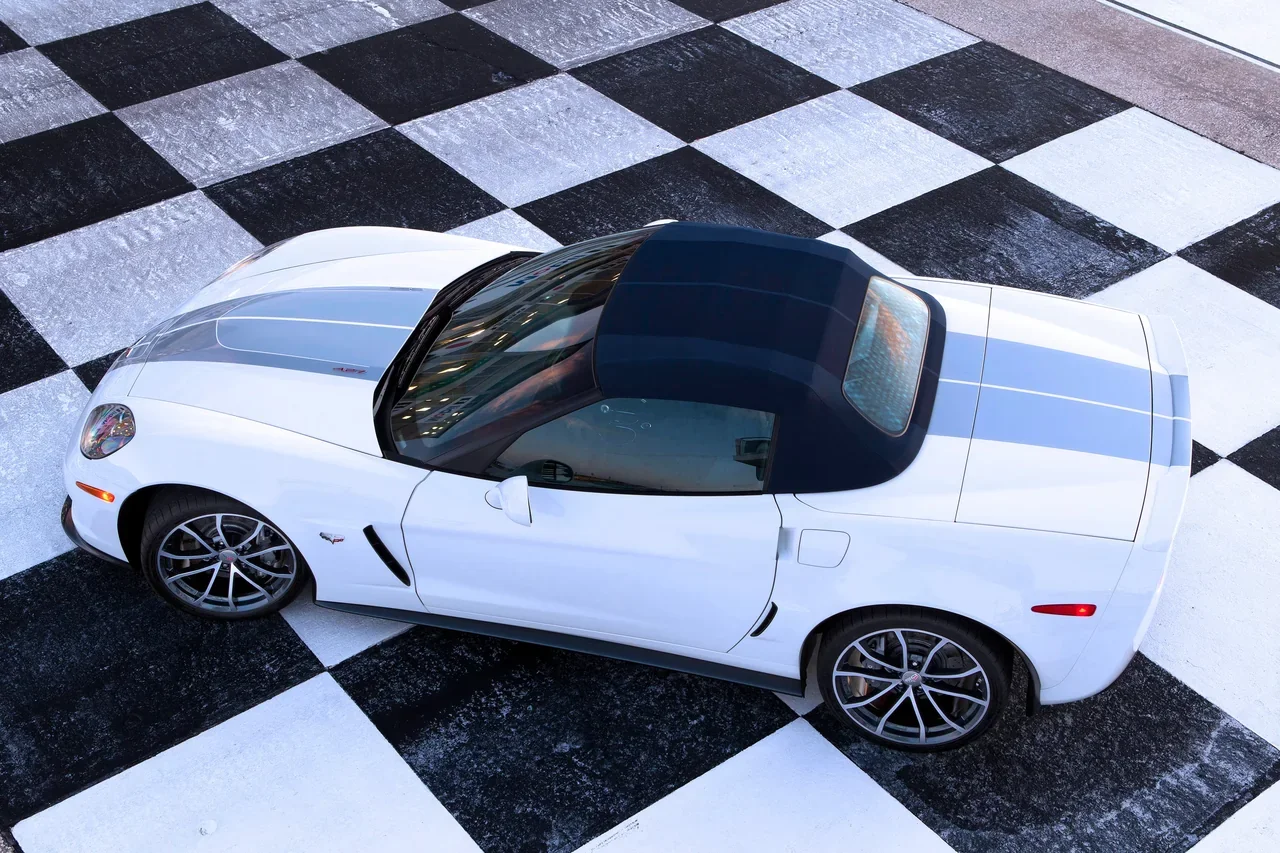
Every 2013 Corvette carried 60th Anniversary badges. The design package added Arctic White paint with a Blue Diamond interior, and an optional stripe ran the full length of the car, including the convertible top.
Corvette also reached a production milestone during the C6 years: the 1.5 millionth Corvette was built in 2009.
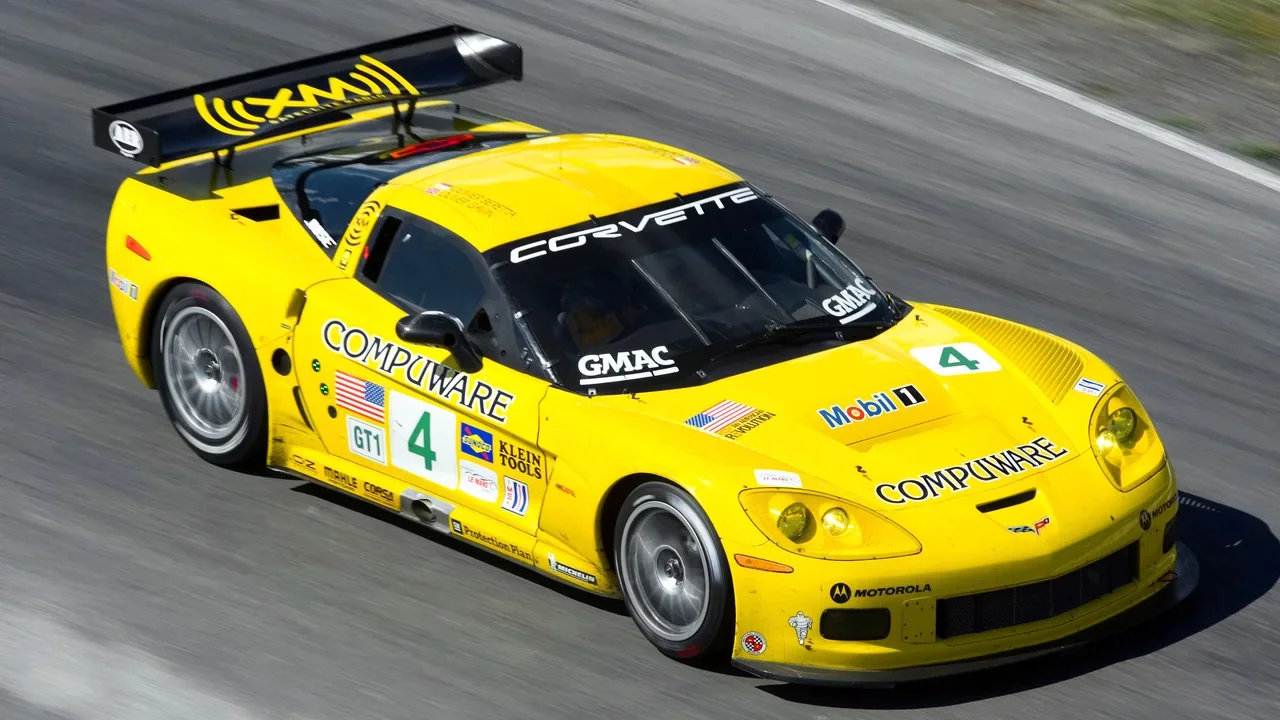
Racing ran through the C6 program. GM developed the Z06 alongside the C6.R race car, tested its fastest models at the Nürburgring, and Corvette Racing won the 2012 American Le Mans Series GT championship.
The link showed in the hardware. GM held the LS7 valve angles at 12 degrees based on its racing engines, and said the LS7 was co-developed with the GT1 engine that won at Le Mans. The 2011 Z06 Carbon carried graphics that marked 50 years of Le Mans racing.
The Z06 was developed alongside the C6.R and lapped the Nürburgring in 7:43 from a standing start.
The ZR1 set a 7:26.4 lap during development.
GM returned with the 2012 cars: 7:19.63 for the ZR1 and 7:22.68 for the Z06, both driven by Corvette engineer Jim Mero.
Corvette Racing won the American Le Mans Series title in the production-based GT class, and Chevrolet took the Corvette Daytona Prototype to GRAND-AM.
The Nürburgring Nordschleife measures 12.9 miles with about 154 turns. GM noted that lap times there are unofficial and described the track as a way to validate its cars in the toughest conditions.


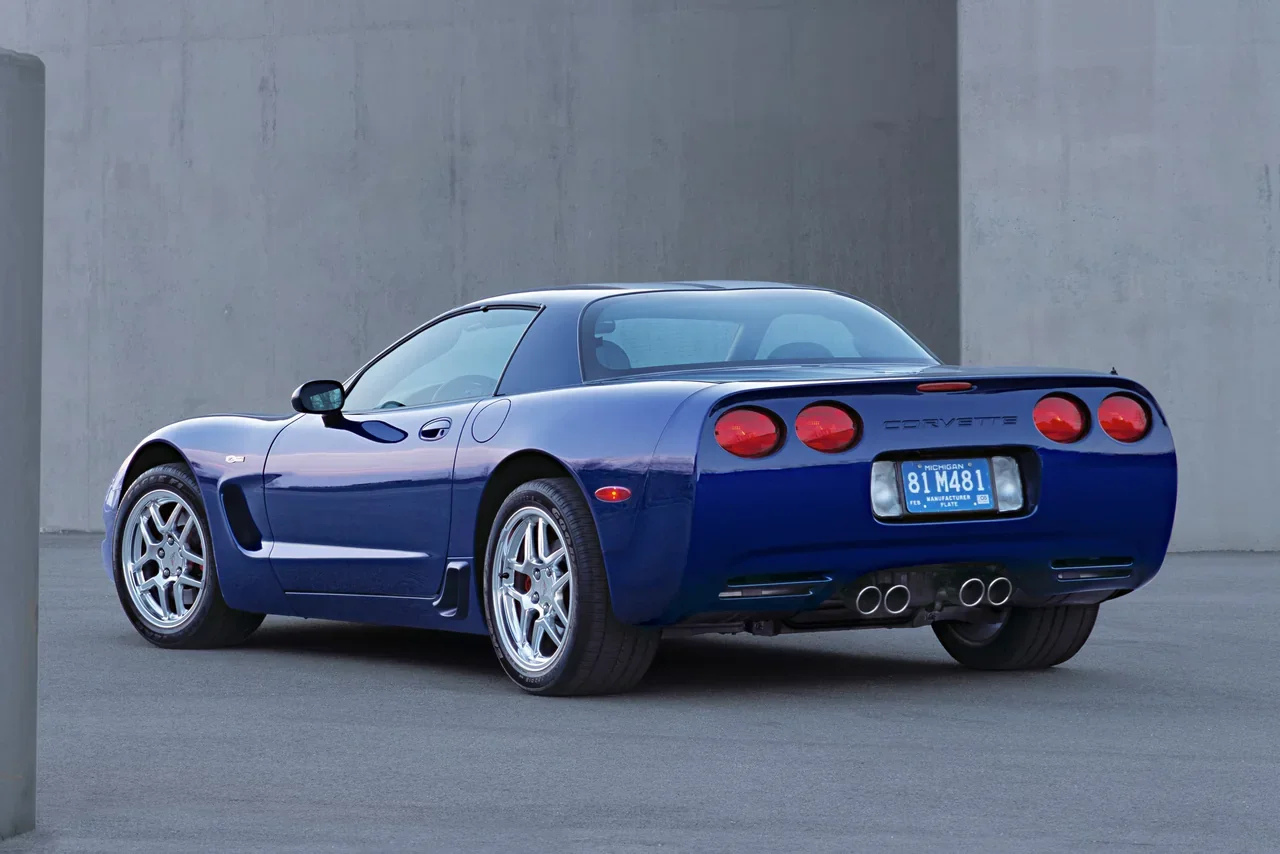
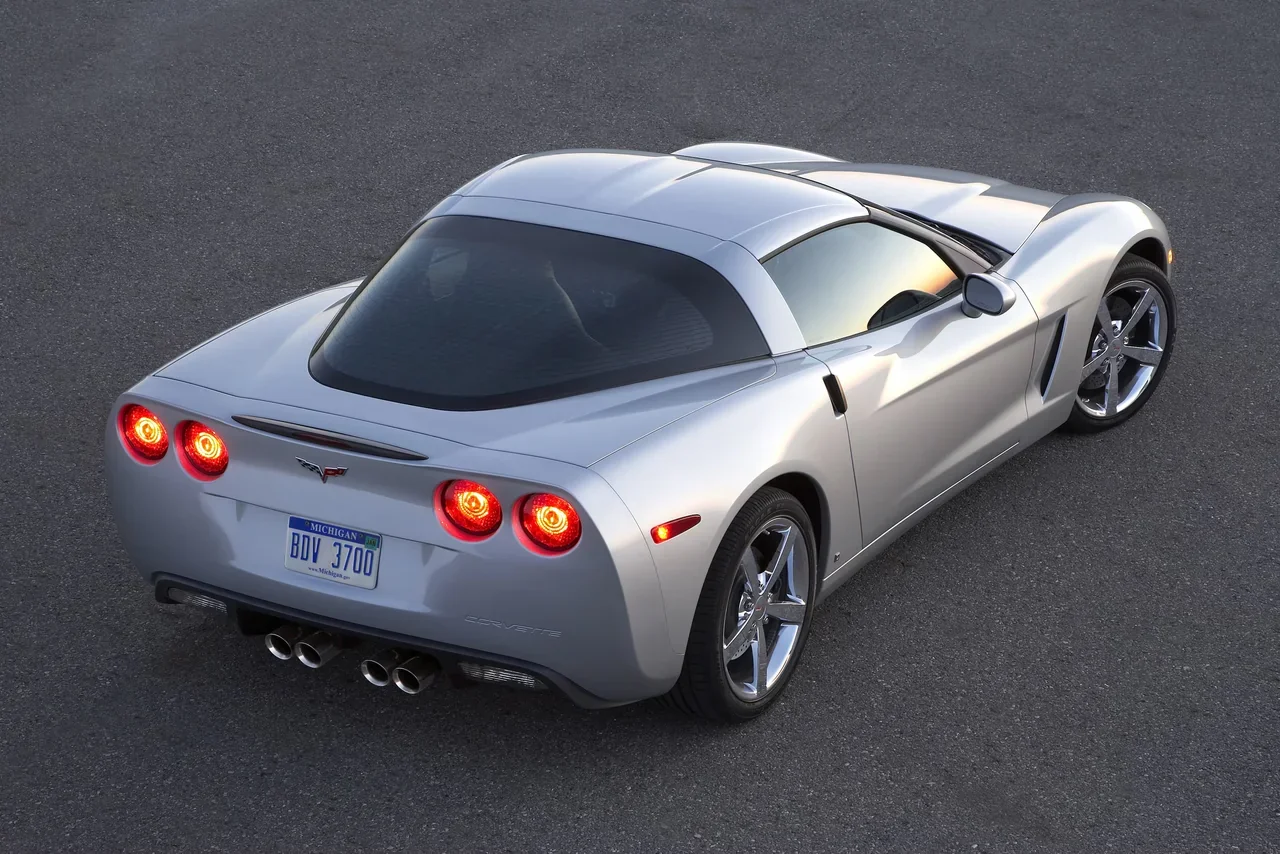
The C6 was an evolution of the C5 and the bridge to the C7. It kept the C5 chassis layout in a shorter, narrower body, and its aluminum-frame Z06 and ZR1 set up the aluminum frame GM made standard on the 2014 C7.
GM replaced the retractable headlamps Corvette had used for 41 years, trimmed 5 inches from the length and held the weight to roughly 20 pounds from that of the 1997 C5.
| Item | C6 Corvette |
|---|---|
| Layout | Front engine, rear-wheel drive and a rear-mounted transmission, carried over from the C5 |
| Frame | Hydroformed steel on base cars, aluminum on the Z06 and ZR1 |
| Headlamps | Fixed, after 41 years of retractable lamps |
| Length | 5 inches shorter than the C5 |
| Standard power | 400 hp at launch, 430 hp from 2008 |
| What came next | The 2014 C7, with an aluminum frame on the base car that GM described as about 60 percent stiffer than the Z06 and ZR1 frame |
EPA rated the LS3 Corvette with the manual transmission at 16 mpg city and 26 highway for 2008 through 2010. The Z06 was rated at 15 city and 24 highway in most years, and the supercharged ZR1 at 14 city and 20 or 21 highway.
These are the ratings listed on fueleconomy.gov. GM's own 2005 estimate for the manual car was 19 mpg city and 28 highway.
| Engine | Transmission | Model years | City | Highway | Combined |
|---|---|---|---|---|---|
| 6.0L LS2 | Six-speed manual | 2005 to 2007 | 16 | 26 | 19 |
| 6.0L LS2 | Four-speed automatic | 2005 | 16 | 24 | 19 |
| 6.0L LS2 | Six-speed automatic | 2006 to 2007 | 15 | 25 | 19 |
| 6.2L LS3 | Six-speed manual | 2008 to 2010 | 16 | 26 | 19 |
| 6.2L LS3 | Six-speed manual | 2011 to 2013 | 16 | 25 | 19 |
| 6.2L LS3 | Six-speed automatic | 2008 to 2010 | 15 | 25 | 18 |
| 6.2L LS3 | Six-speed automatic | 2011 to 2013 | 15 | 24 | 18 |
| 7.0L LS7 | Six-speed manual | 2006 | 15 | 24 | 18 |
| 7.0L LS7 | Six-speed manual | 2007 | 14 | 24 | 18 |
| 7.0L LS7 | Six-speed manual | 2008 to 2013 | 15 | 24 | 18 |
| 6.2L supercharged LS9 | Six-speed manual | 2009 to 2011 | 14 | 20 | 16 |
| 6.2L supercharged LS9 | Six-speed manual | 2012 to 2013 | 14 | 21 | 17 |
Source: U.S. EPA and U.S. Department of Energy, fueleconomy.gov.
NHTSA lists seven recall campaigns that include 2005 to 2013 Corvettes. Most cover the 2005 to 2007 cars, including a roof panel adhesive recall and a low-beam headlamp wiring recall. NHTSA shows no campaigns for the 2008, 2009, 2010 or 2013 model years.
A recall applies to specific vehicles, not to every car in a model year. Run the VIN through the NHTSA lookup before you buy a used C6, and ask for proof that any open recall was completed.
| Campaign | Reported | Model years | Issue |
|---|---|---|---|
| 04V525000 | November 2004 | 2005 | Rear brake lines could be affected by heat from the left exhaust manifold and exhaust pipe |
| 05V455000 | October 2005 | 2005 and 2006 | A power steering hose could fracture and leak fluid under extreme steering maneuvers |
| 06V181000 | May 2006 | 2005 and 2006 | On cars with painted roofs, the adhesive between the roof panel and its frame could separate |
| 09V491000 | December 2009 | 2005 to 2007 | Roof panel adhesive could separate on removable-roof cars and on 2006 and 2007 Z06 models; dealers installed a new design roof panel |
| 10V172000 | April 2010 | 2005 and 2006 | A tilt and telescoping steering column could interrupt a signal and cause one or more brakes to apply |
| 11V491000 | October 2011 | 2011 and 2012 | Rear hatch hinges on coupes built January 24 to September 1, 2011, might not meet the federal load requirement; dealers replaced both hinges |
| 14V251000 | May 2014 | 2005 to 2007 | A low-beam headlamp relay wire could fracture and cause a loss of low-beam headlamps; dealers installed a jumper wire |
Source: NHTSA. Check any car by VIN at nhtsa.gov/recalls.
Start with the model year, because the engine and equipment changed during the run: the LS3 arrived for 2008, the Grand Sport for 2010 and new seats for 2012. Then confirm recall status by VIN and match the car to the right model.
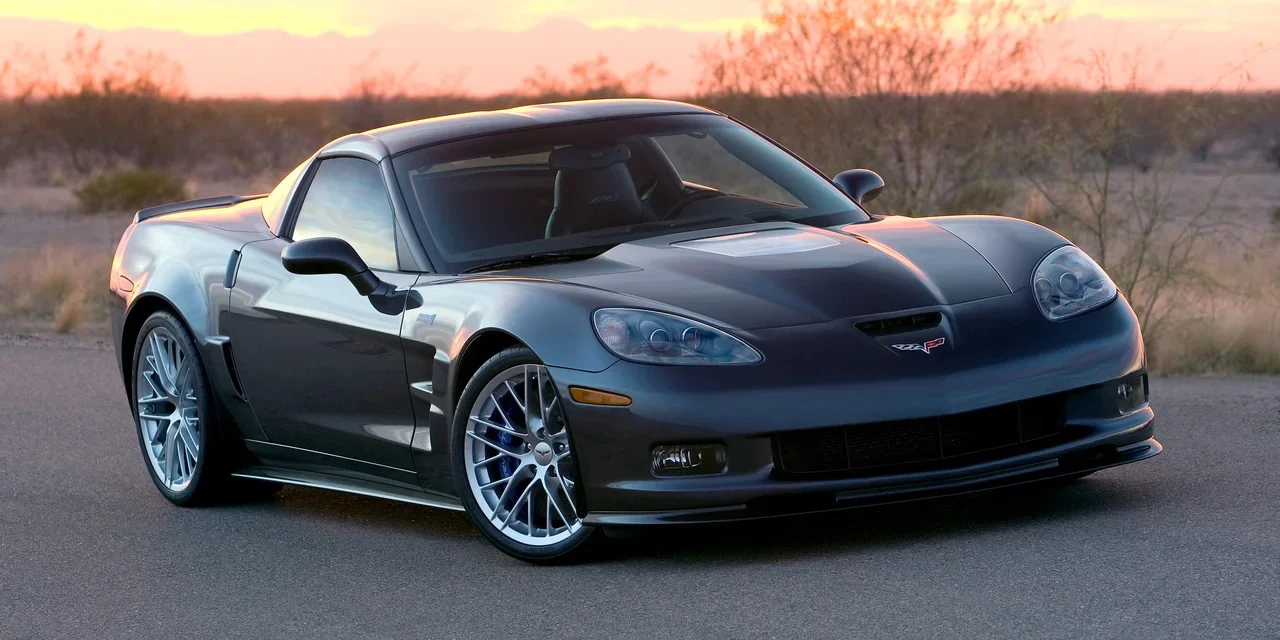
The C6 Corvette covers the 2005 through 2013 model years. Coupe production began in the summer of 2004.
The 2005 to 2007 coupe and convertible made 400 horsepower. The LS3 cars from 2008 made 430, or 436 with the dual-mode exhaust. The Z06 made 505 and the ZR1 made 638.
The C6 used the 6.0L LS2 from 2005 to 2007 and the 6.2L LS3 from 2008 to 2013. The Z06 and 427 Convertible used the 7.0L LS7, and the ZR1 used the supercharged 6.2L LS9.
GM listed the 2005 Corvette at 186 mph, with the quarter mile in 12.6 seconds. It quoted 198 mph for the Z06 and 205 mph for the ZR1.
Both used an aluminum frame and a fixed roof. The Z06 had the naturally aspirated 505-horsepower LS7. The ZR1 had the supercharged 638-horsepower LS9, carbon-ceramic brakes and more carbon fiber body panels.
The LS3 became the standard engine for the 2008 model year. It displaced 6.2 liters and made 430 horsepower.
The C6 Grand Sport was offered from 2010 through 2013 as a coupe and a convertible.
No. The C6 was the first Corvette since 1962 with fixed, exposed headlamps.
Every C6 was built in Bowling Green, Kentucky.
GM listed the 2005 coupe at 3,179 pounds and the convertible at 3,199. The 2006 Z06 was listed at about 3,130 pounds, the ZR1 at 3,324 and the 2013 427 Convertible at 3,355.
The last C6 model year was 2013, which was also the 60th anniversary of Corvette. The 2014 Corvette began the seventh generation.
Both were offered on the coupe, convertible and Grand Sport. The Z06, ZR1 and 427 Convertible came only with a six-speed manual.
NHTSA lists seven recall campaigns for 2005 to 2013 Corvettes, and most cover 2005 to 2007 cars. Check any car by VIN at nhtsa.gov/recalls.
Visit Us
600 S Morrison Blvd.
Hammond, LA 70403
| Mon to Fri | 8:30 AM to 7:30 PM |
|---|---|
| Saturday | 9:00 AM to 5:00 PM |
| Sunday | Closed |