Ross Downing Corvettes

Silver C7 Corvette Stingray coupe on a curving road at night
Corvette Stingray · 2014 to 2019

C7 Corvette Stingray

For 2014 the Stingray was the whole C7 lineup. It stayed through 2019, the only model present for all six years, and every other C7 joined it along the way.

455hpLT1 V8, standard exhaust
460lb-ftLT1 torque at 4,600 rpm
3.7sec0 to 60 mph with Z51 and 8-speed
6Model years on sale

Fuel economy ratings are EPA's. Checked November 5, 2026.

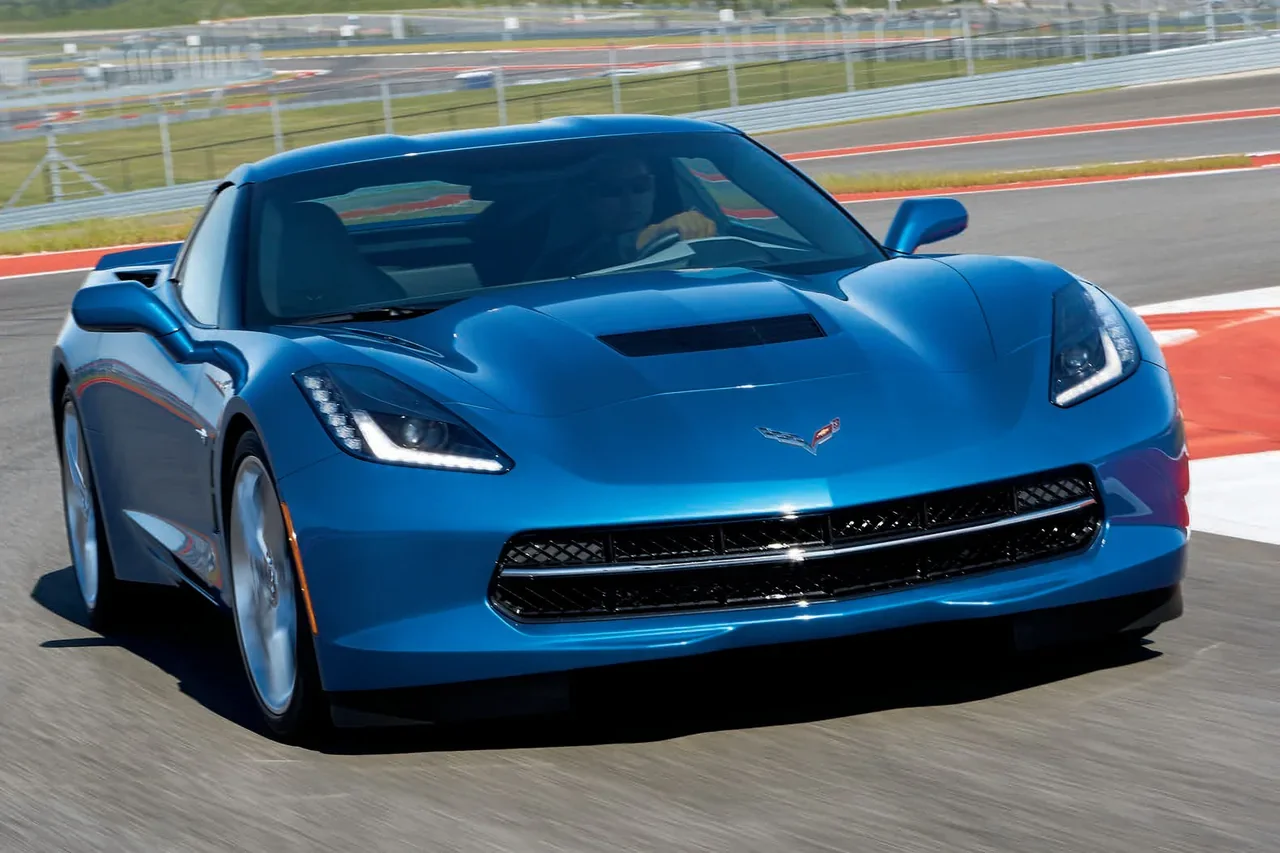
Blue C7 Corvette Stingray coupe cornering on a road course

What is the C7 Corvette Stingray?

The C7 Corvette Stingray is the base car of the seventh-generation Corvette, offered as a coupe and convertible for all six model years from 2014 through 2019. It uses the 6.2-liter LT1 V8, rated at 455 horsepower, or 460 with the performance exhaust, in 1LT, 2LT and 3LT trims.

Base is a loose word for this car. A Stingray with Z51 ran 0 to 60 mph in 3.8 seconds with the manual and pulled 1.03 g on the skid pad, and GM chose a Z51 car to pace the 97th Indianapolis 500 before the first customers had theirs.

The name was the headline. GM launched the car as the return of the Stingray.

Shipping began with roughly 1,000 customer cars already built. The first starting prices for the coupe and convertible were $51,995 and $56,995 with destination. GM offered it in left-hand drive in Europe, the UK, the Middle East, Japan and Russia as well.

Stingray coupe in Laguna Blue Metallic Tintcoat with Z51

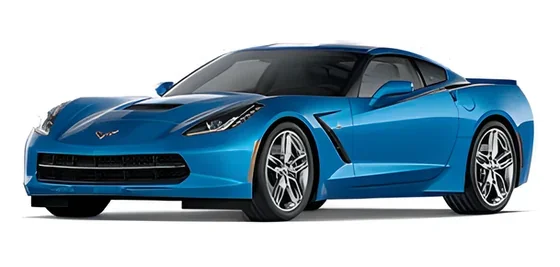
Stingray coupe in Laguna Blue Tintcoat

How is the C7 Stingray's frame and body built?

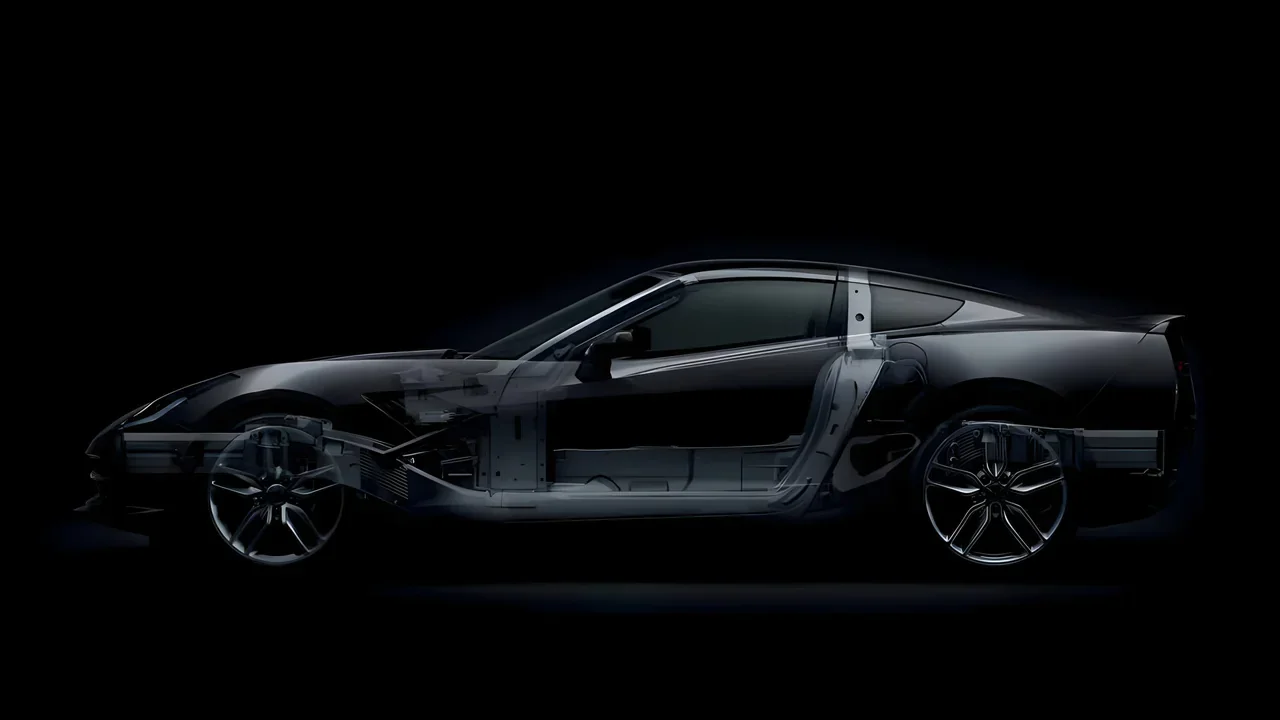
The C7 Stingray pairs a hydroformed aluminum frame with composite and carbon-fiber body panels. Its main rails use five aluminum segments ranging from 2 mm to 11 mm in gauge, and hollow-cast aluminum cradles at each end are about 25 percent lighter and 20 percent stiffer than solid ones.

Side view of a C7 Corvette in shadow with its structure showing through
The structure inside the body

Bowling Green's new body shop joined each frame with 439 spot welds, 37 feet of laser welds in 71 segments, 113 feet of structural adhesive and 188 Flowdrill fasteners. Every frame then went through 100 dimensional measurements, held to within 0.75 mm, against an assembly tolerance target 25 percent tighter than the previous generation's. A vision system checked 39 points on each composite body in about 2.5 minutes.

Wheelbase grew by about an inch over the prior car, yet the turning radius shrank by about two feet. Hollow lower control arms saved about 9 pounds and aluminum rear toe links another 2.4, and the steering system was five times stiffer.

What the 2014 Stingray is made of
PartMaterial
FrameHydroformed aluminum, with aluminum and magnesium structural and chassis parts
Front and rear cradlesHollow-cast aluminum
HoodCarbon fiber
Coupe roof panelCarbon fiber
Fenders, doors, rear quarter panels, rear hatch panelLighter-density Sheet Molded Compound
Underbody panelsCarbon-nano composite
Seat framesMagnesium, GT and Competition Sport
Bare C7 Corvette aluminum frame in profile on a gray background
The aluminum frame on its own
Wireframe airflow render of a C7 Corvette coupe
Computer render of airflow around the coupe
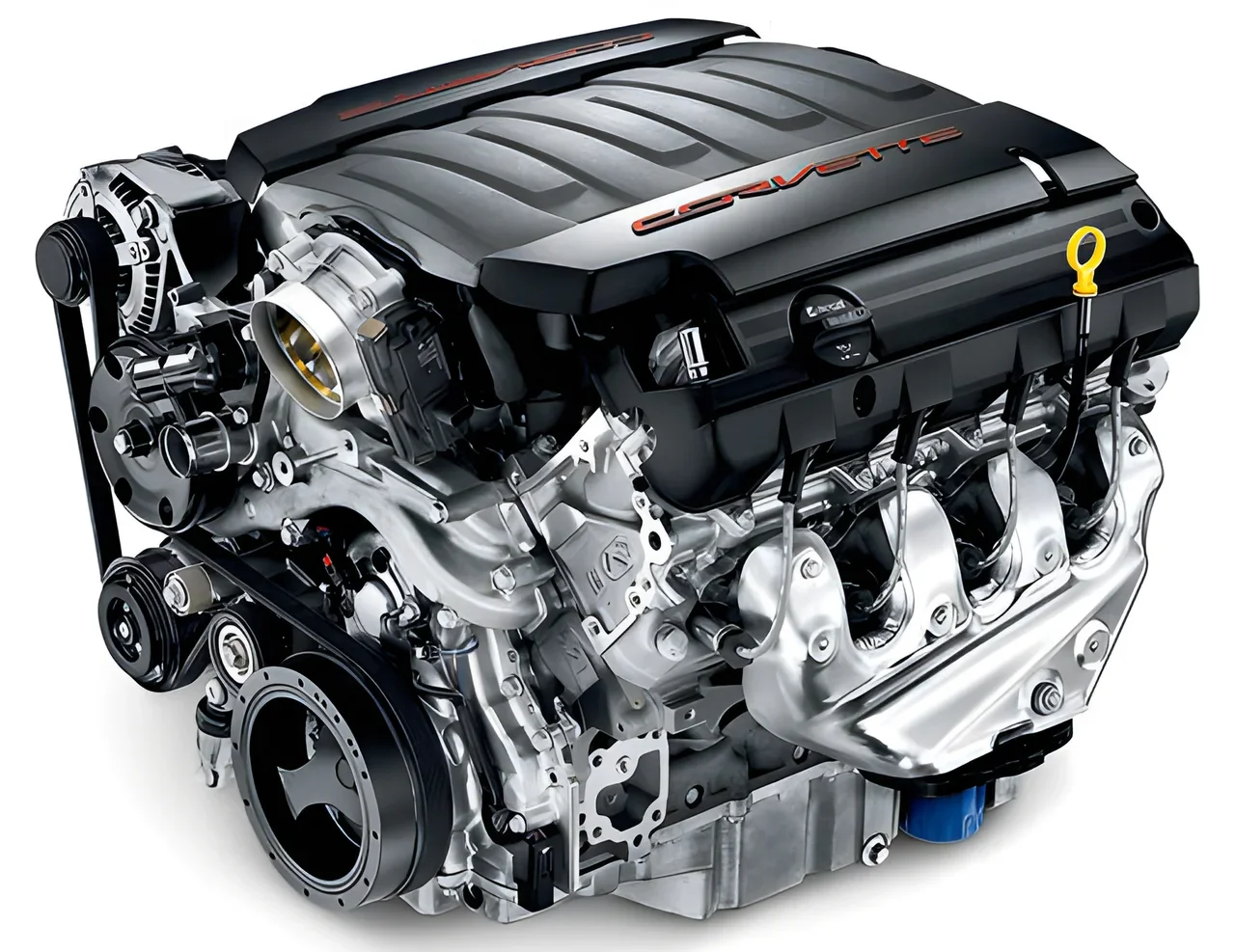
LT1 V8 engine on a white background
The LT1 6.2-liter V8
Gray Corvette engine cover with red lettering
LT1 engine cover

What engine does the C7 Stingray use?

The C7 Stingray uses the LT1, a 6.2-liter, 376 cubic inch aluminum V8 from the fifth generation of the small block. It makes 455 horsepower at 6,000 rpm and 460 lb-ft at 4,600 rpm, and the performance exhaust raises those figures to 460 horsepower and 465 lb-ft.

Power ratings arrived on May 28, 2013. The LT1 made 74 horsepower per liter, 316 lb-ft of torque at 1,000 rpm, and 90 percent of peak torque from 3,000 to 5,500 rpm. It also made 50 lb-ft more low-rpm torque than the previous 6.2-liter and matched the 7.0-liter LS7 from 1,000 to 4,000 rpm.

The LT1 was also the first Corvette engine with Active Fuel Management, GM's cylinder deactivation. On manual cars it is active only in Eco mode. Design work included more than 10 million hours of computer analysis, 6 million of them on the combustion system, and direct injection cut cold-start hydrocarbon emissions by about 25 percent.

Other hardware includes oil-spray piston cooling, a camshaft-driven fuel pump and four-into-one exhaust manifolds based on the LS7's. Exhaust diameter is 2.75 inches, and airflow improved by 13 percent for the standard system and 27 percent for the performance version, which opens two additional valves to a lower-restriction path.

On fuel, GM recommended premium but did not require it. EPA lists premium for the car.

LT1 V8 specifications, 2014 to 2019
SpecLT1
Layout90-degree V8, aluminum block
Displacement376 cu in, 6162 cc
Bore and stroke4.06 x 3.62 in
ValvetrainOverhead valve, two valves per cylinder
Intake and exhaust valvesHollow intake, hollow sodium-filled exhaust (2017 to 2019)
Compression ratio11.5:1
Redline6,600 rpm
LubricationWet sump; dry sump with Z51
Horsepower455 at 6,000 rpm; 460 with performance exhaust
Torque460 lb-ft at 4,600 rpm; 465 lb-ft with performance exhaust
VIN engine code7

What did the Z51 Performance Package add to the Stingray?

Z51 moved the Stingray toward the track with an electronic limited-slip differential, dry-sump oiling, performance gear ratios, larger slotted front brakes, specific suspension, added cooling and an aero package. It was priced at $2,800 for 2014, and from 2015 it also included the performance exhaust.

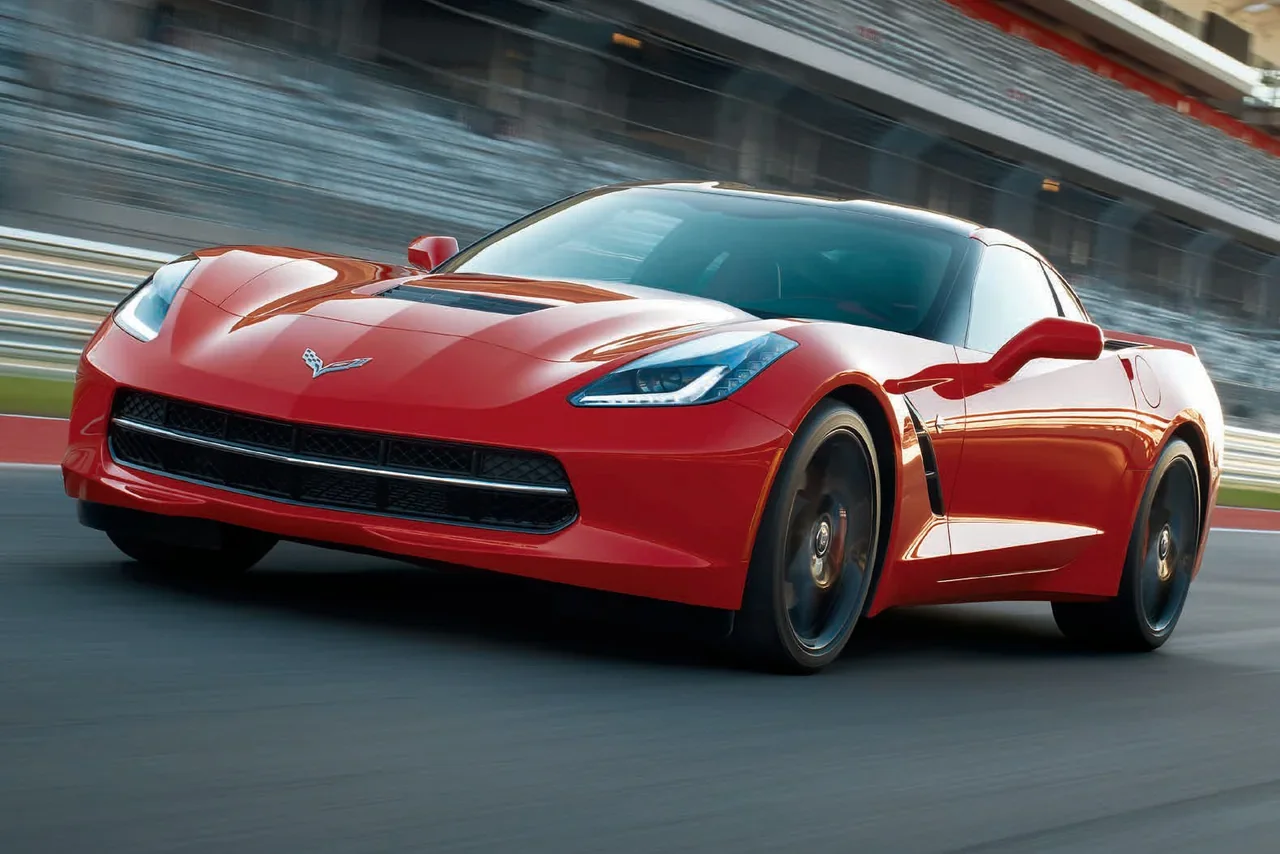
Red C7 Stingray coupe at speed on a track

Stingray coupe in Torch Red with Z51

Z51 added differential and transmission cooling, heavy-duty engine cooling and brake-cooling ducts. Coupes took air through rear quarter panel intakes, and convertibles through underbody intakes. A unique rear spoiler and extra air deflectors finished the aero package.

Rear of a red C7 Stingray coupe on a track

Stingray coupe in Torch Red with Z51, rear view

The electronic limited-slip differential uses a hydraulically actuated clutch that can lock fully from open within tenths of a second, and it has three calibration modes.

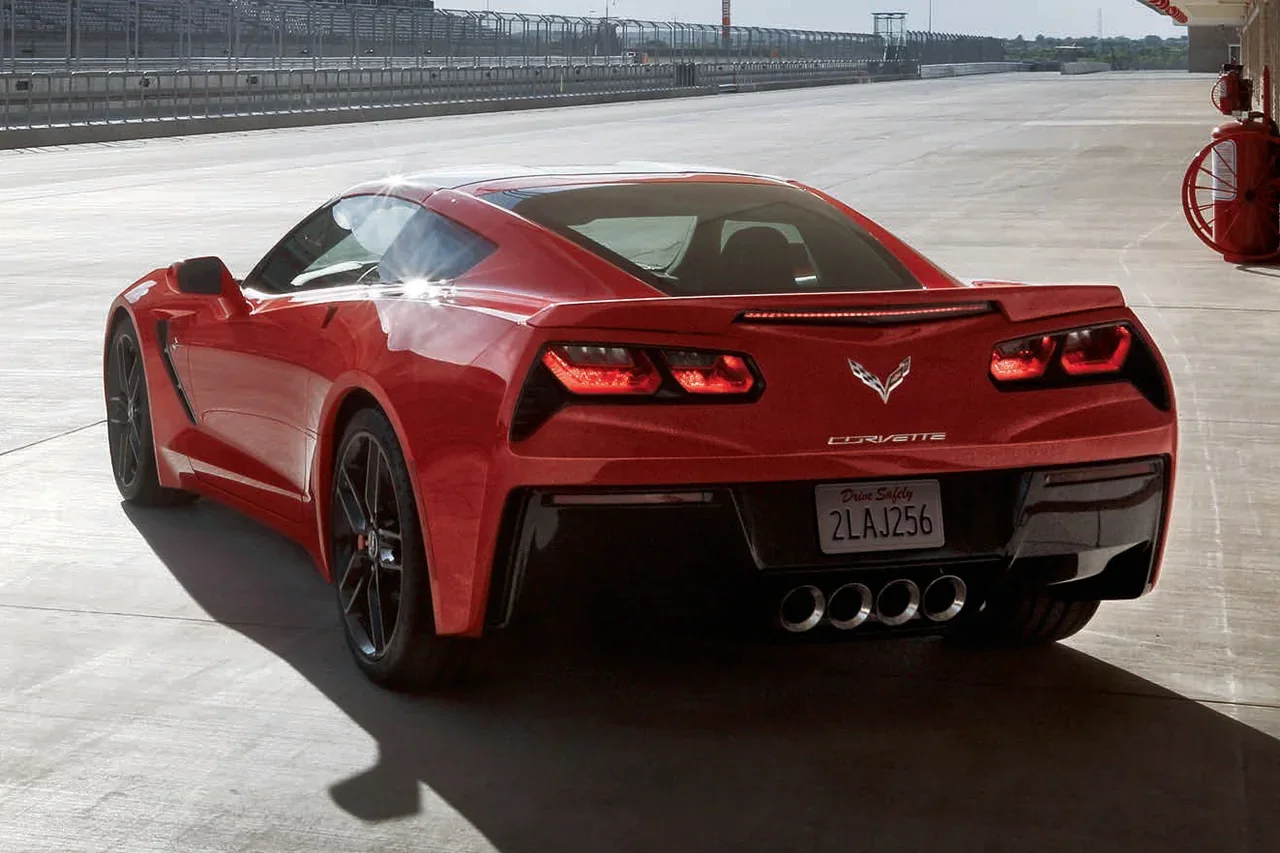
Red C7 Stingray coupe in a pit lane, seen from behind

Stingray coupe in Torch Red with Z51

Third-generation Magnetic Ride Control sat a step above Z51 on the options list at $1,795 with Performance Traction Management for 2014, and it required Z51. Its dual-coil damper reacted 40 percent faster than before. For 2016 it became available without Z51, bringing Z51-style wheels and a rear spoiler with it.

Stingray performance figures by setup
MeasureBase StingrayZ51, manualZ51, 8-speed automatic
0 to 60 mph4.0 sec (2014 to 2016)3.8 sec3.7 sec (2015 to 2019)
Quarter mileNo figure12.0 sec at 119 mph11.9 sec
Skid pad1.0 g1.03 g1.03 g
60 to 0 mph braking112 ft (2014)106 ft (2014)No figure

GM's benchmark lap for this generation: a 2014 Z51 with Magnetic Ride Control ran the 4.2-mile VIR Grand Course in 2:51.78. The test car was modified only with safety equipment.

Z51 suspension and brakes compared with the base car
PartBase StingrayStingray Z51
Stabilizer bar26.7 mm28 mm
Shock piston35 mm45 mm front, 46 mm rear
Front rotor12.6 in ventilated13.6 in slotted
Rear rotor13.3 in ventilated13.3 in slotted
LubricationWet sumpDry sump

The base car's brakes had 35 percent more swept area than before and stopped 9 percent better, and Z51 had 6 percent more swept area than the prior Grand Sport.

Leather-wrapped C7 Stingray gearshift with contrast stitching
Gearshift wrapped in standard leather with contrasting stitching

Which transmissions did the C7 Stingray use?

Every C7 Stingray came standard with a seven-speed manual with Active Rev Match and launch control. The available automatic was a six-speed paddle-shift for 2014, then GM's 8L90 eight-speed paddle-shift from 2015 through 2019. A rear transaxle puts the gearbox behind the driver in both cases.

The manual uses a dual-mass flywheel and dual-disc clutch. Active Rev Match is engaged with the steering wheel paddles and works on upshifts and downshifts. Z51 cars get their own gear ratios, and every manual runs a 3.42 axle.

The 2014 automatic bundled a remote vehicle starter. Its axle was 2.56, or 2.73 with Z51. From 2015 the base automatic moved to a 2.41 axle while Z51 stayed at 2.73.

Stingray EPA fuel economy by model year
YearManual: city / highway / combinedAutomatic: city / highway / combined
201417 / 28 / 2116 / 27 / 20 (6-speed)
201517 / 28 / 2116 / 29 / 20 (8-speed)
201617 / 28 / 2116 / 29 / 20
201716 / 25 / 1915 / 26 / 19
201816 / 25 / 1915 / 25 / 18
201916 / 25 / 1915 / 25 / 18

U.S. EPA ratings. From 2017, EPA's LT1 entry does not separate Stingray and Grand Sport.

Blue C7 Stingray coupe on a coastal bridge
Stingray coupe in Laguna Blue Metallic Tintcoat with Z51
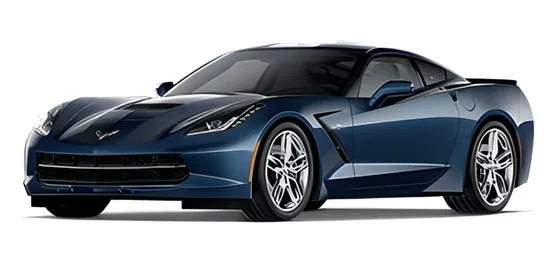
Stingray coupe in Admiral Blue with Z51

What shaped the C7 Stingray's exterior?

Function shaped much of the C7 Stingray's exterior. Its drag coefficient is 0.29, the hood vent reduces front-end lift, and the openings along the body feed cooling air on Z51 cars. Coupes wear a carbon fiber roof panel, with a visible carbon-fiber version offered as an option.

Stingray coupe in Admiral Blue with Z51

Lighting on the 2014 car uses HID projector headlamps with indirect white LEDs, edge-lit amber turn signals and indirect LED taillamps. For 2015 GM widened the appearance options. The list gained carbon fiber tonneau inserts, Carbon Flash badges, body-color or Shark Gray vents and CFZ ground effects. The ZF1 Appearance Package gave a non-Z51 car the Z51-style 19- and 20-inch wheels and a body-color Z51-style spoiler.

The 2016 options added a Carbon Fiber Hood with visible weave and a Carbon Flash badge option that deletes the chrome grille bar.

Dark gray C7 Stingray coupe in profile against modern architecture
Stingray coupe in Cyber Gray Metallic with Z51 and visible carbon-fiber roof panel

Cyber Gray Metallic, 2014

Dark gray C7 Stingray coupe on wet pavement with a city skyline at night
Stingray coupe in Cyber Gray Metallic at night
Dark gray C7 Stingray coupe moving through a tunnel
Stingray coupe in Cyber Gray Metallic in motion

What is different about the C7 Stingray convertible?

Very little changed in the structure. The convertible needed no structural reinforcements, with changes limited to the folding top and relocated safety belt mounts. The top is fully electronic, works from the key fob, lowers in 21 seconds and operates at speeds up to 30 mph.

The open car appeared at the Geneva Motor Show on March 5, 2013, with production due before the end of that year.

Its top is a three-ply fabric with padding and a glass rear window. Curb weight is 3,362 pounds against 3,298 for the coupe, and luggage space is 10 cubic feet against 15. Height is 48.9 inches against 48.8. Z51 convertibles use underbody intakes rather than the coupe's rear quarter panel intakes.

For 2016 the rear trunk gained a power-cinch latch, matching the coupe hatch.

Gray C7 Stingray convertible on a concrete bridge, seen from above
Stingray 3LT convertible in Cyber Gray Metallic with Z51
Gray C7 Stingray convertible on a two-lane road beside green hills
Stingray 3LT convertible in Cyber Gray Metallic on a coast road

Convertible tops, 2014

Black
Black
Kalahari
Kalahari
Gray
Gray
Blue
Blue
Black C7 Stingray convertible on a desert road with mountains behind
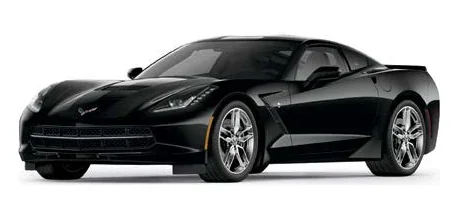
Stingray convertible in Black
Close view of a tan Competition Sport seat back
Competition Sport seat in Kalahari

What is inside a C7 Stingray?

Three trim levels set the cabin. 1LT brings leather GT seats, an 8-inch touch screen, nine Bose speakers, a rear camera and Keyless Access. 2LT adds a Head-Up Display, heated and ventilated seats and ten-speaker Bose Centerpoint audio. 3LT adds navigation and a leather-wrapped interior with Napa leather seat inserts.

Stingray trim contents, 2014, with later changes noted
Feature1LT2LT3LT
SeatsGT, leather, 8-way powerAdds heated and ventilated, power bolster and lumbarAdds Napa leather inserts
ClimateDual-zoneDual-zoneDual-zone
ScreenMyLink, 8-inchMyLink, 8-inchMyLink with Navigation
Audio9-speaker Bose10-speaker Bose Centerpoint10-speaker Bose Centerpoint
Head-Up DisplayNoYesYes
Memory, auto-dimming mirrorsNoYesYes
Universal Home Remote, advanced theft deterrentNoYesYes
Leather-wrapped instrument panel, armrests, consoleNoNoYes
Performance Data Recorder, from 2015AvailableAvailableStandard
Sueded microfiber upper trim, from 2015NoNoYes
Front curb view camera, from 2016NoYesYes

Two seats were offered. The GT is the standard seat. The Competition Sport seat was available on every trim for 2019, and its bolsters were about 35 percent deeper than a Porsche Carrera S seat of the 997 generation. The passenger gets a steel-reinforced grab bar on the console and a micro-LED climate display below the dash vent. The 2016 interior changes brought a flat-bottom steering wheel, two-tone GT seats in Gray or Adrenaline Red, and red or yellow stitching on 3LT Jet Black.

2014 interior trims

Black, 1LT
Black, 1LT
Gray, 1LT
Gray, 1LT
Adrenaline Red, 1LT
Adrenaline Red, 1LT
Kalahari, 2LT
Kalahari, 2LT
Brownstone, 3LT
Brownstone, 3LT
Black with sueded microfiber inserts
Gray with sueded microfiber inserts
Kalahari with sueded microfiber inserts

Stingray cabins

Tan leather C7 Stingray cockpit with the top down
Stingray convertible 3LT in Kalahari
Tan Competition Sport seats in a C7 Stingray
Stingray 3LT in Kalahari with Competition Sport seats
Dark brown C7 Stingray cockpit with sueded microfiber seat inserts
Stingray 3LT in Brownstone
Gray C7 Stingray dash and steering wheel
Stingray 3LT in Gray
Black C7 Stingray cockpit with sueded microfiber seat inserts
Stingray convertible with the Black Suede Package

What technology did the C7 Stingray introduce?

The Stingray brought dual 8-inch screens and a five-position Driver Mode Selector for 2014, with Weather, Eco, Tour, Sport and Track modes adjusting up to 12 attributes. For 2015 it added the Performance Data Recorder, developed with Cosworth, and OnStar 4G LTE with a Wi-Fi hotspot, and Apple CarPlay followed for 2016.

C7 Stingray digital cluster in its first display layout

Stingray gauge cluster display

The center touch screen sits on a motorized drop-down door with storage behind it. The screens were rated at 650 cd/m2 for the cluster and 1,000 cd/m2 at the center stack.

C7 Stingray digital cluster in its second display layout

Stingray gauge cluster display

The Performance Data Recorder puts a high-definition camera in the windshield header, a cabin microphone in the car, and a telemetry recorder with 5 Hz GPS behind it, with the SD card slot in the glove box. An 8 GB card holds about 200 minutes and a 32 GB card about 800.

C7 Stingray digital cluster in its third display layout

Stingray gauge cluster display

Video overlays come in Track, Sport, Touring and Performance modes, and lap data can go into Cosworth Toolbox for analysis.

What colors, wheels and design packages did the C7 Stingray offer?

The 2014 Stingray launched in ten exterior colors, four of them extra-cost. Base cars rode on 18-inch front and 19-inch rear wheels and Z51 cars on 19s and 20s, until only the larger sizes remained for 2018. Five design packages arrived across 2015 and 2016.

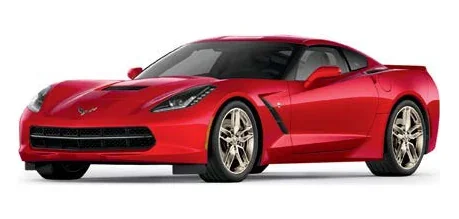
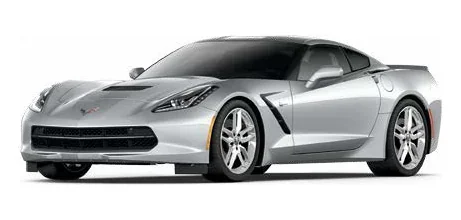
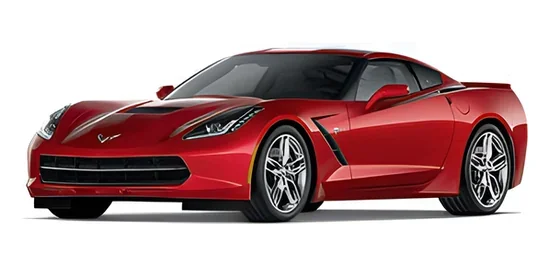
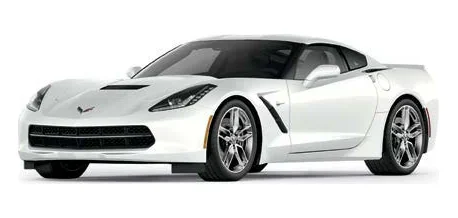
2014 exterior colors

Black
Black
Night Race Blue Metallic
Laguna Blue Tintcoat
Lime Rock Green Metallic
Torch Red
Torch Red
Blade Silver Metallic
Crystal Red Tintcoat
Arctic White
Arctic White
Velocity Yellow Tintcoat
Cyber Gray Metallic
Cyber Gray Metallic

2015 wheels

5-spoke, Sterling Silver
5-spoke, Black
5-spoke, Black
5-spoke machined, Black
5-spoke, Chrome
5-spoke, Chrome
Z51 split 5-spoke
Z51 split 5-spoke

2016 brake calipers

Dark Gray Metallic
Dark Gray Metallic
Black
Black
Red
Red
Yellow
Yellow
Stingray design packages
PackageYearApplies toContents
Pacific2015Z51 coupe, 2LT or 3LTSatin Black full-length stripes, Satin Black Z51 wheels with Red stripe, CFZ ground effects, visible carbon roof, Carbon Flash spoiler, mirrors and badges, Red calipers, Competition Sport seats
Atlantic2015Z51 convertible, 2LT or 3LTZ06-style splitter, Shark Gray vents, stinger and tonneau inserts, chrome Torque wheels, Stingray liner and mats, custom luggage
Twilight Blue20163LTTwilight Blue full-color interior, Stingray Motorsports polished wheels
Spice Red2016Coupe or convertibleSpice Red full-color interior; convertibles require Long Beach Red paint and a Spice Red top
Black Suede2016Stingray by 2017Jet Black with sueded microfiber seat inserts, instrument panel and door inserts, high-gloss carbon trim, Red calipers

The Pacific package was offered in Torch Red, Black, Arctic White, Blade Silver and Shark Gray.

Group of 2014 Corvette Stingray wheels arranged together
The 2014 wheel choices together

Late C7 Stingrays

C7 Corvette Stingray coupe
Corvette Stingray coupe
C7 Corvette Stingray with full-length dual racing stripes
Full-Length Dual Racing Stripe Package in Carbon Flash on a Stingray
Stingray coupe in Arctic White

What are the C7 Stingray's dimensions and specifications?

The C7 Stingray rides on a 106.7-inch wheelbase and measures 176.9 inches long and 73.9 inches wide. The coupe stands 48.8 inches tall with a 3,298-pound curb weight, and the convertible 48.9 inches at 3,362 pounds. Those figures held from 2014 through 2019.

Stingray dimensions, 2014 to 2019
DimensionCoupeConvertible
Wheelbase106.7 in106.7 in
Overall length176.9 in176.9 in
Overall width73.9 in73.9 in
Height48.8 in48.9 in
Front track63.0 in63.0 in
Rear track61.7 in61.7 in
Curb weight3,298 lb3,362 lb
Weight distribution, front / rear49 / 51 percent49 / 51 percent
Luggage capacity15 cu ft10 cu ft
Turning circle, curb to curb37.7 ft37.7 ft
Stingray tires and wheels
SetupFrontRearYears
Base wheels18 x 8.519 x 102014 to 2017
Base tires245/40ZR18285/35ZR192014 to 2017
Z51 wheels19 x 8.520 x 102014 to 2017
Z51 tires245/35ZR19285/30ZR202014 to 2017
All Stingray wheels19 x 8.520 x 102018 and 2019
All Stingray tires245/35ZR19285/30ZR202018 and 2019

Tires are Michelin Pilot Super Sport ZP run-flats, summer-only. The 2014 car carried no spare.

What should you verify on a used C7 Stingray?

Confirm the year and options before anything else, because the differences are real. A 2014 automatic is the six-speed, a 2014 Z51 may lack the performance exhaust, and base wheels grew for 2018. Then check the VIN for open NHTSA recalls, which our C7 overview lists by year.

  • Z51 cars have Black calipers as part of the package, with the larger 13.6-inch slotted front rotors.
  • Before 2016, Magnetic Selective Ride Control came only with Z51. From 2016 a non-Z51 car could have it.
  • A car with Z51-style wheels and spoiler may be a ZF1 Appearance Package car rather than a true Z51.
  • 1LT cars from 2017 to 2019 have no Head-Up Display.
  • Navigation includes the Performance Data Recorder, standard on 3LT from 2015 to 2018.
  • Warranty terms on new 2014 cars were 3 years or 36,000 miles, with powertrain at 5 years or 100,000 miles, transferable. Those periods have run out on the earliest cars.

Looking for today's car instead? Chevrolet's current model has its own page: Corvette Stingray.

Our used inventory changes, and it may or may not include a C7 Stingray at any given time.

C7 Stingray questions

What years was the C7 Corvette Stingray made?

The C7 Stingray covers the 2014 through 2019 model years. Shipping to dealers began on September 18, 2013, and it was the only C7 model offered for all six years.

How much horsepower does a C7 Stingray have?

The LT1 V8 makes 455 hp with the standard exhaust and 460 hp with the performance exhaust. Torque is 460 lb-ft, or 465 lb-ft with the performance exhaust.

How fast is a C7 Stingray from 0 to 60 mph?

It takes 4.0 seconds for the base car, 3.8 seconds with Z51 and the manual, and 3.7 seconds with Z51 and the eight-speed automatic.

What is the Z51 package on a C7 Stingray?

Z51 is GM's Performance Package. It adds an electronic limited-slip differential, dry-sump oiling, performance gear ratios, larger slotted front brakes, specific suspension, added cooling and an aero package.

How can you tell if a C7 Stingray has Z51?

Look for Black calipers and 13.6-inch slotted front rotors, along with the 19- and 20-inch wheels on cars through 2017. The wheels alone prove nothing, because the ZF1 Appearance Package offered the same look.

Does a C7 Stingray need premium fuel?

GM recommended premium but did not require it for the LT1. EPA lists premium gasoline for the car.

Does the C7 Stingray have cylinder deactivation?

Yes. The LT1 was the first Corvette engine with Active Fuel Management, GM's name for cylinder deactivation.

How much does a C7 Stingray weigh?

Curb weight is 3,298 pounds for the coupe and 3,362 pounds for the convertible.

How much luggage space does a C7 Stingray have?

Luggage capacity is 15 cubic feet for the coupe and 10 cubic feet for the convertible.

How fast can you lower the C7 Stingray convertible top?

The electronic top lowers in 21 seconds, works from the key fob and operates at speeds up to 30 mph.

Which C7 Stingray years have Apple CarPlay?

Apple CarPlay arrived for 2016, for iPhone 5 or later. Android Auto joined it for 2017.

Did the C7 Stingray pace the Indianapolis 500?

Yes. A 2014 Corvette Stingray with Z51 paced the 97th Indianapolis 500 in May 2013, a record 12th time for Corvette.

Sources

  1. General Motors product information, model years 2014 to 2019
  2. U.S. EPA and U.S. Department of Energy: fuel economy ratings, 2014 to 2019 Corvette (www.fueleconomy.gov/feg/findacar.shtml)
  3. NHTSA: recall campaigns, 2014 to 2019 Corvette (www.nhtsa.gov/recalls)