
Ross Downing Corvettes

Blog / Hammond Chevrolet Service

Blog

All Hammond Chevrolet Service Hammond Corvette Dealer Hammond Chevrolet Dealer Corvette Maintenance Ross Downing Corvettes Service Corvette Z06 Corvette E-Ray National Corvette Museum
Corvette Dealer Diagnostic Estimate Guide Before Repair

Corvette Dealer Diagnostic Estimate Guide Before Repair

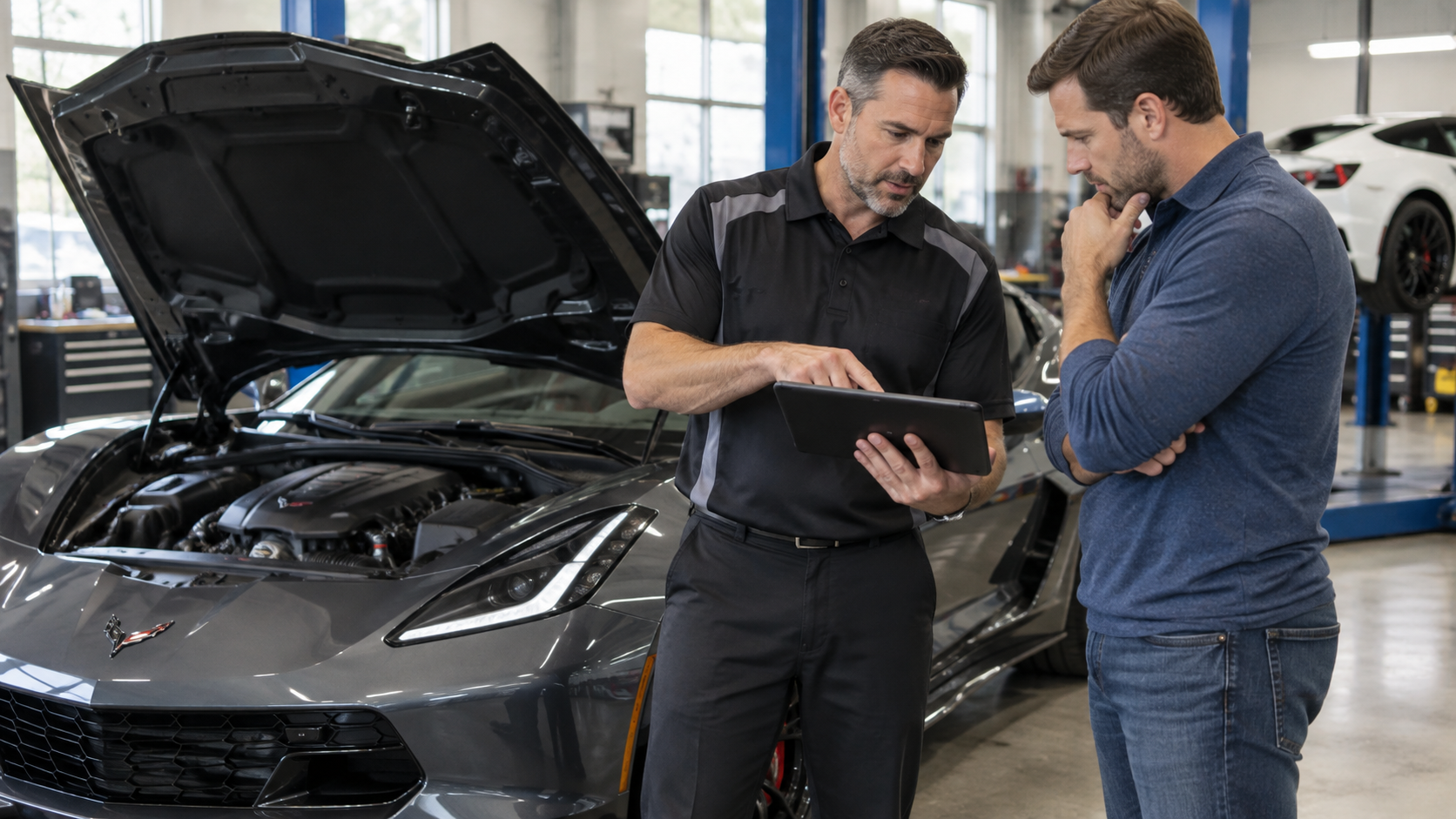
A Corvette dealer diagnostic estimate should explain the reported concern, testing scope, repair recommendation, and expected cost before work begins. Therefore, clear documentation gives you a defined starting point before you approve any repair. In addition, diagnosis and repair are two separate service steps. One identifies the fault, while the other corrects the confirmed problem. For this reason, that distinction matters when a Corvette needs specialized testing, model specific parts, or deeper inspection. Diagnosis and Repair Are Different Decisions Diagnosis identifies why a warning light, noise, leak, or drivability concern is happening. Repair work addresses the confirmed fault after testing supports the recommendation. Therefore, paying for diagnosis does not mean you approved the repair. A Corvette dealer may use scan data, electrical testing, visual inspection, pressure testing, or road testing during diagnosis. In addition, the exact process should match the concern you reported. In addition, some faults require partial disassembly before the technician can confirm the source. Does a diagnostic fee authorize the repair? No, because diagnostic labor covers the testing needed to identify the problem. Repair approval should come after you receive the findings, proposed work, and estimated cost. Therefore, that separation gives you a clear decision point. You can review the diagnosis first, then decide whether to approve the recommended repair. What Should a Corvette Repair Estimate Include? A written estimate should describe the proposed job, expected parts, labor, and anticipated price. In addition, it should connect the repair recommendation to the diagnostic finding. For this reason, a Corvette dealer visit should include a document that makes the repair path easy to follow. You should see what the technician found and which work the estimate recommends. Therefore, vague descriptions make it harder to know what you are approving. A clear estimate should show these items: The document should identify the reported concern and the testing result that supports the repair recommendation. The parts section should list the expected components and enough detail to show what the technician plans to replace. The labor section should connect technician time to the named repair so the scope remains easy to follow. In addition, the estimate should state the expected total before you authorize the repair. If taxes, shop supplies, or other charges apply, those should be clear before work starts. How Diagnostic Fees Should Be Explained A diagnostic fee pays for technician time used to trace the source of a reported problem. Instead, the fee covers the testing needed to trace the reported concern. Modern Corvettes can require several testing steps before the technician confirms one repair path. A technician may compare scan data, inspect wiring, verify fluid pressure, or reproduce the concern. Therefore, the diagnostic process may involve more than one tool or test. What are you paying for when a shop charges a diagnostic fee? You are paying for the testing needed to move from a symptom to a supported finding. Therefore, that work should produce a clearer repair recommendation. A Corvette dealer should explain the diagnostic scope before testing begins. The estimate should also state the diagnostic charge or pricing method. In addition, you should know whether deeper testing would require another approval step. That structure keeps diagnosis transparent. It also makes it easier to understand why the final repair recommendation may differ from the concern you first described. What Happens When Diagnosis Finds More Work? A repair scope can change after deeper testing or partial disassembly reveals another fault. When that happens, the next step should be a revised explanation before new work begins. Can the repair scope expand after the first estimate? Yes, because some related faults only appear after technicians open or test the original concern further. However, the new finding should create another approval point. In addition, the updated explanation should identify what changed and why. It should also show the revised parts, labor, and expected cost. Therefore, you can compare the new scope with the work you already approved. At a Corvette dealer, this may involve related wiring, hardware, seals, sensors, or another component near the original repair. Model specific fitment can also change which parts the job requires. Therefore, a clear process keeps the repair order tied to your approval. New work should not become part of the job without a clear explanation and authorization. Parts, Labor, and Warranty Information Parts and labor represent separate parts of the repair estimate. In addition, the parts section covers the components required for the job. The labor section covers technician time needed to complete the named repair. What should you know about the parts on the estimate? You should know which component the technician plans to install and whether related hardware is also required. In addition, part fitment should match the exact Corvette model and model year. Corvette repairs can involve model specific brake, suspension, electrical, cooling, or drivetrain components. Therefore, part identification matters when several versions exist across trims or model years. Warranty information should also be clear before approval. Ask what coverage applies to the part and to the repair labor. If separate terms apply, the service team should explain those details before the work begins. Therefore, this level of detail gives you a better record of what the repair includes. It also makes the final invoice easier to compare with the approved estimate. Questions to Ask Before You Authorize the Repair Before you approve work, review the estimate against the concern you brought in. The document should connect the reported symptom, diagnostic finding, repair scope, parts, labor, and expected price. A useful final review includes: Ask what testing confirmed the fault and whether any diagnostic steps remain before the repair can begin. Confirm which parts the technician will install, what labor the estimate includes, and what warranty terms apply. Ask how the shop will contact you if the repair scope or price changes after work begins. Finally, compare the final invoice with the work you approved. A Corvette dealer should be able to explain any difference between the estimate and completed charges. Clear repair documentation makes the service decision easier to follow from diagnosis through completion. Before authorizing work, make sure every major part of the estimate is understandable. Ross Downing Corvettes in Hammond can review the diagnostic finding, repair scope, and pricing with you before repair work begins.
Track Cooling and Brake Fluid Guide for Corvette Owners

Track Cooling and Brake Fluid Guide for Corvette Owners

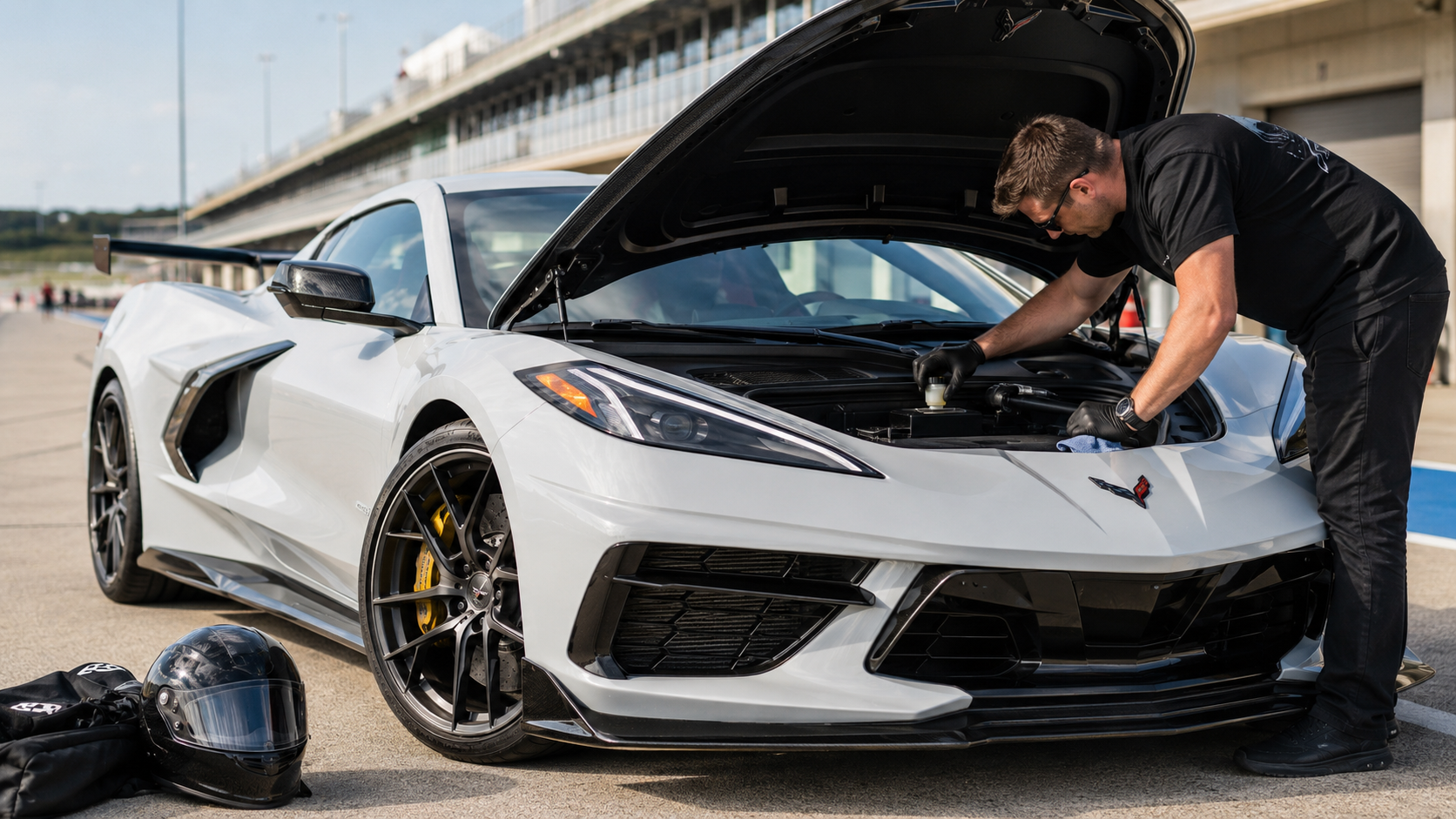
Track cooling matters when repeated Corvette braking pushes heat from the rotors and calipers toward the brake fluid. In addition, every hard stop on a road course converts speed into heat at the friction surfaces. Short recovery periods can also keep temperatures elevated from one braking zone to the next. That heat can travel through the calipers and into the hydraulic fluid. Therefore, track preparation should include fluid grade, boiling points, fluid age, and Chevrolet guidance. Why Track Braking Raises Brake Fluid Temperature Brake pads clamp the rotors and turn vehicle motion into heat. Therefore, the rotors absorb much of that heat first. However, the calipers sit directly beside those hot friction surfaces. As a result, heat can move through the caliper body toward the brake fluid inside. Why can brake fluid become a problem during a track session? Brake fluid must stay liquid so pedal force transfers through the hydraulic circuit. Once fluid reaches its boiling threshold, vapor can form. Because vapor compresses more easily than liquid, pedal travel can increase. Track cooling works alongside brake hardware by managing the heat that reaches each part. Airflow around the brakes can remove heat between braking zones. Still, repeated high energy stops can outpace that heat removal. For this reason, fluid needs enough thermal margin for the session. Z06 and Z07 hardware can manage intense brake heat, but fluid preparation still matters. Z07 carbon ceramic discs resist high rotor temperatures very well. Nevertheless, brake fluid still sits inside the calipers. Strong rotor hardware does not remove the need for fresh, qualified fluid. Dry and Wet Boiling Points Explained Dry boiling point measures fresh brake fluid with very little moisture present. Wet boiling point measures fluid after controlled moisture contact. Therefore, the second number is lower because absorbed water reduces the temperature required for boiling. Which boiling point matters more before a track day? Both matter, because one describes fresh fluid and the other reflects moisture contact. A high dry number gives fresh fluid more thermal margin. The wet number shows how far that margin can fall after moisture enters the fluid. Federal minimums show the difference clearly. DOT 3 starts at a minimum of 401°F dry and 284°F wet. DOT 4 starts at 446°F dry and 311°F wet. DOT 5.1 starts at 500°F dry and 356°F wet. However, those values are minimum standards, not the exact numbers for every product. A track focused DOT 4 fluid can exceed the minimum by a wide margin. Chevrolet specifies qualified DOT 4 with a dry boiling point above 590°F for current Corvette track preparation. Therefore, the product data matters more than the grade number alone. Track cooling decisions should also account for fluid age. In addition, fresh fluid starts closer to its published dry rating. Consequently, moisture lowers that thermal margin. As a result, an older fluid can reach vapor formation sooner during repeated braking. Does DOT 5.1 Beat DOT 4 for Track Driving? DOT classifications establish minimum test thresholds for brake fluid. They do not rank every product from weak to strong. A specific DOT 4 fluid can carry a higher boiling point than a basic DOT 5.1 fluid. Does DOT 5.1 automatically make a stronger Corvette track choice? No, because Chevrolet specifies qualified DOT 4 for current track preparation. That instruction should guide fluid selection before generic grade comparisons. In addition, owners should verify the exact product boiling points and Corvette track instructions. The three grades differ in their federal minimum boiling thresholds: DOT 3 has the lowest minimum dry and wet thresholds of the three grades discussed here. DOT 4 raises both minimum thresholds and includes track fluids that exceed the basic federal floor. DOT 5.1 raises the federal minimums again, but Chevrolet still calls for qualified DOT 4 for Corvette track preparation. Do not confuse DOT 5.1 with DOT 5 silicone fluid. In addition, they are different fluid classes. Chevrolet specifically says not to use DOT 5 silicone brake fluid for track preparation. Therefore, the decimal in DOT 5.1 matters when reading a bottle or service document. How Boiling Fluid Creates a Soft Pedal The hydraulic circuit relies on liquid brake fluid to carry force from the pedal toward the calipers. Therefore, liquid resists compression under normal brake pressure. By contrast, vapor does not. Why can the pedal soften after several hard laps? Vapor formation creates compressible pockets inside the hydraulic circuit. More pedal movement then goes into compressing that vapor. Consequently, less of the initial pedal movement reaches the caliper pistons as direct hydraulic force. The driver may feel longer pedal travel or a softer response. In severe cases, stopping force can fall enough to end the session. However, that sensation differs from simple pad wear because the change can appear quickly as brake temperatures rise. Track cooling reduces heat around the brake assembly, yet fluid selection provides another layer of thermal margin. The two work together. Track cooling also preserves thermal margin by limiting heat transfer toward the calipers. Cooling controls how much heat reaches the caliper area. High boiling fluid raises the temperature required before vapor can form. If the pedal changes during a session, the safest response is to stop track driving and inspect the brake setup. Continued hard laps can add more heat. A service check can evaluate fluid, pads, rotors, calipers, and related brake parts. How Fluid Age Changes Track Preparation Brake fluid can absorb moisture while it remains in the hydraulic circuit. That moisture lowers the boiling threshold. Therefore, mileage alone does not show how much thermal margin remains. Does low mileage mean the fluid is ready for a track day? No, because time and moisture matter alongside mileage. Chevrolet gives Corvette owners a much shorter fluid age window for competitive driving. Current track guidance says to replace qualified fluid when its age exceeds one month or is unknown. In addition, Chevrolet calls for fluid from a sealed container. That instruction protects the starting state of the fluid before it enters the car. An opened container can absorb moisture from the air. Therefore, track preparation should begin with known fluid age and known container history. Track cooling planning should treat freshness as part of the brake setup. Owners should verify fluid level before the event as well. A fresh, correctly filled brake circuit gives the car a stronger thermal starting point before repeated hard stops. Choosing Brake Fluid for a Z06 or Z07 Track Day Corvette track preparation should start with Chevrolet instructions for the exact model and model year. Then, compare the fluid specification against those instructions. For current track guidance, qualified DOT 4 above 590°F dry is the key requirement. Before choosing fluid, review these items: Confirm the fluid meets the Chevrolet track specification for the exact Corvette and model year. Check both dry and wet boiling points instead of relying on the DOT grade alone. Verify fluid age, container history, fluid level, and the rest of the brake setup before driving on track. A Z06 or Z07 owner should also review pads, rotors, calipers, cooling hardware, and tire setup before a track event. Brake fluid works inside that larger thermal chain. Therefore, one strong fluid number cannot replace complete preparation. Track cooling and brake fluid preparation belong in the same conversation because both address heat. One manages how quickly brake parts shed heat. The other sets the thermal margin inside the hydraulic circuit. For Corvette owners heading to a road course, both deserve attention before the first session.

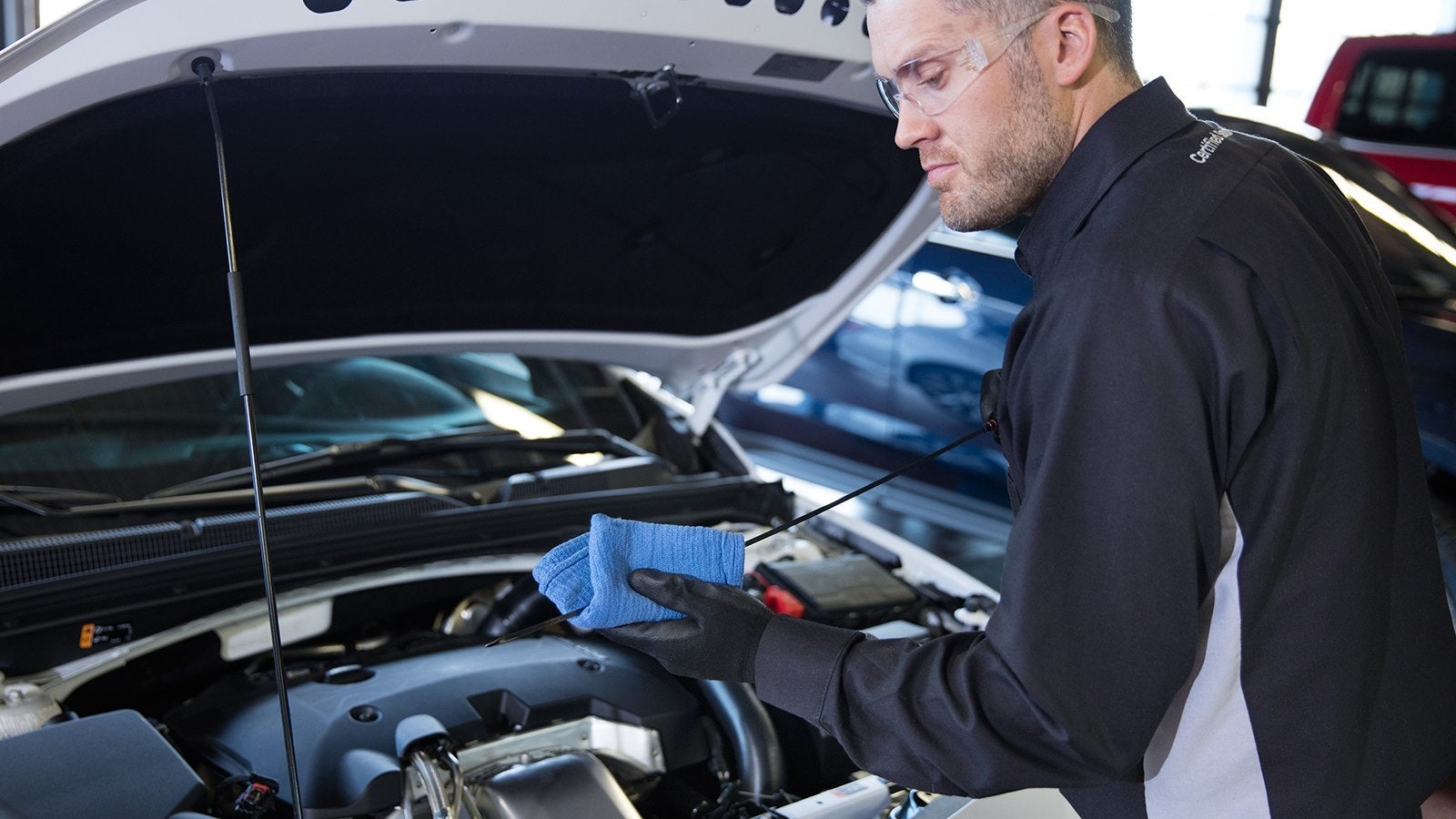
A mechanic checking the oil dipstick under a car hood

5 Benefits of Corvette-Specific Service at the Dealership

A Corvette is a very special vehicle designed by some of America's finest automotive engineers. It's unwise to let an average mechanic work on your high-performance sports car. With specialist dealership service at your local Corvette dealership, you'll keep your Corvette running smoothly for longer. more Corvette Expertise All our technicians are factory-trained to service Corvettes. They routinely receive updated training on all the latest models, innovations, and features. They specialize only in Corvettes and have a huge amount of experience servicing your exact model. This means they know the ins and outs of your high-performance car better than any other mechanic and can do a much better job looking after it. Faster, More Efficient Work As well as superior quality of work, our expert Corvette technicians can identify faults and diagnose underlying problems more rapidly. They can carry out repairs more quickly, too, and are far less likely to make mistakes, which is an unfortunately frequent occurrence with less reputable mechanics. Your car will undergo fewer expensive faults over the years and spend much less time in the service center. Extend Your Corvette's Lifespan When conducting repairs or part replacements, we use genuine OEM Corvette components. This means your Corvette maintains its wonderful standards of performance and condition without declining because of inferior parts and compatibility issues. This, in addition to superior service quality, means your car will last longer and depreciate less in value over time. Optimized Performance As a Corvette owner, you enjoy one of the best-performing sports cars in the world. At this level, even a slight deterioration in the engine, transmission, brakes, suspension, steering, or electrical system can make a significant difference to how your car responds, feels, and moves on the road. Regular Corvette-specific maintenance with our world-class technicians is the most reliable way to preserve this premium performance over the long run. Drive With Confidence and Safety Your overall road safety depends on how dependable your headlights, steering system, suspension, tires, and brakes are, especially when moving at the kind of speeds a Corvette is capable of. Your Corvette's advanced safety systems also depend on the condition of these components. It's inadvisable to put yourself at risk with subpar service quality. With specialist maintenance and repairs, you're guaranteed the safest possible Corvette ownership experience. Schedule Routine Dealership Service at Our Corvette Dealership Allow us to keep your Corvette roadworthy and looking fantastic. With a routine service schedule, we can dramatically reduce hassle, faults, mishaps, and repair costs, so you can focus on having fun with your high-performance car. Come to Ross Downing Corvettes in Hammond, LA, today to arrange a convenient service timetable. We've been Louisiana's number-one Corvette dealer for over 30 years.

Long-term services available for your Corvette

3 Key Services to Extend the Life of Your Corvette

Your Corvette is a fine vehicle, and you want to enjoy driving it for many years to come. As your Corvette dealership, we want to tell you about some of the long-term care services we offer that extend your vehicle's life. more 3 Long-Term Care Services Available at Your Corvette Dealership Oil Changes Regular oil changes are one of the most important services for your Corvette's long-term health, as oil helps keep your engine in good condition and working efficiently. It lubricates countless components, of which depend on friction to work efficiently, to reduce wear and tear. In addition, oil contains specialized additives that break down harmful buildups in the engine, protect against rust, and keep the engine clean. As oil ages, it thickens and slows down due to dirt and other debris collected during its travels through the engine. It's also less effective at protecting components from friction damage. The engine will run less smoothly, and in the long term, it can even seize. We prevent all these possible problems by draining and replacing the old oil and installing a new oil filter. Fluid Checks Your Corvette has other fluids besides oil, and each fluid performs an important function. The most important of these fluids are brake fluid, coolant, power steering fluid, and transmission fluid. As time passes, all fluids become less efficient, and this can lead to a variety of problems. Old power steering fluid, for example, will make turning the steering wheel difficult. Some fluids, like coolant, become corrosive and can cause engine damage, while older brake fluid can overheat, causing brake failure. During a fluid check, our technicians test samples of each fluid to ensure it's in good condition. Older fluids are drained and replaced, and we replace the filters for any fluids that require them. Transmission Service The transmission works with your engine to move your Corvette. The engine produces energy, and the transmission efficiently distributes this energy to the wheels, so they move at the desired speed. Transmission components are very sturdy and have long lives, but the transmission requires maintenance to ensure it performs at its best. We carefully examine transmission components for damage, and we can replace any worn parts we find. The old fluid is drained, then the transmission pan, where the fluid is housed, is cleaned and its seal checked. The old transmission filter is removed, and a new one is installed. The transmission is then sealed again, and the outside is cleaned before it's refilled with new high-quality fluid. These are just some of the many services we provide to keep your Corvette working perfectly. If you'd like to know more or to book a service, contact us at Ross Downing Corvettes in Hammond, LA.

Prepare Your Corvette for Summer Drive

6 Tips for Keeping Your Corvette Ready for Summer Drives

There's no better sight than summer sunlight glinting off the gleaming bodywork of a well-kept Corvette. If you're looking forward to showing off your high-performance sports car this summer, get ready with seasonal maintenance at your local Corvette dealership. more Keep the Tires Uniform and Well-Inflated Heat and strong summer sunlight can be tough on car tires. Hot air and heated tarmac warm the air inside each tire, which can increase the air pressure to hazardous levels or create misleading PSI readings. Check the pressure inside each tire monthly during summer; make sure the tires are cool before you take the reading. Also, try to keep your car and tires out of direct sunlight when parked, as direct UV rays can dry out the chemicals in tire rubber and lead to cracks and dry rot. Check and Replenish Each Vehicle Fluid Vehicle fluids are vital year-round and especially important during summer when coolants, motor oil, transmission fluid, and differential fluid fight to limit friction and heat. With this in mind, check all of your car's fluids at least once a month throughout the summer. Change your oil on time and flush other fluids when needed. Keep the Air-Con Working Reliably A healthy AC system not only keeps you cool comfortably during the hot summer months but also helps you stay fresh, alert, and safe on the road. Have your air conditioner inspected before summer. Its refrigerant may need to be topped up or recharged. Protect Your Luxurious Upholstery Corvettes are beautiful vehicles, inside and out. You can preserve the appearance and comfort of your seating upholstery with regular cleaning, protective treatment, seat covers, and UV-blocking shields for the windshields and window screens. Ask one of our technicians for guidance on how to preserve your Corvette's interior during summer. Wax or Treat the Body's Paintwork Any buildup of dust on your Corvette's paintwork can accelerate corrosion, so clean your car often during summer. Also, ensure the paintwork is proxltected against UV rays with a good layer of wax or the even stronger protective layer that ceramic coating provides. Clean, Secure, and Protect the Car Battery Most drivers know how the cold of winter can harm a car battery, but did you know that summer heat can be equally damaging? If your battery becomes excessively hot, its fluids will evaporate, and internal chemical reactions will speed up. This is another reason to keep your Corvette out of direct sunlight when parked. Also, check and clean your battery periodically during summer. As you do, make sure it's securely fastened in place. Schedule Seasonal Maintenance at Our Corvette Dealership We specialize in keeping Corvettes in pristine condition throughout the year. Let our factory-trained technicians service, maintain, and protect your luxury sports car this summer. For over 30 years, since 1992, we've been Louisiana's leading Corvette dealer. Visit Ross Downing Corvettes in Hammond, LA, today to arrange a convenient service schedule.

corvette interior

6 Tips to Keep Your Corvette's Interior in Top Shape

Your Corvette's interior has comfy seats and upscale materials that need to be protected from wear, tear, crumbs, spills, and stains. Here's a guide to effective interior care, which our Corvette dealership can help you with. more 6 Tips to Keep Your Corvette's Interior in Top Shape Don't Allow Food or Drink No matter how careful you and your passengers are, snacks and beverages inevitably leave crumbs in the seat cracks and stains that can be hard to remove. To prevent an accumulation of stains and odors, it's best to have a policy of no food or drink inside your Corvette. This should even include coffee, which can leave persistent stains on cabin surfaces. Vacuum Frequently With regular vacuuming, you'll get rid of dust, crumbs, sand, lint, pet hairs, and other debris, which might otherwise build up and create a home for bacteria. Once a week, vacuum your car's foot wells, seats, side panels, windows, dashboard, and central console, including inside the cupholders. Even vacuum the cargo area if you use it often. Install All-Weather Floor Mats You'll protect your Corvette's carpets from mud, dirt, and grime with a set of fitted all-weather floor mats. We can provide genuine Corvette mats that fit your model like a glove and stylishly match the appearance of your Corvette's cabin. These mats are of the highest quality and are easy to remove for cleaning. Condition Your Seats Your seating upholstery can become damaged by physical abrasion, UV rays in sunlight, spills, stains, and even improper cleaning methods. One way to preserve the lustrous appearance and pliancy of your upholstery is with a good conditioning product that contains UV blockers. This is particularly important if your seating is leather. Invest in Seat Covers You'll give your seats even more robust protection with genuine Corvette seat covers. These carefully crafted covers not only protect the seating surfaces but also enhance your cabin's image and make you even more comfortable. Replace the Cabin Air Filter You'll want to keep the air inside your Corvette clean and allergen-free. The cabin air filter prevents airborne debris, including mold spores, pollen, and pollutants, from entering your breathing space. If this air filter becomes too old and clogged up, the air inside your car will deteriorate. This creates a less healthy driving environment and also leads to unpleasant smells. Learn More About Interior Care From the Pros You can learn more tips on keeping your Corvette in fantastic shape from our staff. We love helping our customers get the most pleasure and comfort possible from driving their Corvettes. Visit Ross Downing Corvettes in Hammond, LA. We're Louisiana's number-one Corvette dealership and have been since 1992.

Contact Us

Fill out this form below and we'll contact you shortly
*Required Fields