


A few hard laps put steady heat into a Corvette's engine, transmission, and nearby hardware. C8 Corvette cooling systems move that heat through coolant, oil, and carefully directed outside air. Yet the hardware differs between Stingray, Z06, and E-Ray configurations. Even the number of radiators changes with factory equipment. Understanding those distinctions makes a cooling inspection or technical comparison much more useful.
How the C8 Corvette Cooling Network Works
The mid-engine Corvette places its V8 behind the passenger compartment. Coolant circulates through engine passages, collects combustion heat, and carries it toward radiator cores. As a result, air crossing the radiator fins removes heat from the liquid. Coolant can then return to the engine and absorb another cycle of heat.
Why does the Corvette use more than one heat exchanger? Different components produce heat and require different operating temperatures. Engine coolant, engine oil, and transmission fluid do not all follow one identical path. Therefore, a cooler serving transmission fluid should not automatically count as another engine radiator.
In addition, pumps keep fluid moving while thermostats and control hardware regulate its path. Additionally, fans support airflow when road speed cannot supply enough air across the cores. Front openings, side ducts, and exit paths also form part of the design. Consequently, cooling relies on fluid circulation and unobstructed airflow working together.
A single front radiator cannot explain every cooling task in the Corvette. Still, each model's actual equipment must guide any component count or service decision.
Why Cooling Matters During Repeated High Loads
During short drives, the engine may have time to shed heat between acceleration events. A track session keeps combustion load high through repeated corners and straights. Therefore, heat enters the coolant and lubricants for longer periods. Furthermore, braking produces substantial heat, although brake cooling uses its own airflow paths.
Why can elevated fluid temperature change how a Corvette responds? Oil viscosity and transmission fluid characteristics change as temperature rises. Therefore, the engine and drivetrain rely on suitable fluid properties for lubrication and controlled operation. Furthermore, the engine control module monitors temperatures and can adjust output when protective thresholds are reached.
Additionally, hotter intake air carries less oxygen per unit volume. As a result, temperature control contributes to predictable engine operation beyond preventing a coolant warning. However, no cooling arrangement guarantees identical readings or response on every lap. Ambient temperature, vehicle speed, equipment, and track layout still change the heat load.
For this reason, pay attention to the Corvette's temperature displays and warnings. A rising reading deserves context, while a warning requires action under the owner's manual. Never assume that a higher temperature is harmless solely because the vehicle has track equipment.
C8 Corvette Radiators, Locations and Airflow
How many radiators does a C8 Corvette have? There is no single count that accurately describes every model year and factory configuration. Earlier Stingray documentation and service discussions identify two front engine radiators. Additionally, the Z51 cooling package adds an auxiliary radiator in the passenger-side rear intake on documented configurations.
That gives those documented Z51 Stingray arrangements three engine-cooling radiators. However, this historical count does not establish a verified total for every 2026 Stingray. Additional cooling equipment has also existed for certain markets and option codes. Therefore, confirm the exact vehicle's parts catalog and factory equipment before assigning a number.
Radiator location matters because the C8 carries its engine behind the seats. In addition, front air openings feed nose-mounted heat exchangers, while side intakes serve equipment farther rearward. Coolant lines connect distant components across the vehicle. Furthermore, fans and exit ducts move heated air away from the cores.
The following cooling components have distinct functions within the C8's thermal architecture:
- Front engine radiators: These cores transfer heat from engine coolant into outside air entering the front openings. Their placement uses airflow generated as the Corvette travels forward.
- Auxiliary radiator: Documented Z51 Stingray configurations include an additional radiator near a rear-side intake. This component provides another location for engine coolant to release heat.
- Oil and transmission coolers: These heat exchangers regulate lubricant temperatures through their respective cooling arrangements. Their presence does not mean they should count as engine radiators.
- Cooling fans and ducts: Fans move air across applicable cooling cores when vehicle speed provides insufficient airflow. Ducts guide incoming and outgoing air through the intended paths.
A visible grille does not prove that an engine radiator sits behind it. Condensers, oil coolers, ducts, and other exchangers may occupy separate positions. To identify a component, trace what fluid it cools and which circuit serves it. That method gives a clearer answer than counting every finned surface as a radiator.
Stingray, Z06 and E-Ray Cooling Differences
The Stingray uses the naturally aspirated LT2 V8. Its engine-cooling hardware must work alongside oil and transmission temperature control. Additionally, Z51 equipment changes the verified earlier Stingray radiator arrangement. Owners should check their build information before comparing two vehicles with different packages.
The Z06 uses the high-revving LT6 V8 and distinct front cooling openings. Technical comparisons document radiator hardware behind both outer front openings on the Z06. However, that observation does not establish a complete 2026 radiator total. Therefore, the exact count needs matching service documentation for the vehicle's configuration.
Why does the E-Ray require another thermal discussion? Its electric front drive and high-voltage battery create separate sources of heat. Chevrolet's 2026 manual describes cooling for the Traction Power Inverter Module and high-voltage battery. Additionally, the power electronics circuit includes a small radiator and pump. In addition, the manual restricts servicing those pressurized electric cooling circuits to qualified technicians.
These model differences have a mechanical basis, not merely different grille styling. For a deeper examination of the Z06 engine itself, read the dealership's 2026 Corvette Z06 LT6 engine guide. Keep engine design and cooling hardware as related but distinct subjects.
Corvette Cooling During Sustained Track Use
Track driving holds engine speed and load high while leaving less time for temperatures to recover. Therefore, cooling airflow must reach the cores across repeated acceleration and braking events. As a result, a blocked inlet or damaged duct can limit the air reaching a heat exchanger. Even a sound radiator needs an open path for air to enter and leave.
What should an owner watch during a session? Monitor the vehicle's temperature displays and respond to its warnings. Additionally, inspect exposed front openings for debris after the vehicle has cooled. Furthermore, look for visible damage or leakage without touching hot components or opening pressurized caps.
Several cooling-related checks deserve attention following sustained high-load driving. These inspections focus on visible hardware and vehicle information without requiring owners to open pressurized cooling circuits.
- Radiator openings: Examine accessible front and side openings for collected debris or damaged grille material. Restricted airflow can reduce the heat reaching outside air.
- Cooling ducts: Check accessible duct openings for visible damage or loose components. Changes to these passages can redirect air away from cooling cores.
- Temperature displays: Review unusual readings or warning messages observed during driving. Record when the warning appeared so a technician can investigate the cause.
- Visible fluid concerns: Look for puddles, stains, or signs of leakage after the Corvette has cooled. Arrange professional inspection when fluid loss or damage appears.
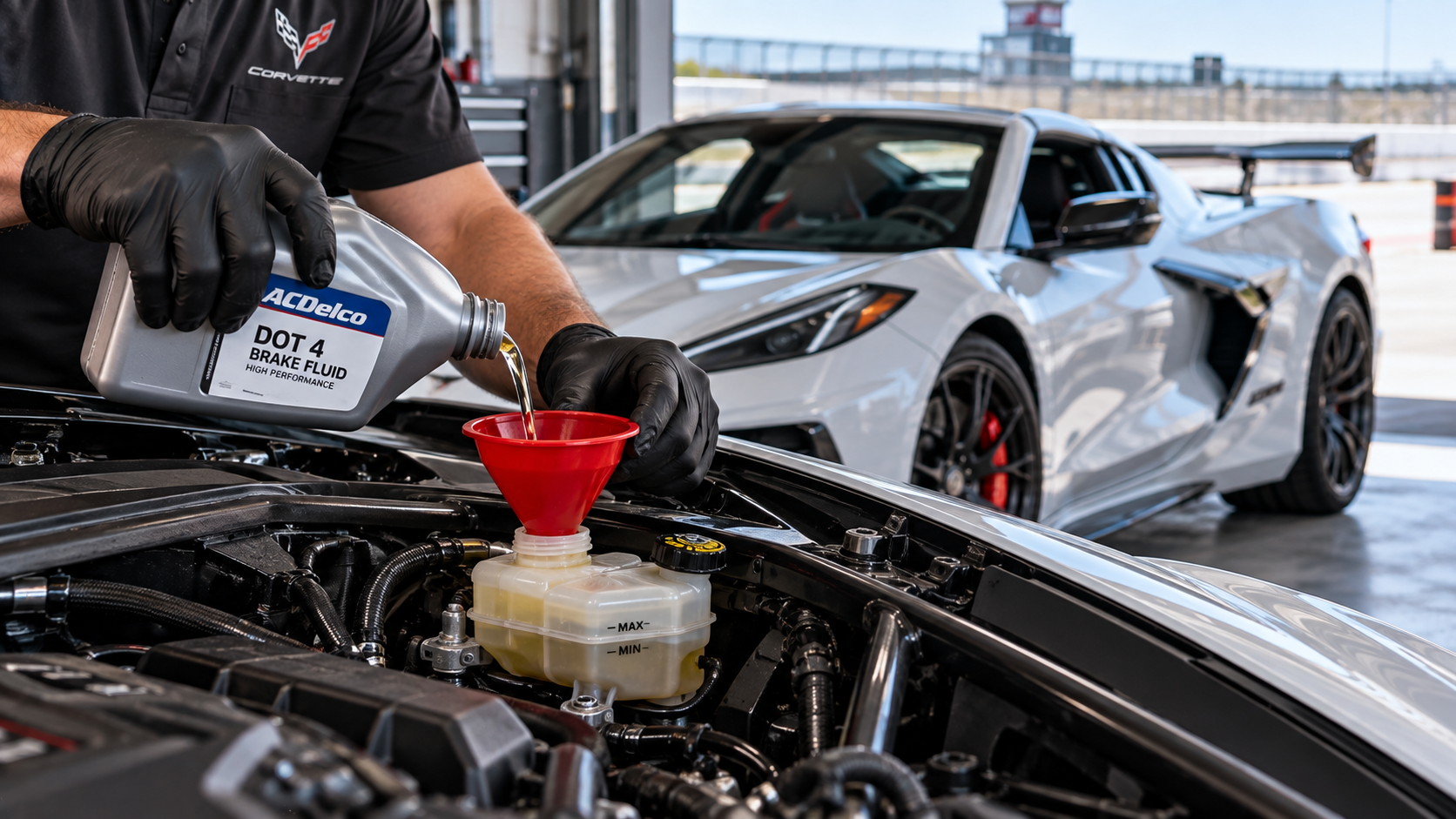
The cooling network also relies on clean fluid and correct levels. However, track inspection does not replace the model's scheduled fluid service. The 2026 owner's manual contains separate guidance for engine cooling and E-Ray electric cooling. For this reason, follow the procedures for the exact model instead of borrowing another Corvette's preparation list.
The dealership's Corvette track day inspection guide covers wider pre-event and post-event checks. This cooling article stays focused on heat transfer, radiator placement, and the physical condition of cooling hardware.
Evaluating Corvette Cooling Equipment and Condition
Even so, two Corvettes with similar bodywork may not carry identical cooling hardware. Begin with the model year, trim, and factory option information. Next, compare that information with the correct service parts diagram. Therefore, this is the safest way to establish a component count for a particular vehicle.
Before arranging an inspection, focus on these checks:
- Verify the configuration. Record the model year and factory options before identifying each radiator or auxiliary cooler.
- Check external airflow. Examine accessible front and side openings for debris or damaged ductwork after the vehicle cools.
- Review temperature information. Note any dashboard warning, unusual reading, or visible coolant loss for a trained technician.
- Respect electric cooling precautions. Leave E-Ray battery and power electronics coolant service to qualified personnel.
Furthermore, never remove a pressure cap from a hot cooling circuit. If the car displays an overheating warning, follow Chevrolet's instructions and seek service when needed. A Corvette specialist can also confirm whether a finned component cools engine coolant, oil, or another fluid.
For owners comparing Stingray, Z06, and E-Ray hardware, accurate equipment identification is the starting point. It turns a broad radiator-count question into a useful examination of the car in front of you. That attention also supports informed service discussions before another demanding drive.