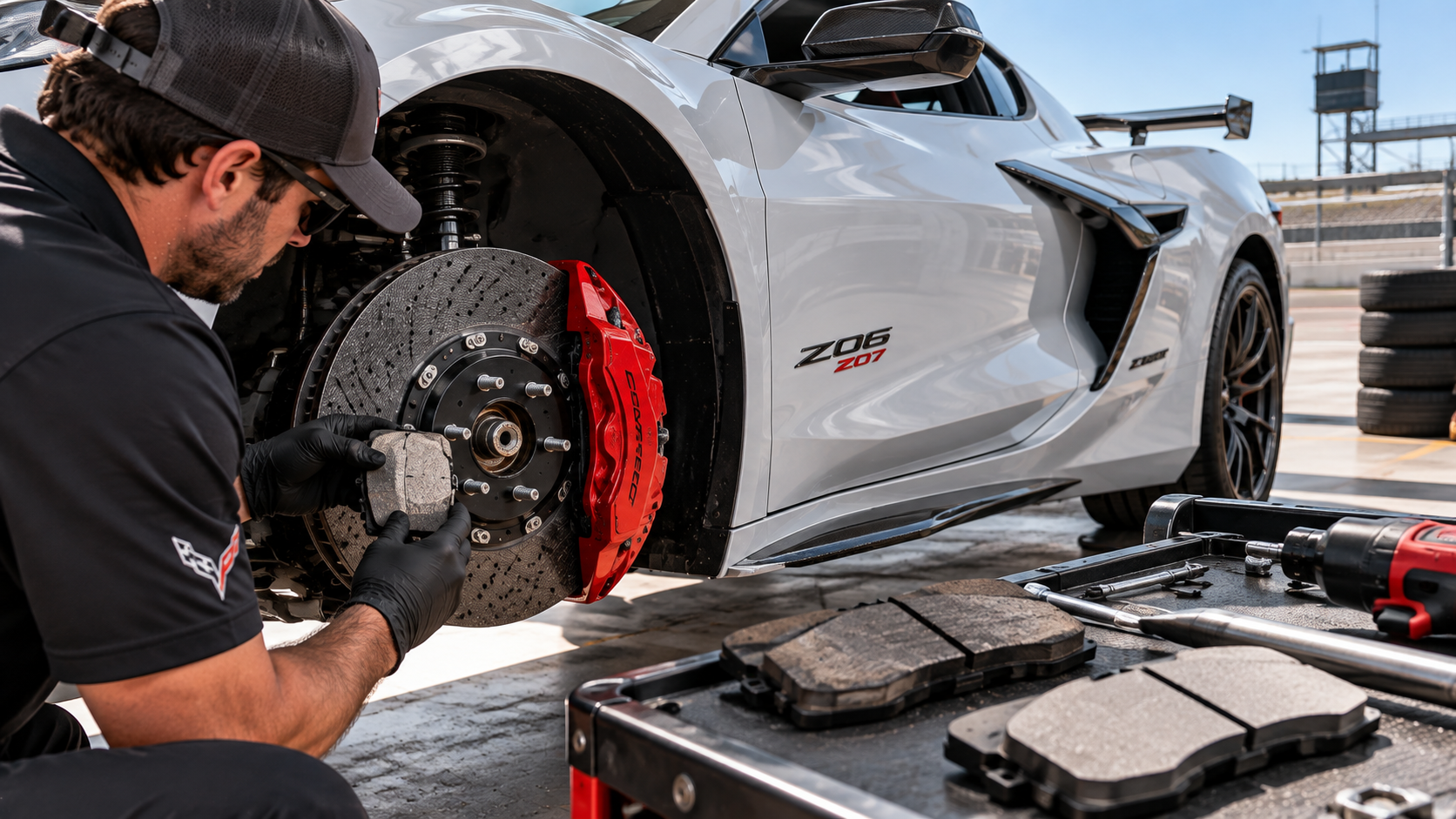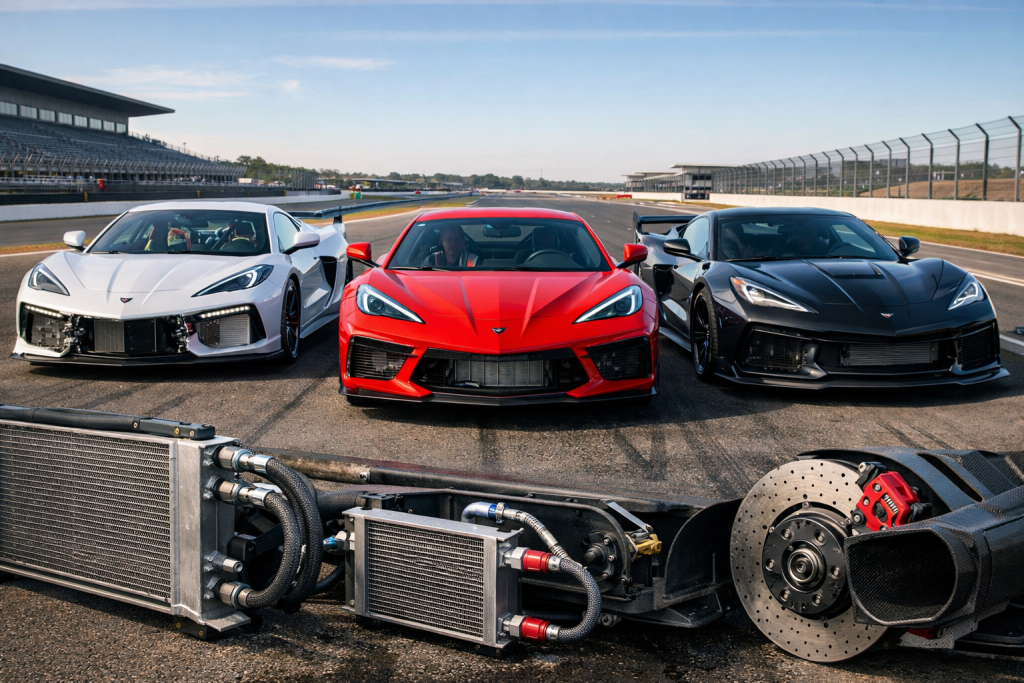

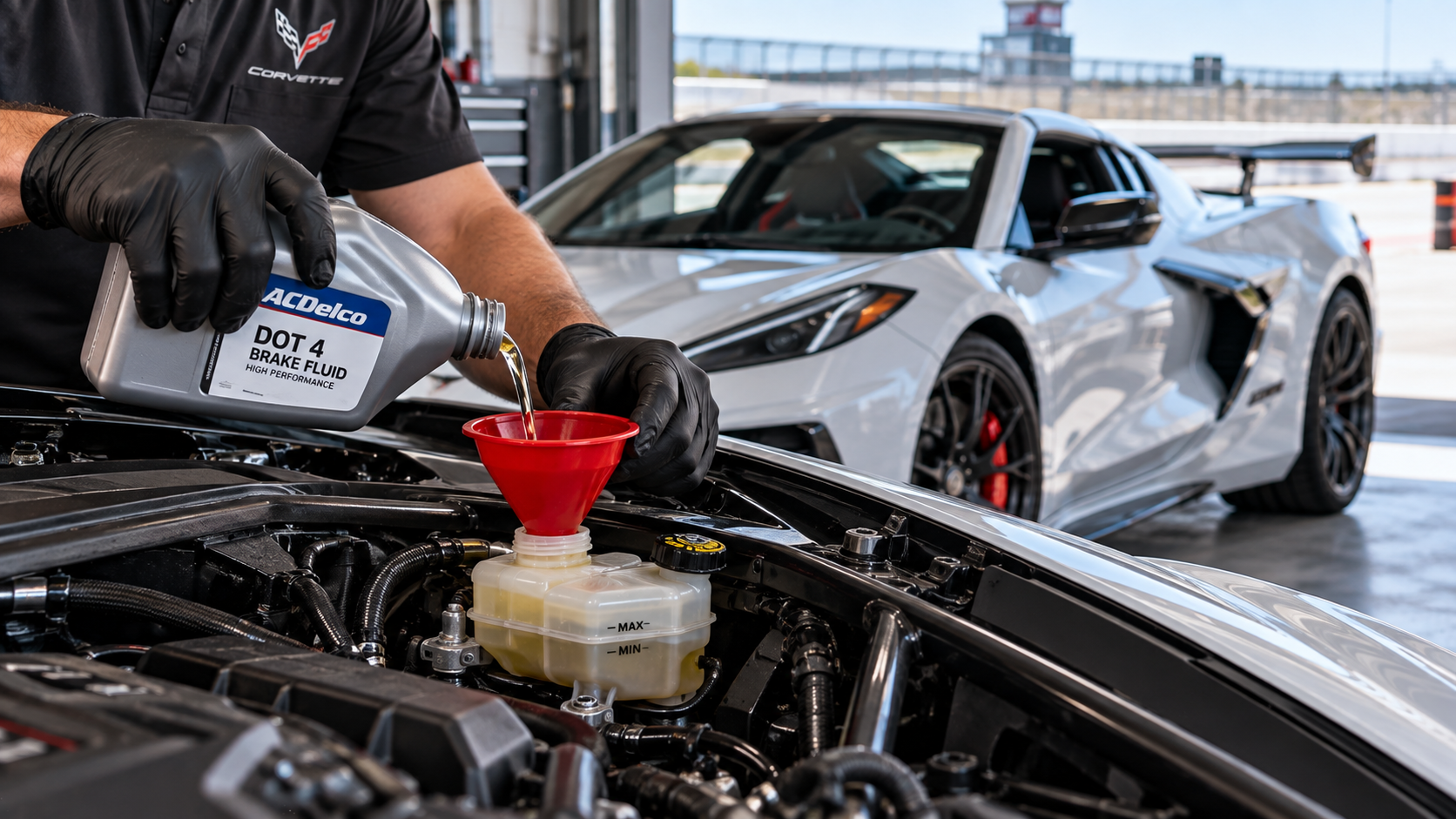
Corvette specific service matters after track use because brake fluid absorbs severe heat during repeated braking. The fluid transfers pedal force through the hydraulic circuit to each caliper. Track sessions raise caliper temperatures far above normal street driving. Therefore, fluid health deserves review before the next event.
What Track Heat Does to Corvette Brake Fluid
What happens to brake fluid during a hard track session? Repeated braking sends heat from the rotor and pad into the caliper. As a result, that heat reaches the fluid inside the hydraulic circuit. Therefore, the fluid must resist boiling while pedal pressure rises again and again.
Brake fluid also absorbs moisture as it ages. As a result, added moisture lowers the temperature where boiling can begin. Therefore, once vapor forms, the hydraulic circuit no longer transmits pedal force as cleanly. The pedal can feel soft because vapor compresses under pressure.
A soft pedal is not the same as worn pad friction. By contrast, pads act against the rotor, while fluid transfers force from the pedal. Therefore, a driver can have usable pad material and still feel weak hydraulic response.
Track cooling can reduce heat around the brakes, but cooling does not replace fresh fluid. In addition, cooling ducts, airflow, and cooldown laps all work with the fluid. In addition, fluid age still matters before another event.
Chevrolet track guidance gives owners a useful baseline for fresh high temperature fluid. The exact requirement should match the Corvette generation and track guide for that car.
When a Post Track Flush Is Required
When does brake fluid need replacement after an event? Therefore, a known boiling event is a clear reason to flush the fluid. Additionally, a sudden soft pedal after repeated braking deserves prompt inspection.
Fresh fluid alone may not solve every post track concern. In addition, a technician should check for leaks, damaged hoses, worn pads, and rotor concerns. Therefore, the flush should be part of a wider brake inspection when pedal feel changed.
Several signs deserve immediate attention before the next session:
- A soft pedal after hard laps can point to vapor or air inside the hydraulic circuit.
- New fluid loss or visible leakage calls for inspection before the car returns to the track.
- Brake response that changes from lap to lap deserves a full review before another event.
A stable pedal does not prove the fluid is ready for the next track day. However, calendar age still matters with high temperature fluid. Therefore, the next event date belongs in the service decision.
ChevyCorvette.com also covers broader post event inspection in its Corvette track day inspection guide. That broader review can support the fluid decision without replacing it.
When Fluid Can Be Monitored Before the Next Session
Can brake fluid remain in service after a track day if the pedal stayed firm? Yes, but only when fluid age, event history, and the next track date support that choice.
First, document when the fluid was installed. Furthermore, track focused fluid can age faster than owners expect because it absorbs moisture. Therefore, service records matter more than memory.
Next, review what the brakes endured during the event. Short novice sessions may create less heat than repeated advanced sessions. However, a firm pedal alone cannot show the exact thermal history.
Before the next event, review three points:
- Confirm the fluid installation date and the exact fluid specification used in the Corvette.
- Note any soft pedal, longer pedal travel, or unusual braking response during the prior event.
- Compare the next track date with Chevrolet guidance for fluid age before track use.
This approach separates post event urgency from pre event preparation. Furthermore, it prevents unnecessary flushing after every mild session. In addition, it keeps fluid age from being ignored.
For owners who track their cars regularly, written records are useful. Therefore, record the fluid date, event date, pedal notes, and any service completed afterward. That record gives a technician better context at the next visit.
Match Fluid Service Timing to Track Frequency
Track frequency changes how closely an owner should watch brake fluid history. A Corvette used once each year has a different schedule from one used monthly.
What should change when track events become more frequent? Inspection and fluid planning should move closer to the event calendar. Consequently, more sessions mean more heat cycles and more chances for the fluid to approach its boiling range.
Additionally, a driver should consider session length and pace. Twenty minute sessions with repeated heavy braking can create substantial caliper heat. A short parade lap places far less thermal load on the fluid.
Therefore, track frequency should be reviewed with several details at once. Fluid age, pedal feel, session intensity, and upcoming dates all matter. Therefore, no single mileage number can replace those records.
This is also where track cooling fits into maintenance planning. Clear ducts and proper cooldown laps can reduce retained heat after hard driving. Still, fluid service should follow the Corvette track guidance for that generation.
Why C8 Corvette Brake Service Needs Specific Procedures
Why does C8 Corvette brake service require extra care? The C8 uses an electro hydraulic brake setup that requires a defined service process. Therefore, Chevrolet directs technicians to disconnect the battery before hydraulic brake work.
Furthermore, the bleeding method matters too. Corvette guidance calls for manual or pressure bleeding when the brake fluid is flushed. Vacuum bleeding is not the recommended method for this procedure.
As a result, shop selection matters more for C8 owners. Therefore, ask whether the technician follows the current Corvette service procedure before authorizing a flush.
Before scheduling, ask the service team to confirm these items:
- The shop knows the correct fluid specification for the exact Corvette generation and intended track use.
- The technician follows the required C8 battery disconnect and bleeding procedure when it applies.
- The final brake inspection includes pedal feel, leaks, pad wear, and rotor condition before track use resumes.
Owners can also review ChevyCorvette.com guidance on Corvette service and fluid checks. That article covers routine fluid care outside the track day context.
Brake fluid service should match what the Corvette endured and what comes next. Flush the fluid after a known boil or serious pedal change. Additionally, review its age before the next event. Then pair that decision with a complete brake inspection and the correct C8 service process when required.