1997
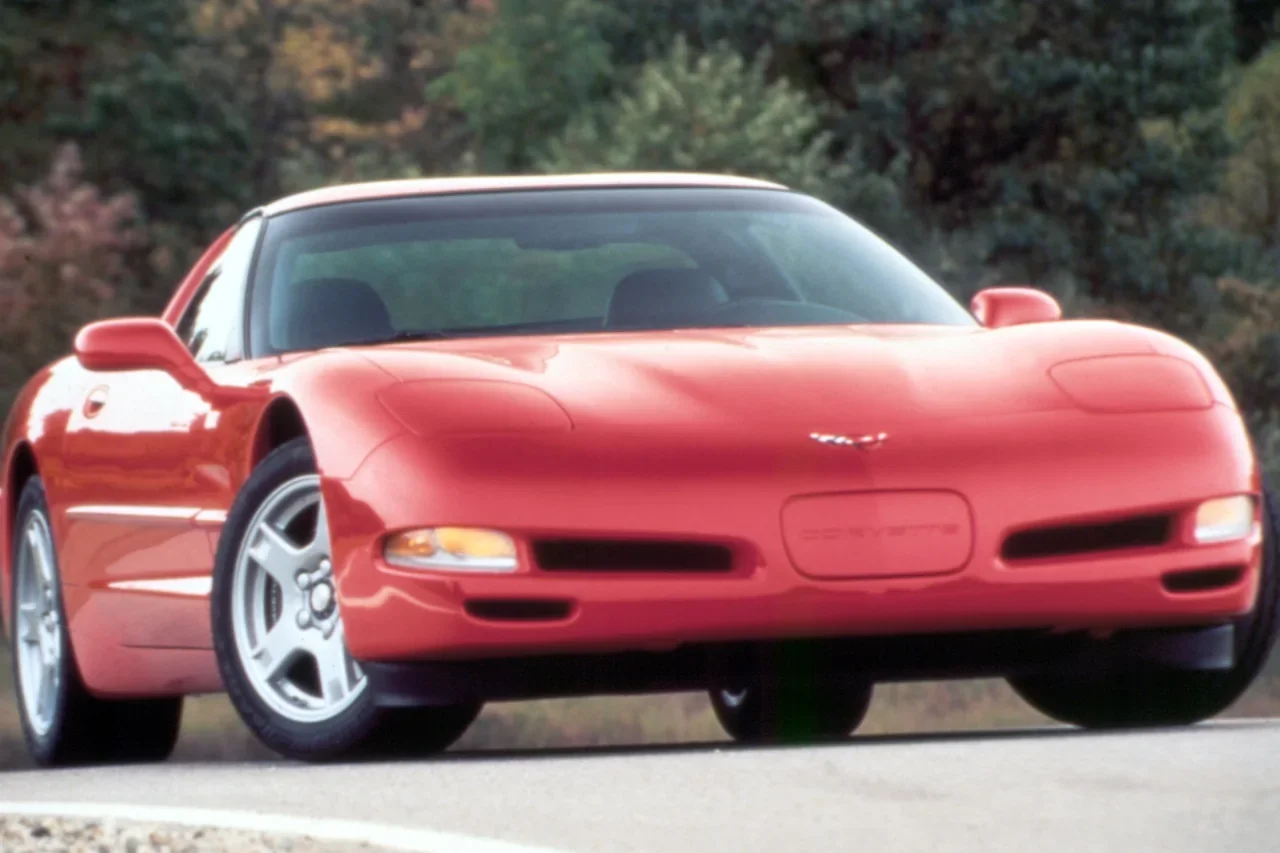
The all-new coupe arrived with the 345-horsepower LS1, the first small-block V8 with an aluminum block, plus electronic throttle control, run-flat tires and a rear-mounted transmission.


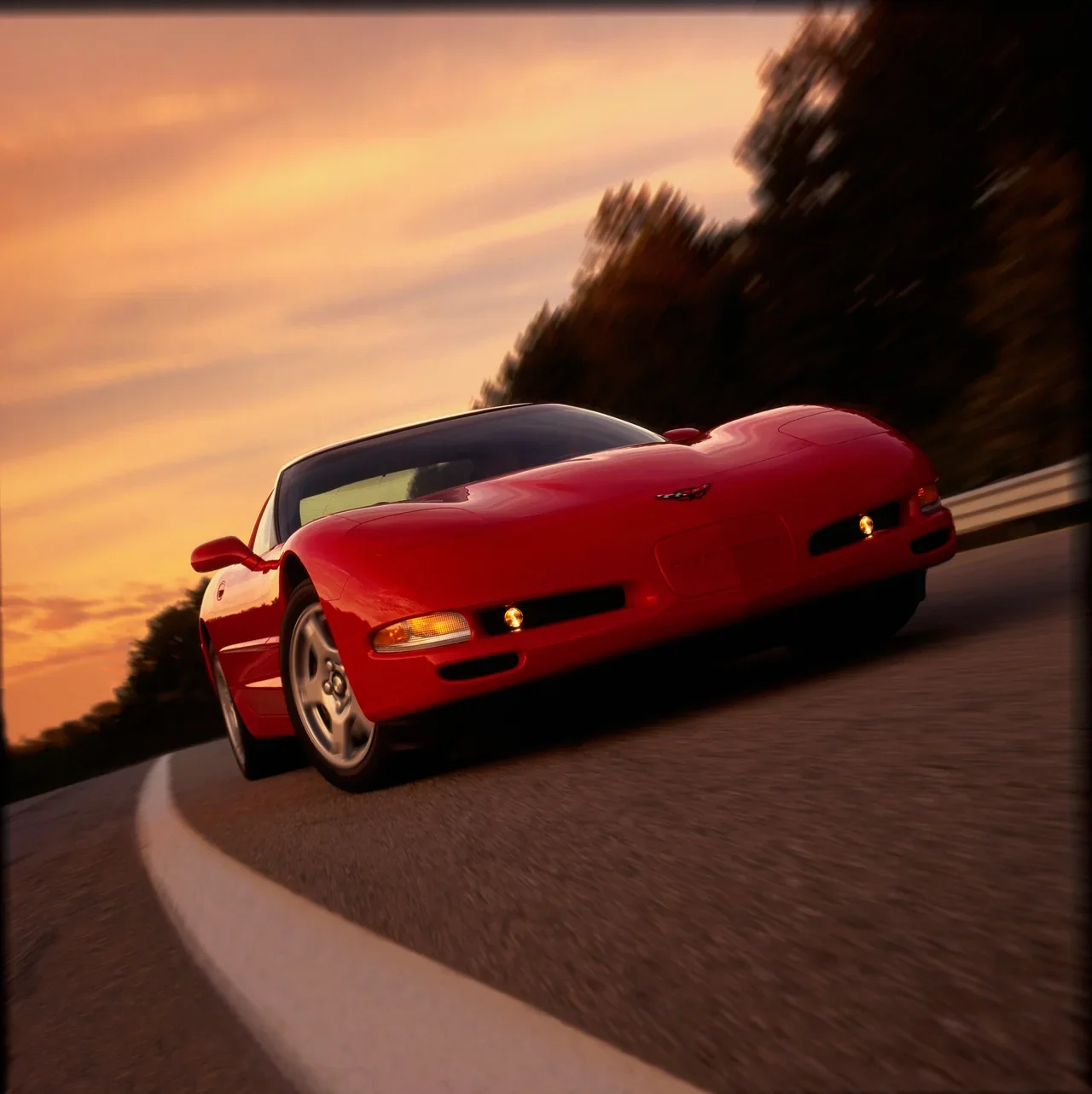
The C5 was the first all-new Corvette since 1984. Chevrolet built it for eight model years, from the 1997 coupe with a 345-horsepower aluminum LS1 V8 to the 405-horsepower Z06 that closed the run in 2004.
Fuel economy from EPA and recalls from NHTSA, checked November 18, 2026.
The C5 Corvette is the fifth generation of the Chevrolet Corvette, sold for the 1997 through 2004 model years and built in Bowling Green, Kentucky. It arrived as a coupe, added a convertible for 1998 and a fixed-roof hardtop for 1999, and the hardtop became the Z06 for 2001.
GM introduced it in January 1997 as the first all-new Corvette since 1984. Under a lower, more aerodynamic body sat a new frame with hydroformed steel side rails, a new all-aluminum small-block V8 and a transmission moved to the rear of the car.
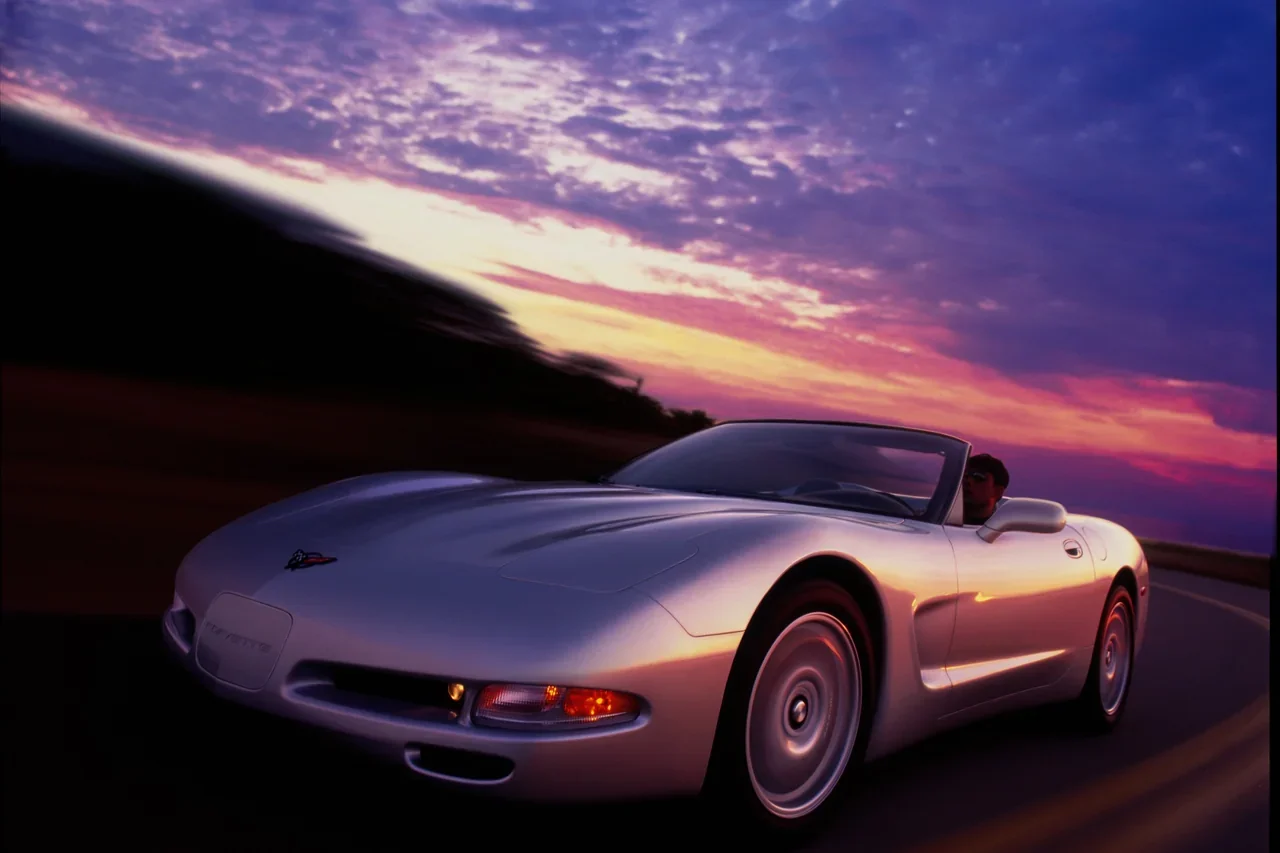
The launch came in three steps: the coupe for 1997, the convertible for 1998 and the hardtop for 1999. GM said the car was designed as a convertible from the start, even though the open car came a year after the coupe.
The C5 also took less to build. Engineers cut the part count by 34 percent, so the car used 1,462 fewer parts than the Corvette it replaced.
| Item | Detail |
|---|---|
| Generation | Fifth |
| Model years | 1997 to 2004 |
| Plant | Bowling Green, Kentucky |
| Body styles | Coupe with a removable roof panel, convertible, fixed-roof hardtop (1999 and 2000) and Z06 (2001 to 2004) |
| Frame | Full-length perimeter frame with hydroformed tubular steel side rails |
| Engines | 5.7L LS1 V8, 345 to 350 hp; 5.7L LS6 V8 in the Z06, 385 to 405 hp |
| Transmissions | Rear-mounted four-speed automatic or six-speed manual |
| Drag coefficient | 0.29 |
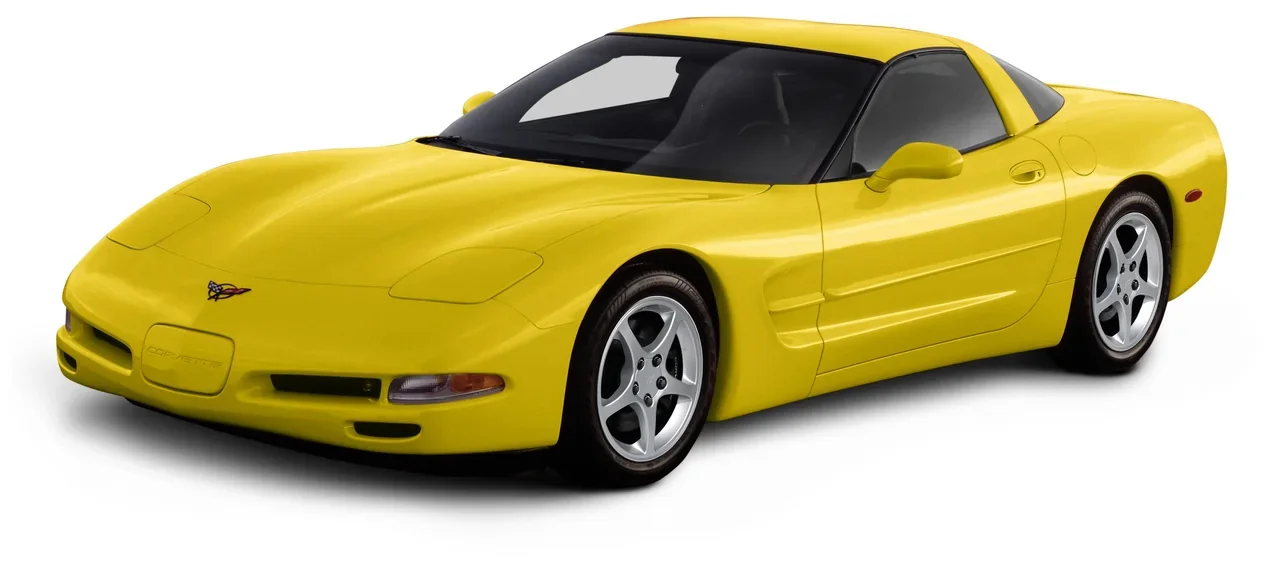
Nearly everything. The C5 brought a frame with hydroformed side rails, a rear-mounted transmission linked to the engine by an aluminum torque tube, and a body with a 0.29 drag coefficient, which GM called the lowest of any mass-produced car in North America apart from its own electric vehicle.
The side rails were pressed into shape by a high-pressure hydraulic press developed by GM, forming a full-length perimeter frame of tubular steel.
Both transmissions moved to the rear of the car, which GM said opened up room for the driver and passenger and helped balance the weight.
An aluminum torque tube joined engine and transmission, and dual fuel tanks sat mid-ship.
Goodyear Extended Mobility Tires could carry the car on their reinforced sidewalls after losing air, so the C5 needed no spare or jack.
The windshield moved more than 7 inches forward, and drivers could see the road 18 feet closer to the front bumper than before.
Independent short and long arm double wishbone suspension at all four corners.
The styling kept Corvette cues on purpose. Retractable headlamps, an air scoop on the front quarter panel and four round taillamps tied the car to earlier Corvettes, and the crossed-flags emblem returned with a more modern look.
Wider door openings made it easier to get in and out than the fourth-generation car, the headlamps were 30 percent brighter and daytime running lamps were standard.
| Item | Coupe | Convertible | Z06 |
|---|---|---|---|
| Overall length | 179.7 in | 179.7 in | 179.7 in |
| Overall height | 47.7 in | 47.8 in | 47.7 in |
| Curb weight, 2004 | 3,246 lb | 3,248 lb | 3,118 lb |
| Weight distribution, front/rear | 51/49 | 51/49 | 53/47 |
| Cargo volume | 24.8 cu ft | 13.9 cu ft | 13.3 cu ft |
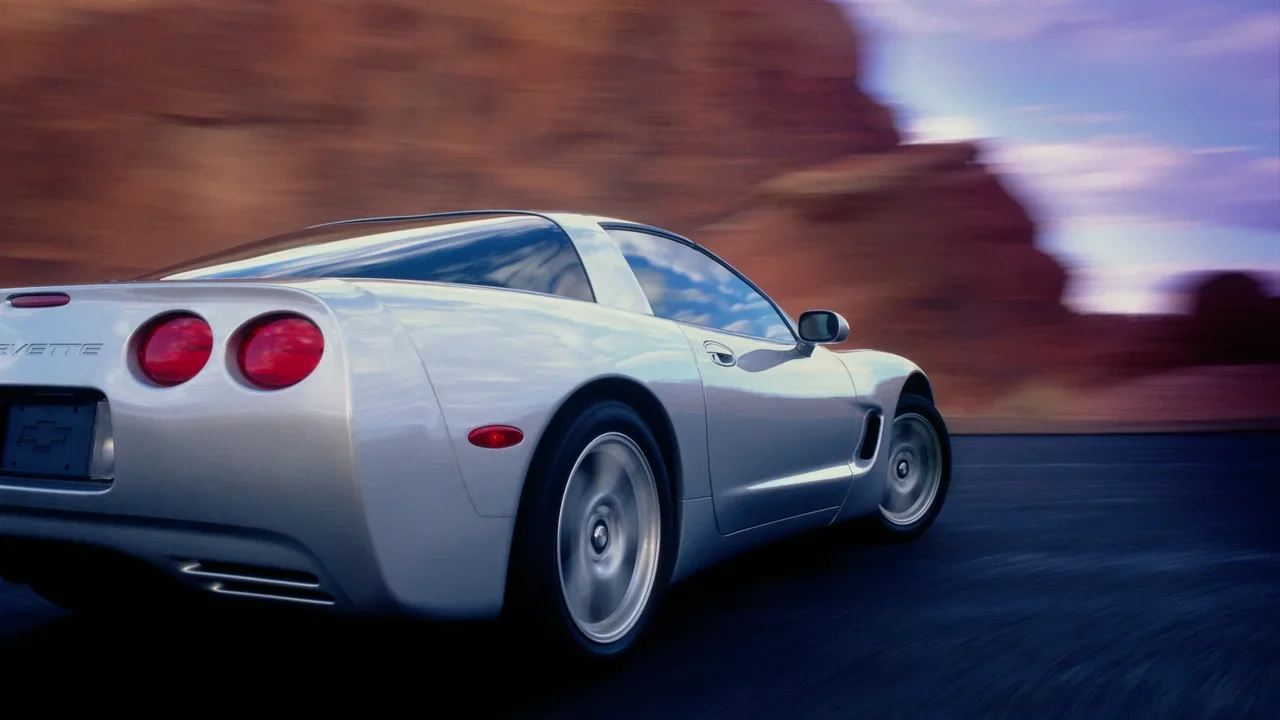
Three: a hatchback coupe with a removable roof panel, a convertible with a trunk, and a fixed-roof hardtop sold for 1999 and 2000. The hardtop, the lightest and stiffest of the three, became the Z06 for 2001.
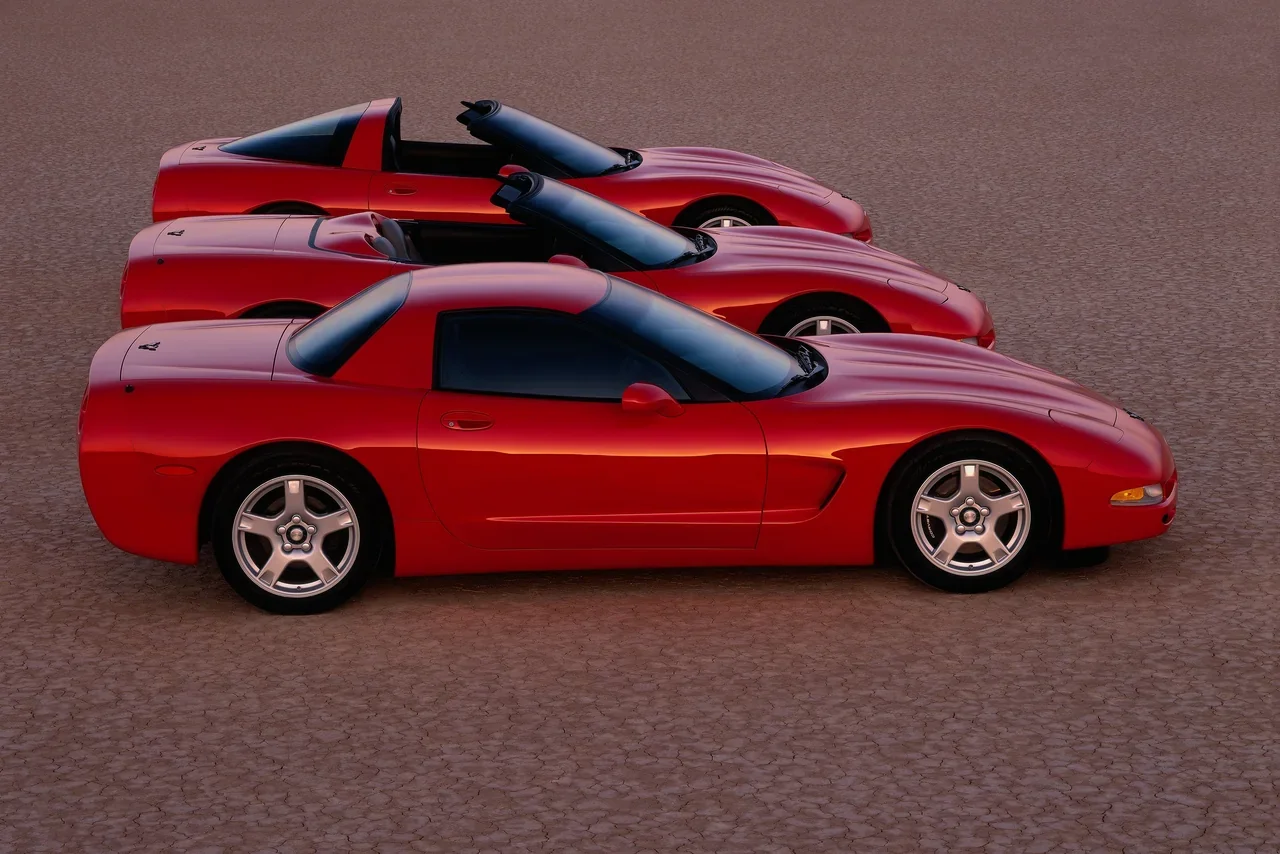
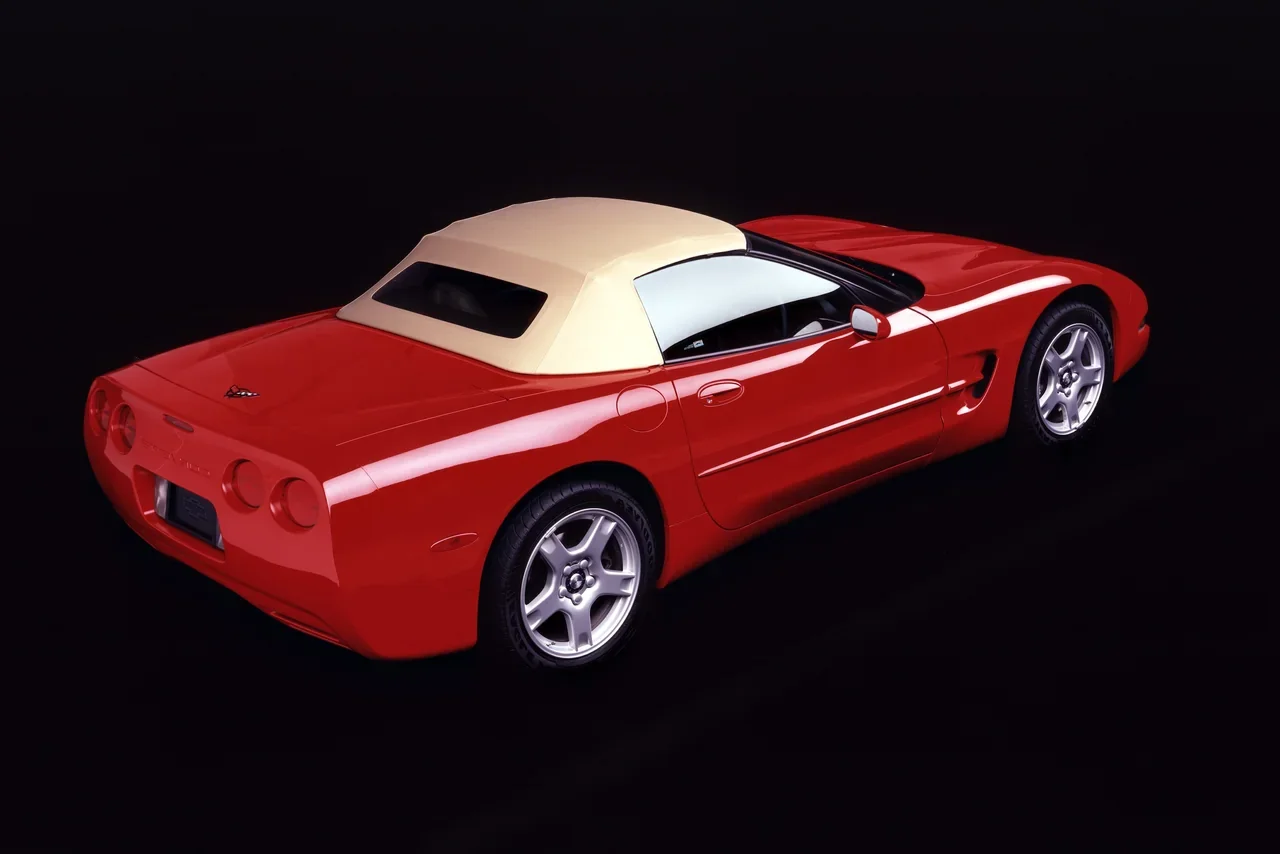
The coupe had a one-piece removable roof panel with a light magnesium frame, a full rear hatch and 24.8 cubic feet of cargo space. A transparent panel, or both panels together, were options.
New for 1998, the convertible had a manual folding top with a heated glass rear window and an integral trunk of up to 13.9 cubic feet, big enough for two sets of golf clubs. GM said it was designed as a true convertible from the beginning.
Added for 1999, the hardtop was the first fixed-roof Corvette since the 1963 to 1967 Sting Rays. It came only with the six-speed manual, the Z51 suspension and a 3.42 limited-slip axle.
GM built the hardtop in response to customers who wanted a simpler, no-frills Corvette, and called it the stiffest, quickest and lightest of the three models.
| Item | Coupe | Convertible | Hardtop |
|---|---|---|---|
| Introduced | 1997 | 1998 | 1999 |
| Roof | Removable panel | Manual folding top | Fixed |
| Standard transmission | Four-speed automatic | Four-speed automatic | Six-speed manual only |
| Z51 suspension | Optional | Optional | Standard |
| Cargo | 24.8 cu ft | 13.9 cu ft (11.1 top down) | 13.3 cu ft |
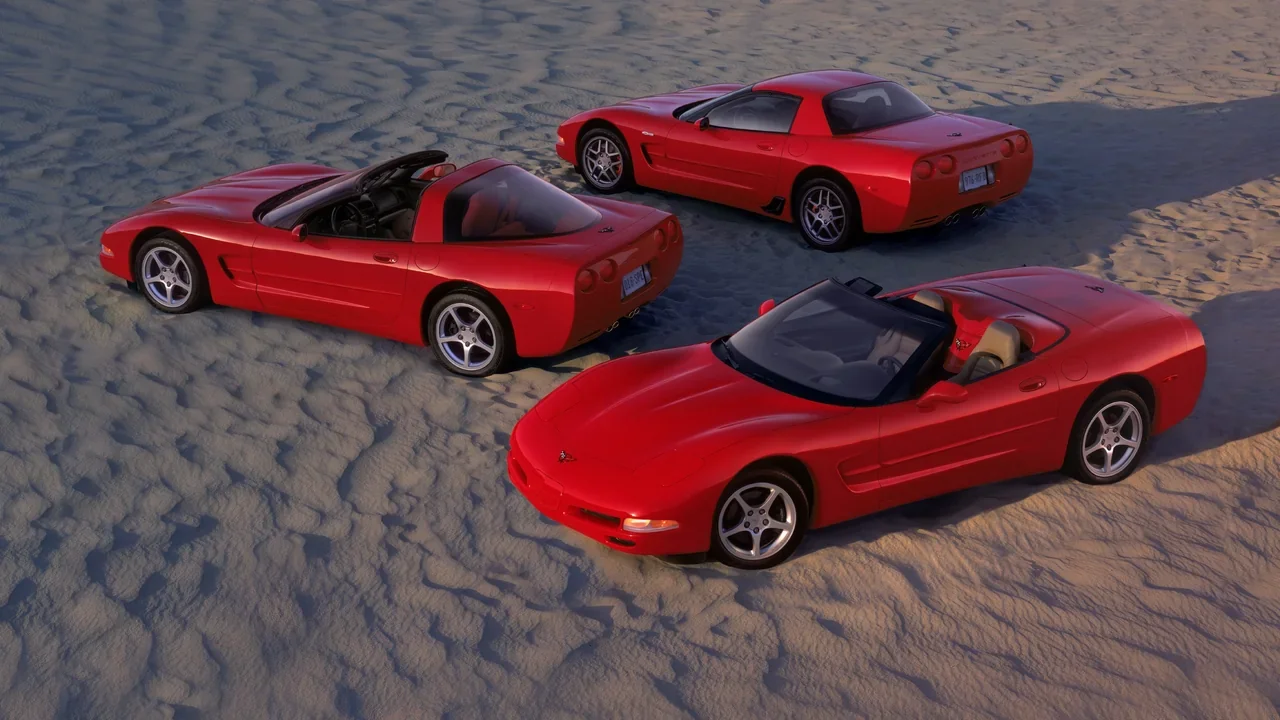
The coupe launched for 1997, the convertible joined for 1998, the hardtop for 1999 and the Z06 for 2001. Power rose from 345 to 350 horsepower for 2001, the Z06 reached 405 for 2002, and the run closed with the 50th Anniversary Edition for 2003 and the Commemorative Editions for 2004.
The all-new coupe arrived with the 345-horsepower LS1, the first small-block V8 with an aluminum block, plus electronic throttle control, run-flat tires and a rear-mounted transmission.
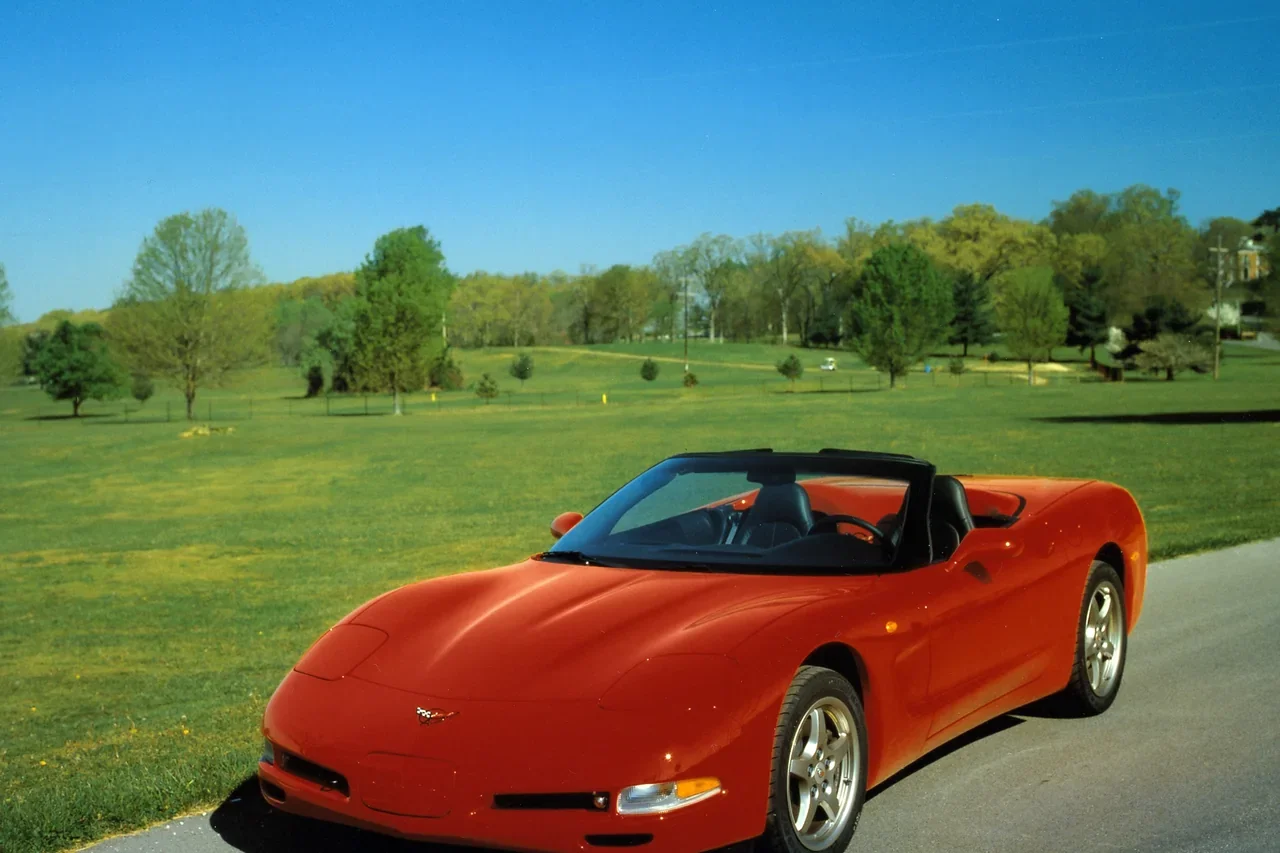
The convertible arrived with a folding top and a trunk. Magnesium wheels became available, three new colors joined the palette, and Active Handling made its debut on the Indy Pace Car.
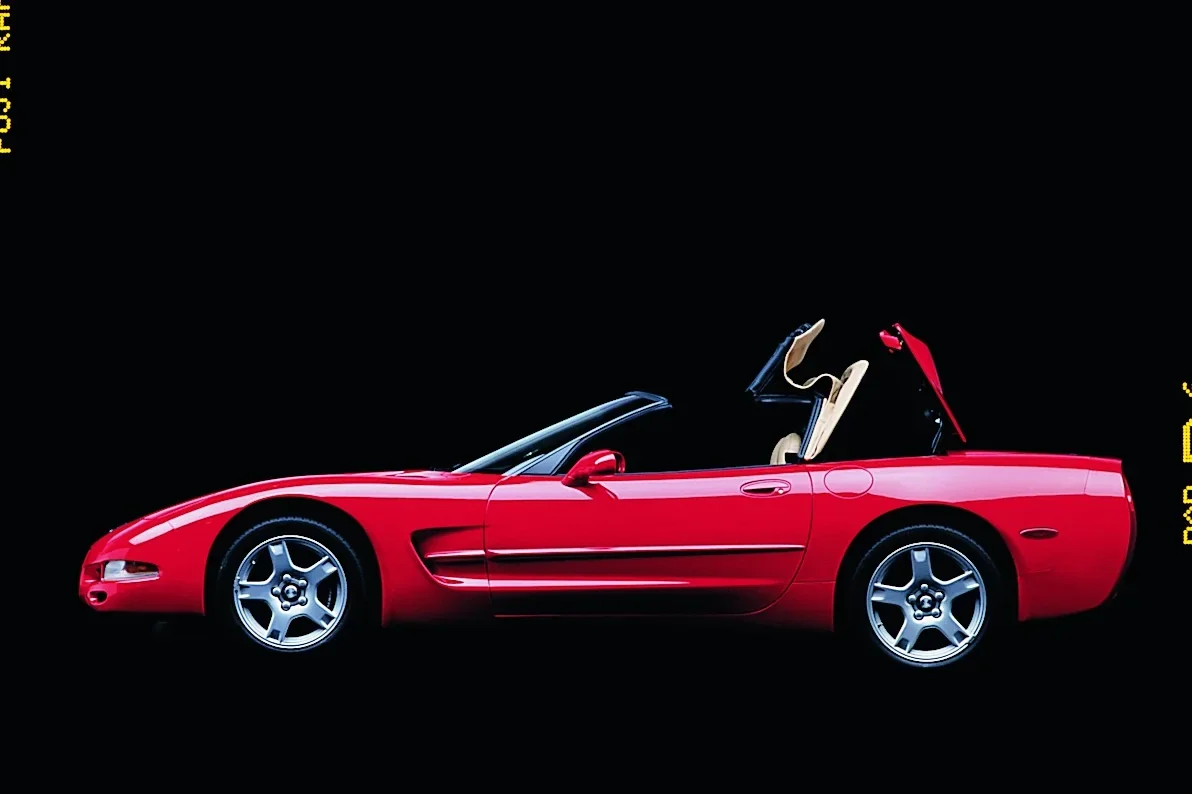
The fixed-roof hardtop completed the lineup. A head-up display and a power telescoping steering column became options, and a turn signal reminder chime was added.
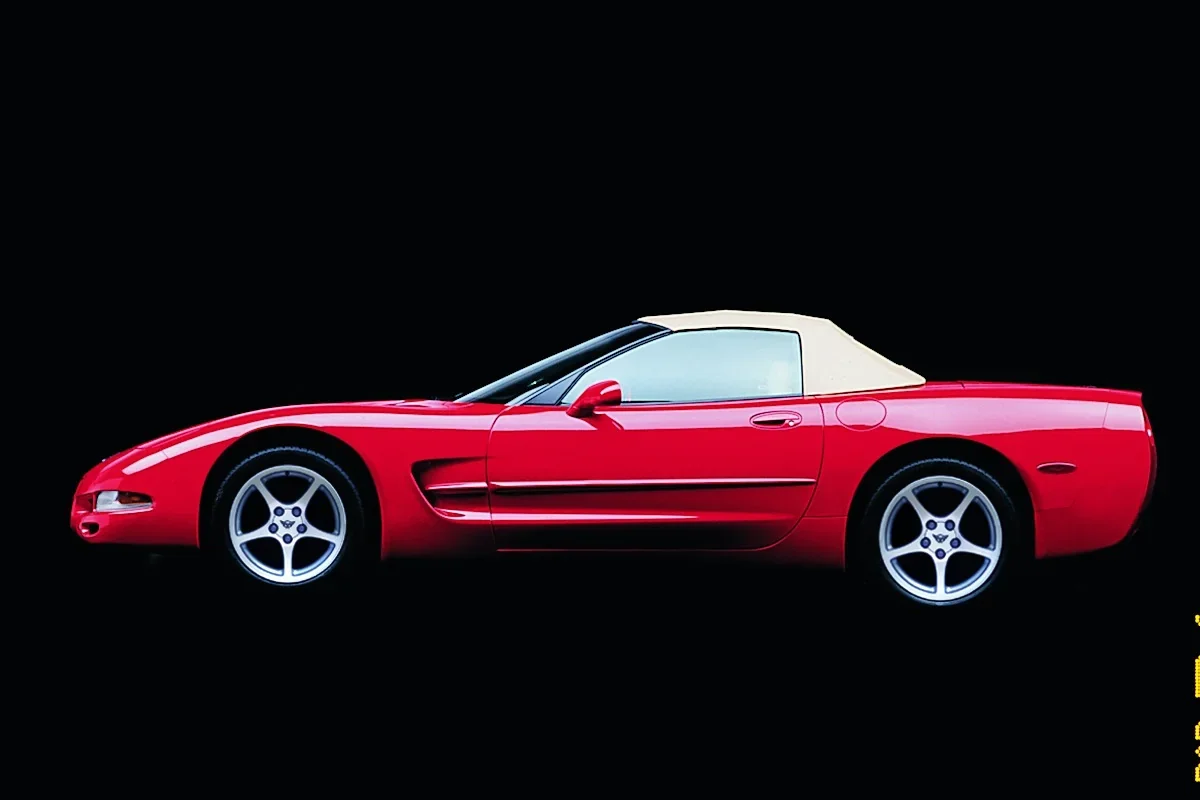
New five-spoke forged aluminum wheels became standard, the Z51 package got larger stabilizer bars, active keyless entry arrived, and the LS1 met low emission vehicle standards in California emissions states.
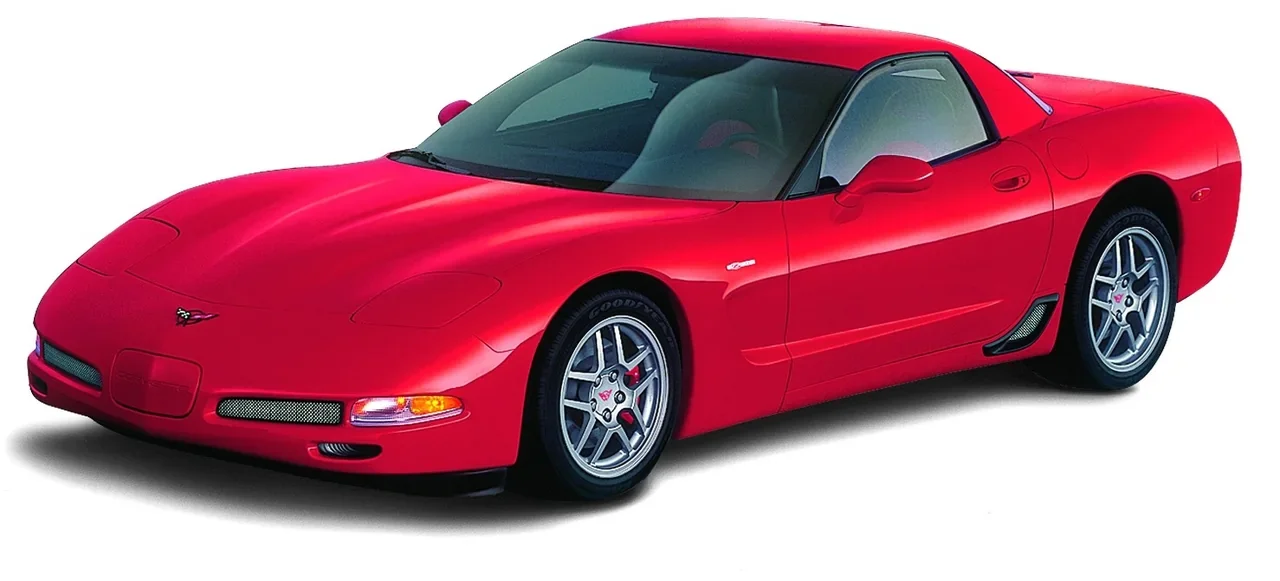
The hardtop became the 385-horsepower Z06. The LS1 rose to 350 horsepower, and second-generation Active Handling, a stronger clutch and a larger driveshaft went into every car.
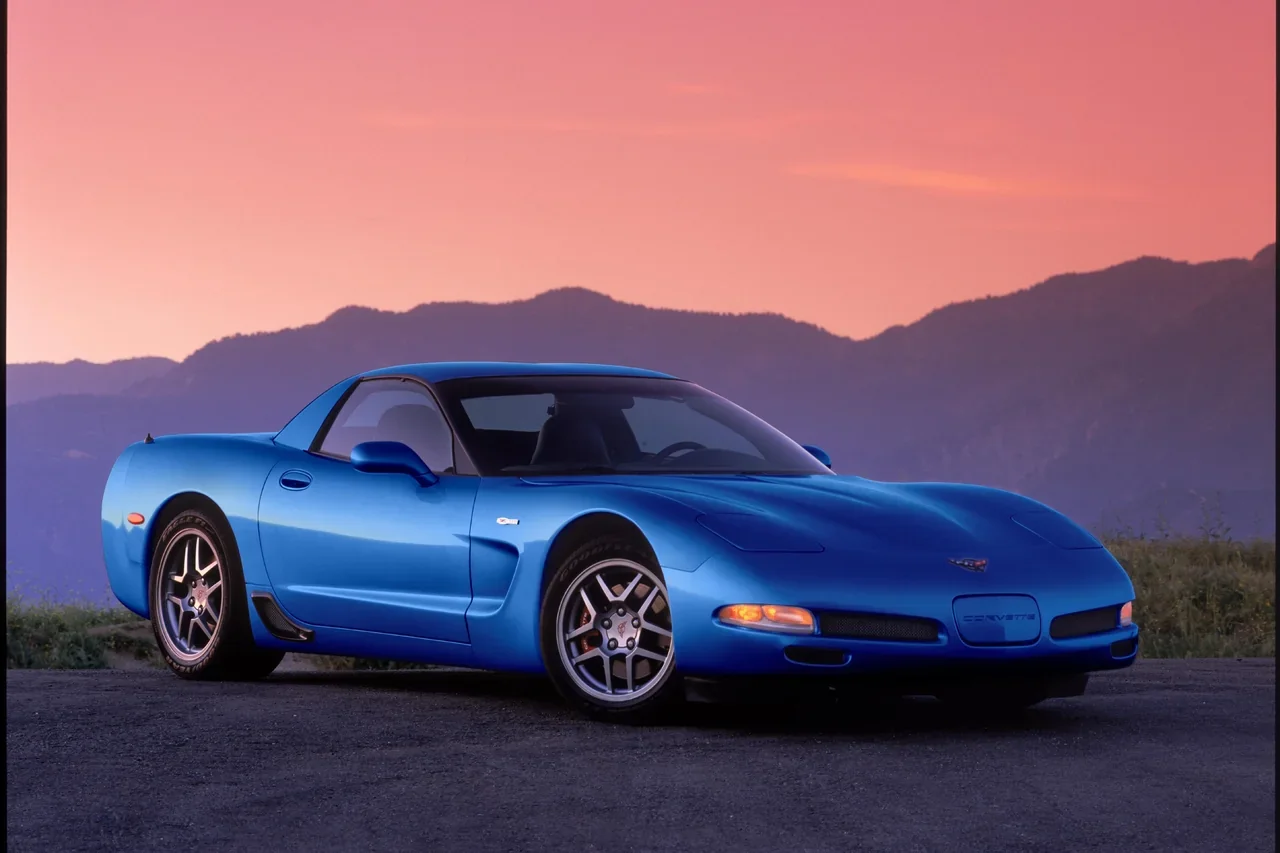
The Z06 gained 20 horsepower, to 405, plus a standard head-up display, new shock valving and new front brake pads.
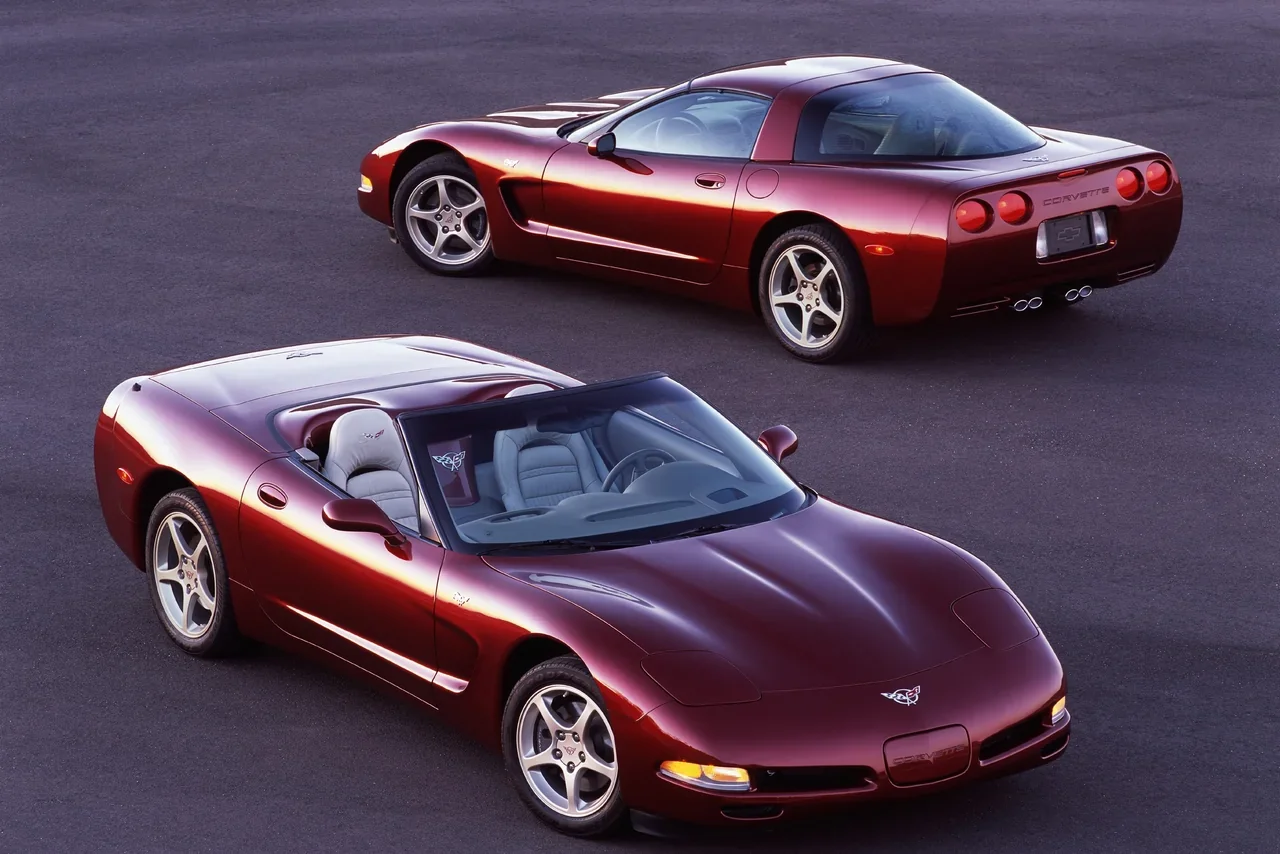
Corvette turned 50. Every car wore a 50th anniversary emblem, the 50th Anniversary Edition debuted, Magnetic Selective Ride Control became available, and the coupe and convertible gained standard foglamps, sport seats and a power passenger seat.
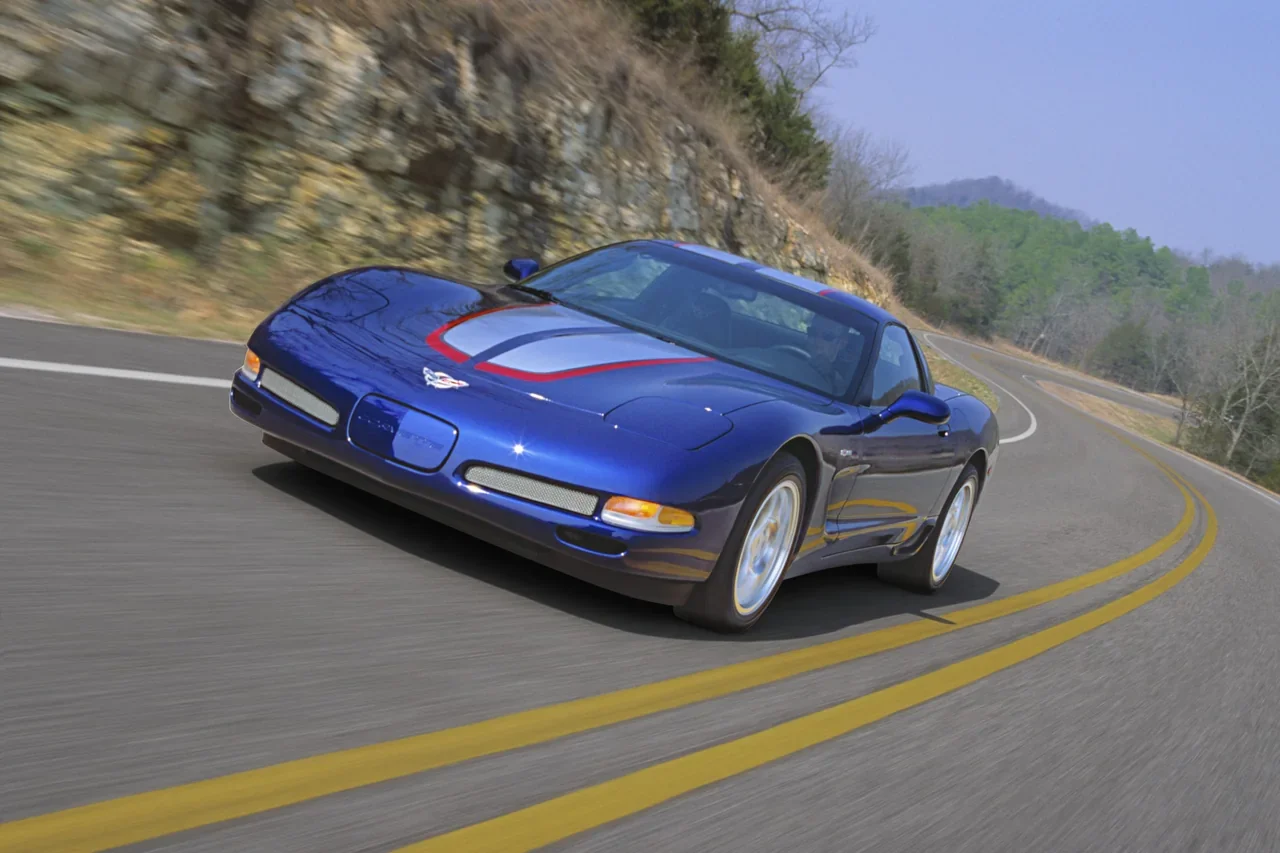
The last C5 year brought Commemorative Editions of the coupe, convertible and Z06, Nürburgring-tuned Z06 shocks, and a Corvette convertible as the Indianapolis 500 pace car.
The coupe, convertible and hardtop used the 5.7L LS1, a small-block pushrod V8 rated at 345 horsepower through 2000 and 350 from 2001. The Z06 used the LS6, a higher-output version rated at 385 horsepower for 2001 and 405 for 2002 to 2004.
GM called the LS1 the first small-block in Chevrolet history with an aluminum block, replacing cast iron, and it made more power than either 1996 Corvette engine. It kept the 4.4-inch bore spacing that small-blocks had used for 40 years.
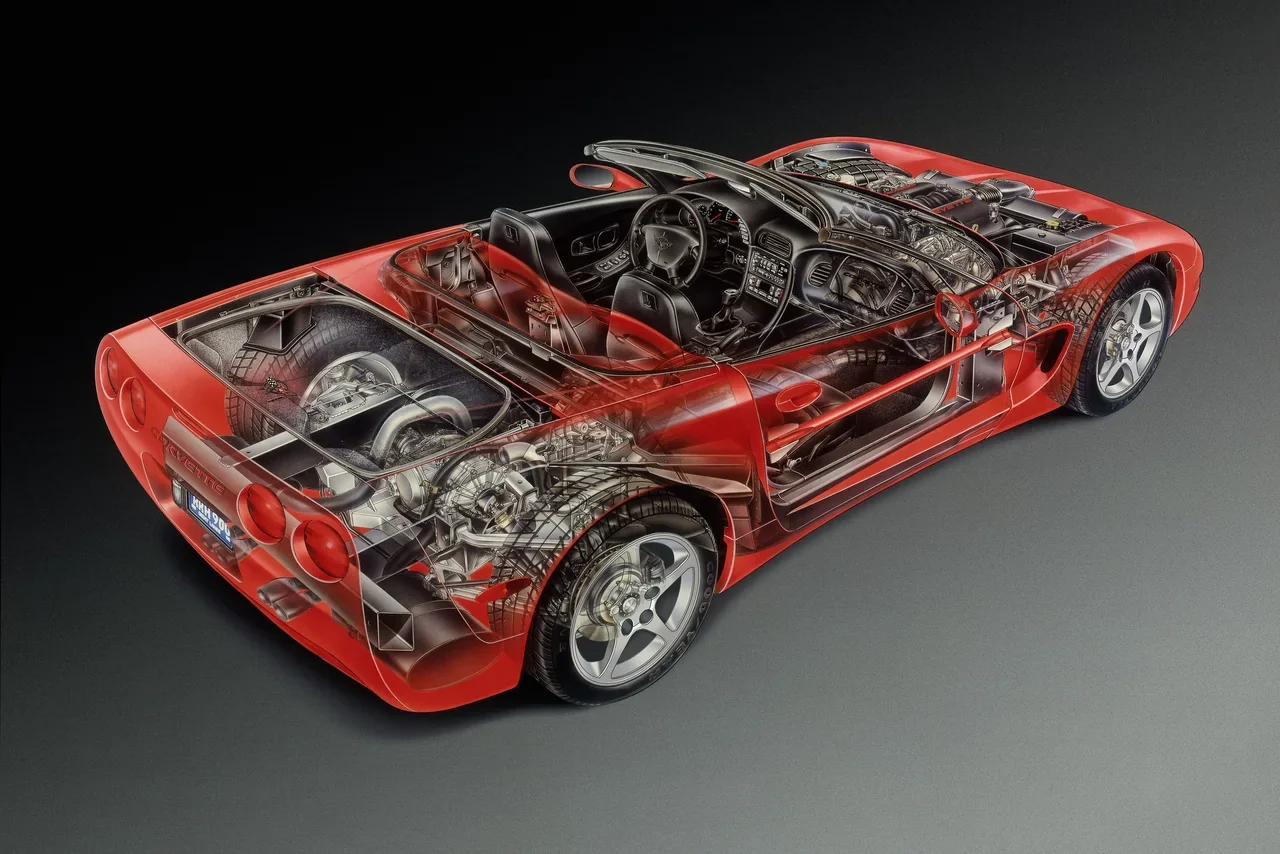
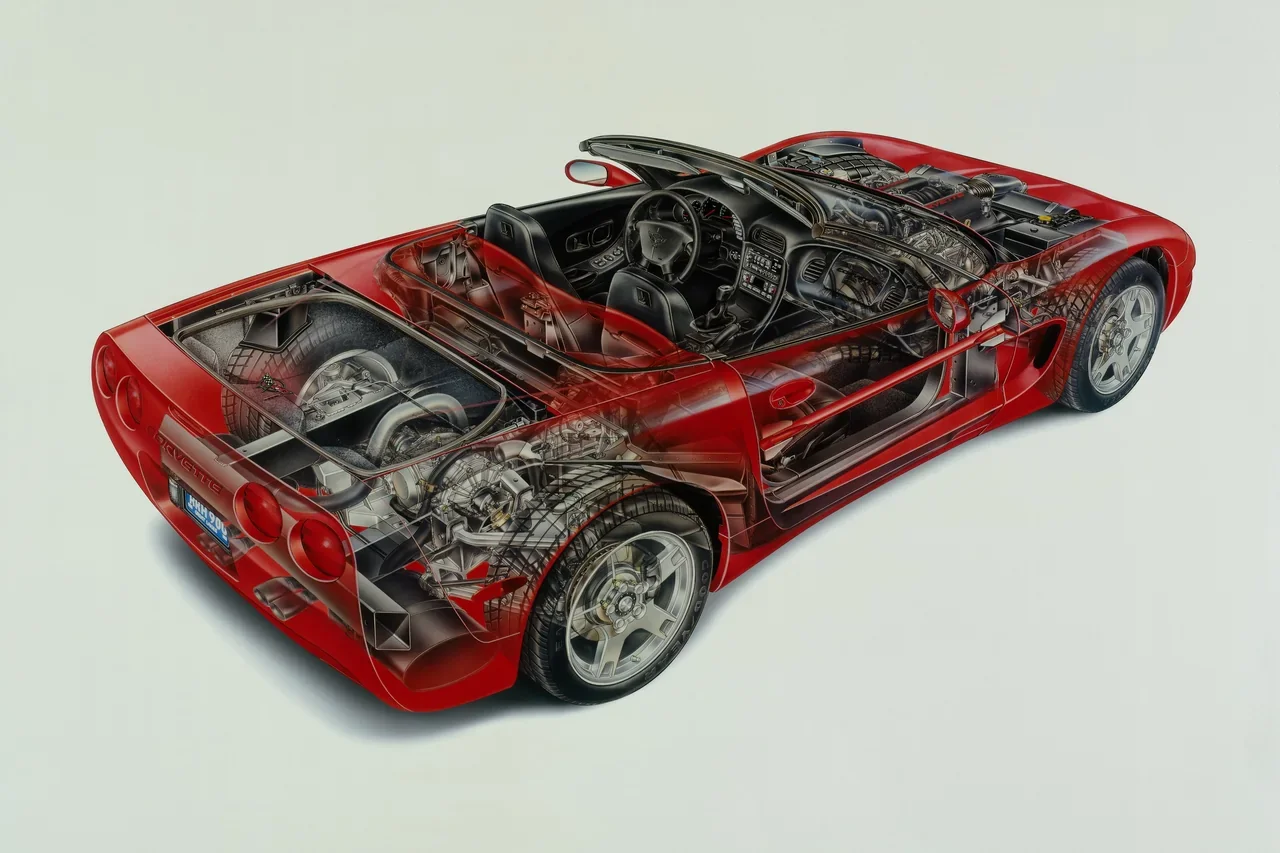
The block extended below the crankshaft, so each main bearing cap was cross-bolted with six bolts.
A four-bolt head pattern replaced the old five-bolt design to reduce distortion and improve sealing.
The intake manifold was a composite, lighter than aluminum, and every intake port was identical.
The 1997 LS1 was the first GM gasoline engine with electronic throttle control.
One ignition coil per cylinder, platinum-tip plugs good for up to 100,000 miles and extended-life coolant.
| Engine | Years | Power | Torque |
|---|---|---|---|
| LS1 5.7L V8 | 1997 to 2000 | 345 hp at 5,600 rpm | 350 lb-ft at 4,400 rpm |
| LS1 5.7L V8 | 2001 to 2004 | 350 hp at 5,200 rpm | 375 lb-ft manual, 360 lb-ft automatic |
| LS6 5.7L V8 (Z06) | 2001 | 385 hp at 6,000 rpm | 385 lb-ft at 4,800 rpm |
| LS6 5.7L V8 (Z06) | 2002 to 2004 | 405 hp at 6,000 rpm | 400 lb-ft at 4,800 rpm |
Both engines displaced 5,665 cc, or 346 cubic inches, with a 3.90 by 3.62 inch bore and stroke. Compression was 10.1:1 in the LS1 and 10.5:1 in the LS6, and GM recommended premium fuel.
For 2001 the LS1 got the new intake and exhaust manifolds developed with the LS6, and its torque arrived far lower in the rev range, with 340 lb-ft available 1,400 rpm sooner than before.
The LS1 was named 1998 Technology of the Year by Automobile Magazine and one of the Best Engines of 1998 by Ward's Auto World.
The Z06 replaced the hardtop for 2001 as a track-ready production Corvette. It used the LS6 V8, its own FE4 suspension, wider wheels and tires, a close-ratio six-speed and a titanium exhaust, and GM called it the quickest, best-handling production Corvette to that point.
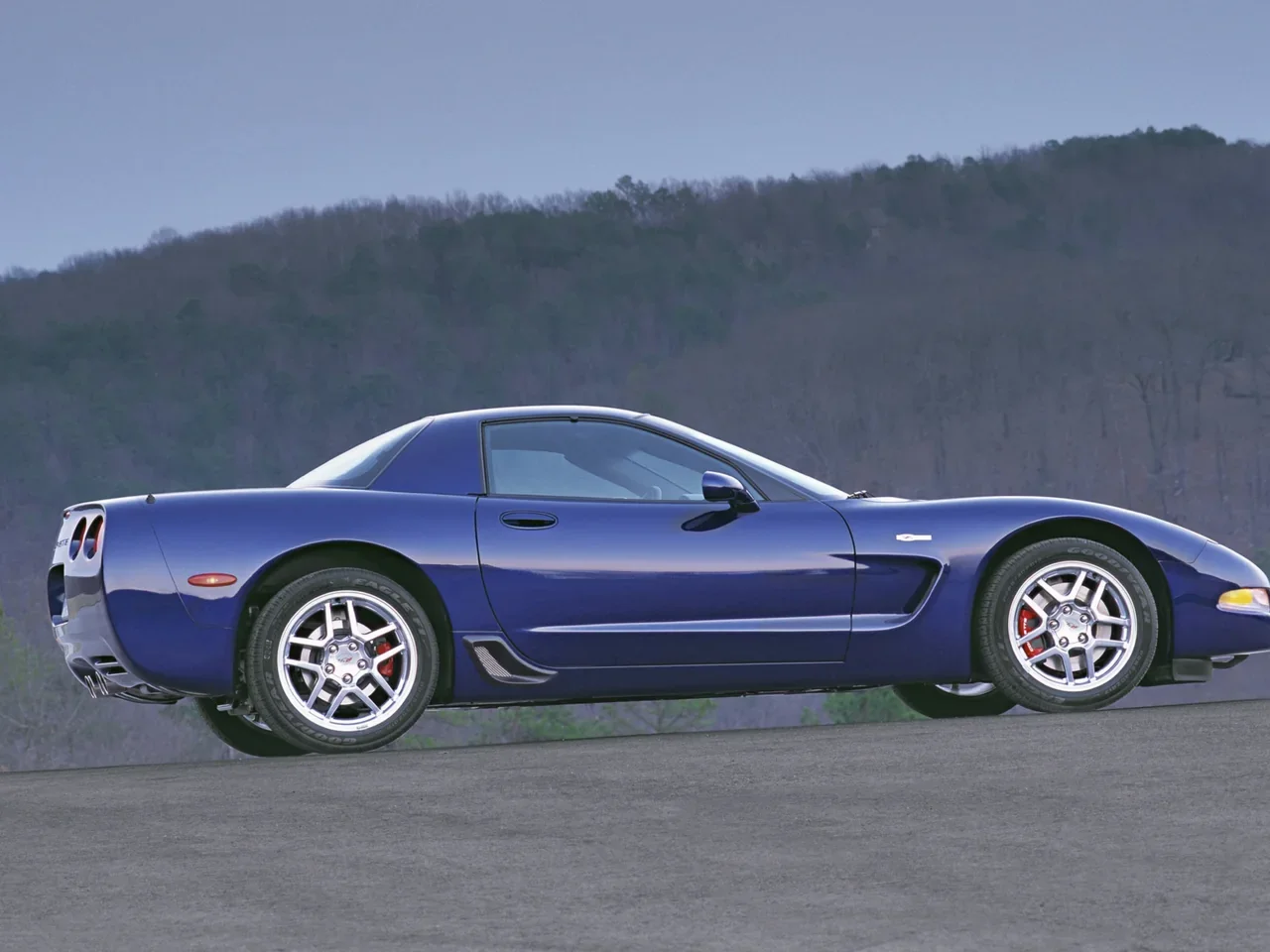
The name honored Zora Arkus-Duntov, the first Corvette chief engineer, who created the original Z06 package in 1963. The LS6 name dated to 1971.
Weight came out wherever GM could find it. The titanium exhaust, the first in a mass-production vehicle, weighed half as much as the stainless system, and the Z06 also got thinner glass and a smaller battery. It was 117 pounds lighter than the coupe and convertible.
GM designed the C5 as a convertible from the start rather than cutting the top off a coupe, which it said gave the open car its structural rigidity. The manual top stowed under a composite tonneau cover, a heated glass rear window was standard, and the convertible had a real trunk.
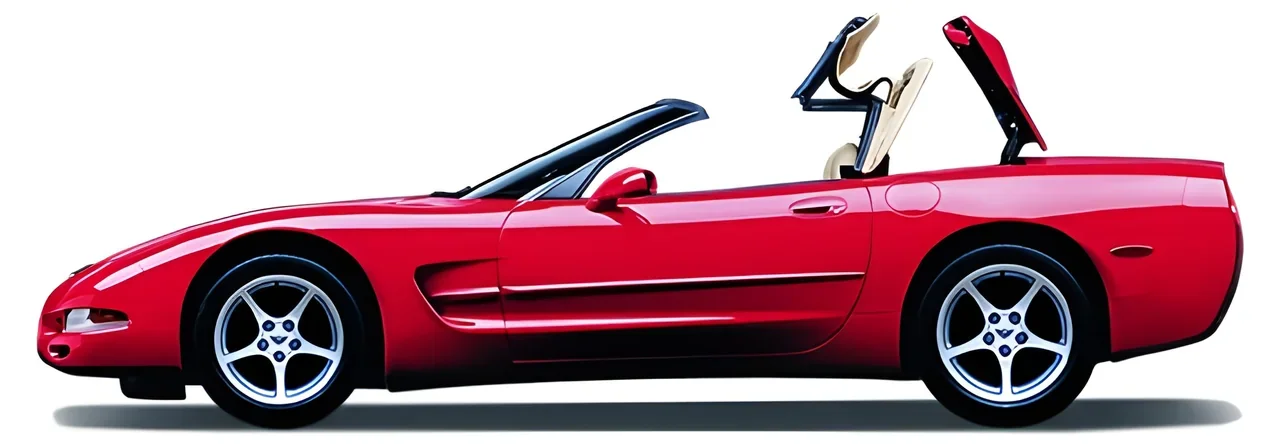
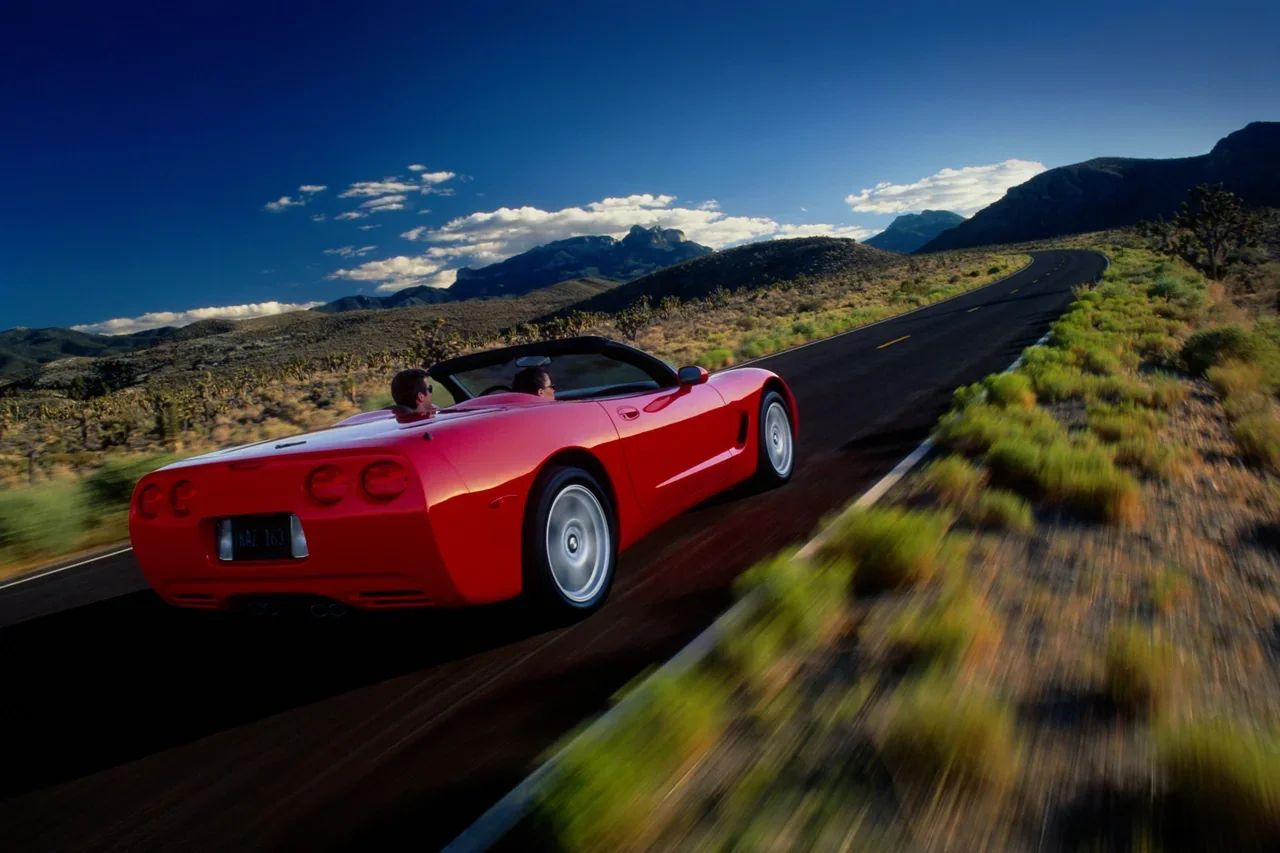
A five-bow pressurized design removed the need for latches at the rear of the top. A button lowered the windows and released the tonneau, and the top was raised or lowered by hand from outside the car.
The integral trunk held up to 13.9 cubic feet, or 11.1 with the top down.
A waterfall panel with the Corvette logo extended the body-color tonneau down between the seats, a feature from 1950s Corvettes.
A new top for 2001 sealed better, kept out more noise and looked smoother.
The convertible won Car of the Year at the 1998 North American International Auto Show, and the coupe and convertible together were Motor Trend Car of the Year for 1998.


For its time, a lot. The C5 added Active Handling stability control, a low tire pressure warning system, a head-up display from 1999, passive keyless entry and, for 2003, Magnetic Selective Ride Control with magneto-rheological shocks.
The system compared the steering wheel sensor with a yaw rate sensor to help bring the car back into line. It debuted on the 1998 Indy Pace Car, a second generation became standard for 2001, and Competition Mode let drivers turn off traction control alone.
New as an option for 1999, the head-up display projected key readouts onto the windshield. It became standard on the Z06 for 2002.
New for 2003, its shocks held magneto-rheological fluid whose consistency changed with the current sent to a coil in each piston, adjusting all four dampers within milliseconds.
A low tire pressure warning system showed the pressure of each tire on the instrument cluster.
Remote Function Actuation included passive keyless entry, and an active system arrived for 2000.
Two editions marked the end of the run: the 50th Anniversary Edition for 2003 and the Commemorative Editions for 2004. C5 Corvettes also paced the Indianapolis 500, including a 50th Anniversary Edition and a 2004 convertible.
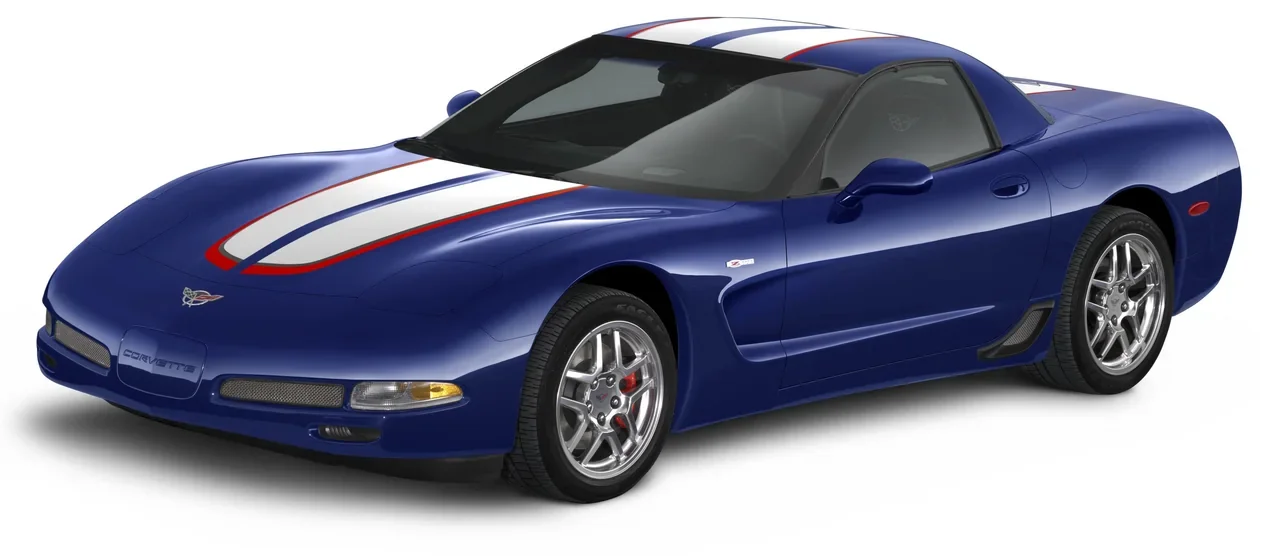
| Edition | Year | What it added |
|---|---|---|
| 50th Anniversary Edition | 2003 | 50th Anniversary Red paint, Shale interior and top, champagne-painted wheels, embroidered badges, Magnetic Selective Ride Control |
| Commemorative Edition coupe and convertible | 2004 | Le Mans Blue paint, Shale interior, special badges and polished wheels |
| Commemorative Edition Z06 | 2004 | Le Mans Blue with a C5-R Le Mans stripe, polished Z06 wheels and a carbon fiber hood |
The 50th Anniversary Edition was offered only for 2003 on the coupe and convertible, as equipment group 1SC, and its red paint and Shale interior were available only with that package.
The 2004 Commemorative Editions marked the success of the C5-R racing program.
A 50th Anniversary Edition paced the Indianapolis 500, the fifth time a Corvette led the field. A 2004 convertible followed for the 88th race on May 30, 2004, a record sixth time for Corvette, with only heavy-duty coolers, a freer-flowing muffler, racing belts and strobe lights added.


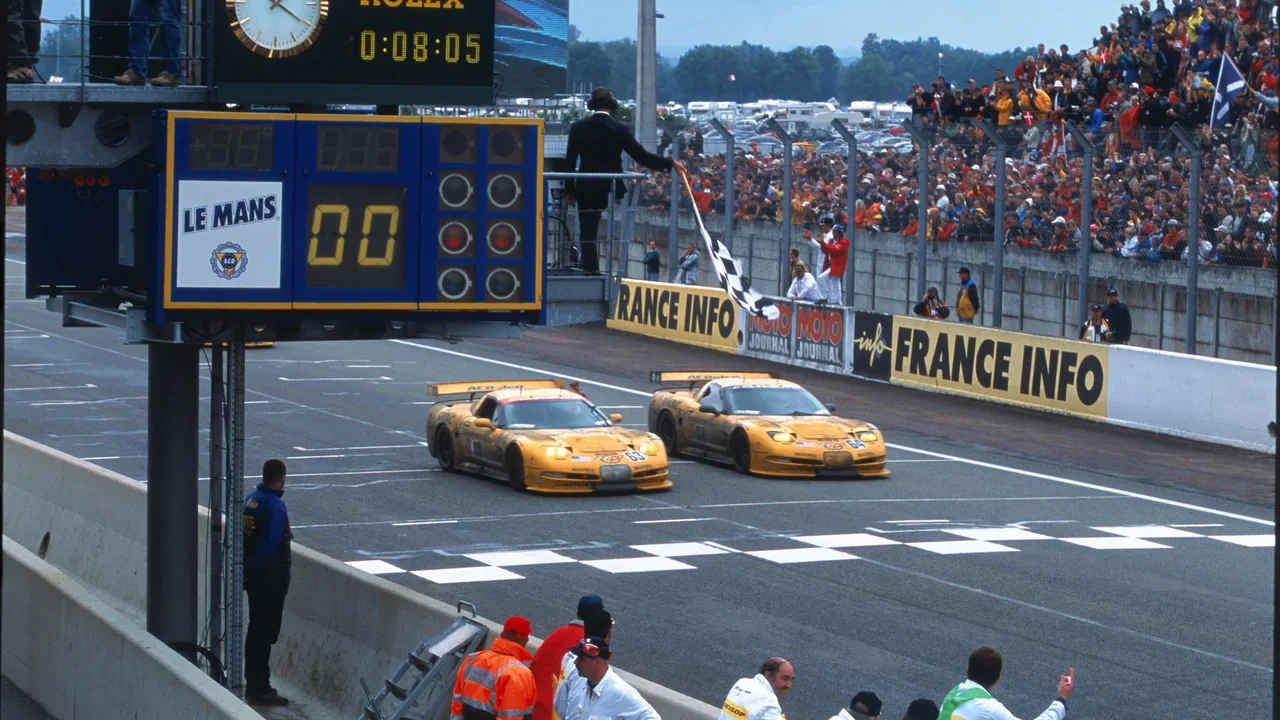
The C5-R won the 24 Hours of Le Mans in 2001 and 2002. In 2002 it also won nine of 10 American Le Mans Series races and took the GTS manufacturer and team championships.
GM honored that record with the 2004 Commemorative Editions. The Z06 version carried a C5-R Le Mans stripe.
The road car carried some of that thinking. From 1999 its Competition Mode turned off traction control for sanctioned racing while leaving Active Handling and ABS active, and from 2001 it could be switched on without stopping the car.


The C5 replaced the fourth generation, which dated to 1984, with a new frame, a rear-mounted transmission and an all-aluminum V8 that made more power than either 1996 engine, while using 1,462 fewer parts.
| Item | C5 Corvette |
|---|---|
| Engine block | Aluminum instead of cast iron |
| Power | More than either 1996 Corvette engine |
| Transmission | Moved to the rear of the car |
| Windshield | More than 7 inches farther forward |
| Door openings | Wider, for easier entry and exit |
| Spare tire | None: run-flat tires instead |
| Part count | 34 percent fewer parts |
The C4 left the C5 a strong position: Corvette led its high-sport segment with 21,560 sales in the 1996 model year.
Every C5 was built at the Corvette Assembly Plant in Bowling Green, Kentucky, where production had moved from St. Louis in 1981. The National Corvette Museum sits across the street.
The plant built body panels into the car late in assembly to protect the paint, used a water-borne paint process and water-tested every car for leaks before it left.
Buyers could also order Corvette Museum Delivery and pick up the new car at the museum.
GM listed the 1997 coupe at 4.72 seconds from 0 to 60 mph with the manual and a 172 mph top speed. By 2001 the coupe ran 0 to 60 in 4.5 seconds and reached 175 mph, and the Z06 ran 0 to 60 in 4.0 seconds.
| Item | 1997 coupe | 2001 coupe | 2001 Z06 |
|---|---|---|---|
| 0 to 60 mph, manual | 4.72 sec | 4.5 sec | 4.0 sec |
| Quarter mile | 13.36 sec at 109.4 mph | 13.22 sec at 109 mph | 12.6 sec at 114 mph |
| Top speed | 172 mph | 175 mph | 171 mph |
| Lateral grip | 0.93 g | 0.93 g | 1.03 g |
| Item | Detail |
|---|---|
| Engine | 5.7L LS1 V8; LS6 in the Z06 |
| Bore and stroke | 3.90 x 3.62 in |
| Transmissions | Hydra-Matic 4L60-E four-speed automatic, Tremec T56 six-speed manual |
| Final drive | 2.73 automatic (3.15 optional), 3.42 manual |
| Suspension | Four-wheel independent short and long arm double wishbone |
| Steering | Magnasteer II speed-sensitive rack and pinion (2000) |
| Tires | Goodyear Extended Mobility run-flat tires, no spare |
| Length and height | 179.7 in, 47.7 in (coupe) |
| Fuel | Premium unleaded recommended |
EPA rated the manual C5 at 16 to 17 mpg city and 25 to 26 highway, and the automatic at 15 to 16 city and 23 to 24 highway. From 2001 the manual car was rated 17 city and 26 highway.
| Engine | Transmission | Model years | City | Highway | Combined |
|---|---|---|---|---|---|
| 5.7L V8 | Six-speed manual | 1997 to 1998 | 16 | 25 | 19 |
| 5.7L V8 | Six-speed manual | 1999 | 16 | 26 | 20 |
| 5.7L V8 | Six-speed manual | 2000 | 16 | 25 | 19 |
| 5.7L V8 | Six-speed manual | 2001 to 2004 | 17 | 26 | 20 |
| 5.7L V8 | Four-speed automatic | 1997 | 16 | 24 | 19 |
| 5.7L V8 | Four-speed automatic | 1998 to 2000 | 15 | 23 | 18 |
| 5.7L V8 | Four-speed automatic | 2001 | 16 | 24 | 19 |
| 5.7L V8 | Four-speed automatic | 2002 to 2004 | 16 | 23 | 19 |
Source: U.S. EPA and U.S. Department of Energy, fueleconomy.gov.
NHTSA lists six GM recall campaigns that include C5 Corvettes. Three cover early 1997 cars, one covers 1997 to 2000 lap belts, one covers the electronic steering column lock across 1997 to 2004, and one covers 2004 control arm hardware.
A recall applies to specific vehicles, not to every car in a model year. Run the VIN through the NHTSA lookup before you buy a used C5, and ask for proof that any open recall was completed. NHTSA also lists two recalls of aftermarket corner lamps sold for these cars, which are not GM parts.
| Campaign | Reported | Model years | Issue |
|---|---|---|---|
| 97V044000 | March 1997 | 1997 | The rear suspension tie rod assembly could fracture; dealers replaced both rear tie rod links |
| 97V105000 | June 1997 | 1997 | A torn fuel tank sending unit seal could cause fuel odor or leakage; dealers replaced both fuel tank assemblies |
| 97V104000 | June 1997 | 1997 | Seat belt energy management loops did not meet FMVSS 208; dealers replaced both seat belt retractors |
| 00V111000 | April 2000 | 1997 to 2000 | Lap belt webbing could twist and jam in the retractor; dealers added inserts to the belt web guides |
| 04V060000 | February 2004 | 1997 to 2004 | The electronic steering column lock could lock or fail to unlock; dealers disabled the lock on automatic cars and reprogrammed and checked manual cars |
| 04V273000 | June 2004 | 2004 | Lower control arm ball stud washers were made of the wrong material; dealers inspected the joints and replaced the hardware |
Source: NHTSA. Check any car by VIN at nhtsa.gov/recalls.
Start with the model and year, because equipment changed through the run: 350 horsepower from 2001, the Z06 from 2001 and Magnetic Selective Ride Control from 2003. Then confirm recall status by VIN, above all the steering column lock recall that covers every C5 year.
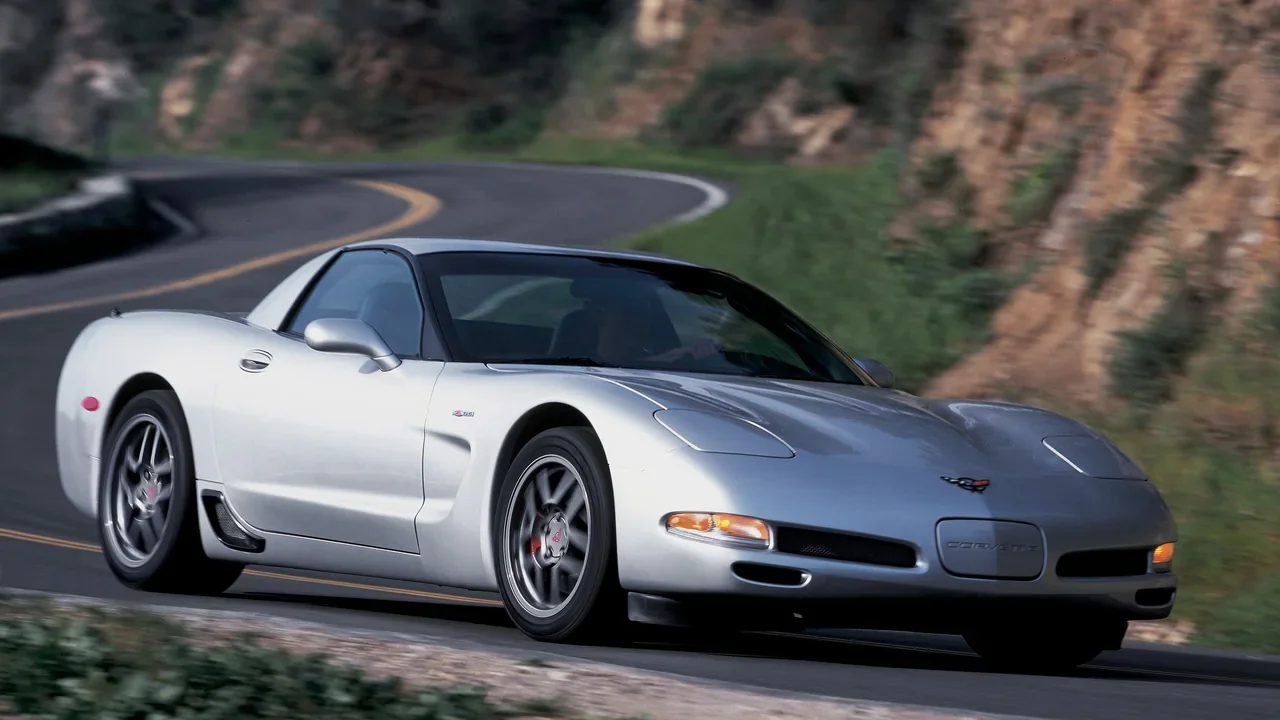
The C5 Corvette covers the 1997 through 2004 model years. The coupe was introduced as a 1997 model.
The LS1 made 345 horsepower from 1997 to 2000 and 350 from 2001 to 2004. The Z06 made 385 for 2001 and 405 from 2002.
The 5.7L LS1 V8, an aluminum-block small-block. The Z06 used the higher-output 5.7L LS6.
GM listed the 1997 coupe at 172 mph and 4.72 seconds from 0 to 60 with the manual. The 2001 coupe reached 175 mph, and the 2001 Z06 ran 0 to 60 in 4.0 seconds.
A fixed-roof C5 sold for 1999 and 2000 with the six-speed manual and Z51 suspension. It was the lightest and stiffest C5, and it became the Z06 for 2001.
Yes. The C5 used power-operated retractable halogen headlamps, a link to earlier Corvettes along with its quad taillamps.
The convertible followed the coupe in the fall of 1997 as a 1998 model.
No. It was built with Extended Mobility run-flat tires and no spare or jack.
Every C5 was built in Bowling Green, Kentucky.
GM listed the 2004 coupe at 3,246 pounds, the convertible at 3,248 and the Z06 at 3,118.
EPA rated later manual cars at 17 mpg city and 26 highway, and automatics at 16 city and 23 highway.
The 2004 model year was the last for the C5 design, marked by Commemorative Editions of the coupe, convertible and Z06.
Both. A four-speed automatic was standard on the coupe and convertible with a six-speed manual optional; the hardtop and Z06 came only with the manual.
Visit Us
600 S Morrison Blvd.
Hammond, LA 70403
| Mon to Fri | 8:30 AM to 7:30 PM |
|---|---|
| Saturday | 9:00 AM to 5:00 PM |
| Sunday | Closed |