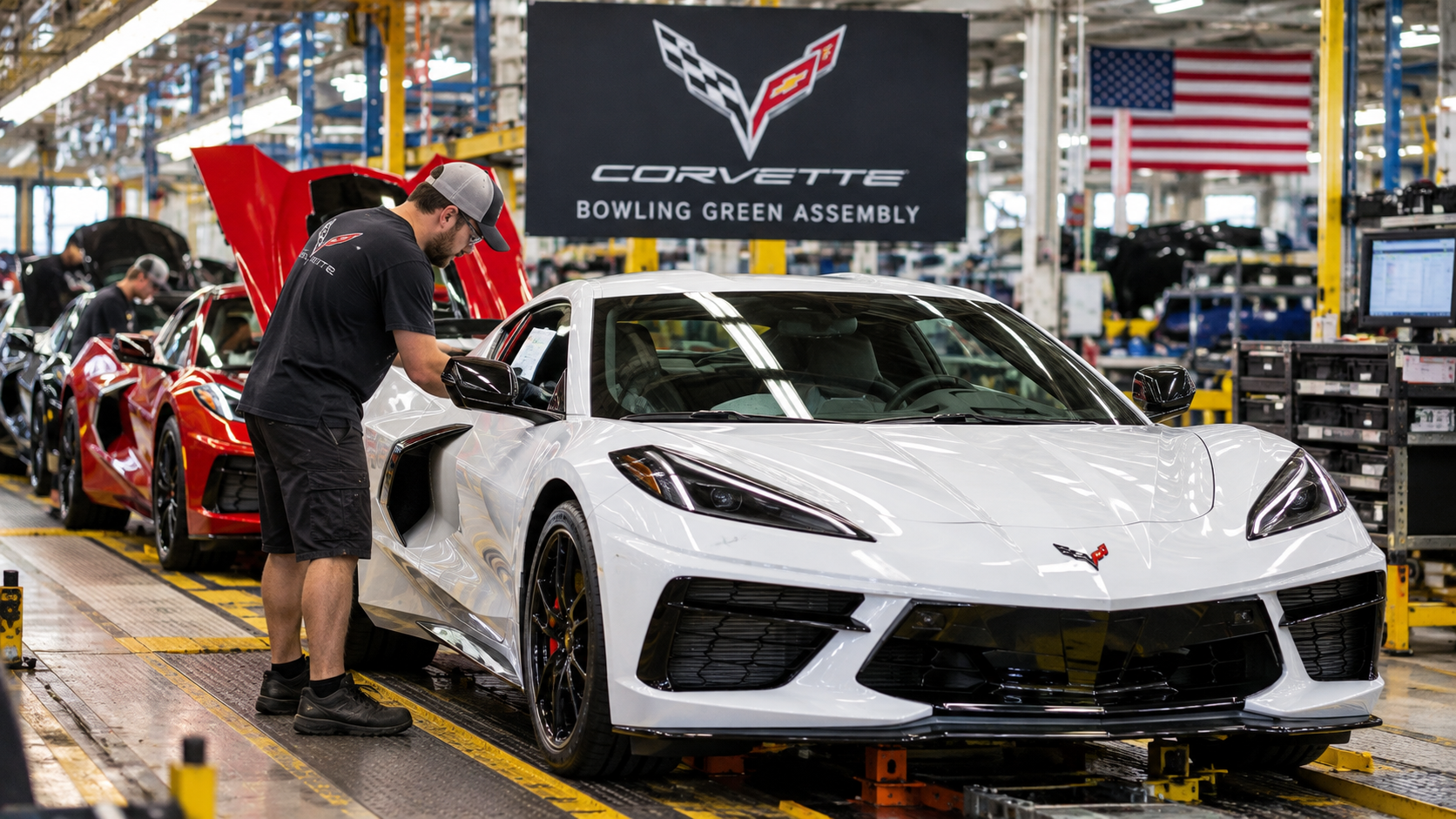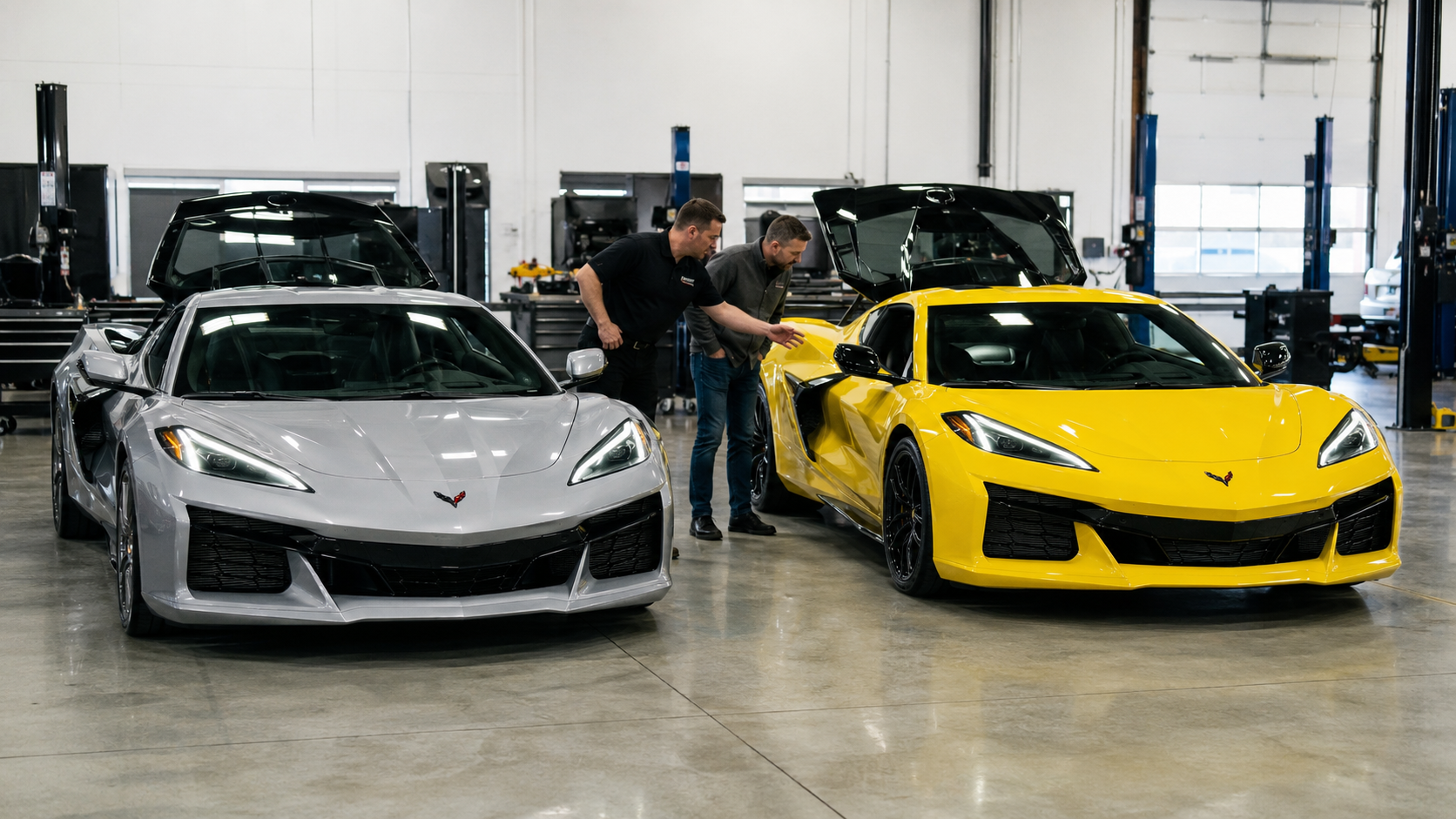

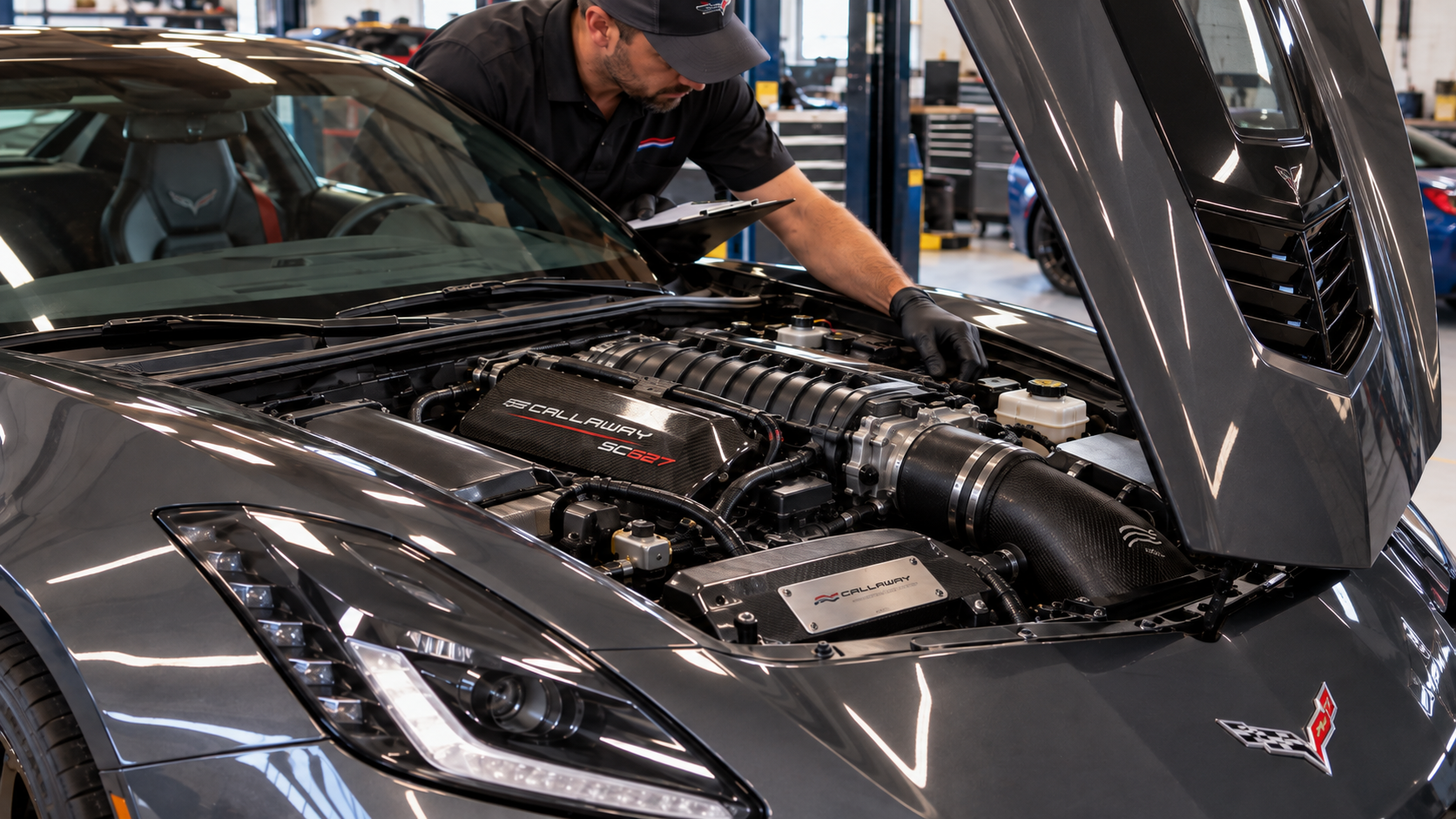
Callaway C7 ownership involves more than the extra power produced by the conversion. However, the car keeps its Corvette foundation while key service and documentation needs become more specialized. Therefore, owners should know how to verify the conversion, protect the calibration, track cooling history, and preserve records. Those details matter during maintenance, diagnosis, and a future sale.
Verify What Makes the C7 a Genuine Callaway
What proves that a C7 is a genuine Callaway? A true conversion should have Callaway identification, documented equipment, and records that match the car. As a result, those items separate a branded conversion from an unrelated modified Corvette.
Callaway offered SC627 packages for Stingray and Grand Sport models. It also offered the SC757 package for the Z06. Those packages used Callaway hardware and calibration, along with identifying pieces tied to the conversion.
Start with the physical identifiers and paperwork. A build plaque, Callaway badging, invoices, and authenticity documents all add context. In addition, service records can show where the conversion was maintained and whether later changes were added.
Callaway C7 ownership starts with knowing exactly what is on the car. Owners should verify several items before treating the conversion as fully documented:
- Confirm that Callaway identification on the car matches the paperwork and conversion history.
- Review invoices for the original package, later service work, and any non Callaway modifications.
- Keep copies of calibration, warranty, and service records with the vehicle file.
This review matters because later modifications can make diagnosis harder. A car with added tuning, pulley changes, or cooling changes may no longer match its original conversion setup. Therefore, the record trail should show what changed after the Callaway work.
How Chevrolet Service Works With a Callaway C7
Can a Chevrolet dealer maintain a Callaway C7? Yes. Routine Chevrolet maintenance can still follow the normal service path for the base Corvette.
Oil service, brakes, tires, filters, and other Chevrolet items still need regular attention. However, conversion related diagnosis may require coordination with Callaway. Therefore, that is where Callaway C7 ownership differs from a stock C7.
Callaway publishes a service procedure that lets Chevrolet dealers work with its technical team. A Callaway authorized dealer can handle that path directly. If the local dealer is not authorized, the service manager can contact Callaway before conversion related diagnosis.
For this reason, owners should make the conversion clear before work begins. Additionally, that matters when the concern involves engine controls, boost, cooling, or drivability.
If the car needs electronic work, ask the advisor whether an ECM update is planned. Callaway warns that a standard reflash can remove its calibration. Therefore, the dealer should coordinate with Callaway before changing ECM software.
ChevyCorvette.com also has a dedicated Callaway Corvette dealer resource. It gives owners a direct dealership path for Callaway related questions.
Protect the Calibration and Watch the Cooling Hardware
A Callaway C7 uses more than added hardware. The conversion also relies on calibration that matches the supercharger and related components. Therefore, that software should remain part of the service conversation whenever electronic work is performed.
What deserves added attention during Callaway C7 ownership? Start with calibration records, cooling hardware, and signs that the car no longer matches its documented setup.
Supercharging increases airflow and heat during hard use. In addition, cooling hardware helps manage that heat across the engine, oil, and intake path. Callaway published track testing for heavy duty cooling equipment on SC627 and SC757 cars.
Owners should look for changes that may alter the original setup:
- Check whether cooling parts, pulleys, intake parts, or tuning were changed after the Callaway conversion.
- Record any ECM software work and confirm that the Callaway calibration was preserved or restored.
- Watch for new warning lights, drivability changes, or heat related concerns after service.
A documented cooling history matters more on a car that has seen track use or sustained high load driving. In addition, repeated hard use makes service records more useful during later diagnosis.
The goal is not to treat every Callaway C7 as fragile. Instead, the goal is to keep the conversion traceable. As a result, a clear record makes it easier to separate normal Corvette service from conversion specific work.
Review Warranty History Before Assuming Coverage
What warranty applied when the Callaway conversion was new? Callaway offered limited coverage alongside the GM warranty during the original term. However, that structure did not make every future repair automatically covered.
Callaway stated that its limited warranty addressed Callaway installed parts. It also covered certain GM powertrain parts when damage came from a covered Callaway component. In addition, GM coverage remained relevant for non Callaway items under its own terms.
For a used C7 today, dates matter. The original in service date, mileage, transfer history, and specific warranty documents should all be reviewed. Therefore, Callaway C7 ownership should not rely on an assumption that older coverage remains active.
For this reason, complete records matter during a purchase. The paperwork can show whether prior repairs involved GM, Callaway, or another shop. It can also show whether later modifications changed the car after the original conversion.
Keep the ownership file organized around:
- Original Callaway conversion documents and warranty records.
- Chevrolet maintenance records and repair invoices.
- Callaway technical service records, calibration notes, and later modification receipts.
As a result, that file gives a future technician more context. In addition, it helps a future purchaser see what was changed and who completed the work.
Document the Car Before Resale
Does a Callaway conversion change resale? However, no single resale formula applies to every C7.
A genuine Callaway has a clearer identity than an undocumented modified Corvette. The conversion name, hardware, build records, and service history give a purchaser more information to evaluate. However, the pool of interested shoppers may still be narrower than for a stock Corvette.
Mileage, condition, trim, accident history, maintenance, and later modifications all shape the final value. Therefore, horsepower alone should not be treated as proof of a premium.
Before listing the car, organize the documents that support its story. Keep the conversion paperwork, service records, calibration notes, and photos of identifying hardware together. Also disclose later modifications clearly.
Owners researching the market can review ChevyCorvette.com's used Corvette inventory. As a result, owners can see how equipment, condition, and documentation appear in current listings.
Callaway C7 ownership asks more from the record keeping side than a stock car. Therefore, the car needs a clear history of what changed and who maintained it. Preserve the calibration, document service work, monitor the cooling hardware, and keep the conversion paperwork complete. Those habits make future service easier and give the next purchaser a clearer view of the car.