
Is the 2024 E-Ray slower than the 2025 E-Ray? Current specifications show both years produce the same 655 combined horsepower. Therefore, the newer model year does not gain a published output advantage. Both use the same core hybrid layout, the same LT2 V8, and the same front electric drive unit. In addition, Chevrolet continues to publish a 2.5 second available sprint to 60 mph for the E-Ray. The real model year differences appear in colors, trim choices, pricing, and equipment details.
Is the 2024 E-Ray Slower Than the 2025 E-Ray?
The direct answer is no based on published factory specifications. Both model years produce 655 combined horsepower and share the same available 2.5 second sprint to 60 mph.
The rear mounted 6.2L LT2 V8 produces 495 horsepower in both years. The front electric drive unit adds 160 horsepower at the front axle. Therefore, the core output figures remain unchanged from 2024 to 2025.
Could calibration alone make the 2025 quicker despite equal horsepower? Current published Chevrolet figures do not show a quicker factory time. In addition, no published power increase appears for the 2025 front motor or LT2 V8.
That matters when comparing two cars with similar equipment. A 2024 E-Ray does not start with a factory speed disadvantage simply because it is one model year older.
Did Chevrolet Add More Power for 2025?
Chevrolet did not publish a horsepower increase for the 2025 E-Ray. The propulsion layout still combines rear V8 power with front electric power.
The LT2 sends 495 horsepower through the eight speed dual clutch transmission to the rear wheels. In addition, the front electric drive unit supplies 160 horsepower at the front axle. Together, those two sources create the 655 horsepower total.
The front motor also produces 125 pound feet of torque. However, that torque acts at the front axle instead of through the rear transmission. Therefore, the electric torque figure should not be treated as extra engine torque from the LT2.
The hybrid layout also keeps all wheel drive. The V8 drives the rear axle while the electric unit powers the front axle. For this reason, launch traction comes from two propulsion sources working at opposite ends of the car.
The core hardware stayed the same:
- The LT2 V8 remains rated at 495 horsepower in both model years.
- The front electric drive unit remains rated at 160 horsepower in both years.
- Combined output remains 655 horsepower with all wheel drive in both model years.
How the E-Ray Makes 655 Horsepower
The E-Ray reaches 655 horsepower by combining two separate propulsion sources. One sits behind the cabin, while the other powers the front axle.
The 6.2L LT2 V8 supplies the larger share of output. In addition, the front electric motor adds power immediately through the front wheels. This arrangement also gives the E-Ray electrified front axle traction without a front driveshaft from the V8.
Where does the extra E-Ray power come from? It comes from the front electric drive unit working with the 495 horsepower LT2. Therefore, the total is not a higher tune of the gasoline engine alone.
The electric unit also supports low speed electric operation through Stealth Mode. However, the main comparison here is output. The 2024 and 2025 cars use the same published 160 horsepower front motor rating.
Because the layout stays the same, the model year decision shifts away from raw output. Equipment, condition, color, trim, mileage, and price become more useful comparison points.
What Changed for the 2025 E-Ray?
The 2025 updates center more on appearance and personalization than propulsion. Chevrolet did not publish a new horsepower figure for the model year.
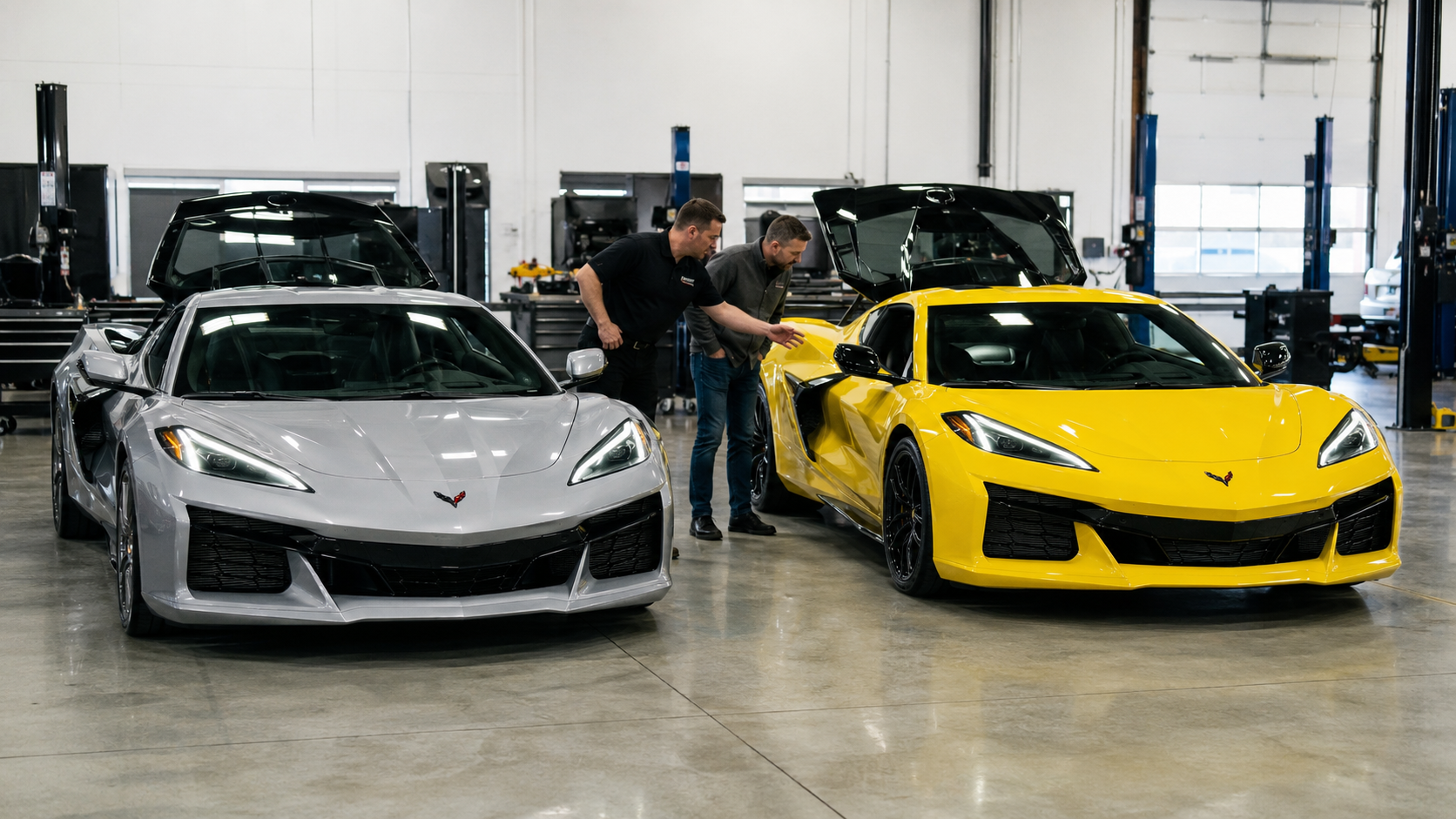
New exterior choices included Competition Yellow Tintcoat and Hysteria Purple Metallic. In addition, new cabin choices included Habanero interior trim and blue stitching. Yellow brake calipers also joined the available appearance choices.
So what are you getting with a 2025 that a 2024 may not have? You are mainly gaining access to newer color and trim combinations. Therefore, the value of those updates depends on how much a specific specification matters to you.
This distinction is useful when comparing inventory. A 2024 with the color, trim, and options you want may offer nearly the same propulsion hardware as a 2025. By contrast, a specific 2025 color or cabin combination may justify the newer year for some shoppers.
Does the Price Increase Change the Value Equation?
The 2025 E-Ray carried a higher listed starting price than the 2024 version. However, that increase did not come with a published horsepower gain.
Is the 2025 worth more if the drivetrain is the same? The answer comes from the complete car, not the model year alone. Mileage, condition, equipment, color, warranty position, and asking price all matter.
For this reason, compare similar trims and options before judging the price gap. A well kept 2024 with desirable equipment may offer strong value beside a similarly configured 2025.
The newer year may still command more money because it is newer. In addition, certain colors or options may be harder to find. Those differences can matter during resale, but they do not change the core 655 horsepower output.
Which Model Year Makes More Sense Today?
A 2024 or 2025 E-Ray can make sense when the car matches your priorities. Both years use the same published hybrid output and the same core propulsion layout.
Before choosing between them, review these points:
- Compare mileage, condition, trim, and option content across the exact cars you are considering.
- Check whether a 2025 color or interior combination matters enough to justify a higher price.
- Compare warranty position, service history, and asking price before paying more for model year alone.
If your priority is factory output, the two years remain closely matched. If your priority is appearance, equipment, or resale timing, the 2025 may carry more appeal.
The 2024 E-Ray still delivers the same published 655 horsepower as the 2025. Therefore, the stronger choice comes from the specific car in front of you. Ross Downing Corvettes in Hammond can compare available E-Ray examples by equipment, condition, and model year.