
Ross Downing Corvettes

Blog

All Hammond Corvette Dealer Hammond Chevrolet Dealer Corvette Maintenance Ross Downing Corvettes Service Hammond Chevrolet Service Corvette Z06 Corvette E-Ray

Corvette Engines and Powertrains for 2026 Compared

Corvette engines for 2026 include three gasoline V8 designs spread across five distinct drivetrain configurations. Stingray, E Ray, Z06, ZR1, and ZR1X each deliver power through a different mechanical path. Therefore, choosing among them requires more than comparing peak horsepower. The LT2 serves Stingray and E Ray. The LT6 powers Z06, while the LT7 powers ZR1 and ZR1X. In addition, E Ray and ZR1X add front axle electric drive. That addition changes traction and total output without replacing the V8 behind the cabin. Stingray and the LT2 V8 What makes the Stingray LT2 distinct? Its 6.2 liter displacement and cross plane crankshaft support strong torque across common road speeds. In addition, Chevrolet rates the engine at 490 horsepower and 465 pound feet of torque. The available exhaust raises those figures to 495 horsepower and 470 pound feet. Moreover, the LT2 uses overhead valves within a compact small block layout. Therefore, the engine fits tightly behind the passenger compartment. Its larger displacement also produces a broad torque curve without requiring extreme engine speed. more A cross plane crankshaft places its crank pins at 90 degree intervals. Consequently, the firing rhythm creates the deep V8 sound linked with Stingray. The layout also adds counterweights that reduce vibration during road travel. The LT2 reaches useful torque at lower engine speeds. Therefore, drivers do not need to chase the redline for quick response. The eight speed dual clutch transmission keeps the engine near the needed range. As a result, Stingray delivers direct acceleration during passing, highway entry, and winding road travel. How E Ray Expands the LT2 Does E Ray replace the LT2 with a hybrid engine? No. E Ray keeps the 495 horsepower LT2 at the rear. It then adds a 160 horsepower electric motor at the front axle. Together, both sources produce 655 horsepower. In addition, this output reaches the road through two separate axles. However, the two axles receive power from separate units. The V8 drives the rear wheels through the dual clutch transmission. The electric motor sends torque directly to the front wheels. This layout creates electrified all wheel drive. Moreover, electric torque arrives quickly when the driver presses the accelerator. That front axle force can support a stronger launch before the rear tires carry the full task. The battery sits within the central tunnel between the seats. Therefore, E Ray does not need a charging plug. Braking and normal driving replenish the battery for later electric assistance. E Ray gives the LT2 a new role without changing its basic character. The V8 still supplies most of the output and sound. In addition, the front motor adds traction and low speed response. Z06 and the LT6 Flat Plane V8 Why does the Z06 engine rev higher than the LT2? The LT6 uses a flat plane crankshaft and dual overhead camshafts. Moreover, Chevrolet rates the 5.5 liter V8 at 670 horsepower with an 8,600 rpm redline. A flat plane crankshaft arranges its crank pins at 180 degree intervals. This design reduces rotating mass and supports quicker changes in engine speed. In addition, the exhaust pulses follow a different rhythm than those from the LT2. Dual overhead camshafts place the camshafts above the cylinder heads. They control four valves per cylinder and support high airflow at elevated rpm. Therefore, the LT6 can keep building power near its redline. The LT6 draws air without turbochargers. Throttle movement changes airflow directly through the intake path. Consequently, the engine responds with a sharp rise in speed and a high pitched exhaust note. Z06 pairs this engine with wider bodywork, larger cooling paths, and track focused hardware. Still, the engine remains the center of its identity. Drivers who value high rpm response and natural aspiration will notice the LT6 most. ZR1 and ZR1X With the LT7 Does ZR1X use a different V8 than ZR1? No. Both models use the twin turbocharged 5.5 liter LT7. Chevrolet rates that engine at 1,064 horsepower and 828 pound feet of torque. The LT7 shares its basic bore spacing and flat plane layout with the LT6. However, Chevrolet revised major internal parts for turbocharged operation. Two turbochargers force more air into the cylinders, which permits much greater fuel flow and output. By contrast, ZR1 sends LT7 power to the rear wheels. Therefore, tire grip and electronic torque control shape the opening phase of acceleration. Once speed rises, the engine continues pulling through the dual clutch transmission. ZR1X adds a 186 horsepower front axle motor. Combined output reaches 1,250 horsepower through electrified all wheel drive. The electric unit adds front wheel torque while the LT7 drives the rear axle. The difference between these two models comes from power distribution: ZR1 uses the LT7 and rear wheel drive. ZR1X uses the LT7 plus a front electric motor. ZR1X combines gasoline and electric output across both axles. Thus, the LT7 remains the gasoline heart of both cars. The ZR1X electric unit adds traction and total output without creating a fourth V8. Which 2026 Corvette Powertrain Fits Your Driving? Which Corvette powertrain fits your plans? Start with the sound, engine response, traction layout, and roads you expect to drive. Peak horsepower matters, but the way each model delivers force matters too. First, Stingray offers the LT2 in its simplest form. Its broad torque and familiar V8 rhythm suit drivers who want strong road manners with room for track visits. E Ray keeps that LT2 sound while adding front axle electric force. Therefore, it suits drivers who value all wheel drive traction and quick low speed response. By contrast, Z06 takes a different path. Its LT6 rewards engine speed, sharp response, and a distinctive flat plane sound. As a result, it speaks most clearly to drivers drawn toward high rpm track work. ZR1 uses turbocharging to push the LT7 far beyond the naturally aspirated engines. ZR1X adds front electric drive for greater total output and traction across both axles. Before choosing, compare these points: Decide whether you prefer cross plane depth or flat plane pitch. Consider rear wheel drive or electrified all wheel drive. Compare natural aspiration with twin turbocharged power. Match the car with your road and track plans. The 2026 Corvette lineup gives each V8 a clear purpose. Therefore, the strongest choice is the one whose power delivery matches your own driving plans.

Read More

What Year Did Corvette Go to Mid Engine and What Changed

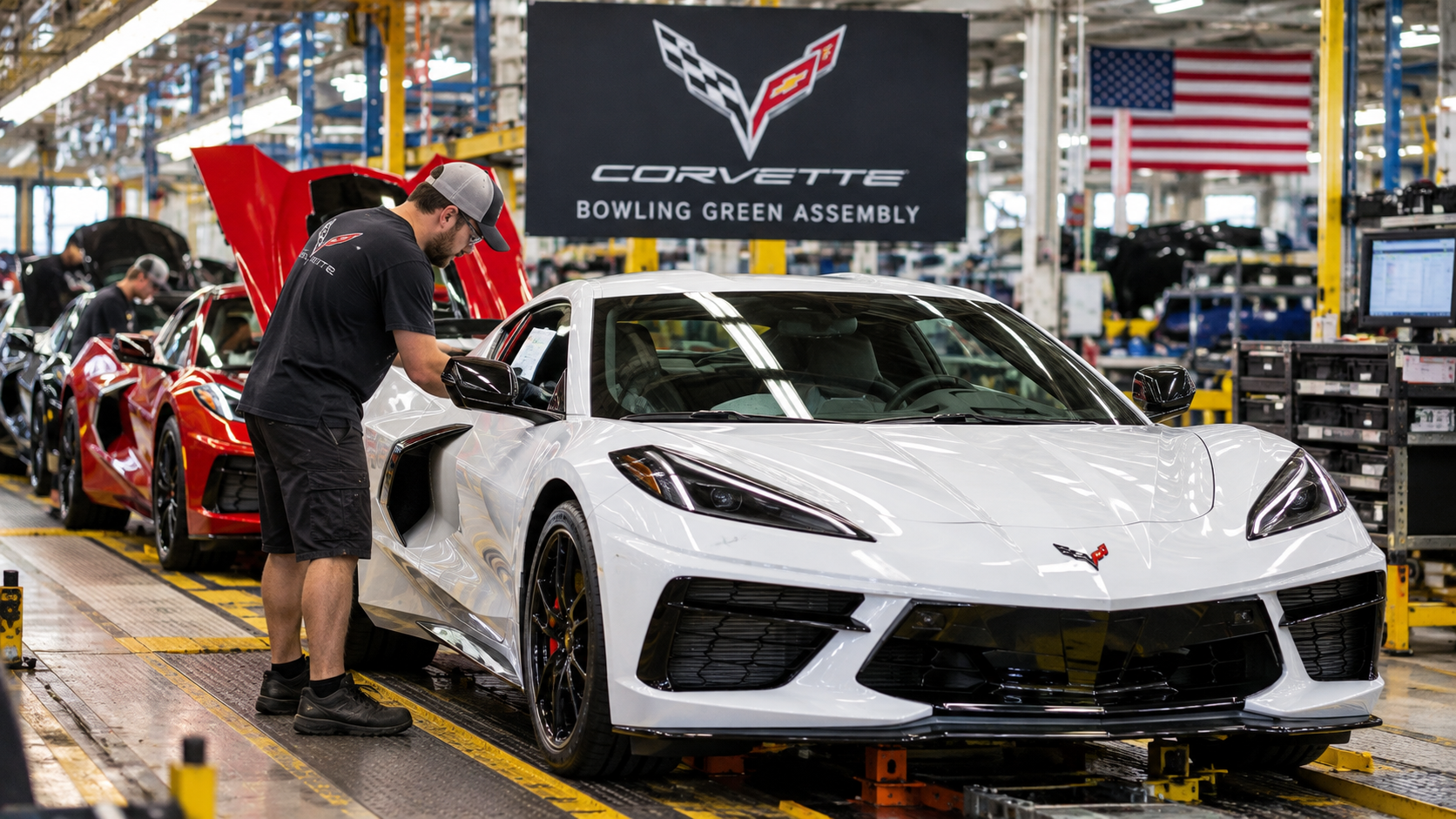
What year did Corvette go to mid engine? The change arrived with the 2020 Corvette Stingray, revealed in July 2019. Both dates appear in Corvette history because they mark different points. Chevrolet showed the C8 during 2019, then released it for the 2020 model year. That answer gives you the date, but the engineering story reaches much farther back. Chevrolet had studied rearward engine placement for decades. Therefore, the C8 was not a sudden rejection of Corvette history. It brought a long running idea into regular production. When Corvette Became Mid Engine The C7 closed Corvette’s front engine production chapter after the 2019 model year. Then, Chevrolet introduced the eighth generation Stingray with its V8 behind the passenger compartment. Therefore, the new car carried a 2020 model year designation. Why do some sources say 2019 while others say 2020? Chevrolet unveiled the car on July 18, 2019. However, dealerships received it as a 2020 Corvette Stingray. Thus, 2019 marks the public reveal, while 2020 identifies the first production model year. more Generation names also make the timeline easier to follow. C7 refers to the seventh generation, which kept its engine ahead of the cabin. C8 identifies the eighth generation and its new engine position. Furthermore, the change reshaped the car’s proportions. The cabin moved forward, while the rear body gained space for the V8 and transaxle. Even so, the C8 remained a two seat Chevrolet sports car. Where the C8 Corvette Engine Sits Is the C8 engine in the middle or the back? It sits behind the seats and ahead of the rear axle. That placement makes the Corvette a rear mid engine car. A rear engine car places its engine behind the rear axle. By contrast, the C8 keeps the V8 within the wheelbase. The engine sits near the car’s center, although it remains behind the passenger compartment. This distinction matters because axle position shapes how mass rests on the tires. Moving the V8 rearward places more static weight near the driven rear wheels. Therefore, the rear tires begin with more load before acceleration starts. In addition, the transaxle sits at the rear. It combines the transmission and final drive near the engine. As a result, the main powertrain mass stays close to the rear axle and within the wheelbase. You can identify the layout through four basic points: The passenger cabin sits ahead of the engine. The V8 sits ahead of the rear axle. The rear wheels receive power in the Stingray. The transmission and final drive sit near the engine. Together, these points explain why the C8 is called rear mid engine. The name refers to engine position, not the visual center of the body. Why Did Chevrolet Move the Corvette Engine? Chevrolet moved the engine to place more mass near the tires delivering power. During hard acceleration, weight also shifts toward the rear axle. Therefore, the C8 starts with rearward mass and gains more rear load as it launches. Why did that matter after seven front engine generations? Engine output kept rising, yet tire grip remained finite. A front engine layout places substantial static weight over the front axle. The rear tires must then handle growing torque with less starting load above them. Wheelspin wastes part of the force meant to move the car. By moving the V8 rearward, Chevrolet gave the rear contact patches a stronger starting point. Consequently, the C8 could use its available engine output more effectively during a launch. Braking also entered the engineering case. Hard braking transfers load toward the front axle, regardless of engine position. However, rearward static mass leaves more load at the rear as that transfer occurs. The rear brakes can then carry a larger share of the stopping task. Corner entry changes for the same reason. The front tires do not begin with the same static burden found in a front engine layout. Therefore, steering and braking forces can be shared differently across both axles. The goal was not simply a new shape. Chevrolet changed the architecture to address traction, braking, and corner entry at their mechanical source. The Mid Engine Story Started Decades Earlier Was the C8 Chevrolet’s first attempt at this layout? No. Engineers studied central engine placement through experimental cars long before the 2020 Stingray. Moreover, Zora Arkus Duntov became closely tied to that work. He joined Chevrolet in 1953 and later served as Corvette’s first chief engineer. Duntov believed a rearward engine could help Corvette compete with racing cars that used similar layouts. Chevrolet Engineering Research Vehicles, known as CERV models, tested several ideas outside regular production. The original CERV I appeared in 1960 as a lightweight open wheel research car. Later projects explored new chassis layouts, drivetrains, aerodynamics, and powertrain placement. CERV III arrived in 1990 with a mid engine layout and all wheel drive. It looked far closer to a road car than the earliest research machines. However, cost, manufacturing needs, and product timing kept those concepts from becoming a showroom Corvette. The C8 finally joined those old ideas with modern production tools. Computer modeling, new structural methods, electronic controls, and Bowling Green manufacturing supported the move. Thus, the 2020 Stingray completed a path that Chevrolet engineers had explored across several eras. What Changed and What Stayed Corvette The engine location changed the body, cabin view, cargo arrangement, and driving feel. It also ended the long hood proportions linked with earlier generations. However, Chevrolet kept several traits at the center of the Corvette name. The Stingray retained a naturally aspirated Chevrolet V8. It also kept two seats, a removable roof panel on the coupe, and rear wheel drive. Moreover, the car continued to pair strong engineering with a price below many exotic rivals. Additionally, the C8 kept Corvette production in Bowling Green, Kentucky. That continuity linked the new architecture with the people and plant behind earlier generations. What stayed familiar after the engine moved? Corvette still centered on direct driver control, V8 character, and American sports car identity. The route changed, but the central mission remained. Knowing what year Corvette went to mid engine gives you a useful timeline marker. Yet the deeper story explains why 2020 mattered. Chevrolet moved the V8 after decades of study. Then, the new position reshaped how the car launches, stops, and turns.

Corvette ZR1 0-60 MPH Explained Beyond a Single Number

Corvette ZR1 0-60 mph results reveal more when you know the setup behind each run. The quickest published time does not come from horsepower alone. Instead, the launch depends on tire grip, launch software, pavement, temperature, and timing method. Each factor changes how quickly the rear tires transfer force to the road. Chevrolet lists an available 2.3 second time for the ZR1 with the ZTK package. The standard version carries a published 2.5 second time. Therefore, the first step is matching each number with the correct car. That context keeps a fast result from becoming a misleading comparison. What the Published Number Includes Which ZR1 produced Chevrolet’s 2.3 second time? The result belongs to a ZR1 equipped with the available ZTK package. That setup includes Michelin Pilot Sport Cup 2 R tires and track focused chassis tuning. It also requires the Carbon Fiber Aero Package. The standard ZR1 uses the same twin turbocharged LT7 V8. However, Chevrolet lists a 2.5 second time for that configuration. The two tenths do not suggest an engine output change. Instead, the package changes how the car places its power onto the pavement. The LT7 produces 1,064 horsepower and 828 pound feet of torque. An eight speed dual clutch transmission sends that output to the rear wheels. Yet a standing start begins with available tire grip. The engine cannot use every pound foot at once without overwhelming the contact patches. For that reason, read every published time with four details: more Identify the tire and package fitted to the test car. Check whether the run used Chevrolet’s launch software. Look for information about pavement and timing method. Compare the quarter mile result with the opening sprint. These details explain what the number represents. Moreover, they make comparisons between the standard ZR1 and ZTK equipped car more useful. How Launch Control Manages the Start Why not send all 1,064 horsepower to the rear tires at once? The tires would spin before moving the car forward efficiently. Therefore, a quicker launch requires measured torque delivery during the first moments. Launch Control coordinates engine output, transmission response, and rear tire slip. The driver selects the proper drive setting and follows the vehicle procedure. Then, the car manages the start within its programmed targets. Custom Launch Control adds driver adjustment for the launch. It lets the driver tailor starting engine speed and target slip for a suitable closed course. However, more wheelspin does not automatically create a quicker run. Too much slip turns engine output into heat instead of forward motion. The eight speed dual clutch transmission also shapes the result. Its fast shifts reduce the time spent between gears. In addition, the transmission keeps the LT7 pulling as road speed rises. That role becomes clearer after the tires clear the most traction limited part of the run. Chevrolet’s traction management technology adds another layer during track driving. It changes traction and stability intervention through selectable settings. Therefore, the chosen setting must match the driver’s skill, tire state, and closed course surface. Why Tires and Pavement Change the Result Can the same ZR1 record different times on separate surfaces? Yes. The tire contact patches can only transfer the force supported by the pavement at that moment. Cup 2 R tires support strong dry grip once they reach a suitable temperature. However, cold rubber will not respond like warmed rubber. Pressure also rises as the tire heats. Therefore, the same tire can launch differently early and later during an event. Pavement creates another variable. A prepared drag strip contains rubber and traction treatment across the launch area. By contrast, an ordinary road may contain dust, moisture, oil residue, or polished aggregate. Those materials reduce the force available before slip begins. Air temperature, pavement temperature, and recent tire activity also matter. A warm, clean surface may support a stronger start than cold pavement. Still, drivers should never attempt launch testing on public roads. The ZR1’s acceleration belongs on a suitable closed course with trained support. A useful test log should record: Tire type, pressure, and approximate temperature Surface type and visible surface state Air temperature and weather Launch setting and timing method That information gives each number a clear setting. Consequently, later runs can be reviewed with less guesswork. Why Do Corvette ZR1 Acceleration Tests Differ? Independent tests may use different starting rules. One test can begin timing when the car first moves. Another may use rollout before the clock starts. Rollout removes a small part of the initial movement from the measured time. Weather and elevation also change the run. The LT7 uses twin turbochargers, yet air density still matters. Moreover, wind can change resistance as speed builds. A headwind may have little effect at first, then become more noticeable later. Vehicle weight can vary too. Fuel level, driver weight, test equipment, and fitted options all add mass. Because acceleration must move that mass, a heavier test car may record a slower number. Driver procedure creates another source of variation. Launch software reduces variation, but it cannot make pavement and tires identical. Therefore, credible tests can disagree without proving that one car has a fault. When comparing two numbers, use the same timing standard whenever possible. Then, compare tire setup, pavement, temperature, and vehicle configuration. This method gives the figure more context than a ranking alone. What the Quarter Mile and ZR1 Build Reveal The quarter mile shows what happens after the launch stops dominating the result. Chevrolet lists a 9.6 second run at 150 mph for the ZTK equipped ZR1. That trap speed shows how forcefully the LT7 continues pulling well beyond 60 mph. The first part of the run depends heavily on traction. Later, engine output, shifting, aerodynamic drag, and vehicle mass take larger roles. Therefore, quarter mile data gives a wider view than the opening sprint. Does every ZR1 build need the ZTK package? No. The package suits drivers who plan serious closed course driving. Its tires, chassis tuning, and aero equipment support that purpose. However, the standard ZR1 retains the same LT7 output and may fit a different ownership plan. Before you build a ZR1, consider where the car will spend most of its miles. A driver focused on road travel may value the standard setup. A frequent track driver may prefer the ZTK equipment and its specialized tire choice. The Corvette ZR1 0-60 mph figure becomes more useful once the setup behind it is clear. Therefore, compare the complete test instead of one headline number. That approach gives you a stronger view of the car you plan to own and drive.

How to Check Tire Tread After a Corvette Track Day

Learning how to check tire tread after a Corvette track day starts with looking beyond one center groove. Furthermore, your tires record each braking zone, corner, and acceleration run. Therefore, the tread can reveal pressure concerns, wheel geometry clues, and excessive shoulder loading. In addition, a careful inspection can uncover damage before the next session. Track driving places intense heat and force into every tire. Because of that, a quick glance at the wear bars is not enough. Therefore, you need to compare several tread zones and review your pressure notes. You should also follow the track guidance for your Corvette model and tire specification. How to Check Tire Tread Across the Full Tire Where should you measure after leaving the track? Measure the inner shoulder, center ribs, and outer shoulder on every tire. Furthermore, a tread gauge gives a clearer reading than a visual estimate. However, one measurement cannot show how the contact patch worked through each corner. Start after the tires have cooled and the Corvette sits on level ground. Then, check several points around the circumference. Additionally, record the lowest reading from each tread zone. In addition, compare the left and right tires on the same axle. Similar readings can confirm an even wear pattern. A wide difference deserves closer review. Before measuring, look for rubber pickup from the track surface. Small pieces can hide the true groove depth. Then, remove loose pickup carefully without cutting the tread. Next, inspect the grooves, tread blocks, and shoulder edges under bright light. Your notes should include: more Record inner, center, and outer readings for every tire. Note the starting pressure and the hot pressure after each session. Mark any cuts, tears, bulges, missing rubber, or exposed material. These records turn one inspection into a useful history. Furthermore, they make later changes easier to spot. The lowest reading matters, but the pattern across the tire tells the fuller story. Is Outer Shoulder Wear Normal After a Track Day? Outer shoulder wear can appear after hard cornering. Because of this, the outside front tire carries heavy lateral force while the Corvette turns. As a result, its shoulder may show more abrasion than the center ribs. Even so, light wear near the tread edge does not always signal a problem. However, the tire should keep its working surface on the tread. Scuffing that continues beyond the tread edge points toward excessive rollover. Moreover, the sidewall uses different rubber and should not carry sustained cornering load. Continued rollover can lead to chunking or tearing near the shoulder junction. Ask whether the marks stop at the tread edge. If they extend onto the sidewall, pause before another session. Therefore, review hot pressures, wheel geometry settings, and driving inputs with a qualified technician. Increasing pressure or negative camber may keep more load on the tread. Still, any adjustment must follow the current Chevrolet guide and the tire maker's instructions. In addition, compare both front tires. A course with more turns in one direction may load one side harder. Even so, deep shoulder loss on one tire can point toward a setup concern. Photos taken after every session can show whether the pattern is stable or moving farther outward. What Center Wear Reveals About Track Pressure What does faster center wear mean after repeated laps? It can indicate that the tread center carried too much load. During a session, tire heat raises pressure. Therefore, a reasonable cold setting can still finish above the target range. Check pressure soon after entering the paddock. A reading taken much later may miss the peak reached on track. Additionally, write down each hot reading beside the session length and outdoor temperature. Then, compare those notes with center tread loss. Chevrolet publishes cold minimums and hot targets for supported Corvette track configurations. However, those values vary by model and course type. For that reason, do not apply one pressure number to every Corvette. A ZR1 on a high speed course may use different targets than a Stingray Z51. For this reason, pressure changes should remain measured and gradual. Do not bleed a hot tire without knowing the target for your setup. Furthermore, restore the placard pressure before returning to public roads. Street travel places different demands on the tire than closed course laps. Center wear alone cannot prove the cause. Wheel geometry, tire construction, course layout, and repeated heat cycles also shape the tread. Instead, use the pattern with your recorded pressures. What Inner Edge and Uneven Wear Say About Wheel Geometry Does inner edge wear mean the wheel geometry is wrong? It may reflect camber, toe, or street miles driven with track settings. Furthermore, negative camber tilts the tire inward at the top. During cornering, that angle can place more tread on the pavement. Toe describes the direction each tire points when viewed from above. Consequently, a small toe change can make the tread scrub across the road. An incorrect setting may produce feathering or rapid wear along one edge. Run your hand lightly across the tread after it cools. A smooth feel in one direction and a sharp feel in the other suggests feathering. In addition, compare the inner edge with the center and outer edge. A steady slope across the tread differs from isolated damage. Chevrolet lists track wheel geometry specifications for supported Corvette models. The guide also directs owners to return the settings to factory specifications for public road driving. Therefore, record the settings before the event and after the reset. As a result, that record gives a technician a stronger starting point. Uneven wear does not always come from wheel geometry alone. Moreover, a bent component, worn joint, damaged wheel, or pressure difference can produce a similar clue. Because the tire only shows the result, a full inspection may be needed to identify the cause. When a Corvette Tire Should Stay Off the Track Can a tire need replacement before reaching its wear bars? Yes. Track loads act on the visible tread and the internal tire structure. Furthermore, Chevrolet gives track distance replacement limits for certain Corvette models, even when tread remains above the indicator. Stop further track driving when you find serious damage. Examples include exposed material, a bulge, deep cuts, missing tread chunks, or a visible separation. In addition, disappearing shoulder grooves may show that the tire has reached its track limit. Use this final review before another event: Compare the tire's track distance with the current Chevrolet guidance. Confirm that no tread or sidewall damage appeared during the last session. Review the lowest tread reading, pressure log, wheel geometry record, and tire age. A tire that passes one check can still fail another. For this reason, never approve it from tire tread depth alone. Therefore, ask a qualified tire or Corvette technician to inspect any doubtful pattern. In addition, your notes, photos, and measurements will give that person useful evidence. After the track day, return pressures and wheel geometry to the correct street settings. Then, recheck the wheel nuts with the proper torque procedure. Consequently, careful post track review protects the next drive and preserves the feedback your Corvette gave you.

Do Corvettes Have Engines in the Back? What Changes

Yes, the current Corvette does have its engine in the back. Starting with the 2020 model year, Chevy moved away from decades of front engine design. This guide explains why that switch happened and breaks each change down clearly. It also covers what changes in traffic and parking, and what a driver coming from an older Corvette should expect. Do Corvettes Have Engines in the Back? The direct answer is yes, but only since the C8 generation. Every Corvette built before 2020 placed the engine up front, behind the grille and ahead of the driver. That layout had stayed consistent across nearly seven decades of Corvette generations. The C8 moved that V8 behind the driver and ahead of the rear axle. This layout is known as mid engine. However, the shift was not cosmetic. It changed where weight sits across the chassis. Because the engine now sits closer to the car's center, the car balances differently through a corner. That balance shift is the main engineering reason behind the move, and it shapes nearly every other change discussed in this guide. more The Reason Behind the Move to the Back This question comes up constantly among shoppers comparing Corvette generations. The direct answer centers on weight distribution. A front engine Corvette carries roughly 50 percent of its weight up front. A mid engine Corvette shifts that closer to a 40 front, 60 rear split. That rear weight bias boosts traction during hard acceleration. Because more weight sits over the driven wheels under power, the rear tires grip the pavement harder off the line. The Hood Line Benefit Nobody Talks About Additionally, moving the engine back let engineers lower the hood line. Instead, there is no longer a large engine block sitting ahead of the driver. That lower hood opens up forward visibility, and shoppers notice it right away when comparing a C7 to a C8. A flatter front end also makes it easier to judge distance to curbs and parking blocks. For this reason, the switch solved two problems at once. It fixed weight balance and gave drivers a clearer view forward. What Changes in Traffic and Parking? This question moves the conversation away from handling and toward daily use. A mid engine layout places the engine behind the driver. That means the rear of the car houses mechanical parts instead of a trunk or back seat. As a result, the view through the back window is more limited than in a front engine Corvette. The engine bay sits directly behind the cabin. However, many C8 owners adjust by relying more on the rearview camera and side mirrors. This becomes routine when backing out of a driveway or a tight space, and most owners report it stops feeling unusual within the first month. Tighter Spaces Need a Bit More Care Even so, the car's overall length and width stayed close to its predecessor. Therefore, the footprint in a parking space feels familiar once a driver adjusts to the new view. Beyond that, the wider rear fenders on the C8 mean a driver should leave extra clearance. This matters most in tight garage entries or narrow alleys. What an Older Corvette Owner Should Expect A driver moving from a C6 or C7 into a C8 will notice the seating position shifts forward. That change comes directly from the mid engine layout. The driver now sits closer to the front axle instead of near the middle of the car. Consequently, the car feels more connected to the front wheels through tight turns. That connection comes from the driver sitting nearer the front axle, where steering input feels more direct. Drivers tend to describe this as sharper steering feedback. Still, the biggest adjustment for most owners is backing out of a space. The rear window view they relied on for years is gone. A short test drive focused on reverse maneuvers lets a shopper judge that adjustment before committing to the switch. Practicing a few parking lot maneuvers during that drive can reveal whether the visibility change feels manageable day to day. Living With the Mid Engine Layout Day to Day Once the visibility adjustment becomes routine, most owners report the mid engine layout fits daily driving without much friction. That ease comes largely from how quickly the brain adapts to relying on mirrors and cameras instead of a direct rear window view. The lower hood line changes how the front of the car reads in traffic. A driver can place the nose more precisely near curbs and other vehicles. Beyond that, parking garages with tight clearance need a bit more attention to the wider rear fenders. This becomes second nature within the first few weeks of ownership. The seating position closer to the front axle also changes how road texture registers compared to a front engine Corvette. Still, most drivers describe this as a small shift, not a dramatic one. For a shopper weighing the move from a front engine Corvette to the mid engine C8, one point holds steady. The visibility and seating changes are real, but they settle into habit faster than the spec sheet differences might suggest.

Corvette Repair Shop Communication: What to Expect

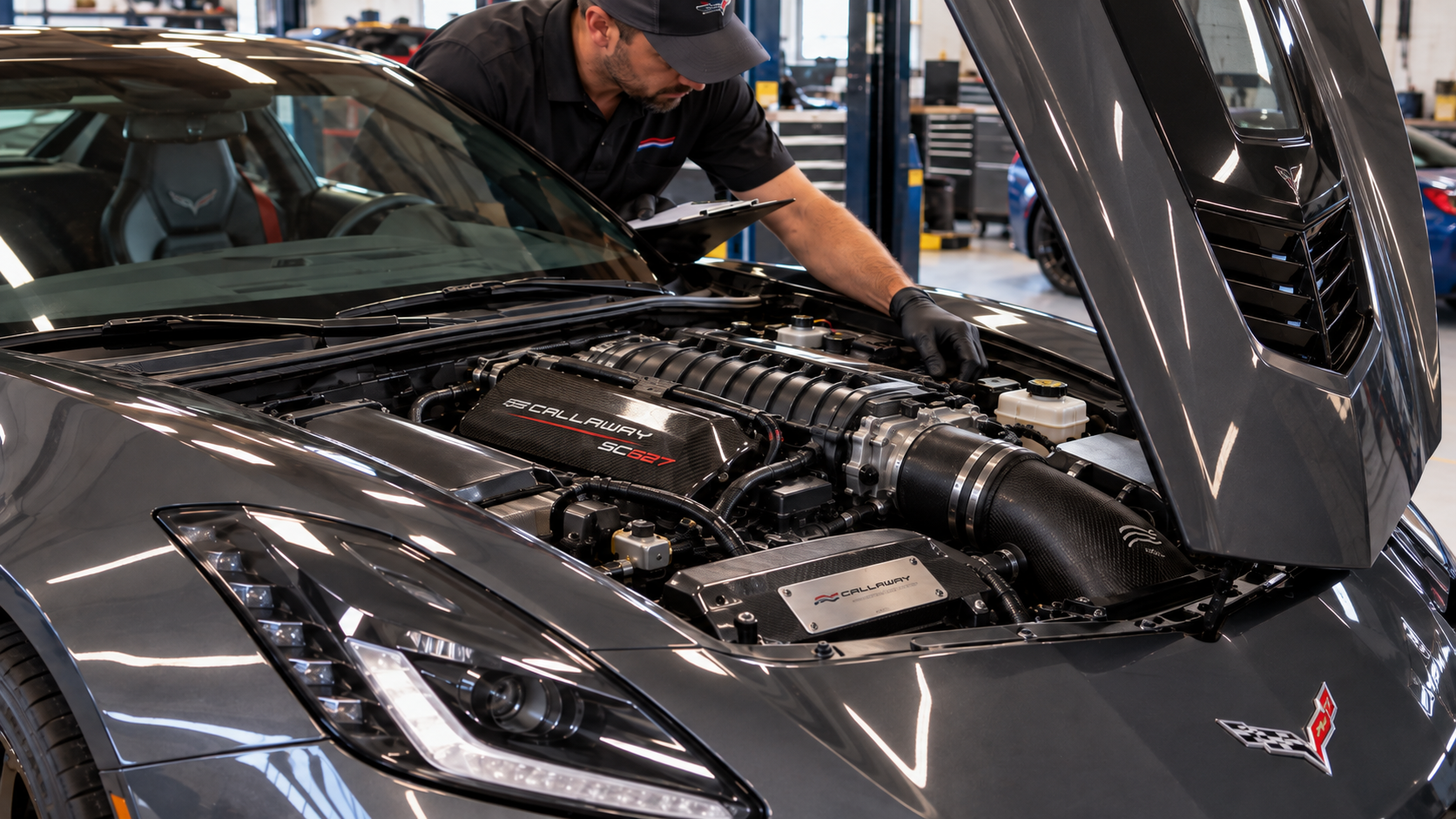
A repair visit can feel uncertain even when nothing about the car itself is going wrong. A trustworthy corvette repair shop removes that uncertainty with clear updates. Those updates should run from the first phone call through pickup. Most service frustration traces back to silence during the wait. It rarely traces back to the quality of the work performed. This guide breaks down what clear communication should sound like at intake. It also covers diagnosis, timing shifts, and approval before added cost. Each stage builds on the one before it, and a gap early in the process usually carries forward to the next. Why Do Service Visits Feel Stressful Even When the Repair Goes Fine? This question matters because the stress rarely comes from the repair itself. Instead, it comes from not knowing what is happening to the car while it sits out of sight. Owners hand over a car and then wait without a clear sense of where it stands in the queue. As a result, even a routine wait can feel longer than it really is. Because most shops call only when something changes, the gap between updates can feel longer than it is. A shop that sets a clear contact schedule from the start removes that gap before it turns into frustration. For this reason, the first call at intake should state when the next update will arrive. It should not only confirm the drop off. more What Should a Clear Initial Update Include? A clear initial update should arrive once a technician finishes the first diagnostic look at the car. That update should state exactly what was found, in plain language instead of part numbers or codes alone. It should also state what the technician recommends and why. That reasoning should connect back to the original concern that brought the car in. Additionally, the update should give a realistic cost and time estimate before any work begins. Owners who get this detail early trust the rest of the visit more. The unknown gets replaced with a clear picture. By contrast, a vague update that only says the shop found some issues leaves the owner guessing. That kind of vague update wears down confidence before the real work even starts. Why Does a Repair Take Longer Than First Quoted? Repair timing can shift once a technician gets deeper into the car. That shift can happen more on a low production sports car like the Corvette. That shift is normal and is not a sign something went wrong. Parts availability, hidden wear found mid repair, or a part that fails testing after installation can all stretch a timeline. Even a well run shop runs into one of these issues occasionally. However, a shop that communicates well will call before the original deadline passes, not after. That call should explain what changed and offer a new, specific date instead of a vague promise. Owners do not need every repair to finish exactly on schedule. They need to know when the schedule changes and why, so they can plan around it instead of guessing. Approval Before Added Cost: What Owners Should Expect A trustworthy shop calls before adding cost beyond the original estimate, every time. That call should explain the new finding and why it matters for the car's safety on the road. Moreover, it should also explain what the added cost covers. Owners should never discover a higher bill only at pickup. That moment removes their chance to make an informed choice. The list below covers what this approval step should always include. A clear explanation of what was found and why it was not visible during the first inspection. A specific cost figure instead of a wide range, so the owner can decide with full information. An explanation of what happens if the additional work gets declined, including any tradeoffs that follow. This approval step protects the owner's trust more than almost any other moment in the visit. It shows the shop respects the owner's right to decide instead of treating the repair as automatic. A shop that skips this step risks the relationship, even with good intentions, no matter how the repair turns out. What Strong Communication Looks Like at Pickup The final update at pickup should summarize what was done. It should confirm the original concern was resolved. It should also explain anything the owner should watch for going forward. A technician walkthrough, even a brief one, gives the owner a chance to ask questions before driving away. That moment also gives the shop a chance to confirm nothing was missed. That short conversation can resolve small concerns before they grow into a complaint. Beyond that, a shop that documents the visit clearly on the invoice makes the next visit easier. The next visit starts with a known history instead of a blank slate. Consequently, strong communication at this stage closes the loop on every update that came before it. When a corvette repair shop, corvette dealership, or corvette dealer follows this pattern, owners walk away with confidence. That confidence replaces lingering doubt about what happened to their car.

Corvette Specific Service: Track Day Inspection Guide

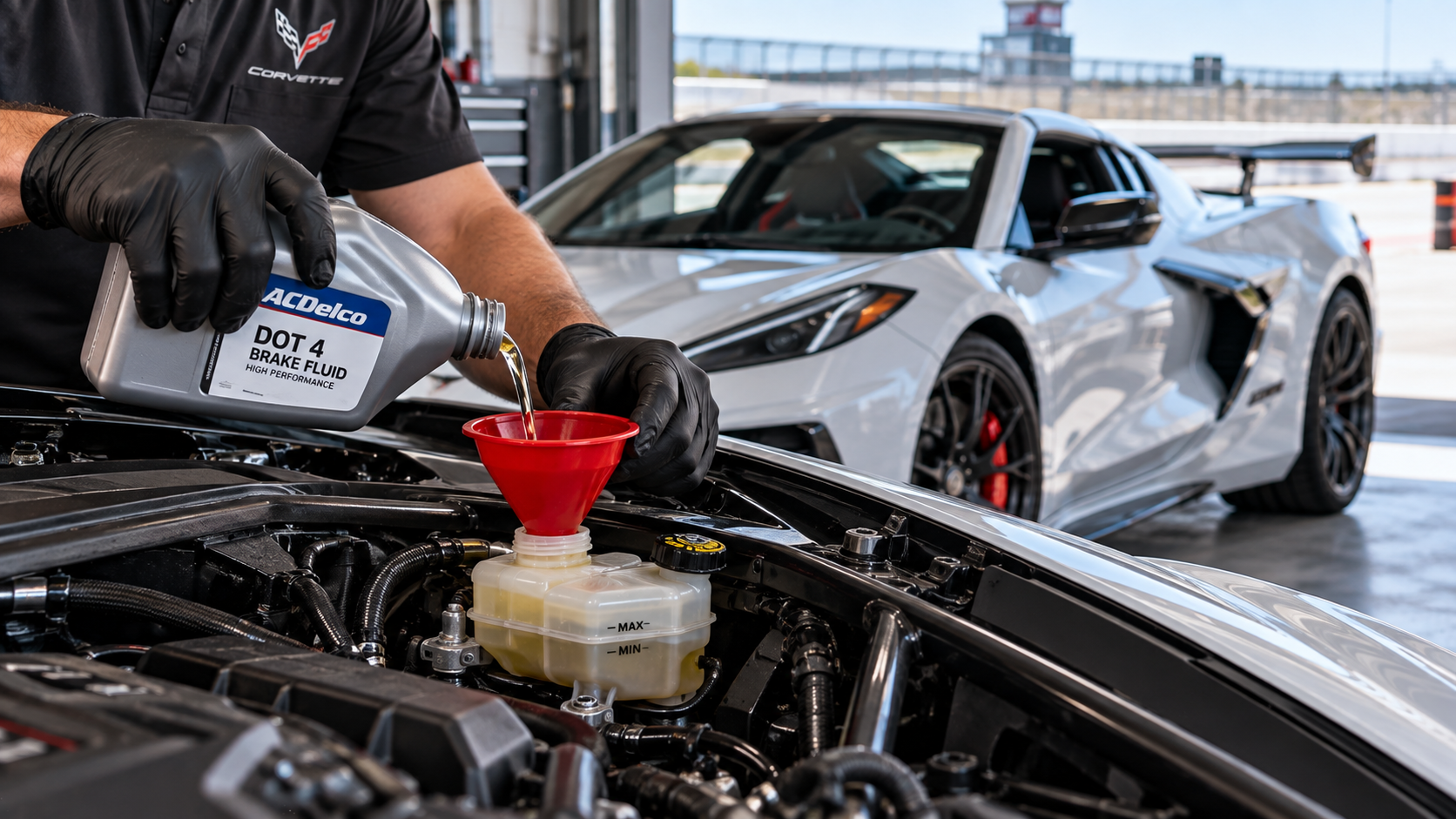
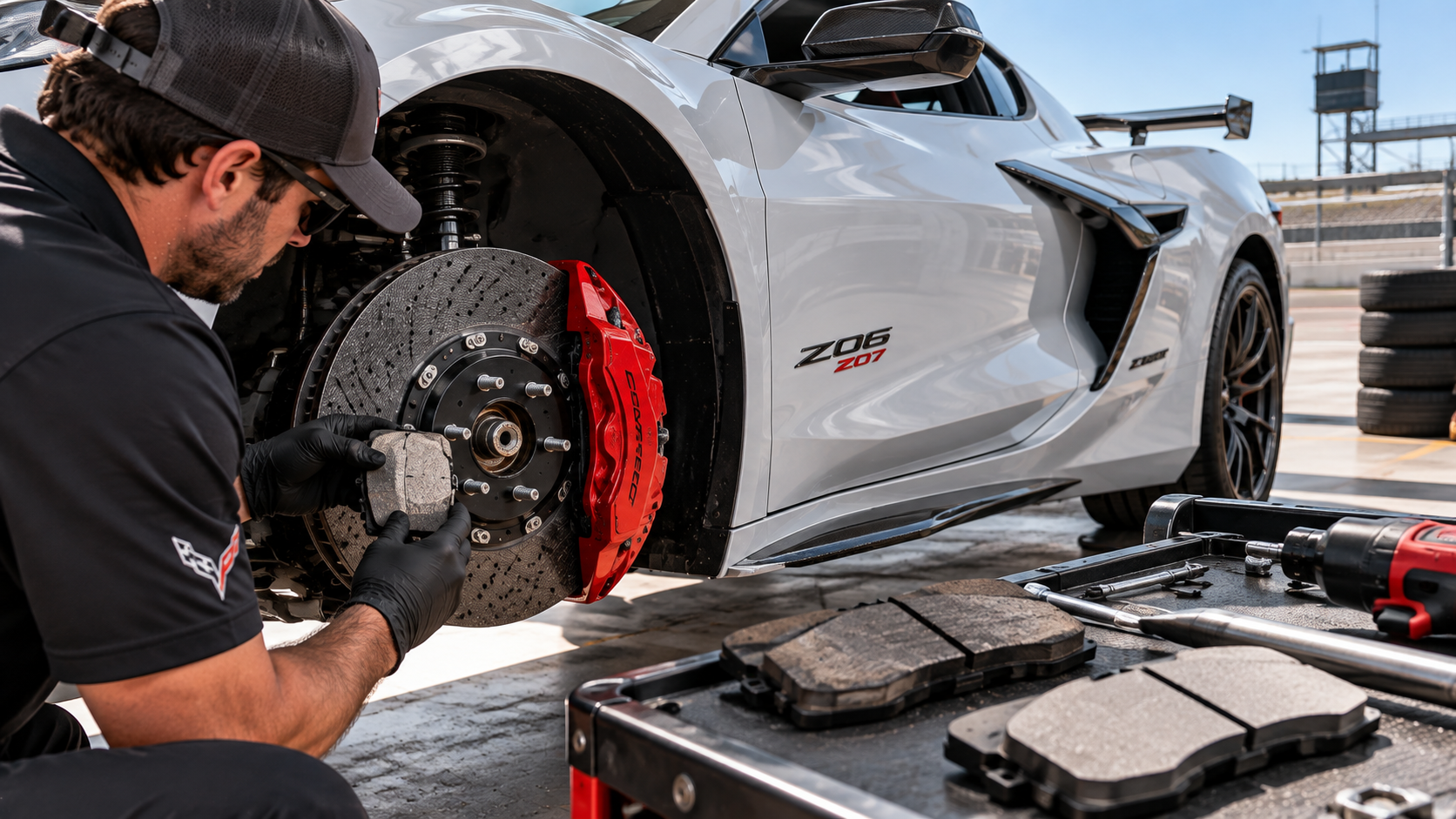
A Corvette driven hard on a track faces stress levels far beyond daily street use. For that reason, corvette specific service matters more than a routine oil change. Track driving raises brake temperatures and loads suspension bushings hard. Additionally, it cycles tires through heat ranges a daily commute never reaches. A shop that understands these stresses can catch wear before it causes a failure. This guide covers what to check before a track day. It also covers what changes mechanically on track, what to inspect right after, and why brake fluid choice carries real weight. What Changes Mechanically During a Track Session? This question matters because the answer explains every inspection point that follows. On track, brake rotors and pads reach temperatures far above street driving. Repeated hard stops can push that heat above 1,000 degrees Fahrenheit. That heat transfers into the brake fluid inside the calipers. If the fluid boils, the pedal can go soft or fail entirely. At the same time, suspension bushings and ball joints absorb cornering loads that exceed anything found on a public road. Tires heat cycle several times per session, and that changes both pressure and grip. Because these stresses build across a full track day, the car needs an inspection process that matches what it absorbed. more The Brake Fluid Requirement Most Owners Miss Stock Corvette brake fluid usually meets a DOT 3 or DOT 4 specification. That fluid carries a wet boiling point in the range of 280 to 311 degrees Fahrenheit. Track temperatures regularly exceed that threshold. Stock fluid can boil during hard braking and pull air into the lines. A DOT 5.1 fluid raises the wet boiling point closer to 370 degrees Fahrenheit. That gap gives real margin during repeated braking events. DOT 5.1 fluid is also more moisture sensitive over the calendar year. For this reason, it needs a flush schedule more frequent than typical street use. Given that, a specialty shop will know the correct GM approved fluid for each Corvette generation. That shop can also verify the system was bled with no trapped air. Skipping this step risks a soft pedal exactly when stopping power matters most. Post Track Inspection: What Should Get Checked After Most track prep content focuses heavily on what to check before a session. However, the inspection after the car comes off track carries equal weight. Heat cycling and repeated loading can reveal wear that stayed hidden during the pre track check. Catching that wear early stops a small issue from becoming a costly repair. The list below covers the points a specialty shop checks most closely. Brake pads and rotors need a check for uneven wear or hairline cracking. Extreme heat can weaken rotor integrity even when pad material still looks fine. Additionally, wheel and suspension fasteners should get retorqued to factory specification. Heat cycling and cornering loads can work bolts loose without any feeling reaching the seat. Furthermore, tire tread needs a check for chunking or uneven wear. Aggressive heat cycling can break down rubber faster than tread depth alone suggests. Fluid levels across the brake, coolant, and differential lines need a recheck. A hot session can reveal a slow leak that street driving never exposed. Beyond the visual check, a specialty shop will pull the wheels to inspect brake lines and suspension parts. Still, those parts stay hidden from underneath the car during a quick glance. That deeper look matters because a stress crack in a line can grow slowly and go unnoticed until it fails. Why Specialty Knowledge Changes the Outcome A general repair shop can handle an oil change or a battery swap without trouble. However, corvette specific service calls for familiarity with the mid engine layout and the track oriented brake setup. As a result, a technician unfamiliar with the platform might miss a wear pattern that a Corvette specialist would catch right away. That gap exists because bushings, fluid types, and fastener specs differ from a typical sedan. For this reason, searching corvette repair shop or corvette shops near me points owners toward technicians who already know this platform. That familiarity carries even more weight on newer generations like the C8. The mid engine layout on the C8 shifts which parts absorb the most stress. Building a Service Routine Around Track Use A Corvette that sees regular track time needs a service routine built around that use. However, a generic schedule pulled from the owner's manual will not catch everything. Establishing a relationship with a shop that understands corvette specific service means inspection points get caught on a consistent basis. That consistency removes the burden of the owner remembering every check after each session. It also protects the car's mechanical health across years of ownership, since small issues caught early rarely turn into expensive repairs. Owners who treat track use as a normal part of ownership gain the most from a shop relationship built on that understanding. The outcome is a Corvette that stays ready for the next session without surprises showing up on the drive home.

Corvette Stingray Specs vs Z06: Which One Fits You

The Corvette Stingray and the Z06 share a body and a mid engine layout. They also share a badge that draws comparison the moment research begins. Corvette Stingray specs put the V8 at 490 horsepower. The Z06 pushes a flat plane crank V8 to 670 horsepower. That gap is the first number most shoppers find. However, a spec sheet only tells part of the story. The real question is whether that extra output changes how the car gets driven on a normal week. This guide breaks down the engine difference, the price gap, and the daily feel. The goal is a decision based on fit, not on the larger number printed on a window sticker. The Engine Architecture Behind the Numbers The Stingray runs a cross plane crank 6.2 liter V8. This layout produces smooth low end torque and a familiar V8 sound. The Z06 instead uses a flat plane crank 5.5 liter V8, a layout borrowed from race engineering. That design lets the engine spin past 8,000 RPM. Because the flat plane design favors high RPM output, the Z06 needs to be driven harder to show its full character. That changes how it feels in stop and go traffic. By contrast, the Stingray's cross plane V8 delivers strong torque from idle. It feels responsive without needing high RPM to reward the driver. For a shopper who drives mostly on city streets, the Stingray's engine layout matches that daily use. Given that most owners drive on public roads instead of a track, this distinction carries real weight. more Does the Z06's Extra Horsepower Matter on the Street? This question comes up constantly in early research. The direct answer is that extra horsepower only matters when a driver can use it. On public roads, traction limits and traffic mean the Stingray's 490 horsepower already exceeds what most drivers can deploy safely. The Z06's 670 horsepower becomes more relevant on a track. Higher cornering speeds and longer straights let the engine reach the RPM range where it produces peak output. Consequently, a shopper with no track plans gains little from the Z06's added horsepower beyond bragging rights. Still, some drivers value the engineering itself, the sound, and the wider Z06 body. That reason is valid even without lap times attached to it. Even so, that value is personal and cannot be measured on a spec sheet. What the Price Gap Buys The Z06 carries roughly a fifty thousand dollar premium over the Stingray once options are matched. That premium covers the flat plane engine and larger Brembo brakes. It also covers a wider body with functional aero and a stiffer suspension tune. For this reason, the price gap is not random, since each component connects to a specific track focused upgrade. Even so, a shopper who never plans to use the wider tires or the aero on a track is paying for hardware that sits unused. Instead of treating the Z06 as the obvious upgrade, it helps to map each dollar of the premium to a specific use case first. That mapping turns an abstract price gap into a concrete decision tool. Is the Stingray's Ride Feel the Smarter Daily Fit? The direct answer here depends on road quality. The Z06's stiffer suspension and wider tires transmit more road texture into the cabin. Even with the Z51 package, the Stingray keeps a softer base tune. It absorbs rough pavement with less harshness. Moreover, the Z06's wider tires can follow road grooves more directly on certain highways. Nevertheless, both cars offer a touring suspension mode that softens the ride. That mode narrows the gap when active. Beyond that, taller drivers may find the Z06's wider sills less comfortable for frequent in and out movement. The Stingray keeps a slightly easier entry by comparison. That small detail carries weight during a daily commute. Choosing the Corvette That Fits How You Drive Once the engine layout, the price gap, and the ride feel are weighed together, the decision shifts. It becomes less about which car wins on paper and more about which car matches the road ahead. A shopper who drives mostly on public roads and values smooth torque should weigh the Stingray first. Its cross plane V8 and softer suspension tune fit that daily pattern directly. A shopper who plans regular track days and wants the flat plane engine should weigh the Z06 first. Its larger brakes and aero only pay off under that kind of repeated use. Neither car is the wrong choice, and the spec sheet alone cannot settle this. The Stingray rewards a driver who wants strong torque and a comfortable ride. By contrast, the Z06 rewards a driver who has a clear plan to use its track focused hardware regularly. With that in mind, the smarter buy is the one that matches the roads a driver covers each week. That answer will land differently for each Corvette shopper, and that difference is exactly what a spec sheet alone cannot show.

LT2 vs LT6 Corvette Engine Differences Explained

The LT2 vs LT6 Corvette engine discussion starts long before horsepower numbers enter the conversation, because these two V8 layouts change how the car sounds, reacts, shifts, and communicates with the driver. Buyers researching the Corvette Stingray and Corvette Z06 usually begin with output figures, quarter mile times, or trim comparisons, but the larger distinction comes from engine architecture itself. Chevrolet engineered these powerplants with completely different personalities in mind. One delivers immediate torque with a deep, muscular cadence. The other builds intensity through rev speed, airflow, and razor-sharp response. Understanding how those traits appear behind the wheel creates a much clearer picture of which Corvette belongs in your garage. Why LT2 and LT6 Feel Different Before Full Throttle The LT2 in the Corvette Stingray uses a traditional cross plane crankshaft pushrod V8 layout. That configuration creates a smoother idle character, stronger low RPM torque delivery, and a heavier exhaust pulse rhythm. Even before aggressive acceleration, the Stingray feels settled and substantial. Small throttle inputs create immediate forward movement because torque arrives earlier in the rev range. The LT6 in the Corvette Z06 approaches engine response very differently. Chevrolet developed this naturally aspirated 5.5 liter V8 around rapid airflow movement and high RPM breathing. Instead of emphasizing low-speed shove, the LT6 builds urgency through rev speed and throttle sharpness. Press the accelerator lightly in a Z06 and the engine climbs through RPM far faster than the Stingray. Drivers notice that change immediately during merges, lane changes, and corner exits. That difference alters how the dual clutch transmission behaves as well. The Stingray transmission tuning keeps shifts calm and relaxed during casual driving. Gear changes happen lower in the RPM range because the LT2 produces strong usable torque without needing aggressive downshifts. The Z06 behaves differently because the LT6 wants to remain active higher in the rev range. Drivers may notice: more More frequent downshifts during acceleration Sharper throttle sensitivity during partial pedal inputs Faster RPM climbing between shifts Greater engine sound presence during normal driving Those differences create two distinct personalities before either car approaches maximum acceleration. What Is a Flat Plane Crank and Why Does It Matter? A flat plane crankshaft changes the firing sequence and rotational balance inside the engine. In the LT6, crankshaft journals sit 180 degrees apart instead of the cross shaped layout used in the LT2. That design changes airflow rhythm, vibration character, and exhaust pulse timing. The result is an engine that revs more freely and responds more quickly to throttle movement. Rotating mass inside the LT6 changes direction with less inertia, allowing RPM to climb rapidly. That sharper response becomes one of the defining traits of the Corvette Z06. The tradeoff appears in engine smoothness. Cross plane crank V8 engines like the LT2 naturally balance vibrations more effectively, producing the deeper rumble associated with traditional American V8 sound. Flat plane crank engines create a higher frequency exhaust note with more mechanical sharpness because firing pulses alternate differently between cylinder banks. That architecture also changes breathing efficiency at higher RPM. The LT6 uses dual overhead camshaft valvetrain engineering to support airflow stability as engine speed climbs toward its extremely high redline. The LT2 pushrod layout prioritizes compact packaging and strong torque delivery lower in the powerband. Competitor articles usually stop at “flat plane crank equals exotic sound,” but the larger mechanical story involves airflow timing, crankshaft inertia, and combustion rhythm. From the driver seat, that translates into: Faster rev transitions More urgent acceleration feel Higher pitch exhaust tone Increased sensitivity during throttle modulation More active engine personality during spirited driving Street Driving and Highway Cruising Reveal Different Priorities The Corvette Stingray and Corvette Z06 separate themselves most clearly during ordinary driving situations. Highway cruising, stoplight acceleration, parking lot maneuvering, and suburban commuting expose how differently these engines interact with daily traffic rhythm. The LT2 settles into lower RPM cruising naturally. Its torque curve supports relaxed acceleration without requiring aggressive pedal movement. During highway passing situations, the Stingray can accelerate strongly without dramatic transmission downshifts or elevated engine noise. That creates a calmer grand touring personality. The LT6 introduces more sensory intensity into every interaction. Because power builds progressively through RPM, the engine remains more active during acceleration events. Drivers hear intake sound, exhaust sharpness, and valvetrain activity more prominently throughout the rev range. This does not make the Z06 difficult to drive. Instead, it creates a more engaged relationship between driver inputs and engine reaction. Buyers considering daily ownership should evaluate: Desired exhaust volume during commuting Preference for low RPM torque versus high RPM excitement Interest in track-focused response tuning Sensitivity to sharper throttle calibration Highway cruising priorities Some drivers immediately connect with the Z06 because every acceleration event feels dramatic and urgent. Others prefer the Stingray because it balances speed with calmer drivability. Why the LT6 Sounds Completely Different The sound distinction between these Corvettes originates directly from firing order rhythm and airflow behavior. Cross plane crank V8 engines create overlapping exhaust pulses that produce the traditional deep American V8 rumble. The LT2 delivers that familiar cadence with strong low-frequency resonance and slower exhaust rhythm. The LT6 changes that acoustic structure entirely. Flat plane crank timing spaces exhaust pulses more evenly, producing a sharper, smoother, higher-frequency sound profile. As RPM climbs, the engine develops a layered mechanical tone closer to endurance racing engines than traditional pushrod V8 muscle cars. Air intake tuning contributes heavily as well. Chevrolet engineered the LT6 intake path to support sustained high RPM airflow stability. Drivers hear that airflow movement increase dramatically as revs climb, adding to the engine’s exotic character. The emotional distinction becomes substantial during acceleration: LT2 delivers heavier bass-driven acceleration sound LT6 produces sharper rising pitch intensity Stingray emphasizes torque sensation Z06 emphasizes RPM escalation and urgency That difference shapes emotional connection more than raw output numbers for many buyers. Choosing Corvette Character Instead of Chasing Numbers The LT2 vs LT6 Corvette engine debate becomes easier once buyers stop viewing the decision as “base versus upgraded.” These engines pursue entirely different emotional goals. The Corvette Stingray focuses on broad accessibility, deep torque delivery, and balanced drivability. Its pushrod V8 creates a familiar American sports car rhythm with enough refinement to feel composed during long highway drives or daily commuting. The Corvette Z06 introduces a far more intense relationship between engine speed and driver input. The flat plane crank LT6 transforms the car into something sharper, louder, and more reactive. It rewards aggressive throttle application and high RPM driving in ways the Stingray intentionally does not pursue. Neither setup replaces the other. Instead, Chevrolet engineered two separate interpretations of Corvette character: One centered around muscular torque and composure One centered around rev speed, sharpness, and sensory drama Drivers choosing between them should focus less on horsepower hierarchy and more on which engine personality matches the kind of driving they want to remember after the road straightens out.

Corvette Order Updates: What Happens When Timing Changes

Corvette order updates can feel confusing once production timing, shipping windows, or delivery estimates begin to shift after your build is submitted. Many buyers enter the process expecting a straight path from order placement to dealership arrival, but the reality involves allocation scheduling, production sequencing, carrier coordination, and regional transport staging. That complexity becomes more noticeable with high demand configurations like the Corvette Z06, E Ray, or heavily optioned Stingray builds. The frustration usually comes less from the delay itself and more from uncertainty surrounding what is happening behind the scenes. Understanding how the process works gives buyers a better framework for interpreting updates and maintaining realistic expectations while the car moves through production and delivery. Understanding Corvette Order Milestones After Submission A Corvette order moves through several internal milestones before the vehicle ever reaches transport staging. The process begins with dealership allocation. Allocation refers to the number of Corvette builds Chevrolet authorizes a dealership to submit within a production cycle. Until allocation exists, a configuration may remain visible inside the system without receiving formal production scheduling. Once the build receives allocation, the order moves through status progression tied to production planning. This stage determines when the vehicle enters sequencing for assembly at Bowling Green. Buyers following Corvette order updates usually begin paying close attention once the build receives target production timing. The progression matters because different milestones represent very different stages: more allocation approval production scheduling VIN assignment assembly sequencing production completion transport staging shipment release dealership arrival Competitor articles frequently collapse these stages together, which creates confusion once timing changes occur. A scheduled production week does not guarantee a locked completion date. Likewise, production completion does not automatically trigger immediate shipping. This becomes more noticeable on specialized Corvette builds. A Z06 using a constrained component package may move through scheduling differently than a lower complexity Stingray configuration. Carbon fiber options, wheel combinations, interior packages, and specialty trims can all alter sequencing timing during assembly planning. Buyers tracking status codes should focus less on isolated numbers and more on milestone progression itself. Movement between stages matters more than obsessing over exact estimated dates early in the process. Why Corvette Timing Changes During Production Why do Corvette delivery estimates change after ordering? Production scheduling is dynamic because assembly sequencing adjusts around supplier timing, option constraints, plant throughput, and regional shipping coordination. The Corvette plant does not build every configuration at the same pace. Some combinations require different part availability windows or specialized sequencing inside production planning. That creates situations where one order moves ahead while another pauses temporarily despite being submitted earlier. The most common reasons timing changes include: allocation pacing adjustments constrained components transport carrier availability regional shipment batching sequencing changes at the plant Buyers sometimes interpret updated timing windows as a sign something is wrong with the order itself. In many cases, the vehicle remains fully secured within the system while scheduling logic simply shifts around broader production demands. The Corvette E Ray provides a good example. Electrified drivetrain integration introduces additional production coordination compared with a standard Stingray build. A heavily optioned Z06 may also move differently through scheduling due to LT6 demand and limited specialty components. Dealership estimates should be viewed as evolving projections during this stage, not guaranteed delivery promises. Strong dealership communication acknowledges that reality directly instead of presenting early timing windows as fixed outcomes. This part of the process becomes emotionally difficult because buyers are already invested in the configuration. Once VIN assignment happens, anticipation increases sharply. Every timing adjustment suddenly feels more personal because the vehicle now feels real instead of theoretical. What Built But Not Shipped Really Means One of the most searched Corvette delivery phrases is “built but not shipped.” The term refers to vehicles that completed production but have not yet entered active transport movement toward the dealership. This stage creates confusion because buyers assume factory completion means immediate shipment release. In practice, transport coordination introduces another operational layer after assembly ends. Shipping timing depends on: carrier scheduling route efficiency regional batching transport capacity delivery sequencing Jack Cooper transport activity receives heavy attention because the carrier handles a significant portion of Corvette movement after production. Buyers monitoring Corvette order updates frequently notice long periods where shipment visibility appears unchanged. That silence does not automatically indicate a problem. Transport staging works differently than production tracking. A completed Corvette may wait for additional regional vehicles before shipment routing becomes efficient. Multi vehicle transport planning changes timing substantially depending on destination region and scheduling availability. This becomes more noticeable for buyers located farther from Bowling Green. A Corvette heading several states away may remain staged longer than a nearby regional delivery because transport coordination operates around route efficiency and carrier planning. The shipping stage also introduces visibility limitations. Production systems update differently than transport systems, which creates periods where dealership updates become less precise. Buyers expecting daily movement notifications frequently become frustrated during this transition. The strongest communication approach during this phase includes realistic explanations about transport batching instead of vague reassurances. Buyers respond better when the process is explained directly and clearly. How Corvette Dealership Communication Should Work Communication quality shapes the emotional side of Corvette ownership long before delivery occurs. Buyers understand that production timing can change. What creates frustration is silence, inconsistent information, or unrealistic promises. Strong dealership communication should include: milestone explanations updated timing expectations clarification around delays transparency regarding unknowns proactive follow up during long pauses The most helpful updates explain context instead of simply repeating status codes. Buyers want interpretation, not just data. Hearing that a Corvette remains in transport staging due to regional batching provides far more reassurance than hearing “there has been no update.” Corvette buyers also tend to follow enthusiast forums and social media discussions closely during the waiting period. That outside information can create confusion when timelines differ dramatically between owners. Dealership communication should help ground expectations within the buyer’s actual build path instead of allowing online speculation to shape perception. Timing transparency matters heavily once delivery estimates shift multiple times. Buyers generally respond better to honest uncertainty than overly optimistic projections that later change again. The dealership relationship also becomes part of the ownership memory. Corvette customers remember whether communication felt organized, responsive, and visible throughout the process. Calm, informed communication reduces anxiety while preserving excitement around the eventual delivery moment. Staying Engaged While Waiting for Corvette Delivery The waiting period between ordering and delivery becomes part of the Corvette ownership journey itself. Buyers who remain engaged with the process usually handle timeline changes more comfortably than those refreshing shipment trackers constantly without understanding the broader process. This stage gives owners time to: learn configuration details research break in procedures understand vehicle technology prepare garage storage plan detailing or protection work connect with Corvette enthusiast communities The anticipation surrounding a custom Corvette build is part of what makes the ownership journey different from ordinary vehicle purchases. Buyers choosing a Stingray, E Ray, or Z06 are usually making emotional decisions tied to driving identity, engineering appreciation, or long term enthusiasm. That emotional investment naturally amplifies frustration when timing moves unexpectedly. Understanding the production and shipping process creates a more grounded perspective during delays. Timing changes do not automatically indicate mistakes, lost orders, or failed production scheduling. In many cases, the Corvette remains exactly where it should be within the broader sequencing process. The healthiest approach combines excitement with realistic pacing expectations. Corvette ownership begins before delivery day arrives, and buyers who understand the process usually maintain stronger confidence throughout the waiting period.

Corvette Museum Delivery vs Standard Pickup Guide

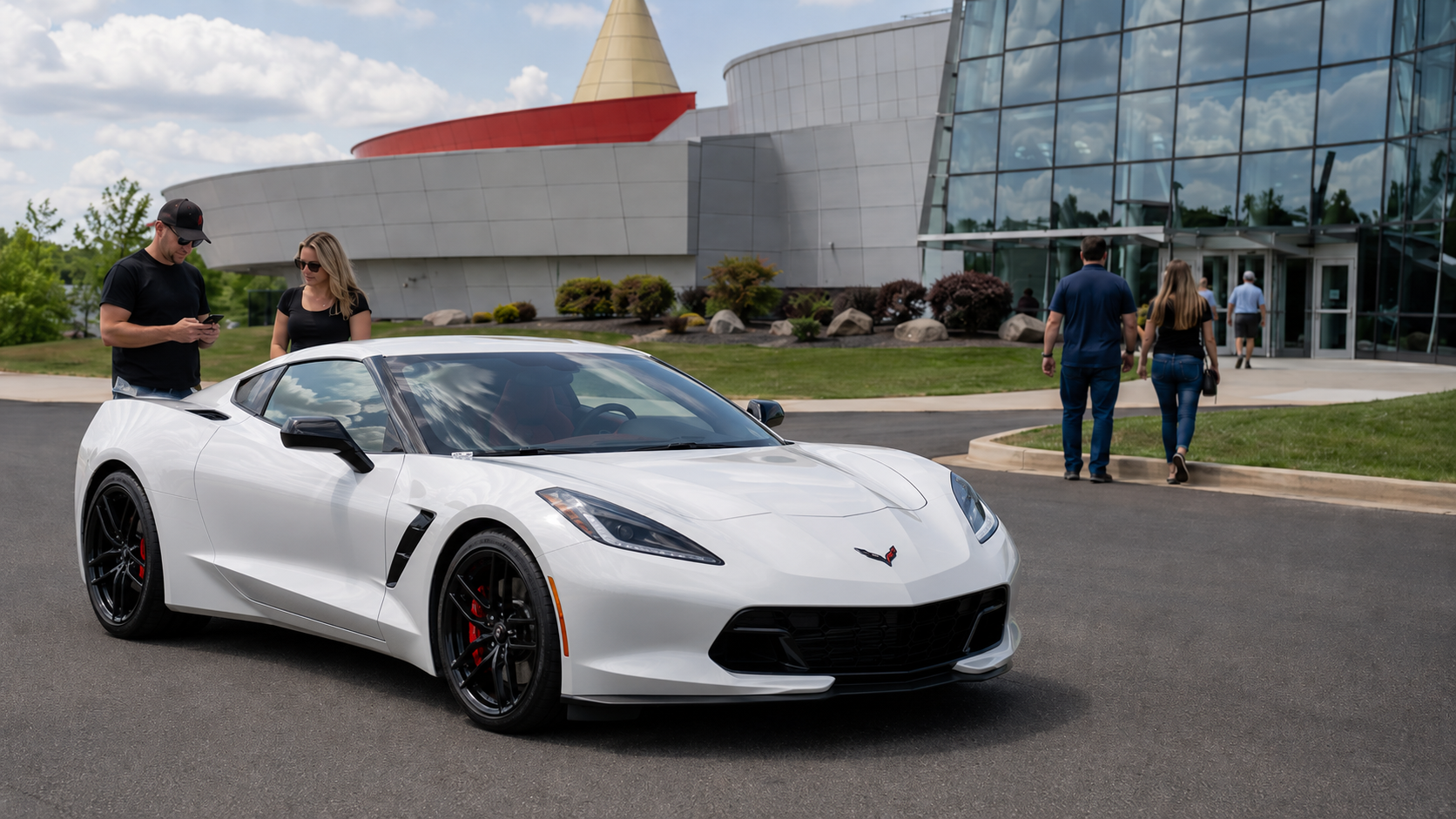
Corvette Museum Delivery has become part of the ownership story for many C8 buyers, but the right acquisition path depends less on prestige and more on how you personally connect to the car before the first drive home. Some owners want the moment to feel immersive from the beginning, complete with plant history, museum orientation, and delivery ceremony. Others want a cleaner process centered around getting behind the wheel as quickly as possible. That difference shapes how buyers approach ordering, build tracking, scheduling, and even how they remember the car years later. A Corvette purchase is emotional by nature, so the acquisition path deserves the same level of consideration as trim selection, engine choice, or package configuration. Why Corvette Buyers Approach Delivery Differently The reason Corvette Museum Delivery generates so much attention is because the car itself carries enthusiast identity long before ownership begins. Buyers are not simply choosing transportation. They are entering a community with strong ties to engineering history, motorsports heritage, and personalization culture. That changes how acquisition decisions are viewed. Some buyers treat delivery as the final administrative step before driving home. Others see it as the opening chapter of ownership itself. That distinction explains why Museum Delivery resonates strongly with some Corvette customers while feeling unnecessary to others. Buyers leaning toward the Bowling Green route usually value: more connection to Corvette manufacturing history visual access to the assembly environment commemorative ownership moments deeper involvement in the ordering process A standard dealership pickup appeals to a different ownership mindset. Those buyers may still be passionate enthusiasts, but their focus centers more heavily on immediacy, scheduling simplicity, or avoiding additional travel coordination. Neither approach is more correct. The decision becomes more personal once buyers understand what they emotionally expect from the acquisition process itself. Corvette ownership culture also amplifies this divide online. Build updates, delivery photos, museum ceremonies, and plant tours are heavily shared across forums and enthusiast communities. That visibility can create pressure to view Museum Delivery as the “proper” enthusiast choice. In practice, satisfaction usually comes from selecting the process that naturally matches the buyer’s personality and pacing preferences. How Museum Delivery Changes the Start of Ownership What is Corvette Museum Delivery? It is a factory connected acquisition experience where buyers take delivery near the National Corvette Museum in Bowling Green after their vehicle completes production. The process transforms vehicle pickup into a destination-centered ownership event. That emotional shift starts before arrival. Buyers frequently monitor production status updates more closely once Museum Delivery is scheduled because the trip itself becomes tied to assembly timing. VIN assignment, production sequencing, and transport coordination suddenly feel more personal. The experience changes ownership psychology in several ways: anticipation stretches longer due to travel planning production milestones feel more emotionally important buyers become more attached before first drive the car gains a story before accumulating mileage A Corvette Stingray buyer choosing Museum Delivery may value the historical connection and ceremonial pacing. A Z06 customer may place heavier emphasis on LT6 engineering heritage and assembly curiosity. E-Ray buyers frequently approach the experience through innovation interest and milestone ownership. The delivery environment reinforces those emotional narratives. The plant connection also changes how owners perceive the vehicle afterward. Buyers who tour the facility or spend time immersed in Corvette history usually develop stronger awareness of production detail, sequencing complexity, and manufacturing craftsmanship. That added context shapes ownership pride differently than a traditional handoff at the dealership. Museum Delivery also slows the acquisition moment intentionally. Instead of signing paperwork and immediately transitioning into traffic, the owner spends additional time focusing entirely on the car. That pacing creates a stronger memory imprint for buyers who value milestone experiences. Does Building a Corvette Create a Different Ownership Connection? Yes. Build participation changes emotional investment because the buyer becomes attached to the configuration process long before delivery occurs. Corvette ordering is highly personalized, and that personalization creates anticipation that grows throughout production tracking. The ordering process becomes immersive once buyers start monitoring: allocation acceptance status code progression VIN assignment production scheduling assembly completion transportation updates Those milestones sound administrative on the surface, but enthusiast buyers treat them as emotional checkpoints. A custom-built Z06 with carefully selected interior colors, wheel configurations, aero packages, and seating combinations feels emotionally tied to the buyer before the vehicle physically arrives. That emotional investment becomes stronger when paired with Museum Delivery because the owner sees the acquisition as a continuation of the build journey instead of a separate transaction. The buyer mentally connects configuration decisions, assembly visibility, and final pickup into one continuous ownership story. Standard pickup buyers can still develop that same attachment through build tracking, but the emotional pacing changes. The acquisition becomes more compressed. Some owners prefer that approach because it keeps excitement focused on driving rather than ceremony. This distinction matters most for buyers debating between inventory purchase and factory ordering. Enthusiasts who enjoy personalization, production curiosity, and milestone tracking usually gain more satisfaction from a custom build path. Buyers prioritizing immediacy may find inventory acquisition more rewarding because the emotional payoff arrives sooner. Why Standard Pickup Still Fits Many Corvette Buyers A standard dealership delivery removes several layers of coordination that Museum Delivery introduces. Travel planning, hotel scheduling, timing flexibility, and transportation logistics all become part of the acquisition process with the Bowling Green route. That added complexity does not appeal to every buyer. Some Corvette owners simply want: shorter acquisition timelines easier scheduling less travel coordination immediate local support access faster transition into ownership This becomes more noticeable for repeat Corvette owners. Someone purchasing their third or fourth Corvette may already feel deeply connected to the brand and no longer prioritize ceremonial delivery. Their satisfaction may come from configuration selection and driving engagement instead. Distance also changes the equation. Buyers traveling across multiple states for Museum Delivery must account for weather timing, road break in planning, return travel fatigue, and scheduling unpredictability tied to production movement. Some owners enjoy that added planning because it extends anticipation. Others view it as unnecessary friction. There is also an understated emotional advantage to local pickup. Taking delivery from the dealership where the ordering relationship was built creates a more personal hometown connection for certain buyers. Some owners value seeing the car prepared locally by the team that guided them through the ordering process. The important point is that ownership excitement is not measured by delivery complexity. A standard pickup does not diminish enthusiasm. For many Corvette customers, the strongest emotional moment still happens the instant the engine starts for the first drive home. Choosing the Corvette Ownership Journey That Fits You Museum Delivery works best for buyers who value memory creation alongside vehicle ownership. Those customers usually enjoy the anticipation phase, production tracking process, and enthusiast immersion tied to Bowling Green. The experience feels less transactional and more personal from beginning to end. Standard pickup fits buyers who prioritize immediacy, simplicity, and cleaner logistics. That path keeps the focus concentrated on the driving relationship itself without adding travel coordination or ceremonial pacing. The right answer depends on how you emotionally approach ownership: Do you enjoy the process as much as the product? Does manufacturing history matter to you? Will the delivery memory stay important years later? Do you enjoy production tracking and configuration involvement? Would additional travel increase excitement or create stress? Corvette buyers frequently spend months researching trims, engines, wheel designs, and appearance packages. Delivery style deserves similar attention because it shapes the emotional tone of ownership before the odometer meaningfully changes. Whether the keys are handed over in Bowling Green or at your local dealership, the strongest ownership outcome comes from choosing the process that naturally fits how you connect with the car.
Do Corvettes Hold Their Value? Specs That Matter Most

Do Corvettes hold their value better than most sports cars? That question follows almost every buyer researching a Stingray, Z06, or E Ray because configuration choices start shaping future buyer demand long before the first mile is driven. Corvette resale patterns work differently than many performance cars because demand comes from several buyer groups at once. Enthusiasts chase specific engines and packages, collectors watch production numbers, and casual sports car buyers search for recognizable configurations that feel exciting without becoming difficult to own. That combination creates a market where trim selection, options, and even color combinations can influence future desirability years after production ends. Why Corvette Value Retention Works Differently Most sports cars lose value steadily because production volume eventually outpaces demand. Corvette pricing moves differently because the car carries both enthusiast and cultural recognition. A buyer searching for a used C8 is not simply shopping for transportation. They are usually shopping for a specific driving identity, engine layout, or ownership milestone. The mid engine layout changed this dynamic even further. Earlier Corvette generations already carried strong enthusiast followings, but the C8 platform introduced entirely new buyer audiences who previously looked at European exotics or higher-priced performance coupes. That widened demand across the used market and created stronger long-term buyer visibility. Production constraints also shape pricing stability. During periods where factory output slows or specialty trims become difficult to source, used inventory becomes more attractive because buyers can avoid waiting lists or allocation uncertainty. That creates unusual pricing support compared with ordinary sports car depreciation curves. Several factors continue strengthening Corvette buyer interest: more • Strong enthusiast communities surrounding specific trims and packages • Broad recognition across casual buyers and collectors • Lower entry pricing than many competing mid engine sports cars • High emotional appeal tied to styling and engine character That combination keeps secondary market demand active even after newer model years appear. Which Corvette Trim Attracts the Strongest Long Term Demand? The Corvette Stingray usually attracts the broadest resale audience because it balances accessibility, recognizable styling, and V8 ownership appeal. Buyers entering the market for the first time frequently search for a Stingray because it delivers the mid engine layout without the higher acquisition cost tied to specialty trims. Z06 demand behaves differently. The LT6 engine creates a much more specialized enthusiast audience because the flat plane crank architecture changes how the car sounds, revs, and responds. Buyers researching the Z06 are usually searching for the engine itself as much as the overall car. That distinction matters because enthusiast-driven demand can remain extremely strong when production numbers stay relatively controlled. The E Ray introduces another layer by pairing electrified all wheel drive with Corvette architecture. Some buyers view it as a bridge between traditional V8 ownership and future electrified performance platforms. Others prioritize the added traction layout and all season usability. Future resale patterns may depend heavily on how enthusiast communities continue viewing hybridized performance applications inside the Corvette lineup. Trim hierarchy also changes how future buyers perceive exclusivity. A heavily optioned Stingray may still compete against entry-level Z06 pricing later, which creates difficult positioning if MSRP climbs too aggressively during initial purchase configuration. Buyers evaluating future desirability should pay close attention to: • Engine identity and enthusiast recognition • Production volume expectations • Whether packages broaden or narrow buyer appeal • Long-term maintenance perception tied to specialty hardware These factors usually shape future buyer demand more than horsepower figures alone. Which Corvette Options Matter Most Later? Not every expensive package strengthens future buyer interest equally. Some options widen resale appeal because they improve drivability or visual desirability without limiting future audiences. Others create highly specific configurations that only attract smaller enthusiast groups. The Z51 package continues carrying strong resale relevance because many buyers specifically search for it during used Corvette shopping. Larger brakes, cooling upgrades, suspension tuning, and performance-oriented setup changes create stronger enthusiast positioning while remaining approachable for ordinary ownership. Front lift systems also maintain strong demand because they solve a usability concern buyers immediately understand. A future owner navigating steep driveways or parking structures sees tangible daily value from the feature, making resale conversations easier. Seat selection creates another important divide. Competition seats may appeal strongly to track-oriented enthusiasts, but some buyers avoid them because entry and exit become more restrictive. GT seating generally keeps broader audience appeal because it balances support with comfort. Some configurations strengthen market positioning more effectively than others: • Z51 package creates broad enthusiast interest • Front lift increases everyday drivability appeal • Carbon fiber trim packages attract appearance-focused buyers • Highly personalized interior combinations narrow future audiences The strongest long-term builds usually combine enthusiast credibility with approachable ownership rather than chasing every available option. Does Color and Configuration Change Future Buyer Interest? Color selection shapes emotional response faster than almost any specification on a Corvette. Buyers scrolling used inventory make immediate visual judgments before reading option lists or mileage figures. That means color combinations can either broaden appeal or narrow the future audience dramatically. Traditional performance colors like red, black, white, silver, and certain blues generally maintain broader market visibility because they remain recognizable and familiar across multiple buyer groups. Highly specific launch colors or unusual combinations may become collectible later, but they can also narrow buyer interest during ordinary resale situations. Coupe versus convertible demand creates another split. Coupe configurations frequently attract enthusiasts prioritizing chassis rigidity, track identity, and visual aggressiveness. Convertibles usually attract buyers focused on cruising character and open-air ownership. Neither configuration automatically retains value better in every situation because audience preference shifts regionally and seasonally. Mileage perception also behaves differently on Corvettes than on ordinary commuter vehicles. Extremely low mileage examples may attract collectors, but many enthusiasts still prefer cars driven enough to demonstrate maintenance consistency and operational reliability. Future marketability usually becomes strongest when configuration choices remain recognizable, balanced, and easy for broad enthusiast groups to understand immediately. What Enthusiasts Look for Years After Production Ends Once a Corvette generation matures, enthusiast communities start separating ordinary builds from highly desirable configurations. This process usually centers around identity and emotional recognition more than isolated specification sheets. A future buyer may specifically search for a naturally aspirated flat plane crank engine, a Z51-equipped Stingray coupe, or a limited production appearance package because those combinations represent a particular moment in Corvette evolution. That emotional connection creates stronger demand than generic option stacking. Documentation and ownership history also grow more important over time. Clean maintenance records, careful storage history, and original factory configurations usually create stronger buyer confidence than heavily modified examples with unclear histories. Enthusiasts years later generally focus on: • Original configuration integrity • Distinctive engine identity • Recognizable enthusiast packages • Balanced mileage history • Factory documentation and maintenance records Corvette ownership has always carried a community aspect alongside the driving portion itself. Buyers entering the market later are usually searching for a story they recognize, not merely a specification list. That is why thoughtful configuration choices made during purchase can continue shaping buyer interest long after the original window sticker disappears.

How Corvette Build and Order Status Codes Shape Timing Expectations for Hammond Buyers

Ordering a Corvette is not a single step. It is a structured process that moves through defined stages, each tracked by a specific status code. Most buyers are not just asking what these codes mean. They are trying to understand whether their order is progressing normally, how long each stage will take, and what happens next. The Corvette ordering system is designed to track production from initial request through delivery, but without context, those codes can feel unclear. Understanding how the system works allows you to interpret progress and set realistic expectations. This approach reflects Chevrolet’s focus on clarity, real-world understanding, and helping drivers move forward with confidence What Corvette Order Status Codes Actually Represent When buyers ask what Corvette order status codes actually mean, they are asking how the production system tracks progress. Status codes are milestones that represent specific points in the manufacturing and ordering process. Each Corvette order moves through a sequence of stages, beginning with initial entry into the order system and ending with delivery. These codes are not arbitrary labels. They indicate whether the order has been accepted, scheduled, built, or shipped. For example, early-stage codes represent orders that are placed but not yet scheduled for production. Mid-stage codes indicate that the order has been accepted and assigned to a production cycle. Later-stage codes reflect that the vehicle is being built or prepared for shipment. more The technical reason this matters is that each status change reflects a real action within the manufacturing system. The Corvette is not simply waiting. It is moving through a queue that aligns with production capacity and scheduling. For buyers, this means status codes are not just updates. They are a direct view into where your Corvette is within the production process. Understanding them removes uncertainty and allows you to interpret progress accurately. How Corvette Orders Move Through the Production System When buyers ask how a Corvette moves from order to production, they are asking how the manufacturing system sequences builds. The Corvette production process is based on scheduling, resource availability, and allocation. Once an order is accepted, it does not immediately move into production. It enters a scheduling system where it is matched to available build slots. These slots depend on factors such as parts availability, production capacity, and configuration requirements. The process generally follows a structured flow: Order is entered into the system and assigned an initial status Allocation allows the order to be accepted for production Scheduling assigns the order to a specific build window Production begins once all required components are available The reason this system exists is to ensure efficiency and consistency in manufacturing. Each Corvette must be built within a sequence that aligns with available resources. For buyers, this means the timeline is not linear. Movement through the system depends on when the order can be scheduled, not simply when it was placed. Why Corvette Build Timelines Vary Between Orders When buyers ask why their Corvette order is taking longer than expected, they are asking how production variables affect timing. Build timelines vary because the system must account for multiple constraints. These constraints include: Availability of specific components required for your configuration Production scheduling based on demand and capacity Allocation timing at the dealership level The technical reason for variability is that manufacturing operates as a coordinated system. If one component is delayed, the entire build sequence may shift. This is why two Corvette orders placed at the same time can move through the system at different speeds. Differences in configuration or allocation timing can change when an order is scheduled. For buyers, this means delays are not always disruptions. In many cases, they are part of how the system adjusts to maintain production flow. Understanding this helps distinguish between normal variability and actual issues. What Happens Between Production and Delivery When buyers ask what happens after a Corvette is built, they are asking how the vehicle moves from the factory to delivery. Once production is complete, the Corvette enters a logistics phase. This phase includes inspection, transportation scheduling, and shipment to the dealership. The vehicle must be prepared for delivery and transported through a distribution network. During this stage: The Corvette undergoes final checks and preparation Shipping is scheduled based on location and transport availability The vehicle is delivered to the dealership for final handoff The reason this stage takes time is because transportation must be coordinated with other shipments and routes. It is not an immediate transition from factory to dealership. For buyers, this means the process continues even after production is complete. Understanding this phase helps set expectations for the final steps before delivery. How to Set Realistic Timing Expectations as a Corvette Buyer When buyers ask how long it really takes to receive a Corvette, they are asking how to interpret the full timeline. The answer depends on understanding how each stage contributes to the overall process. A realistic expectation considers: Time required to secure allocation Time for scheduling and production Time for post-production logistics and delivery The key is recognizing that each stage operates within a system. Timing is influenced by factors that extend beyond a single order. For buyers, the most effective approach is to evaluate progress through status codes and communication from the dealership. When both are understood, the process becomes predictable rather than uncertain. The Corvette ordering system is designed to move each vehicle from concept to delivery in a structured way. When you understand how that system works, you gain clarity, confidence, and a better overall buying experience.

Contact Us

Fill out this form below and we'll contact you shortly
*Required Fields