
Ross Downing Corvettes

Blog

All Hammond Corvette Dealer Hammond Chevrolet Dealer Corvette Maintenance Ross Downing Corvettes Service Hammond Chevrolet Service Corvette Z06 Corvette E-Ray

What a Smooth Corvette Buying Experience Should Include Before You Leave a Deposit

Buying a Corvette is not the same as purchasing a typical vehicle from inventory. Most shoppers are not just asking how to buy a Corvette. They are trying to understand what the process should feel like before they commit to a deposit. That process is structured around allocation, ordering systems, and dealership communication. When those systems are explained clearly, the experience feels controlled and predictable. When they are not, the same process can feel uncertain. Understanding how the Corvette buying system works allows you to evaluate the dealership experience before you commit. This approach aligns with Chevrolet’s voice of being practical, clear, and focused on real-world confidence in decision-making What the Corvette Buying Process Actually Involves Before a Deposit When shoppers ask what the Corvette buying process should look like before placing a deposit, they are asking how the system moves from interest to commitment. The Corvette purchase process is not based on immediate inventory selection. It is based on securing a future production slot through an order system. Before a deposit is placed, the dealership should walk you through how ordering works, how allocations are assigned, and how your build request fits into that system. A deposit is not simply holding a vehicle. It is securing a position in a sequence that determines when your Corvette will be built. At this stage, clarity should include: more How the dealership receives Corvette allocations Where your order would sit in their queue What timeline expectations look like based on current demand How pricing is structured before the order is submitted The reason this matters is because the Corvette buying process is tied to production scheduling. Without understanding that system, a deposit can feel like a commitment without context. A clear process ensures you know exactly what you are committing to. How Corvette Allocation and Ordering Systems Shape the Experience Corvette allocation refers to the number of vehicles a dealership is authorized to order within a given production cycle. This is not controlled by the dealership alone. It is determined by manufacturer distribution and production capacity. When buyers ask how allocation affects timing, they are asking how long it will take for their order to move from request to build. The answer depends on how frequently a dealership receives allocations and how many orders are ahead of yours. In the Corvette ordering system, your position is determined by: The dealership’s allocation frequency The number of existing customer orders The specific configuration of your build The technical reason this matters is that production is scheduled in sequences. Your order does not move forward until an allocation is available and your configuration can be matched to production constraints. For buyers, this means timing is not estimated randomly. It is based on a structured system. A dealership that explains this clearly allows you to set realistic expectations instead of relying on assumptions. What Clear Communication Should Look Like From a Corvette Dealer Communication is the mechanism that connects you to the Corvette ordering system. When buyers ask what they should expect from a Corvette dealer, they are asking how information should be delivered and updated throughout the process. A strong Corvette dealership experience is defined by transparency and consistency. You should understand not only what is happening, but why it is happening at each stage. Clear communication should include: Explanation of allocation status and what it means for your order Updates when your order moves through different stages Honest timelines based on current production conditions Direct answers to questions about pricing, options, and delays The reason this matters is because the Corvette buying process involves waiting periods. Communication reduces uncertainty by keeping you informed about progress and changes. For buyers, this is one of the most important indicators of a smooth experience. A dealership that communicates clearly allows you to feel confident in the process, even when timelines shift. What Happens After You Place a Deposit on a Corvette When buyers ask what happens after placing a deposit, they are asking how the system progresses from commitment to production. Once a deposit is placed, your order is typically entered into the dealership’s order bank. The order bank is where customer configurations are stored until an allocation becomes available. When that allocation is assigned, your order is submitted for production. After submission, the Corvette moves through a series of status stages that reflect where it is in the build process. These stages indicate whether the vehicle is scheduled, being built, or preparing for delivery. From a system perspective: The deposit secures your position in the order queue Allocation triggers the transition from waiting to production Status updates track the vehicle through manufacturing For buyers, this means the process does not stop at the deposit. It shifts into a structured sequence that leads to delivery. Understanding this helps maintain realistic expectations throughout the wait. How to Recognize a Smooth Corvette Buying Experience Before Committing When buyers ask how to know if a Corvette dealership is trustworthy, they are asking how to evaluate the process before making a commitment. A smooth buying experience is not defined by speed. It is defined by clarity, consistency, and transparency. The key indicators of a strong process include: Clear explanation of allocation and ordering systems Realistic timelines based on actual data Consistent communication before and after the deposit Willingness to answer detailed questions without hesitation The technical reason these indicators matter is because they reflect how well the dealership understands and communicates the Corvette ordering system. A dealership that explains the process clearly is more likely to manage it effectively. For buyers, the goal is not just to secure a Corvette. It is to move through the process with confidence. When the system is explained and communication is consistent, the experience feels structured and predictable. That is what defines a smooth Corvette buying experience.

What Owning a Z07-Equipped Corvette Changes After Delivery Tires Brakes and Street Use

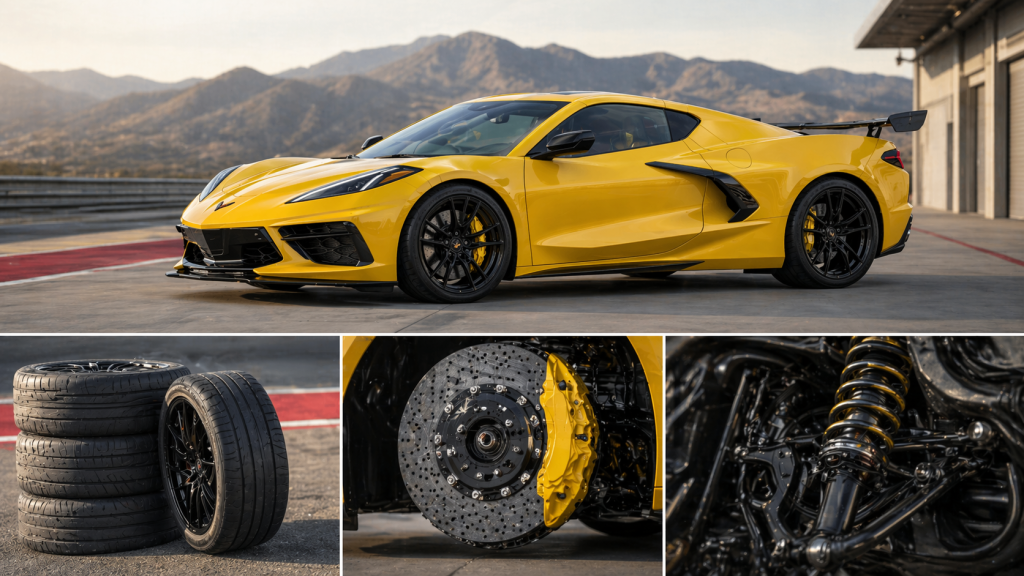
Choosing a Corvette Z06 with the Z07 package is not just a decision about performance features. It is a decision about how the car will behave, wear, and feel every time you drive it. Most buyers are not asking what comes in the Z07 package. They are trying to understand what changes after delivery and whether those changes align with how they actually plan to use the car. The Z07 package is a system of track-focused upgrades that directly affect tires, braking behavior, and ride quality in ways that become noticeable immediately in real-world driving. What the Z07 Package Actually Changes in the Corvette Z06 When buyers ask what the Z07 package actually changes on a Corvette Z06, they are asking how the car’s performance system is reconfigured. The Z07 package is a collection of hardware and tuning changes that shift the Corvette Z06 toward track-focused driving by increasing grip, braking capability, and aerodynamic stability. In the Corvette Z06 with Z07, the system includes higher-grip tires, carbon ceramic brakes, and suspension tuning that is calibrated for precision rather than comfort. These components do not operate independently. They work together to increase the car’s ability to maintain control at higher speeds and under heavier load. more The reason this matters is because improving one area, such as grip, increases demand on other systems. More grip places greater stress on tires and brakes. Stiffer suspension improves control but reduces compliance over uneven surfaces. For buyers, this means the Z07 package does not simply add performance. It changes how the entire Corvette Z06 behaves. The evaluation is not whether it is better, but whether it fits how you intend to drive. Tire Behavior and Wear in a Z07-Equipped Corvette High-performance tires on the Corvette Z06 Z07 are designed to maximize grip by using softer rubber compounds. Tire compound refers to the material composition of the tire surface, and softer compounds create more friction with the road, which increases traction. The tradeoff is that softer compounds wear faster because they generate more heat and friction during use. In a Z07-equipped Corvette, this means tires will degrade more quickly than standard performance tires, especially under aggressive driving conditions. In real-world use, tire behavior changes depending on how the car is driven: Aggressive acceleration and cornering increase heat buildup and wear Highway driving produces less wear but still degrades softer compounds over time Temperature changes affect how quickly the compound breaks down The key implication for buyers is that tire replacement is not occasional maintenance. It becomes a regular ownership consideration. The Corvette Z06 Z07 tire setup is optimized for performance, and that performance comes with a shorter lifespan compared to standard configurations. Carbon Ceramic Brakes and Long-Term Cost Considerations Carbon ceramic brakes are designed to manage high levels of heat more effectively than traditional steel brakes. Heat management is critical because braking performance depends on the ability to dissipate energy without losing effectiveness. In the Corvette Z06 with Z07, carbon ceramic brakes maintain consistent performance under repeated heavy braking. This is especially important in track conditions where brake systems are exposed to sustained heat. The benefit of carbon ceramic brakes is durability under extreme conditions. They resist fade and maintain braking consistency. However, the tradeoff is cost, particularly when replacement is required. From a system perspective: Carbon ceramic materials handle heat with less degradation during use They last longer under performance driving compared to standard brakes Replacement costs are significantly higher due to material and manufacturing complexity For buyers, the decision is about how often the system will be used to its full potential. In everyday driving, the benefits may not be fully realized, but the cost remains a factor. The Corvette Z06 Z07 brake system is engineered for performance conditions, and ownership expectations should reflect that. Ride Quality and Daily Driving Tradeoffs with Z07 Ride quality is determined by how the suspension system absorbs and responds to road imperfections. In the Corvette Z06 with Z07, suspension tuning is adjusted to prioritize stability and control at high speeds. This tuning results in a firmer ride because the suspension is designed to reduce body movement and maintain tire contact with the road. While this improves handling precision, it also reduces comfort over uneven surfaces. In daily driving scenarios, this translates to: More noticeable road texture and surface imperfections Reduced cushioning over bumps and rough pavement Increased responsiveness in steering and handling The technical reason behind this is that stiffer suspension limits vertical movement, which improves control but reduces the ability to absorb irregularities. For buyers, this means the Corvette Z06 Z07 will feel different in everyday use compared to a standard configuration. The ride is more connected and controlled, but less forgiving. This tradeoff becomes important when the car is driven outside of track environments. Is the Z07 Package Worth It Based on How You Drive When buyers ask if the Z07 package is worth it, they are asking whether the performance benefits align with their actual driving habits. The answer depends on how often the added capability is used. The Corvette Z06 Z07 package is designed for drivers who prioritize maximum performance and plan to take advantage of it. This includes track driving, performance-focused events, or situations where high-speed control and braking are critical. For drivers whose use is primarily street-based, the tradeoffs become more noticeable: Increased tire wear leads to more frequent replacement Brake system cost becomes a larger consideration over time Ride quality may feel too firm for everyday comfort The evaluation comes down to alignment between capability and usage: Choose Z07 if performance driving is a consistent part of ownership Consider standard Z06 setup if daily usability and cost balance are priorities The Corvette Z06 Z07 is a focused performance system. It delivers exceptional capability, but that capability is most valuable when it is actively used. Understanding that distinction helps buyers make a decision that fits their real-world driving experience.

Corvette Transaxle Explained for C8 Buyers; Why the Layout Matters Beyond the Spec Sheet

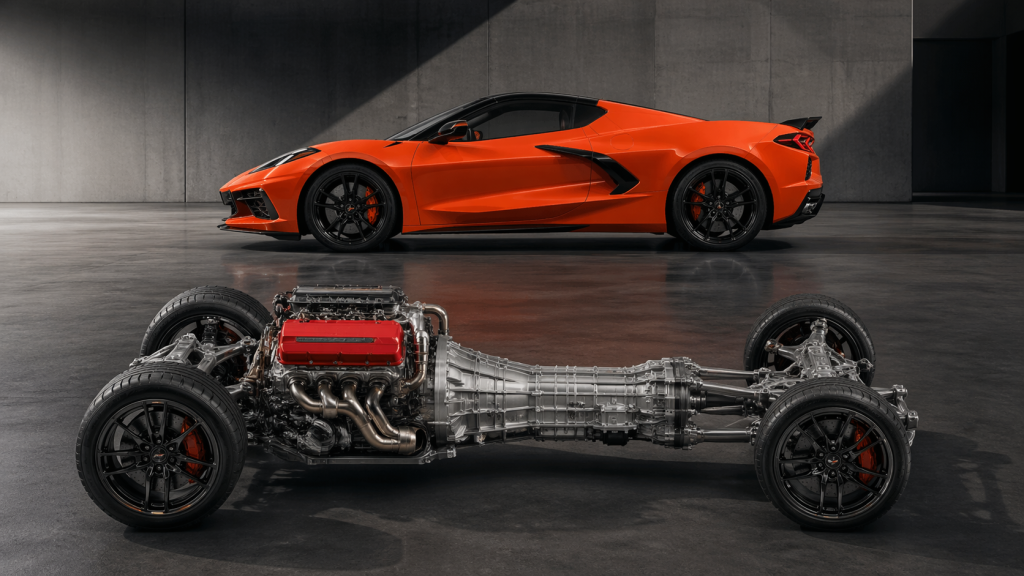
When shoppers start researching the Corvette C8, one of the most common questions is what the transaxle actually is and why Chevrolet changed the layout. That question is really about understanding how the Corvette drivetrain works and how that design affects balance, traction, and overall driving feel. The transaxle is not just a technical detail. It is a core part of how the C8 Corvette behaves on the road compared to previous generations. What a Corvette Transaxle Actually Is and How It Works When buyers ask what a Corvette transaxle is and how it is different from a transmission, they are asking how power moves from the engine to the wheels. A transaxle is a single unit that combines the transmission and the differential into one integrated system. In a traditional setup, the transmission and differential are separate components connected by a driveshaft. In the Corvette C8 transaxle system, both functions are housed together at the rear of the vehicle. This means the gearbox that changes gears and the differential that distributes power to the rear wheels operate as one unit. more In the C8 Corvette drivetrain, power flows from the mid-mounted engine directly into the rear transaxle. The transaxle then manages gear selection and splits torque between the rear wheels. This reduces the distance power needs to travel and simplifies the drivetrain layout. For buyers, the implication is not just mechanical efficiency. The Corvette C8 transaxle system changes how quickly and directly power reaches the wheels. That translates into more immediate acceleration response and a more connected driving feel. Why the Corvette C8 Uses a Rear Transaxle Layout When shoppers ask why the Corvette C8 uses a rear transaxle layout, they are really asking why Chevrolet moved away from the traditional front engine design. The answer is that the transaxle works as part of a complete mid-engine system designed to improve balance and traction. In the Corvette C8, the engine is positioned behind the driver and in front of the rear axle. The rear transaxle sits directly behind the engine, creating a compact and centralized drivetrain. This layout concentrates mass closer to the center of the vehicle. The reason this matters is because weight placement directly affects how a car accelerates, corners, and maintains stability. By pairing a mid-engine position with a rear transaxle, the Corvette C8 achieves a more balanced weight distribution than previous generations. From a buyer perspective, this is not just about performance numbers. The Corvette C8 layout improves rear wheel traction during acceleration and increases stability during high-speed driving. It also changes how the car feels when entering and exiting corners, making the driving experience more precise and controlled. How the Transaxle Changes Balance and Weight Distribution Weight distribution is the way a vehicle’s mass is spread between the front and rear axles. In the Corvette C8, the transaxle plays a direct role in achieving near-balanced weight distribution by placing key drivetrain components toward the rear. In earlier front-engine Corvettes, even with a rear transaxle in models like the C5, a significant portion of weight remained at the front due to engine placement. In the C8 Corvette, the mid-engine and rear transaxle combination shifts more weight toward the center and rear of the car. This affects several key driving characteristics: Improved traction because more weight sits over the driven rear wheels More stable cornering as weight is distributed more evenly Reduced front-end load, allowing sharper steering response The technical reason behind this is that weight distribution influences how tires maintain contact with the road. A balanced layout allows each tire to contribute more evenly to grip and control. For buyers, the implication is that the Corvette C8 transaxle system contributes directly to confidence behind the wheel. Whether accelerating onto a highway or navigating a curve, the car responds more predictably because its weight is managed more effectively. C5 Corvette Transaxle vs C8 Corvette Layout Differences When buyers compare the C5 Corvette transaxle to the C8 Corvette transaxle, they are trying to understand whether this is a completely new concept or an evolution. The C5 Corvette did use a rear transaxle, but the overall layout was fundamentally different. In the C5 Corvette, the engine was mounted at the front of the vehicle, and a driveshaft connected it to a rear-mounted transaxle. This design improved weight distribution compared to traditional front-engine cars but still retained a front-engine driving character. In the C8 Corvette, both the engine and the transaxle are located at the rear of the vehicle in a mid-engine configuration. This eliminates the long driveshaft and centralizes the drivetrain mass. The key differences are: C5 Corvette transaxle supports a front-engine layout C8 Corvette transaxle is integrated into a mid-engine system Power delivery in the C8 is more direct due to reduced drivetrain length For buyers transitioning from earlier Corvettes, this means the C8 does not just refine the previous formula. It changes the entire driving dynamic. The Corvette C8 feels more balanced and responsive because the drivetrain layout is fundamentally different. What the Corvette Transaxle Means for Real-World Driving Feel When shoppers ask whether the Corvette C8 will feel different in everyday driving, they are asking how these engineering changes translate into real use. The transaxle is a key factor in how the car behaves in normal driving conditions. In the Corvette C8, the rear transaxle contributes to smoother power delivery and more controlled acceleration. Because the drivetrain components are tightly integrated, there is less delay between engine output and wheel response. This also affects how the car feels in everyday scenarios: Acceleration feels more immediate when merging or passing The car remains stable during highway driving Steering response feels more precise due to balanced weight The technical reason is that the transaxle reduces drivetrain complexity and improves weight distribution. That combination enhances both performance and predictability. For buyers, the Corvette C8 transaxle system is not just a track-focused feature. It is a design choice that improves how the car behaves in daily driving situations. Understanding this helps set realistic expectations for how different the C8 will feel compared to earlier Corvettes.

2026 Corvette Buyer’s Guide: Choosing Between Stingray, Z06 & E-Ray

Choosing between the 2026 Corvette Stingray, 2026 Corvette Z06, and 2026 Corvette E-Ray is not about selecting the “best” Corvette. It is about selecting the Corvette that aligns with how you actually plan to drive. Many shoppers ask which Corvette they should buy, and the answer depends on how each model delivers performance, how it behaves under different conditions, and what tradeoffs come with its engineering. Each Corvette is built around a different performance philosophy. The Corvette Stingray focuses on balance and everyday usability. The Corvette Z06 is engineered for track-focused precision and sustained high-performance driving. The Corvette E-Ray introduces hybrid all-wheel drive to expand traction, acceleration consistency, and real-world versatility. Understanding these differences requires looking beyond horsepower and into how each system works in real driving conditions. How Stingray, E-Ray, and Z06 Deliver Performance Differently The 2026 Corvette Stingray V8, 2026 Corvette E-Ray hybrid AWD system, and 2026 Corvette Z06 high-revving V8 each produce power in a way that changes how the car feels from the driver’s seat. The Corvette Stingray V8 delivers power through a naturally aspirated engine that builds output progressively as engine speed increases. This creates a predictable throttle response that is easy to manage in both daily driving and spirited acceleration. The power delivery is smooth and controlled, which makes the Stingray approachable without limiting performance capability. more The Corvette Z06 high-revving V8 produces power differently. Its engine is designed to operate at higher engine speeds, which shifts the performance focus toward sustained output rather than low-end torque. This creates a more aggressive driving experience where power builds rapidly as the engine approaches higher rev ranges. For drivers, this means the Z06 rewards precision and commitment, especially during track driving where maintaining engine speed is critical. The Corvette E-Ray hybrid AWD system introduces a different approach. The front electric motor delivers instant torque the moment throttle is applied, while the rear V8 continues to provide combustion-based power. This combination changes how acceleration feels. Instead of waiting for engine speed to build, the Corvette E-Ray responds immediately, creating a more consistent and controlled launch. These differences are not just technical. They define how each Corvette behaves when accelerating, merging, or exiting a corner. Why Drivetrain and Traction Change the Ownership Experience Many shoppers ask whether the Corvette E-Ray is better than the Z06 for daily driving. The answer depends on how drivetrain layout affects traction, confidence, and usability. Rear-wheel drive is a drivetrain layout that sends power only to the rear wheels, placing the responsibility for traction entirely on the back axle. The Corvette Stingray rear-wheel drive system and Corvette Z06 rear-wheel drive system both rely on this setup, which creates a traditional performance feel but also requires more driver input to manage traction under hard acceleration. Electrified all-wheel drive is a system that uses an electric motor to power the front axle while the combustion engine powers the rear. The Corvette E-Ray all-wheel drive system distributes power across all four wheels, improving traction and stability. This difference changes how each Corvette behaves: • The Corvette Stingray rear-wheel drive layout provides a balanced and engaging driving feel with predictable handling • The Corvette Z06 rear-wheel drive system emphasizes performance precision but requires more attention under aggressive driving • The Corvette E-Ray all-wheel drive system improves launch consistency and provides greater traction in varying conditions For drivers in areas with changing weather or less predictable road surfaces, the Corvette E-Ray hybrid AWD system expands usability. It allows more of the vehicle’s power to be used more often, without relying entirely on rear-wheel traction. How Track Focus and Street Comfort Separate These Corvettes The difference between street comfort and track capability is not a simple label. It is the result of how each Corvette is engineered. The Corvette Stingray is tuned for balance. Its suspension, power delivery, and overall setup are designed to perform well across a wide range of conditions. This makes it comfortable enough for daily driving while still delivering strong performance when pushed. The Corvette Z06 is engineered with track performance as the priority. Its chassis tuning, engine characteristics, and aerodynamic focus are all designed to support sustained high-speed driving. This results in sharper responses and higher capability at the limit, but it also means the driving experience is more focused and less forgiving in everyday conditions. The Corvette E-Ray sits in a different position. Instead of prioritizing track intensity, it focuses on expanding performance across more situations. The added traction from the Corvette E-Ray hybrid AWD system improves stability during acceleration and allows the vehicle to perform consistently in conditions where rear-wheel drive models may require more restraint. These differences reflect engineering priorities, not hierarchy. Each Corvette is optimized for a different type of driving experience. Which Corvette Fits Different Buyer Priorities Choosing the right Corvette becomes easier when you evaluate how you plan to use the vehicle rather than focusing only on specifications. Buyers should consider: • how often they will drive the vehicle in everyday conditions versus controlled environments • whether traction and confidence across varying surfaces are important • how much they value precision and high-revving performance characteristics • whether they prefer a more approachable or more aggressive driving experience The Corvette Stingray is often the best fit for drivers who want a balance of performance and usability. It delivers strong capability without requiring constant attention to traction or operating conditions. The Corvette Z06 is suited for drivers who want a more focused performance experience and are willing to trade some everyday comfort for increased capability at higher limits. The Corvette E-Ray is designed for drivers who want performance that is easier to access. Its hybrid AWD system allows the car to deliver power more consistently, making it a strong option for those who want both performance and broader usability. How to Choose the Right 2026 Corvette With Confidence The decision between the 2026 Corvette Stingray, 2026 Corvette Z06, and 2026 Corvette E-Ray comes down to how each model aligns with your driving priorities. If your goal is a well-rounded sports car that performs confidently in everyday conditions, the Corvette Stingray provides the most balanced experience. If your focus is on maximizing performance during high-speed or track-focused driving, the Corvette Z06 delivers the most specialized capability. If you want a Corvette that expands traction, improves launch consistency, and performs across a wider range of conditions, the Corvette E-Ray offers a distinct approach through its hybrid AWD system. Each Corvette represents a different answer to the same question: how should performance be delivered. By understanding how these systems work and what they prioritize, you can choose the model that fits not just what you want from a Corvette, but how you plan to use it.

C8 Corvette Cooling Systems Explained: Heat Management for Stingray, Z06 & E-Ray

Performance in the C8 Corvette is not defined by peak output alone. It is defined by how consistently that performance can be delivered under sustained load. Many shoppers researching Corvette engineering ask how the cooling system actually works and why it becomes more complex in higher-performance models. The answer is that thermal management is not a single component. It is a coordinated system designed to control heat across the engine, transmission, brakes, and, in the case of the E-Ray, hybrid components. Thermal management is the system a performance car uses to regulate temperature across all major mechanical and electronic systems so they can operate within optimal ranges. In the 2026 Corvette Stingray, 2026 Corvette Z06, and 2026 Corvette E-Ray, that system is engineered differently because each model generates heat in different ways and at different intensities. How the Corvette Cooling System Works as a Complete Network The Corvette cooling system operates as a distributed thermal network rather than relying on a single radiator. Many drivers ask how the Corvette cooling system works under aggressive driving, and the key is that multiple subsystems are working at the same time to move heat away from critical components. The Corvette cooling system includes front-mounted radiators, auxiliary heat exchangers, coolant circuits, and airflow channels that are all coordinated to manage temperature across the vehicle. Engine coolant absorbs heat from the combustion process and transfers it to the Corvette radiators, where passing air removes that heat. At the same time, separate fluid systems regulate oil and transmission temperatures through dedicated heat exchangers. more Airflow plays a central role in this process. The Corvette airflow system directs air through front intakes, across cooling cores, and out through vents that extract heat from the engine bay and underbody. This continuous movement of air ensures that heat does not accumulate in one area, which is critical during sustained high-load driving. Because the Corvette cooling system operates as a network, it can manage multiple heat sources simultaneously rather than reacting to a single temperature spike. This allows the vehicle to maintain stable operating conditions even when engine load, braking demand, and drivetrain stress are all elevated at the same time. Why Heat Management Directly Impacts Performance Many shoppers assume cooling is only about preventing overheating, but heat management directly affects how the Corvette performs moment to moment. Why do performance cars need more advanced cooling systems? Because heat changes how mechanical and electronic systems behave long before a failure occurs. As temperatures rise within the Corvette engine and supporting systems, several performance changes begin to occur. Intake air becomes less dense as it heats up, which reduces combustion efficiency and limits power output. Engine oil and transmission fluid are also affected by temperature. As fluid temperatures increase, viscosity decreases, which reduces the ability of those fluids to lubricate and protect internal components under load. Brake performance is also directly tied to heat. During repeated high-speed braking, friction between the brake pads and rotors generates significant thermal energy. If that heat is not removed efficiently, brake fade can occur, reducing stopping power and consistency. Electronic systems within the Corvette also monitor temperature closely. If heat levels exceed calibrated thresholds, the vehicle may reduce power output or adjust system behavior to protect components. This is not a failure condition. It is a protective response that prevents long-term damage but also highlights why effective cooling is critical for maintaining consistent performance. How Airflow and Heat Exchangers Work Together Airflow in the Corvette is not only about aerodynamics. It is a primary tool for thermal control. Many drivers see vents, ducts, and openings as styling elements, but in the Corvette airflow system, these features are engineered to manage heat. Air enters through the front of the Corvette and is directed toward radiators and heat exchangers. A heat exchanger is a component that transfers heat from a fluid system into passing air so temperatures remain within an effective operating range. Once air passes through these components, it carries heat away from the vehicle. The Corvette airflow system also directs air toward the braking system. Brake cooling ducts channel air toward the rotors, allowing heat to dissipate more quickly during repeated braking events. Without this airflow, brake temperatures would rise rapidly, reducing effectiveness. After absorbing heat, air must be removed efficiently. The Corvette uses vents and underbody pathways to extract hot air from the engine bay and surrounding areas. This prevents heat from becoming trapped, which would reduce the effectiveness of the entire cooling system. Because airflow is controlled from entry to exit, the Corvette cooling system maintains a continuous cycle of heat removal that supports both engine performance and overall vehicle stability. Why Stingray, Z06, and E-Ray Require Different Cooling Strategies Each Corvette model produces heat in a different way, which is why each uses a distinct thermal management approach. The 2026 Corvette Stingray cooling system is designed for balanced performance. Its naturally aspirated V8 produces strong power without the sustained thermal load of track-focused driving. The Stingray cooling system focuses on maintaining stable temperatures across a wide range of conditions, making it well-suited for daily driving and occasional high-performance use. The 2026 Corvette Z06 heat management system is engineered for continuous high-load operation. Its high-revving engine generates more sustained heat, especially during track driving where engine speed and load remain elevated. To support this, the Corvette Z06 cooling system uses increased airflow capacity, larger cooling components, and more aggressive heat extraction strategies. This allows the Z06 to maintain consistent performance across repeated laps rather than experiencing performance drop-off. The 2026 Corvette E-Ray thermal management system introduces additional complexity because it must manage both combustion and electrified systems. In addition to engine heat, the Corvette E-Ray must regulate temperature for its battery and front electric motor. This requires separate cooling circuits for hybrid components, ensuring that electrical systems operate within safe temperature ranges without affecting engine cooling performance. These differences are not just technical. They reflect the intended use of each model. The Stingray is engineered for versatility, the Z06 for track performance, and the E-Ray for combining performance with hybrid capability. How Corvette Cooling Supports Track Consistency Over Time Track driving creates a sustained thermal environment that is very different from normal driving. Engine load remains high, braking is repeated, and airflow conditions change constantly. In this environment, the Corvette cooling system must manage heat continuously rather than allowing temperatures to recover between events. The Corvette cooling system supports track consistency by stabilizing temperatures across multiple systems at once. Engine cooling maintains consistent combustion conditions, allowing the Corvette to deliver predictable power output. Brake cooling ducts ensure that braking performance remains stable even after repeated high-speed stops. Transmission cooling helps maintain smooth and reliable gear changes under aggressive driving. This coordinated approach prevents performance degradation over time. Instead of delivering peak performance for a short burst, the Corvette is engineered to sustain performance across an entire session. For drivers, this translates into confidence. The vehicle responds the same way on later laps as it does on the first, which is a direct result of how effectively the Corvette cooling system manages heat. What This Means for Corvette Buyers Understanding the Corvette cooling system helps explain how each model performs in real-world conditions and how to choose the right configuration. Buyers comparing the Corvette Stingray, Corvette Z06, and Corvette E-Ray should evaluate how they plan to use the vehicle and how thermal management supports that use. • The Corvette Stingray cooling system is designed for drivers who want strong, reliable performance in everyday conditions with the ability to handle occasional high-load driving • The Corvette Z06 heat management system is built for drivers who plan to push the vehicle consistently, particularly in track environments where sustained performance matters • The Corvette E-Ray thermal management system supports drivers who want advanced performance with hybrid capability, balancing power delivery with additional system complexity Cooling is not a background feature. It is a defining part of how each Corvette delivers performance, consistency, and confidence. By managing heat effectively, the Corvette ensures that power, braking, and handling remain stable, allowing drivers to focus on how the car responds rather than how it recovers.

Corvette Aero Engineering: How Stingray, Z06 & Z07 Maximize Grip at High Speeds (2026)

Aerodynamics plays a defining role in how modern Corvettes perform, especially as speed increases and mechanical grip alone is no longer enough to maintain control. Many shoppers exploring the 2026 Corvette lineup want to understand how aerodynamic systems actually work, what downforce does in real driving, and how different configurations like the Stingray, Z06, and Z07 package change performance. The answer lies in how the Corvette uses airflow as a functional tool, shaping and directing it to increase stability, improve cornering grip, and maintain control at high speeds. How Corvette Aerodynamics Manage Airflow at Speed Many shoppers ask how aerodynamics affect Corvette performance and what actually happens to air as it moves across the vehicle. The 2026 Corvette Stingray aerodynamics system is designed to manage airflow across three primary zones: over the body, under the vehicle, and through internal channels. At speed, air interacts with the Corvette’s surfaces in ways that directly influence stability. The Corvette front fascia directs incoming air through intakes that cool components while guiding excess airflow around the body. At the same time, the underbody is shaped to accelerate airflow beneath the car, reducing pressure and helping pull the vehicle closer to the ground. Key airflow behaviors include: more Air splitting at the front of the Corvette and being directed above, around, and underneath the vehicle Underbody airflow accelerating to create a low-pressure zone that contributes to downforce Rear airflow being managed by diffusers and vents to reduce turbulence The 2026 Corvette Z06 aero system builds on this by increasing airflow efficiency and adding components that more aggressively manage air direction. Rather than allowing air to create lift or instability, the Corvette airflow system converts it into a stabilizing force that improves high-speed control. Downforce and Tire Grip: Why Aerodynamics Improve Handling Many drivers ask what downforce is and why it matters in a performance car. Downforce is the aerodynamic force that pushes a vehicle downward as air flows over and around it, increasing the load on the tires without adding weight. The 2026 Corvette Z06 aero system generates downforce by shaping airflow so that pressure above the car is higher than pressure below it. This pressure difference pushes the vehicle toward the road surface. This has a direct impact on tire performance. As downforce increases: Tire contact with the road becomes more consistent Available grip increases during cornering and braking The vehicle can maintain higher speeds through turns without losing traction Unlike mechanical grip, which depends on tire compound and suspension, aerodynamic grip increases with speed. This means the faster the Corvette travels, the more stable it becomes, particularly in high-speed cornering scenarios. For drivers comparing Corvette trims, this is where aerodynamic systems begin to define performance differences. The Corvette Z06 aero system produces more downforce than the Stingray, allowing it to maintain greater stability and control under aggressive driving conditions. Downforce vs Drag: The Performance Tradeoff Explained One of the most common questions surrounding Corvette aerodynamics is whether more downforce is always better. The answer depends on how downforce interacts with drag, which is the aerodynamic resistance that slows a vehicle down. The 2026 Corvette aerodynamics system must balance two opposing forces: Downforce improves grip and stability Drag reduces acceleration efficiency and top speed When aerodynamic components like front splitters and rear wings increase downforce, they also disrupt airflow, which increases drag. This creates a tradeoff between straight-line speed and cornering performance. In practical terms: Lower drag setups favor higher top speeds and efficiency Higher downforce setups favor cornering grip and track performance The Corvette Stingray aerodynamics system is tuned to balance these factors for everyday driving and highway performance. The 2026 Corvette Z06 aero system shifts this balance toward increased downforce, prioritizing track capability. The Corvette Z07 performance package takes this further by introducing aggressive aerodynamic components designed to maximize grip, even if it slightly reduces top speed. For track-focused drivers, this tradeoff results in faster lap times due to improved stability and cornering precision. How Stingray, Z06, and Z07 Aero Systems Differ For shoppers deciding between Corvette models, understanding how aerodynamic systems differ between trims is critical. While all Corvettes use airflow to improve performance, each configuration is designed for a different driving purpose. The 2026 Corvette Stingray aerodynamics system focuses on balance. It provides enough downforce to improve stability at speed while minimizing drag for efficient highway driving. This makes it well-suited for daily driving and occasional spirited performance. The 2026 Corvette Z06 aero system introduces more aggressive airflow management. Larger air intakes, enhanced underbody shaping, and additional aerodynamic surfaces increase downforce and improve cooling for high-performance driving. The Corvette Z07 performance package represents the most track-focused configuration. It includes larger front splitters, a high-mounted rear wing, and additional aerodynamic elements designed to maximize downforce. Key differences buyers should evaluate: The Stingray prioritizes balance between efficiency and stability The Z06 increases aerodynamic grip for high-performance driving The Z07 package maximizes downforce for track-focused control These differences directly impact how each Corvette behaves at speed, particularly in cornering and braking scenarios. How Corvette Aero Components Work Together as a System One of the most overlooked aspects of Corvette aerodynamics is how each component works together rather than independently. Many shoppers see features like splitters and wings as standalone elements, but the 2026 Corvette aero system is designed as a fully integrated system. The Corvette front splitter manages how air initially interacts with the vehicle, reducing lift and directing airflow around and under the car. The underbody channels accelerate airflow beneath the vehicle, contributing to downforce. At the rear, the Corvette rear wing and diffuser manage how air exits, stabilizing the vehicle and reducing turbulence. This coordinated system ensures that airflow remains controlled from front to rear. From a performance standpoint: The front splitter reduces lift and improves front-end grip The underbody increases downforce by creating low-pressure airflow The rear wing stabilizes the vehicle and enhances rear traction Because each component influences the others, the Corvette aero system must remain balanced. Increasing downforce at the front without adjusting the rear can create instability, which is why the Corvette Z07 performance package is engineered as a complete system rather than a collection of parts. For drivers, this means that aerodynamic performance is not just about individual components but about how the entire system works together to maintain stability, maximize grip, and improve control at high speeds.

How All-Wheel Drive Transforms Corvette Performance in the 2026 E-Ray

The 2026 Corvette E-Ray introduces a fundamental shift in Corvette performance by integrating an all-wheel drive system into a platform historically defined by rear-wheel drive dynamics. Many shoppers exploring the Corvette E-Ray want to understand how this hybrid AWD system actually works, how it changes acceleration and handling, and whether it enhances or alters the driving experience. The answer lies in how the Corvette E-Ray combines a traditional V8 engine with an electric motor to deliver power in a way that improves traction, responsiveness, and real-world usability without sacrificing performance identity. How the Corvette E-Ray AWD System Works Many shoppers ask how the Corvette E-Ray AWD system actually works and how a hybrid setup can power all four wheels. The 2026 Corvette E-Ray AWD system uses a dual propulsion architecture that separates power delivery between the front and rear axles. The Corvette E-Ray pairs a naturally aspirated V8 engine driving the rear wheels with an electric motor mounted on the front axle. Unlike mechanical AWD systems that rely on driveshafts and transfer cases, the Corvette E-Ray AWD system uses electronic coordination between these two power sources. This means: more The rear wheels are powered by the V8 engine through the transmission The front wheels are driven independently by the electric motor Power distribution is controlled digitally rather than mechanically Because the front and rear systems operate independently, the Corvette E-Ray hybrid powertrain can instantly adjust how much power is sent to each axle based on traction conditions, throttle input, and driving mode. For performance drivers, this setup eliminates the delay associated with traditional AWD systems. The Corvette E-Ray AWD system reacts in real time, allowing the vehicle to maintain grip during acceleration, cornering, and changing road conditions. Why Instant Electric Torque Transforms Acceleration Many performance shoppers ask whether AWD actually improves acceleration, and in the case of the 2026 Corvette E-Ray, the answer comes down to how electric torque behaves compared to a gasoline engine. Electric motors deliver maximum torque immediately from a standstill. The Corvette E-Ray front electric motor provides instant torque to the front wheels the moment the driver applies throttle, while the rear V8 builds power through its rev range. This changes launch dynamics in several key ways: The Corvette E-Ray AWD system reduces wheel spin by distributing force across all four tires The front electric motor fills the gap before the V8 reaches peak output Traction is maximized at launch, allowing more usable power to reach the ground In a rear-wheel drive Corvette, aggressive acceleration can overwhelm the rear tires, especially on less-than-ideal surfaces. The Corvette E-Ray hybrid AWD system prevents this by engaging the front wheels immediately, stabilizing the vehicle and improving forward momentum. For drivers comparing performance cars, this results in quicker and more consistent acceleration, particularly from a standstill or during rapid throttle input. How AWD Improves Cornering and Stability at Speed Beyond straight-line performance, the 2026 Corvette E-Ray AWD system plays a critical role in how the vehicle behaves through corners. Many drivers want to understand whether AWD improves handling or simply adds traction. The Corvette E-Ray traction system uses real-time torque distribution to manage how power is applied during cornering. Instead of sending equal power to all wheels, the system adjusts output based on steering angle, throttle input, and available grip. This creates a form of torque vectoring, where power is shifted to the wheels that can use it most effectively. From a mechanical standpoint: The front electric motor can increase or decrease power independently of the rear axle The system stabilizes the vehicle by reducing oversteer during aggressive cornering Power can be applied earlier when exiting a turn without breaking traction For performance driving, this translates into more predictable handling. The Corvette E-Ray AWD system allows drivers to carry speed through corners with greater confidence, as the system actively works to maintain balance and grip. Real World Traction and Everyday Driving Confidence While much of the discussion around the 2026 Corvette E-Ray focuses on performance, AWD also delivers meaningful benefits in everyday driving conditions. Many shoppers question whether AWD matters outside of track environments. The Corvette E-Ray AWD system improves traction in situations where rear-wheel drive vehicles can struggle. This includes: Wet roads where reduced grip can cause wheel slip Cold weather where tire traction is limited Uneven or imperfect road surfaces Because the Corvette E-Ray front electric motor engages instantly, the system can respond to traction loss faster than a traditional drivetrain. This improves stability during sudden acceleration or when road conditions change unexpectedly. For drivers who plan to use the Corvette beyond ideal weather conditions, the Corvette E-Ray AWD system expands usability without requiring compromises in performance capability. AWD vs Traditional Corvette RWD Driving Experience For long-time Corvette enthusiasts, one of the most important considerations is how AWD changes the driving experience compared to traditional rear-wheel drive models like the Corvette Stingray or Z06. Rear-wheel drive Corvettes are known for delivering power directly to the rear axle, creating a driving feel that emphasizes throttle control and rear-end dynamics. The 2026 Corvette E-Ray introduces a different approach by adding front axle engagement. This results in several key differences: Acceleration behavior The Corvette E-Ray AWD system provides more controlled launches with less wheel spin compared to rear-wheel drive models. Handling balance AWD reduces the likelihood of oversteer by stabilizing the front end during aggressive driving inputs. Driver confidence The Corvette E-Ray traction system allows drivers to apply power earlier and more consistently without losing control. Driving feel While rear-wheel drive emphasizes driver-managed traction, the Corvette E-Ray AWD system introduces a more composed and controlled performance experience. Rather than replacing the Corvette identity, the Corvette E-Ray expands it. The AWD system enhances performance by making power more usable, particularly in situations where traction is the limiting factor. For buyers comparing Corvette models, the decision often comes down to driving preference. Those who value raw rear-wheel dynamics may prefer traditional setups, while those seeking maximum traction, acceleration, and confidence will find the Corvette E-Ray AWD system offers a more advanced approach to performance.

Pre-Owned Chevrolet Corvette C7 vs Chevrolet Corvette C8 Performance and Ownership Differences

For performance shoppers exploring pre-owned Corvettes, the C7 and C8 represent two fundamentally different engineering philosophies. The C7 is the final evolution of the traditional front-engine Corvette. The C8 introduces a mid-engine layout, dual clutch transmission, and structural redesign that redefined the platform. Choosing between them requires understanding architecture, performance behavior, transmission differences, reliability considerations, and long-term ownership dynamics. Front-Engine vs Mid-Engine Architecture C7 Corvette: Front-engine layout Rear-wheel drive Rear-mounted transaxle for improved balance Traditional Corvette proportions C8 Corvette: more Mid-engine layout Rear-wheel drive in Stingray configuration Engine positioned behind driver Shorter front overhang and cab-forward design The mid-engine placement in the C8 shifts weight toward the center of the vehicle. This alters weight distribution, braking stability, and corner entry dynamics. The C7 maintains classic front-engine sports car behavior with strong rear-wheel drive engagement. Engine Differences: LT1 vs LT2 C7 Stingray: 6.2L LT1 V8 Naturally aspirated Strong low-end torque Broad power band C8 Stingray: 6.2L LT2 V8 Naturally aspirated Updated intake routing for mid-engine packaging Improved airflow efficiency Slightly higher horsepower output compared to base C7 Both engines deliver classic naturally aspirated response. The LT2 benefits from improved cooling and airflow due to mid-engine packaging. Higher trim C7 models such as Z06 and ZR1 introduce forced induction variants. However, for base model comparison, LT1 and LT2 are the direct parallels. Transmission: Manual vs Dual Clutch One of the most significant ownership differences is transmission availability. C7: 7-speed manual transmission available 8-speed automatic option C8: 8-speed dual clutch transmission only No manual option Manual transmission availability makes the C7 attractive to purists seeking driver engagement. The C8 dual clutch system delivers: Rapid gear changes Seamless acceleration Launch control optimization Enhanced performance repeatability For buyers prioritizing mechanical involvement, the C7 manual holds appeal. For those prioritizing precision and speed, the C8 dual clutch offers measurable performance advantage. 0 to 60 and Acceleration Comparison C7 Stingray: 0 to 60 in approximately low four-second range depending on configuration C8 Stingray: 0 to 60 in approximately three-second range when properly equipped Mid-engine traction improves launch stability. With more weight over the rear wheels during acceleration, the C8 delivers stronger off-the-line grip. Acceleration is not only faster but more consistent in the C8 due to dual clutch integration and improved traction geometry. Handling and Driving Dynamics C7: Front-engine weight distribution Traditional rear-drive throttle steer Predictable oversteer characteristics under load C8: Mid-engine balance More neutral cornering behavior Increased front-end grip Reduced polar moment of inertia Drivers transitioning from C7 to C8 often notice: Sharper turn-in Increased stability at speed Greater composure under heavy braking The C8’s mid-engine layout alters the sensation of rotation and weight transfer. It feels more planted and precise, especially in high-speed cornering. Interior Technology and Ergonomics C7 interior: Driver-focused cockpit Traditional horizontal dashboard layout Analog gauge integration C8 interior: Fully redesigned cabin Digital instrument cluster Large central touchscreen Driver-centric control wall separating passenger area The C8 interior reflects a generational leap in infotainment integration and digital interface design. For buyers prioritizing modern connectivity and updated cabin presentation, the C8 provides a clear advantage. Reliability Considerations by Generation C7: Mature platform by final production years LT1 engine known for durability Manual transmission reliability strong Earlier model years may require inspection for common wear items C8: First production years introduced new platform architecture Dual clutch transmission introduced new service considerations Software updates addressed early calibration refinements When evaluating reliability, service history and maintenance documentation are critical regardless of generation. Both platforms benefit from naturally aspirated engine simplicity compared to forced induction variants. Ownership Cost and Maintenance Ownership costs include: Insurance Maintenance intervals Tire replacement Brake servicing Fuel consumption C8 components such as dual clutch transmission servicing may require specialized maintenance procedures. C7 manual models may offer slightly lower long-term complexity in drivetrain components. Tire and brake costs remain performance-car specific in both generations. Used Pricing and Value Trends C7 pricing varies based on: Model year Trim level Mileage Manual versus automatic C8 pricing reflects: Mid-engine redesign demand Lower production volume in early years Performance parity with higher-priced exotic competitors C7 models may represent strong value relative to horsepower output. C8 models often command higher resale strength due to generational redesign and architecture shift. Which Pre-Owned Corvette Is Right for You Choose C7 if: You prefer front-engine dynamics You want a manual transmission You value classic Corvette proportions You prioritize mechanical simplicity Choose C8 if: You want mid-engine balance You prioritize acceleration and launch traction You value modern interior technology You seek the newest generation architecture Both generations deliver authentic Corvette performance. The C7 represents the culmination of front-engine evolution. The C8 introduces a structural transformation that redefines Corvette driving dynamics. Understanding architecture, transmission differences, and ownership implications ensures a confident decision when entering the pre-owned Corvette market.

2026 Chevrolet Corvette Z06 LT6 Engine Specs and Performance Breakdown

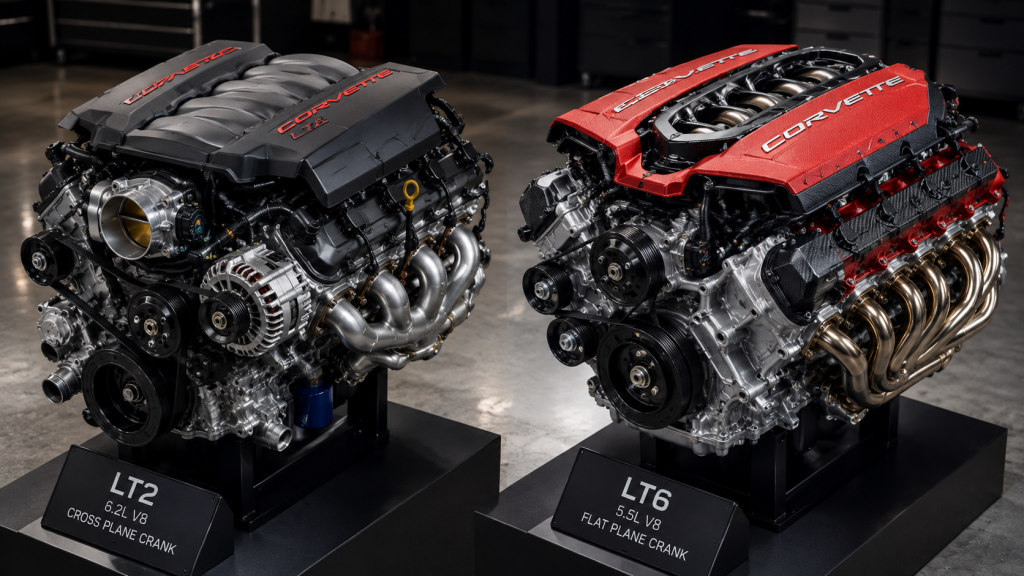
The 2026 Corvette Z06 is defined by its engine. While every C8 Corvette shares a mid-engine layout, the Z06 introduces the LT6, a naturally aspirated 5.5L V8 engineered with race-derived architecture. This is not a modified version of the LT2 found in the Stingray. It is a fundamentally different mechanical design built to sustain extreme RPM and deliver exotic-level response. For performance-focused buyers, understanding how the LT6 operates clarifies why the Z06 occupies a distinct tier within the Corvette lineup. LT6 Engine Architecture At the core of the Z06 is the 5.5L LT6 V8. Key Specifications: Naturally aspirated Flat-plane crankshaft Dual overhead camshaft design 32 valves Dry sump lubrication Titanium connecting rods Output: more 670 horsepower 460 lb-ft of torque 8,600 RPM redline The LT6 is one of the highest-revving naturally aspirated V8 engines ever placed in a production vehicle. Flat-Plane Crankshaft Design Most American V8 engines use a cross-plane crankshaft. The LT6 uses a flat-plane crank. Flat-plane characteristics: Even firing intervals Reduced rotational mass Faster throttle response Higher redline capability Because the crankshaft counterweights are smaller, the engine spins more freely and builds RPM rapidly. This architecture produces: Sharper throttle input response Linear power delivery at high RPM Distinct exhaust tone compared to traditional V8s The flat-plane crank also enables improved airflow efficiency at elevated engine speeds. Dual Overhead Camshaft Configuration Unlike the pushrod LT2 engine, the LT6 uses a dual overhead cam configuration. Benefits include: Independent intake and exhaust cam control Higher valve lift precision Improved high-RPM airflow Enhanced combustion efficiency The DOHC layout allows the engine to sustain performance at RPM levels well beyond traditional pushrod limits. This design is closer to international racing engines than conventional American V8 architecture. Naturally Aspirated Power Delivery The LT6 achieves 670 horsepower without turbocharging or supercharging. Advantages of naturally aspirated tuning: Immediate throttle response Linear power curve No boost lag Consistent heat management Peak power occurs high in the RPM range, encouraging drivers to utilize the upper rev band. Unlike forced induction engines that deliver peak torque early, the LT6 rewards sustained RPM engagement. 0 to 60 and Acceleration Metrics The Z06 achieves 0 to 60 mph in under three seconds when properly configured. Acceleration characteristics: Rapid high-RPM pull Aggressive mid-range transition Seamless gear changes through the eight-speed dual clutch transmission The dual clutch transmission is calibrated specifically for Z06 performance mapping, allowing near-instant gear engagement. Launch control integrates engine mapping, clutch control, and traction management to optimize initial grip. Redline and High-RPM Engineering An 8,600 RPM redline requires internal component precision. Engineering elements supporting this include: Lightweight titanium connecting rods Forged pistons Optimized intake runner geometry High-capacity oil scavenging system Dry sump lubrication ensures consistent oil pressure under sustained lateral G forces during track driving. Without this system, oil starvation could occur under extreme cornering loads. The LT6 is engineered for repeatable track use, not occasional bursts. Cooling and Aerodynamic Integration High-output engines require thermal management. Z06 enhancements include: Enlarged cooling intakes Additional heat exchangers Optimized airflow through bodywork Functional aerodynamic elements Available aerodynamic packages increase downforce, improving stability at higher speeds. Downforce management works in coordination with suspension tuning to maintain front-end grip. Chassis and Brake Enhancements The Z06 is not solely an engine upgrade. Chassis differences include: Wider track width Larger wheels and tires Enhanced suspension tuning Available carbon ceramic brake system The brake system is designed to withstand sustained track temperatures without fade. Wider rear tires maximize traction under high-RPM acceleration. How the LT6 Differs from the LT2 LT2: 6.2L pushrod V8 Cross-plane crank Lower redline Emphasis on broad torque curve LT6: 5.5L dual overhead cam Flat-plane crank 8,600 RPM redline Peak horsepower at high RPM The LT6 is not an evolution of the LT2. It is a separate engine family engineered for higher rev capability and race-inspired performance. Top Speed and Track Intent While top speed depends on aerodynamic configuration, the Z06 is engineered for high-speed track performance. The combination of: High RPM power band Aerodynamic stability Precise chassis tuning Carbon ceramic braking Positions the Z06 as a track-focused Corvette rather than a street-oriented grand tourer. Who the Z06 Is Built For The 2026 Corvette Z06 targets drivers who: Prioritize high-revving naturally aspirated performance Value track-ready engineering Seek exotic engine architecture without forced induction Demand precision throttle response The LT6 engine defines the Z06 experience. Its flat-plane crankshaft, dual overhead cam design, and extreme redline create a Corvette that performs beyond traditional pushrod expectations. Understanding the LT6 is essential to understanding why the Z06 occupies a distinct performance tier within the Corvette lineup.

2026 Chevrolet Corvette Stingray vs Chevrolet Corvette E-Ray Daily Driving Comparison: Performance, Handling, and Traction

The 2026 Corvette Stingray and E-Ray share the same mid-engine LT2 foundation, but they deliver power differently. One is a pure rear-wheel-drive expression of naturally aspirated V8 balance. The other adds an electric front axle, transforming traction strategy and launch consistency. For buyers comparing these two Corvettes as real-world sports cars, the question is not simply which is faster. It is how drivetrain architecture affects daily drivability, traction confidence, ride behavior, and handling character. Shared LT2 Foundation Both Stingray and E-Ray use the 6.2L LT2 naturally aspirated V8 mounted behind the driver. Common performance architecture: Mid-engine layout Eight-speed dual clutch transmission Lightweight aluminum structure Magnetic Ride Control availability Rear limited slip differential This shared platform means cabin ergonomics, seating position, steering layout, and base suspension geometry are fundamentally similar. Where they differ is how torque reaches the pavement. more Rear-Wheel Drive vs Electronic All-Wheel Drive Stingray: Rear-wheel drive only Power delivered exclusively to rear axle Mechanical traction management E-Ray: Rear LT2 V8 Independent front electric motor Electronic all-wheel drive system No mechanical driveshaft between axles The E-Ray’s front motor activates automatically based on traction demand and acceleration input. Torque is distributed electronically rather than mechanically. In dry conditions, both vehicles offer strong grip. In low traction scenarios such as damp pavement, the E-Ray deploys additional front axle torque to stabilize acceleration. 0 to 60 Acceleration and Launch Behavior Stingray delivers rapid acceleration through optimized rear traction and launch control calibration. E-Ray enhances launch through: Instant electric torque at the front axle Reduced rear wheelspin Improved weight transfer stability The electric motor provides immediate torque from zero RPM, eliminating lag during initial acceleration. As a result, E-Ray achieves quicker and more consistent 0 to 60 times, particularly in non-ideal surface conditions. For drivers who prioritize maximum launch performance regardless of weather, the hybrid system offers measurable advantage. Handling Character and Weight Considerations The E-Ray carries additional weight due to: Front electric motor High voltage battery system Cooling components Battery placement is centralized within the chassis to preserve balance. Handling Differences: Stingray: Slightly lighter overall weight Pure rear-drive rotation feel More traditional sports car weight transfer dynamics E-Ray: Increased front axle engagement Enhanced stability under throttle More planted acceleration out of corners The Stingray emphasizes mechanical purity and rear-drive responsiveness. The E-Ray prioritizes traction authority and stability. Drivers who enjoy throttle steering and rear bias dynamics may gravitate toward Stingray. Drivers seeking controlled power deployment in varied conditions may prefer E-Ray. Ride Comfort and Suspension Behavior Both models offer available Magnetic Ride Control. This system continuously adjusts damper stiffness based on: Road surface conditions Steering input Acceleration forces Daily ride comfort differences between Stingray and E-Ray are minimal under similar suspension configurations. The E-Ray’s additional front axle mass slightly alters front-end feedback, but suspension tuning compensates for added weight. For commuting and long-distance driving, cabin comfort and seat support remain consistent across both variants. Wet Weather and All-Season Driving One of the most significant daily driving differences appears in wet or cooler climates. Stingray: Relies on rear tire traction Requires more deliberate throttle control in reduced grip E-Ray: Deploys front torque to stabilize acceleration Reduces rear slip under throttle Improves traction exiting intersections or merging in rain Electronic all-wheel drive provides additional confidence when road conditions are inconsistent. For drivers in areas with frequent rain or seasonal temperature changes, this difference may influence decision-making more than raw performance numbers. Regenerative Braking Feel The E-Ray incorporates regenerative braking via the front motor. Under deceleration: Front motor recaptures energy Brake blending integrates mechanical and regenerative braking Chevrolet calibrates this system to maintain natural brake pedal feel. Drivers transitioning from Stingray to E-Ray may notice subtle differences in low-speed deceleration response, but braking remains linear and predictable. Fuel Economy Considerations Hybrid assistance can improve efficiency during certain driving scenarios. However, both vehicles are performance-oriented. Fuel economy differences exist but are not the primary purchasing driver for this segment. The E-Ray’s hybrid system is engineered for performance enhancement first and efficiency second. Which Corvette Is Better for Daily Driving? Choose Stingray if: You prefer traditional rear-wheel-drive dynamics You value lighter weight and mechanical purity You drive primarily in dry conditions You prioritize simplicity in drivetrain architecture Choose E-Ray if: You want all-wheel-drive traction You drive in varied weather conditions You prioritize launch consistency You value hybrid torque fill for immediate acceleration Both Corvettes deliver high-performance capability rooted in the same LT2 engine architecture. The Stingray maintains classic rear-drive engagement. The E-Ray expands usability by integrating electronic front torque and hybrid assistance. For daily driving, the choice depends on whether you prioritize traditional sports car dynamics or traction-enhanced performance versatility.

How Electric Assist Enhances Launch Control in the 2026 Chevrolet Corvette E-Ray

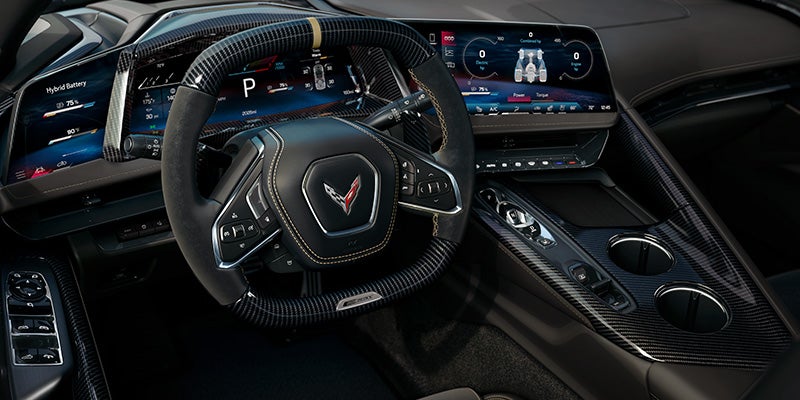
The 2026 Corvette E-Ray is not simply a Corvette with added electric power. It is the first electrified, all-wheel-drive Corvette engineered around torque deployment strategy. The hybrid system is designed specifically to enhance launch control performance, improve traction consistency, and deliver repeatable sub three second acceleration. Understanding how electric assist integrates with launch control requires examining system architecture, torque distribution, battery placement, and traction management logic. Core Powertrain Architecture The E-Ray combines two propulsion systems: Rear Axle: 6.2L LT2 naturally aspirated V8 Mid-mounted configuration Eight-speed dual clutch transmission Front Axle: more Electric motor driving front wheels only Independent from rear drivetrain No mechanical driveshaft connecting front and rear This layout creates an electronic all-wheel-drive system. Power is blended digitally rather than mechanically. The absence of a driveshaft reduces parasitic loss and allows instantaneous torque delivery to the front axle. Combined output exceeds 650 horsepower. More important than peak horsepower is torque response timing. Instant Electric Torque at Launch Internal combustion engines generate peak torque at specific RPM ranges. Electric motors generate maximum torque immediately from zero RPM. At launch, this difference is critical. During launch control activation: The rear LT2 V8 builds revs within programmed parameters The front electric motor delivers immediate torque to the front wheels Torque vectoring optimizes grip across both front tires This eliminates the brief delay associated with rear-wheel traction buildup in traditional rear-drive configurations. Electric assist fills the torque curve at the moment traction is most limited. Launch Control Sequence Explained When launch control is engaged: Vehicle systems verify operating temperature and traction conditions. Stability control transitions into performance calibration mode. Rear engine RPM is staged within optimal torque band. Front motor preloads torque delivery. Upon brake release, both systems deploy synchronized power. Because the front motor responds instantly, it stabilizes weight transfer and reduces wheelspin before the rear axle reaches peak torque output. This coordination produces stronger initial bite and cleaner off-the-line acceleration. eAWD and Torque Vectoring Benefits Traditional AWD systems rely on mechanical differentials and driveshafts. The E-Ray uses electronic torque vectoring. Key advantages: Instant front axle torque modulation Independent front left and right torque management No rotational inertia from mechanical coupling Rapid adaptation to changing traction surfaces If one front wheel encounters reduced grip, the system can redirect torque in milliseconds. This enhances launch stability on: Cold pavement Slightly damp surfaces Imperfect road textures Consistency is one of the most overlooked aspects of high performance acceleration. The E-Ray’s hybrid architecture improves repeatability. Battery Placement and Weight Distribution The hybrid battery is positioned centrally within the chassis, between the seats along the center tunnel. This location: Maintains low center of gravity Preserves front to rear balance Minimizes polar moment changes Additional weight from electrification is strategically placed rather than concentrated over one axle. The result is: Neutral corner entry Stable weight transfer during launch Improved traction distribution Hybrid performance in the E-Ray is engineered for dynamic balance rather than solely power output. Acceleration Metrics and Real-World Consistency The E-Ray achieves 0 to 60 mph acceleration in under three seconds. More significant than the headline number is how consistently it can reproduce that time. Electric assist: Reduces rear tire slip Minimizes power interruption from traction control intervention Maintains optimal drivetrain loading Repeated launch attempts generate less variation compared to purely rear-wheel-drive configurations. For drivers evaluating measurable performance, this consistency reflects engineering intent. Regenerative Braking Integration The front electric motor also functions as a generator under deceleration. Benefits include: Energy recapture during braking Enhanced brake balance stability Improved efficiency during normal driving Regen braking does not compromise launch performance. Instead, it supports battery readiness for repeated torque assist deployment. The system ensures adequate battery charge for performance bursts without requiring external charging. Electric Assist Versus Traditional Traction Control In a rear-drive sports car, traction control often reduces engine power to prevent wheelspin. In the E-Ray: Traction management adds controlled front torque rather than removing rear power Power is redistributed rather than limited Acceleration feels uninterrupted This difference defines the character of hybrid performance. Instead of restricting output, the system enhances grip to fully utilize it. Is the E-Ray Faster Than a Rear-Drive Corvette at Launch Under ideal dry conditions, both vehicles can produce impressive acceleration. Under variable traction: The E-Ray’s eAWD system provides measurable advantage Electric torque fills gaps in rear traction Weight transfer is more stable The hybrid architecture does not change the LT2’s character. It amplifies its launch capability. Engineering Intent Behind Electric Assist The purpose of electric assist in the E-Ray is not efficiency first. It is torque strategy. By pairing instantaneous electric torque with naturally aspirated V8 output, Chevrolet engineered: Enhanced launch traction Improved acceleration repeatability All-weather performance capability Balanced mid-engine weight distribution The result is a Corvette that maintains traditional V8 identity while expanding performance envelope through electrification. Electric assist in the 2026 Corvette E-Ray does not dilute the Corvette formula. It sharpens its launch capability with measurable engineering precision.

2026 Corvette E-Ray Performance Breakdown: Hybrid Power, AWD Traction & Acceleration

The Corvette E-Ray represents a fundamental expansion of what Corvette performance means. Rather than chasing higher peak horsepower or higher rev limits, the E-Ray focuses on how power is delivered to the pavement. Its hybrid all-wheel-drive system is not designed for fuel economy or electric cruising. It is engineered to maximize traction, sharpen response, and produce repeatable acceleration in conditions where rear-wheel-drive performance cars struggle. Understanding the E-Ray requires looking beyond combined horsepower figures and into how its hybrid and drivetrain systems interact in real driving. Hybrid Architecture and System Layout The E-Ray pairs a mid-mounted naturally aspirated V8 driving the rear wheels with a compact electric motor powering the front axle. There is no mechanical connection between the front and rear axles. Key architectural elements include: more Rear-mounted V8 driving the rear wheels through a dual-clutch transaxle Front-mounted electric motor powering the front wheels independently Battery system sized for power delivery, not range Electronic coordination replacing traditional AWD hardware This layout allows instantaneous torque delivery to the front axle without the mass or delay of a driveshaft or transfer case. Electric Front Motor and Torque Delivery The electric motor’s primary role is torque fill and traction support. Unlike hybrid systems focused on efficiency, the E-Ray uses its electric motor to supplement acceleration and stabilize the chassis under load. Performance benefits include: Immediate front axle torque at launch Reduced rear tire slip during hard acceleration Enhanced stability when exiting corners Improved responsiveness before the V8 reaches peak torque This torque delivery smooths power application rather than overwhelming the rear tires, particularly on imperfect surfaces. All-Wheel Drive Behavior and Control Strategy The E-Ray’s AWD system is fully performance-oriented. It is designed to engage aggressively during acceleration and disengage seamlessly as conditions stabilize. Key AWD characteristics include: Front motor engagement during launches and low-speed acceleration Dynamic torque modulation based on steering angle and throttle input Reduced understeer through controlled front axle assistance Predictable power delivery rather than constant AWD drag At higher speeds, the system prioritizes rear-wheel drive behavior while maintaining the ability to intervene when traction demands it. Acceleration and Launch Performance One of the E-Ray’s defining traits is launch consistency. By combining rear-wheel power with front axle torque, the E-Ray can apply full system output without excessive wheelspin. Real-world acceleration advantages include: Faster and more repeatable 0 to 60 launches Reduced reliance on traction control intervention Confidence-inspiring acceleration on cold or damp pavement Improved straight-line performance without excessive tire wear This makes the E-Ray especially effective in street driving scenarios where surface conditions vary. Weight Distribution and Chassis Impact The addition of a front motor and battery does increase overall mass, but the placement of these components improves front axle engagement and balance. Chassis effects include: More even longitudinal load distribution during acceleration Increased front-end authority during corner exit Greater stability during aggressive throttle application Reduced tendency toward rear-driven snap oversteer Rather than dulling the driving experience, the added mass is used strategically to enhance control. Track Behavior and Thermal Considerations On track, the E-Ray behaves differently than rear-drive Corvettes. It rewards smooth inputs and benefits from its ability to deploy torque across both axles. Track-relevant characteristics include: Strong corner exit traction in low-speed sections Reduced wheelspin when applying throttle early Consistent lap-to-lap acceleration behavior Thermal management designed to sustain electric assist under load The system is not intended to replace a Z06 on a road course, but it provides a unique performance profile that emphasizes usable speed. Street Usability and Real-World Performance For street driving, the E-Ray’s hybrid system offers tangible advantages without changing the Corvette’s core character. Drivers experience: Increased confidence in variable conditions Smooth, immediate throttle response Less need to modulate power manually Strong acceleration without constant electronic correction This makes the E-Ray one of the most approachable high-performance Corvettes ever built. E-Ray vs Traditional Performance Corvettes Compared to rear-wheel-drive Corvettes, the E-Ray trades some ultimate track purity for traction and acceleration advantages. The E-Ray is best suited for drivers who: Prioritize acceleration and drivability Drive aggressively on public roads Want maximum traction without sacrificing performance Value cutting-edge drivetrain technology It fills a gap between traditional Corvette performance and modern hybrid supercar behavior. Final Technical Perspective The 2026 Corvette E-Ray is not a compromise and not an efficiency experiment. It is a performance-focused hybrid that uses electric torque to solve real traction and acceleration limitations inherent in rear-wheel-drive sports cars. By combining a mid-engine V8 with an electric front axle, the E-Ray delivers a distinct performance experience centered on control, confidence, and repeatable speed rather than peak numbers alone.

Contact Us

Fill out this form below and we'll contact you shortly
*Required Fields