
Ross Downing Corvettes

Blog

All Hammond Corvette Dealer Hammond Chevrolet Dealer Hammond Chevrolet Service Corvette Maintenance Ross Downing Corvettes Service Corvette Z06 Corvette E-Ray National Corvette Museum
Corvette Museum Tickets and Bowling Green Visit Guide
in National Corvette Museum

Corvette Museum Tickets and Bowling Green Visit Guide

Corvette Museum tickets are easier to plan when you know the hours, admission choices, and Bowling Green stops. In addition, a museum visit can include galleries, shopping, dining, simulators, or a plant tour. Therefore, timing matters before you build the rest of the day. Some visitors are also traveling for R8C Museum Delivery. That trip follows a different schedule because the vehicle handoff has its own timing and document requirements. How Much Time Should You Plan at the Corvette Museum? Most groups spend about 90 minutes to two hours inside the National Corvette Museum. However, that estimate mainly covers time in the galleries. Shopping, simulator sessions, dining, and photos can extend the visit. Corvette Museum tickets can be purchased online or at the Museum. Current adult admission is $25, while senior admission is $23. Youth admission is $14, and children age four and younger enter free. In addition, the Museum currently operates from 9:00 AM to 5:00 PM Central Time. How much time should you reserve? Plan at least two hours if the galleries are your main focus. Therefore, add more time when the Corvette Store, Stingray Grill, or simulators are part of your day. Arriving earlier also gives you more room if your pace changes. Beyond that, Central Time matters when you are driving in from another time zone. Check the current operating calendar before leaving home because seasonal closures can change the available days. Add Time for the Store, Dining, and Simulators Furthermore, the Museum visit can extend well beyond the exhibit halls. In addition, the Corvette Store gives enthusiasts a dedicated retail stop inside the building. The store covers about 5,000 square feet and carries apparel, collectibles, gifts, and Corvette merchandise. Should you leave time for shopping? Yes, if memorabilia or model specific items are part of the trip. A quick stop can turn into a longer browse once you see the full selection. The Stingray Grill also gives visitors an on site dining option. Therefore, lunch does not require leaving the Museum complex. Racing simulators add another activity for visitors who want seat time before heading back to the road. Simulator sessions use separate pricing from Corvette Museum tickets. For this reason, include them in both your schedule and your trip budget. The Museum currently lists individual sessions at $18 and head to head sessions at $30. A simple plan works well. Tour the galleries first, then decide whether shopping, food, or simulator time fits before your next stop. Does a Corvette Museum Ticket Include the Plant Tour? Museum admission and the Bowling Green Assembly Plant tour are separate purchases. Therefore, a Corvette Museum ticket does not provide automatic plant access. Plant tours run only on selected dates. In addition, advance online booking is required. Visitors need Museum admission and a separate plant tour ticket for the same day. Several rules also shape plant tour planning: Guests must be 13 or older before entering the assembly plant tour. Closed toe and closed heel shoes are required, so footwear should be checked before leaving for Bowling Green. Visitors should arrive at least 30 minutes early because phones, cameras, and other electronics cannot enter the tour. These rules matter when your group includes children or people carrying electronics. Therefore, some family members may need a different plan during the plant visit. However, the plant and Museum sit close together, while the two stops follow different schedules. Build the day around the plant appointment first. Then place your museum visit before or after that fixed time. How R8C Museum Delivery Works R8C Museum Delivery is a new Corvette delivery option selected through the selling Chevrolet dealer. It is not a general Museum admission upgrade. Therefore, the option must be added during the vehicle ordering process. How do you arrange Museum Delivery? Start by selecting R8C through your Chevrolet dealer when ordering the Corvette. The Museum becomes involved later, after the car reaches completion and receives GM release approval. The current R8C option price is $1,695. In addition, the program includes Museum delivery, a VIP guided tour, vehicle orientation, commemorative items, and Museum membership. Delivery timing does not begin with a guessed production date. The Museum contacts the customer after the vehicle clears the required release step. Available appointments usually begin about two weeks after the offline date. For this reason, avoid locking travel around an early production estimate. Wait for the Museum scheduling contact before finalizing flights, lodging, or other firm reservations. Bring the Right Documents for Museum Delivery R8C delivery requires specific documents before the Corvette handoff can happen. Therefore, paperwork should be checked before leaving for Kentucky. The Museum currently requires several items: Bring the license plate or temporary tag that will go on the Corvette after delivery. Carry proof of ownership, proof of insurance, and a valid operator license for the person taking delivery. Bring the required dealer acknowledgement form so the Museum can complete the scheduled handoff. What happens if one item is missing? The delivery process can be interrupted because the Museum needs these documents before releasing the car. In addition, review the paperwork with your selling dealer before the trip. That gives you time to correct a missing form or insurance issue before traveling. The delivery day also includes vehicle orientation. Therefore, arrive ready to spend time learning controls, settings, and key vehicle details before leaving Bowling Green. Build Your Bowling Green Day Without Rushing Corvette Museum tickets can anchor either a simple Museum visit or a larger Bowling Green itinerary. The strongest schedule keeps fixed appointments separate from open stops. If you have a plant tour, build around that reservation first. If you have R8C Museum Delivery, build around the confirmed delivery appointment. Then place galleries, shopping, dining, and simulator sessions around those fixed times. Before leaving, review a few final details: Confirm current Museum hours, ticket information, and operating dates before the trip. Check plant tour reservations separately because Museum admission does not replace the plant ticket. For R8C delivery, confirm the appointment and required documents before beginning your trip. A general visitor may only need a few hours in Bowling Green. A delivery customer can turn the same destination into a much fuller day. Ross Downing Corvettes can also explain R8C ordering before your Corvette reaches the scheduling stage. Plan the fixed pieces first, then leave enough room to enjoy the Museum at your own pace.

Read More
Is the 2024 E-Ray Slower Than the 2025 E-Ray Today

Is the 2024 E-Ray Slower Than the 2025 E-Ray Today

Is the 2024 E-Ray slower than the 2025 E-Ray? Current specifications show both years produce the same 655 combined horsepower. Therefore, the newer model year does not gain a published output advantage. Both use the same core hybrid layout, the same LT2 V8, and the same front electric drive unit. In addition, Chevrolet continues to publish a 2.5 second available sprint to 60 mph for the E-Ray. The real model year differences appear in colors, trim choices, pricing, and equipment details. Is the 2024 E-Ray Slower Than the 2025 E-Ray? The direct answer is no based on published factory specifications. Both model years produce 655 combined horsepower and share the same available 2.5 second sprint to 60 mph. The rear mounted 6.2L LT2 V8 produces 495 horsepower in both years. The front electric drive unit adds 160 horsepower at the front axle. Therefore, the core output figures remain unchanged from 2024 to 2025. Could calibration alone make the 2025 quicker despite equal horsepower? Current published Chevrolet figures do not show a quicker factory time. In addition, no published power increase appears for the 2025 front motor or LT2 V8. That matters when comparing two cars with similar equipment. A 2024 E-Ray does not start with a factory speed disadvantage simply because it is one model year older. Did Chevrolet Add More Power for 2025? Chevrolet did not publish a horsepower increase for the 2025 E-Ray. The propulsion layout still combines rear V8 power with front electric power. The LT2 sends 495 horsepower through the eight speed dual clutch transmission to the rear wheels. In addition, the front electric drive unit supplies 160 horsepower at the front axle. Together, those two sources create the 655 horsepower total. The front motor also produces 125 pound feet of torque. However, that torque acts at the front axle instead of through the rear transmission. Therefore, the electric torque figure should not be treated as extra engine torque from the LT2. The hybrid layout also keeps all wheel drive. The V8 drives the rear axle while the electric unit powers the front axle. For this reason, launch traction comes from two propulsion sources working at opposite ends of the car. The core hardware stayed the same: The LT2 V8 remains rated at 495 horsepower in both model years. The front electric drive unit remains rated at 160 horsepower in both years. Combined output remains 655 horsepower with all wheel drive in both model years. How the E-Ray Makes 655 Horsepower The E-Ray reaches 655 horsepower by combining two separate propulsion sources. One sits behind the cabin, while the other powers the front axle. The 6.2L LT2 V8 supplies the larger share of output. In addition, the front electric motor adds power immediately through the front wheels. This arrangement also gives the E-Ray electrified front axle traction without a front driveshaft from the V8. Where does the extra E-Ray power come from? It comes from the front electric drive unit working with the 495 horsepower LT2. Therefore, the total is not a higher tune of the gasoline engine alone. The electric unit also supports low speed electric operation through Stealth Mode. However, the main comparison here is output. The 2024 and 2025 cars use the same published 160 horsepower front motor rating. Because the layout stays the same, the model year decision shifts away from raw output. Equipment, condition, color, trim, mileage, and price become more useful comparison points. What Changed for the 2025 E-Ray? The 2025 updates center more on appearance and personalization than propulsion. Chevrolet did not publish a new horsepower figure for the model year. New exterior choices included Competition Yellow Tintcoat and Hysteria Purple Metallic. In addition, new cabin choices included Habanero interior trim and blue stitching. Yellow brake calipers also joined the available appearance choices. So what are you getting with a 2025 that a 2024 may not have? You are mainly gaining access to newer color and trim combinations. Therefore, the value of those updates depends on how much a specific specification matters to you. This distinction is useful when comparing inventory. A 2024 with the color, trim, and options you want may offer nearly the same propulsion hardware as a 2025. By contrast, a specific 2025 color or cabin combination may justify the newer year for some shoppers. Does the Price Increase Change the Value Equation? The 2025 E-Ray carried a higher listed starting price than the 2024 version. However, that increase did not come with a published horsepower gain. Is the 2025 worth more if the drivetrain is the same? The answer comes from the complete car, not the model year alone. Mileage, condition, equipment, color, warranty position, and asking price all matter. For this reason, compare similar trims and options before judging the price gap. A well kept 2024 with desirable equipment may offer strong value beside a similarly configured 2025. The newer year may still command more money because it is newer. In addition, certain colors or options may be harder to find. Those differences can matter during resale, but they do not change the core 655 horsepower output. Which Model Year Makes More Sense Today? A 2024 or 2025 E-Ray can make sense when the car matches your priorities. Both years use the same published hybrid output and the same core propulsion layout. Before choosing between them, review these points: Compare mileage, condition, trim, and option content across the exact cars you are considering. Check whether a 2025 color or interior combination matters enough to justify a higher price. Compare warranty position, service history, and asking price before paying more for model year alone. If your priority is factory output, the two years remain closely matched. If your priority is appearance, equipment, or resale timing, the 2025 may carry more appeal. The 2024 E-Ray still delivers the same published 655 horsepower as the 2025. Therefore, the stronger choice comes from the specific car in front of you. Ross Downing Corvettes in Hammond can compare available E-Ray examples by equipment, condition, and model year.
Corvette Dealer Diagnostic Estimate Guide Before Repair

Corvette Dealer Diagnostic Estimate Guide Before Repair

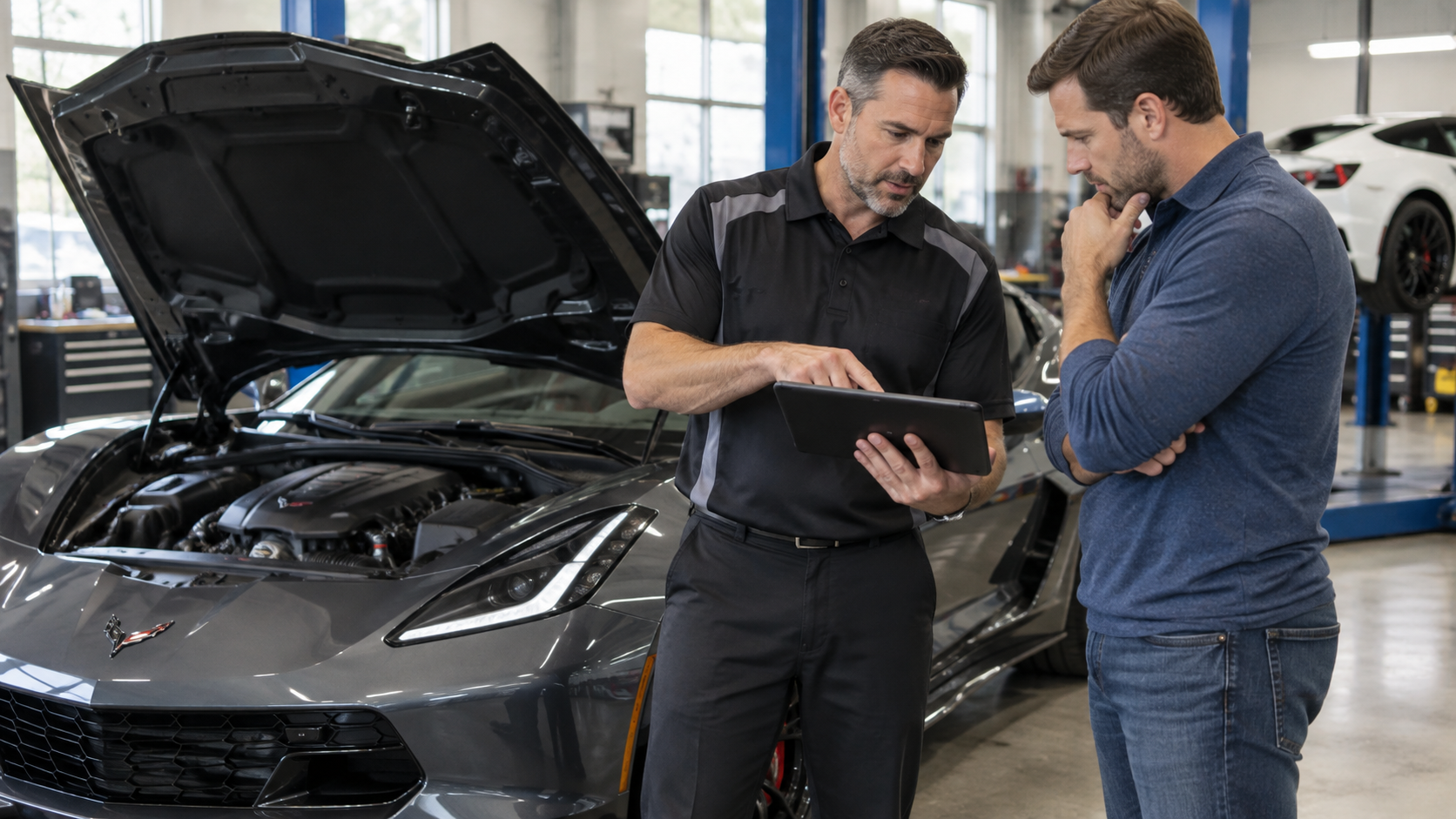
A Corvette dealer diagnostic estimate should explain the reported concern, testing scope, repair recommendation, and expected cost before work begins. Therefore, clear documentation gives you a defined starting point before you approve any repair. In addition, diagnosis and repair are two separate service steps. One identifies the fault, while the other corrects the confirmed problem. For this reason, that distinction matters when a Corvette needs specialized testing, model specific parts, or deeper inspection. Diagnosis and Repair Are Different Decisions Diagnosis identifies why a warning light, noise, leak, or drivability concern is happening. Repair work addresses the confirmed fault after testing supports the recommendation. Therefore, paying for diagnosis does not mean you approved the repair. A Corvette dealer may use scan data, electrical testing, visual inspection, pressure testing, or road testing during diagnosis. In addition, the exact process should match the concern you reported. In addition, some faults require partial disassembly before the technician can confirm the source. Does a diagnostic fee authorize the repair? No, because diagnostic labor covers the testing needed to identify the problem. Repair approval should come after you receive the findings, proposed work, and estimated cost. Therefore, that separation gives you a clear decision point. You can review the diagnosis first, then decide whether to approve the recommended repair. What Should a Corvette Repair Estimate Include? A written estimate should describe the proposed job, expected parts, labor, and anticipated price. In addition, it should connect the repair recommendation to the diagnostic finding. For this reason, a Corvette dealer visit should include a document that makes the repair path easy to follow. You should see what the technician found and which work the estimate recommends. Therefore, vague descriptions make it harder to know what you are approving. A clear estimate should show these items: The document should identify the reported concern and the testing result that supports the repair recommendation. The parts section should list the expected components and enough detail to show what the technician plans to replace. The labor section should connect technician time to the named repair so the scope remains easy to follow. In addition, the estimate should state the expected total before you authorize the repair. If taxes, shop supplies, or other charges apply, those should be clear before work starts. How Diagnostic Fees Should Be Explained A diagnostic fee pays for technician time used to trace the source of a reported problem. Instead, the fee covers the testing needed to trace the reported concern. Modern Corvettes can require several testing steps before the technician confirms one repair path. A technician may compare scan data, inspect wiring, verify fluid pressure, or reproduce the concern. Therefore, the diagnostic process may involve more than one tool or test. What are you paying for when a shop charges a diagnostic fee? You are paying for the testing needed to move from a symptom to a supported finding. Therefore, that work should produce a clearer repair recommendation. A Corvette dealer should explain the diagnostic scope before testing begins. The estimate should also state the diagnostic charge or pricing method. In addition, you should know whether deeper testing would require another approval step. That structure keeps diagnosis transparent. It also makes it easier to understand why the final repair recommendation may differ from the concern you first described. What Happens When Diagnosis Finds More Work? A repair scope can change after deeper testing or partial disassembly reveals another fault. When that happens, the next step should be a revised explanation before new work begins. Can the repair scope expand after the first estimate? Yes, because some related faults only appear after technicians open or test the original concern further. However, the new finding should create another approval point. In addition, the updated explanation should identify what changed and why. It should also show the revised parts, labor, and expected cost. Therefore, you can compare the new scope with the work you already approved. At a Corvette dealer, this may involve related wiring, hardware, seals, sensors, or another component near the original repair. Model specific fitment can also change which parts the job requires. Therefore, a clear process keeps the repair order tied to your approval. New work should not become part of the job without a clear explanation and authorization. Parts, Labor, and Warranty Information Parts and labor represent separate parts of the repair estimate. In addition, the parts section covers the components required for the job. The labor section covers technician time needed to complete the named repair. What should you know about the parts on the estimate? You should know which component the technician plans to install and whether related hardware is also required. In addition, part fitment should match the exact Corvette model and model year. Corvette repairs can involve model specific brake, suspension, electrical, cooling, or drivetrain components. Therefore, part identification matters when several versions exist across trims or model years. Warranty information should also be clear before approval. Ask what coverage applies to the part and to the repair labor. If separate terms apply, the service team should explain those details before the work begins. Therefore, this level of detail gives you a better record of what the repair includes. It also makes the final invoice easier to compare with the approved estimate. Questions to Ask Before You Authorize the Repair Before you approve work, review the estimate against the concern you brought in. The document should connect the reported symptom, diagnostic finding, repair scope, parts, labor, and expected price. A useful final review includes: Ask what testing confirmed the fault and whether any diagnostic steps remain before the repair can begin. Confirm which parts the technician will install, what labor the estimate includes, and what warranty terms apply. Ask how the shop will contact you if the repair scope or price changes after work begins. Finally, compare the final invoice with the work you approved. A Corvette dealer should be able to explain any difference between the estimate and completed charges. Clear repair documentation makes the service decision easier to follow from diagnosis through completion. Before authorizing work, make sure every major part of the estimate is understandable. Ross Downing Corvettes in Hammond can review the diagnostic finding, repair scope, and pricing with you before repair work begins.

Track Cooling and Brake Fluid Guide for Corvette Owners

Track Cooling and Brake Fluid Guide for Corvette Owners

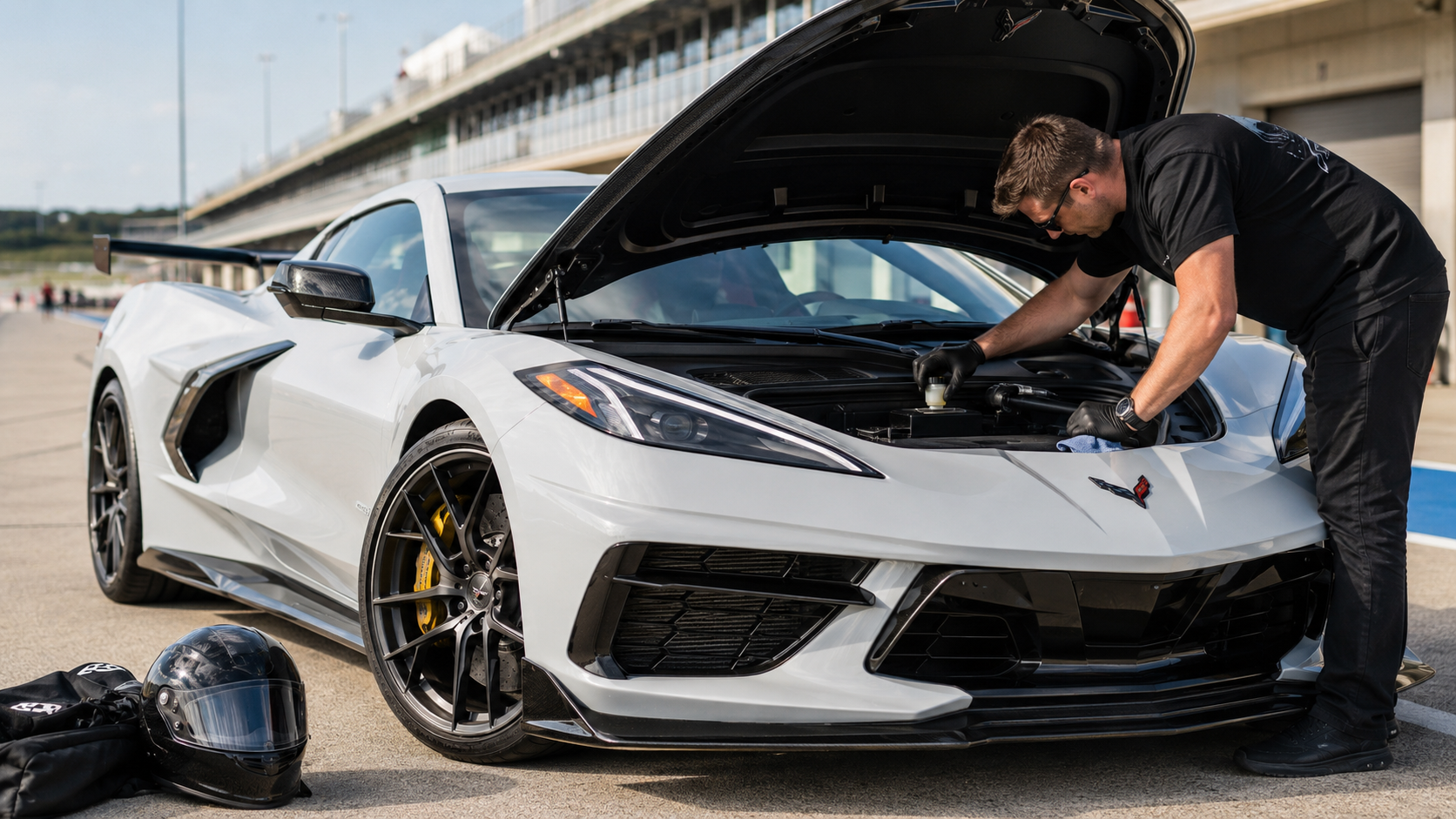
Track cooling matters when repeated Corvette braking pushes heat from the rotors and calipers toward the brake fluid. In addition, every hard stop on a road course converts speed into heat at the friction surfaces. Short recovery periods can also keep temperatures elevated from one braking zone to the next. That heat can travel through the calipers and into the hydraulic fluid. Therefore, track preparation should include fluid grade, boiling points, fluid age, and Chevrolet guidance. Why Track Braking Raises Brake Fluid Temperature Brake pads clamp the rotors and turn vehicle motion into heat. Therefore, the rotors absorb much of that heat first. However, the calipers sit directly beside those hot friction surfaces. As a result, heat can move through the caliper body toward the brake fluid inside. Why can brake fluid become a problem during a track session? Brake fluid must stay liquid so pedal force transfers through the hydraulic circuit. Once fluid reaches its boiling threshold, vapor can form. Because vapor compresses more easily than liquid, pedal travel can increase. Track cooling works alongside brake hardware by managing the heat that reaches each part. Airflow around the brakes can remove heat between braking zones. Still, repeated high energy stops can outpace that heat removal. For this reason, fluid needs enough thermal margin for the session. Z06 and Z07 hardware can manage intense brake heat, but fluid preparation still matters. Z07 carbon ceramic discs resist high rotor temperatures very well. Nevertheless, brake fluid still sits inside the calipers. Strong rotor hardware does not remove the need for fresh, qualified fluid. Dry and Wet Boiling Points Explained Dry boiling point measures fresh brake fluid with very little moisture present. Wet boiling point measures fluid after controlled moisture contact. Therefore, the second number is lower because absorbed water reduces the temperature required for boiling. Which boiling point matters more before a track day? Both matter, because one describes fresh fluid and the other reflects moisture contact. A high dry number gives fresh fluid more thermal margin. The wet number shows how far that margin can fall after moisture enters the fluid. Federal minimums show the difference clearly. DOT 3 starts at a minimum of 401°F dry and 284°F wet. DOT 4 starts at 446°F dry and 311°F wet. DOT 5.1 starts at 500°F dry and 356°F wet. However, those values are minimum standards, not the exact numbers for every product. A track focused DOT 4 fluid can exceed the minimum by a wide margin. Chevrolet specifies qualified DOT 4 with a dry boiling point above 590°F for current Corvette track preparation. Therefore, the product data matters more than the grade number alone. Track cooling decisions should also account for fluid age. In addition, fresh fluid starts closer to its published dry rating. Consequently, moisture lowers that thermal margin. As a result, an older fluid can reach vapor formation sooner during repeated braking. Does DOT 5.1 Beat DOT 4 for Track Driving? DOT classifications establish minimum test thresholds for brake fluid. They do not rank every product from weak to strong. A specific DOT 4 fluid can carry a higher boiling point than a basic DOT 5.1 fluid. Does DOT 5.1 automatically make a stronger Corvette track choice? No, because Chevrolet specifies qualified DOT 4 for current track preparation. That instruction should guide fluid selection before generic grade comparisons. In addition, owners should verify the exact product boiling points and Corvette track instructions. The three grades differ in their federal minimum boiling thresholds: DOT 3 has the lowest minimum dry and wet thresholds of the three grades discussed here. DOT 4 raises both minimum thresholds and includes track fluids that exceed the basic federal floor. DOT 5.1 raises the federal minimums again, but Chevrolet still calls for qualified DOT 4 for Corvette track preparation. Do not confuse DOT 5.1 with DOT 5 silicone fluid. In addition, they are different fluid classes. Chevrolet specifically says not to use DOT 5 silicone brake fluid for track preparation. Therefore, the decimal in DOT 5.1 matters when reading a bottle or service document. How Boiling Fluid Creates a Soft Pedal The hydraulic circuit relies on liquid brake fluid to carry force from the pedal toward the calipers. Therefore, liquid resists compression under normal brake pressure. By contrast, vapor does not. Why can the pedal soften after several hard laps? Vapor formation creates compressible pockets inside the hydraulic circuit. More pedal movement then goes into compressing that vapor. Consequently, less of the initial pedal movement reaches the caliper pistons as direct hydraulic force. The driver may feel longer pedal travel or a softer response. In severe cases, stopping force can fall enough to end the session. However, that sensation differs from simple pad wear because the change can appear quickly as brake temperatures rise. Track cooling reduces heat around the brake assembly, yet fluid selection provides another layer of thermal margin. The two work together. Track cooling also preserves thermal margin by limiting heat transfer toward the calipers. Cooling controls how much heat reaches the caliper area. High boiling fluid raises the temperature required before vapor can form. If the pedal changes during a session, the safest response is to stop track driving and inspect the brake setup. Continued hard laps can add more heat. A service check can evaluate fluid, pads, rotors, calipers, and related brake parts. How Fluid Age Changes Track Preparation Brake fluid can absorb moisture while it remains in the hydraulic circuit. That moisture lowers the boiling threshold. Therefore, mileage alone does not show how much thermal margin remains. Does low mileage mean the fluid is ready for a track day? No, because time and moisture matter alongside mileage. Chevrolet gives Corvette owners a much shorter fluid age window for competitive driving. Current track guidance says to replace qualified fluid when its age exceeds one month or is unknown. In addition, Chevrolet calls for fluid from a sealed container. That instruction protects the starting state of the fluid before it enters the car. An opened container can absorb moisture from the air. Therefore, track preparation should begin with known fluid age and known container history. Track cooling planning should treat freshness as part of the brake setup. Owners should verify fluid level before the event as well. A fresh, correctly filled brake circuit gives the car a stronger thermal starting point before repeated hard stops. Choosing Brake Fluid for a Z06 or Z07 Track Day Corvette track preparation should start with Chevrolet instructions for the exact model and model year. Then, compare the fluid specification against those instructions. For current track guidance, qualified DOT 4 above 590°F dry is the key requirement. Before choosing fluid, review these items: Confirm the fluid meets the Chevrolet track specification for the exact Corvette and model year. Check both dry and wet boiling points instead of relying on the DOT grade alone. Verify fluid age, container history, fluid level, and the rest of the brake setup before driving on track. A Z06 or Z07 owner should also review pads, rotors, calipers, cooling hardware, and tire setup before a track event. Brake fluid works inside that larger thermal chain. Therefore, one strong fluid number cannot replace complete preparation. Track cooling and brake fluid preparation belong in the same conversation because both address heat. One manages how quickly brake parts shed heat. The other sets the thermal margin inside the hydraulic circuit. For Corvette owners heading to a road course, both deserve attention before the first session.

Corvette Engines and Powertrains for 2026 Compared

Corvette engines for 2026 include three gasoline V8 designs spread across five distinct drivetrain configurations. Stingray, E Ray, Z06, ZR1, and ZR1X each deliver power through a different mechanical path. Therefore, choosing among them requires more than comparing peak horsepower. The LT2 serves Stingray and E Ray. The LT6 powers Z06, while the LT7 powers ZR1 and ZR1X. In addition, E Ray and ZR1X add front axle electric drive. That addition changes traction and total output without replacing the V8 behind the cabin. Stingray and the LT2 V8 What makes the Stingray LT2 distinct? Its 6.2 liter displacement and cross plane crankshaft support strong torque across common road speeds. In addition, Chevrolet rates the engine at 490 horsepower and 465 pound feet of torque. The available exhaust raises those figures to 495 horsepower and 470 pound feet. Moreover, the LT2 uses overhead valves within a compact small block layout. Therefore, the engine fits tightly behind the passenger compartment. Its larger displacement also produces a broad torque curve without requiring extreme engine speed. more A cross plane crankshaft places its crank pins at 90 degree intervals. Consequently, the firing rhythm creates the deep V8 sound linked with Stingray. The layout also adds counterweights that reduce vibration during road travel. The LT2 reaches useful torque at lower engine speeds. Therefore, drivers do not need to chase the redline for quick response. The eight speed dual clutch transmission keeps the engine near the needed range. As a result, Stingray delivers direct acceleration during passing, highway entry, and winding road travel. How E Ray Expands the LT2 Does E Ray replace the LT2 with a hybrid engine? No. E Ray keeps the 495 horsepower LT2 at the rear. It then adds a 160 horsepower electric motor at the front axle. Together, both sources produce 655 horsepower. In addition, this output reaches the road through two separate axles. However, the two axles receive power from separate units. The V8 drives the rear wheels through the dual clutch transmission. The electric motor sends torque directly to the front wheels. This layout creates electrified all wheel drive. Moreover, electric torque arrives quickly when the driver presses the accelerator. That front axle force can support a stronger launch before the rear tires carry the full task. The battery sits within the central tunnel between the seats. Therefore, E Ray does not need a charging plug. Braking and normal driving replenish the battery for later electric assistance. E Ray gives the LT2 a new role without changing its basic character. The V8 still supplies most of the output and sound. In addition, the front motor adds traction and low speed response. Z06 and the LT6 Flat Plane V8 Why does the Z06 engine rev higher than the LT2? The LT6 uses a flat plane crankshaft and dual overhead camshafts. Moreover, Chevrolet rates the 5.5 liter V8 at 670 horsepower with an 8,600 rpm redline. A flat plane crankshaft arranges its crank pins at 180 degree intervals. This design reduces rotating mass and supports quicker changes in engine speed. In addition, the exhaust pulses follow a different rhythm than those from the LT2. Dual overhead camshafts place the camshafts above the cylinder heads. They control four valves per cylinder and support high airflow at elevated rpm. Therefore, the LT6 can keep building power near its redline. The LT6 draws air without turbochargers. Throttle movement changes airflow directly through the intake path. Consequently, the engine responds with a sharp rise in speed and a high pitched exhaust note. Z06 pairs this engine with wider bodywork, larger cooling paths, and track focused hardware. Still, the engine remains the center of its identity. Drivers who value high rpm response and natural aspiration will notice the LT6 most. ZR1 and ZR1X With the LT7 Does ZR1X use a different V8 than ZR1? No. Both models use the twin turbocharged 5.5 liter LT7. Chevrolet rates that engine at 1,064 horsepower and 828 pound feet of torque. The LT7 shares its basic bore spacing and flat plane layout with the LT6. However, Chevrolet revised major internal parts for turbocharged operation. Two turbochargers force more air into the cylinders, which permits much greater fuel flow and output. By contrast, ZR1 sends LT7 power to the rear wheels. Therefore, tire grip and electronic torque control shape the opening phase of acceleration. Once speed rises, the engine continues pulling through the dual clutch transmission. ZR1X adds a 186 horsepower front axle motor. Combined output reaches 1,250 horsepower through electrified all wheel drive. The electric unit adds front wheel torque while the LT7 drives the rear axle. The difference between these two models comes from power distribution: ZR1 uses the LT7 and rear wheel drive. ZR1X uses the LT7 plus a front electric motor. ZR1X combines gasoline and electric output across both axles. Thus, the LT7 remains the gasoline heart of both cars. The ZR1X electric unit adds traction and total output without creating a fourth V8. Which 2026 Corvette Powertrain Fits Your Driving? Which Corvette powertrain fits your plans? Start with the sound, engine response, traction layout, and roads you expect to drive. Peak horsepower matters, but the way each model delivers force matters too. First, Stingray offers the LT2 in its simplest form. Its broad torque and familiar V8 rhythm suit drivers who want strong road manners with room for track visits. E Ray keeps that LT2 sound while adding front axle electric force. Therefore, it suits drivers who value all wheel drive traction and quick low speed response. By contrast, Z06 takes a different path. Its LT6 rewards engine speed, sharp response, and a distinctive flat plane sound. As a result, it speaks most clearly to drivers drawn toward high rpm track work. ZR1 uses turbocharging to push the LT7 far beyond the naturally aspirated engines. ZR1X adds front electric drive for greater total output and traction across both axles. Before choosing, compare these points: Decide whether you prefer cross plane depth or flat plane pitch. Consider rear wheel drive or electrified all wheel drive. Compare natural aspiration with twin turbocharged power. Match the car with your road and track plans. The 2026 Corvette lineup gives each V8 a clear purpose. Therefore, the strongest choice is the one whose power delivery matches your own driving plans.

What Year Did Corvette Go to Mid Engine and What Changed

What year did Corvette go to mid engine? The change arrived with the 2020 Corvette Stingray, revealed in July 2019. Both dates appear in Corvette history because they mark different points. Chevrolet showed the C8 during 2019, then released it for the 2020 model year. That answer gives you the date, but the engineering story reaches much farther back. Chevrolet had studied rearward engine placement for decades. Therefore, the C8 was not a sudden rejection of Corvette history. It brought a long running idea into regular production. When Corvette Became Mid Engine The C7 closed Corvette’s front engine production chapter after the 2019 model year. Then, Chevrolet introduced the eighth generation Stingray with its V8 behind the passenger compartment. Therefore, the new car carried a 2020 model year designation. Why do some sources say 2019 while others say 2020? Chevrolet unveiled the car on July 18, 2019. However, dealerships received it as a 2020 Corvette Stingray. Thus, 2019 marks the public reveal, while 2020 identifies the first production model year. more Generation names also make the timeline easier to follow. C7 refers to the seventh generation, which kept its engine ahead of the cabin. C8 identifies the eighth generation and its new engine position. Furthermore, the change reshaped the car’s proportions. The cabin moved forward, while the rear body gained space for the V8 and transaxle. Even so, the C8 remained a two seat Chevrolet sports car. Where the C8 Corvette Engine Sits Is the C8 engine in the middle or the back? It sits behind the seats and ahead of the rear axle. That placement makes the Corvette a rear mid engine car. A rear engine car places its engine behind the rear axle. By contrast, the C8 keeps the V8 within the wheelbase. The engine sits near the car’s center, although it remains behind the passenger compartment. This distinction matters because axle position shapes how mass rests on the tires. Moving the V8 rearward places more static weight near the driven rear wheels. Therefore, the rear tires begin with more load before acceleration starts. In addition, the transaxle sits at the rear. It combines the transmission and final drive near the engine. As a result, the main powertrain mass stays close to the rear axle and within the wheelbase. You can identify the layout through four basic points: The passenger cabin sits ahead of the engine. The V8 sits ahead of the rear axle. The rear wheels receive power in the Stingray. The transmission and final drive sit near the engine. Together, these points explain why the C8 is called rear mid engine. The name refers to engine position, not the visual center of the body. Why Did Chevrolet Move the Corvette Engine? Chevrolet moved the engine to place more mass near the tires delivering power. During hard acceleration, weight also shifts toward the rear axle. Therefore, the C8 starts with rearward mass and gains more rear load as it launches. Why did that matter after seven front engine generations? Engine output kept rising, yet tire grip remained finite. A front engine layout places substantial static weight over the front axle. The rear tires must then handle growing torque with less starting load above them. Wheelspin wastes part of the force meant to move the car. By moving the V8 rearward, Chevrolet gave the rear contact patches a stronger starting point. Consequently, the C8 could use its available engine output more effectively during a launch. Braking also entered the engineering case. Hard braking transfers load toward the front axle, regardless of engine position. However, rearward static mass leaves more load at the rear as that transfer occurs. The rear brakes can then carry a larger share of the stopping task. Corner entry changes for the same reason. The front tires do not begin with the same static burden found in a front engine layout. Therefore, steering and braking forces can be shared differently across both axles. The goal was not simply a new shape. Chevrolet changed the architecture to address traction, braking, and corner entry at their mechanical source. The Mid Engine Story Started Decades Earlier Was the C8 Chevrolet’s first attempt at this layout? No. Engineers studied central engine placement through experimental cars long before the 2020 Stingray. Moreover, Zora Arkus Duntov became closely tied to that work. He joined Chevrolet in 1953 and later served as Corvette’s first chief engineer. Duntov believed a rearward engine could help Corvette compete with racing cars that used similar layouts. Chevrolet Engineering Research Vehicles, known as CERV models, tested several ideas outside regular production. The original CERV I appeared in 1960 as a lightweight open wheel research car. Later projects explored new chassis layouts, drivetrains, aerodynamics, and powertrain placement. CERV III arrived in 1990 with a mid engine layout and all wheel drive. It looked far closer to a road car than the earliest research machines. However, cost, manufacturing needs, and product timing kept those concepts from becoming a showroom Corvette. The C8 finally joined those old ideas with modern production tools. Computer modeling, new structural methods, electronic controls, and Bowling Green manufacturing supported the move. Thus, the 2020 Stingray completed a path that Chevrolet engineers had explored across several eras. What Changed and What Stayed Corvette The engine location changed the body, cabin view, cargo arrangement, and driving feel. It also ended the long hood proportions linked with earlier generations. However, Chevrolet kept several traits at the center of the Corvette name. The Stingray retained a naturally aspirated Chevrolet V8. It also kept two seats, a removable roof panel on the coupe, and rear wheel drive. Moreover, the car continued to pair strong engineering with a price below many exotic rivals. Additionally, the C8 kept Corvette production in Bowling Green, Kentucky. That continuity linked the new architecture with the people and plant behind earlier generations. What stayed familiar after the engine moved? Corvette still centered on direct driver control, V8 character, and American sports car identity. The route changed, but the central mission remained. Knowing what year Corvette went to mid engine gives you a useful timeline marker. Yet the deeper story explains why 2020 mattered. Chevrolet moved the V8 after decades of study. Then, the new position reshaped how the car launches, stops, and turns.

Corvette ZR1 0-60 MPH Explained Beyond a Single Number

Corvette ZR1 0-60 mph results reveal more when you know the setup behind each run. The quickest published time does not come from horsepower alone. Instead, the launch depends on tire grip, launch software, pavement, temperature, and timing method. Each factor changes how quickly the rear tires transfer force to the road. Chevrolet lists an available 2.3 second time for the ZR1 with the ZTK package. The standard version carries a published 2.5 second time. Therefore, the first step is matching each number with the correct car. That context keeps a fast result from becoming a misleading comparison. What the Published Number Includes Which ZR1 produced Chevrolet’s 2.3 second time? The result belongs to a ZR1 equipped with the available ZTK package. That setup includes Michelin Pilot Sport Cup 2 R tires and track focused chassis tuning. It also requires the Carbon Fiber Aero Package. The standard ZR1 uses the same twin turbocharged LT7 V8. However, Chevrolet lists a 2.5 second time for that configuration. The two tenths do not suggest an engine output change. Instead, the package changes how the car places its power onto the pavement. The LT7 produces 1,064 horsepower and 828 pound feet of torque. An eight speed dual clutch transmission sends that output to the rear wheels. Yet a standing start begins with available tire grip. The engine cannot use every pound foot at once without overwhelming the contact patches. For that reason, read every published time with four details: more Identify the tire and package fitted to the test car. Check whether the run used Chevrolet’s launch software. Look for information about pavement and timing method. Compare the quarter mile result with the opening sprint. These details explain what the number represents. Moreover, they make comparisons between the standard ZR1 and ZTK equipped car more useful. How Launch Control Manages the Start Why not send all 1,064 horsepower to the rear tires at once? The tires would spin before moving the car forward efficiently. Therefore, a quicker launch requires measured torque delivery during the first moments. Launch Control coordinates engine output, transmission response, and rear tire slip. The driver selects the proper drive setting and follows the vehicle procedure. Then, the car manages the start within its programmed targets. Custom Launch Control adds driver adjustment for the launch. It lets the driver tailor starting engine speed and target slip for a suitable closed course. However, more wheelspin does not automatically create a quicker run. Too much slip turns engine output into heat instead of forward motion. The eight speed dual clutch transmission also shapes the result. Its fast shifts reduce the time spent between gears. In addition, the transmission keeps the LT7 pulling as road speed rises. That role becomes clearer after the tires clear the most traction limited part of the run. Chevrolet’s traction management technology adds another layer during track driving. It changes traction and stability intervention through selectable settings. Therefore, the chosen setting must match the driver’s skill, tire state, and closed course surface. Why Tires and Pavement Change the Result Can the same ZR1 record different times on separate surfaces? Yes. The tire contact patches can only transfer the force supported by the pavement at that moment. Cup 2 R tires support strong dry grip once they reach a suitable temperature. However, cold rubber will not respond like warmed rubber. Pressure also rises as the tire heats. Therefore, the same tire can launch differently early and later during an event. Pavement creates another variable. A prepared drag strip contains rubber and traction treatment across the launch area. By contrast, an ordinary road may contain dust, moisture, oil residue, or polished aggregate. Those materials reduce the force available before slip begins. Air temperature, pavement temperature, and recent tire activity also matter. A warm, clean surface may support a stronger start than cold pavement. Still, drivers should never attempt launch testing on public roads. The ZR1’s acceleration belongs on a suitable closed course with trained support. A useful test log should record: Tire type, pressure, and approximate temperature Surface type and visible surface state Air temperature and weather Launch setting and timing method That information gives each number a clear setting. Consequently, later runs can be reviewed with less guesswork. Why Do Corvette ZR1 Acceleration Tests Differ? Independent tests may use different starting rules. One test can begin timing when the car first moves. Another may use rollout before the clock starts. Rollout removes a small part of the initial movement from the measured time. Weather and elevation also change the run. The LT7 uses twin turbochargers, yet air density still matters. Moreover, wind can change resistance as speed builds. A headwind may have little effect at first, then become more noticeable later. Vehicle weight can vary too. Fuel level, driver weight, test equipment, and fitted options all add mass. Because acceleration must move that mass, a heavier test car may record a slower number. Driver procedure creates another source of variation. Launch software reduces variation, but it cannot make pavement and tires identical. Therefore, credible tests can disagree without proving that one car has a fault. When comparing two numbers, use the same timing standard whenever possible. Then, compare tire setup, pavement, temperature, and vehicle configuration. This method gives the figure more context than a ranking alone. What the Quarter Mile and ZR1 Build Reveal The quarter mile shows what happens after the launch stops dominating the result. Chevrolet lists a 9.6 second run at 150 mph for the ZTK equipped ZR1. That trap speed shows how forcefully the LT7 continues pulling well beyond 60 mph. The first part of the run depends heavily on traction. Later, engine output, shifting, aerodynamic drag, and vehicle mass take larger roles. Therefore, quarter mile data gives a wider view than the opening sprint. Does every ZR1 build need the ZTK package? No. The package suits drivers who plan serious closed course driving. Its tires, chassis tuning, and aero equipment support that purpose. However, the standard ZR1 retains the same LT7 output and may fit a different ownership plan. Before you build a ZR1, consider where the car will spend most of its miles. A driver focused on road travel may value the standard setup. A frequent track driver may prefer the ZTK equipment and its specialized tire choice. The Corvette ZR1 0-60 mph figure becomes more useful once the setup behind it is clear. Therefore, compare the complete test instead of one headline number. That approach gives you a stronger view of the car you plan to own and drive.

How to Check Tire Tread After a Corvette Track Day

Learning how to check tire tread after a Corvette track day starts with looking beyond one center groove. Furthermore, your tires record each braking zone, corner, and acceleration run. Therefore, the tread can reveal pressure concerns, wheel geometry clues, and excessive shoulder loading. In addition, a careful inspection can uncover damage before the next session. Track driving places intense heat and force into every tire. Because of that, a quick glance at the wear bars is not enough. Therefore, you need to compare several tread zones and review your pressure notes. You should also follow the track guidance for your Corvette model and tire specification. How to Check Tire Tread Across the Full Tire Where should you measure after leaving the track? Measure the inner shoulder, center ribs, and outer shoulder on every tire. Furthermore, a tread gauge gives a clearer reading than a visual estimate. However, one measurement cannot show how the contact patch worked through each corner. Start after the tires have cooled and the Corvette sits on level ground. Then, check several points around the circumference. Additionally, record the lowest reading from each tread zone. In addition, compare the left and right tires on the same axle. Similar readings can confirm an even wear pattern. A wide difference deserves closer review. Before measuring, look for rubber pickup from the track surface. Small pieces can hide the true groove depth. Then, remove loose pickup carefully without cutting the tread. Next, inspect the grooves, tread blocks, and shoulder edges under bright light. Your notes should include: more Record inner, center, and outer readings for every tire. Note the starting pressure and the hot pressure after each session. Mark any cuts, tears, bulges, missing rubber, or exposed material. These records turn one inspection into a useful history. Furthermore, they make later changes easier to spot. The lowest reading matters, but the pattern across the tire tells the fuller story. Is Outer Shoulder Wear Normal After a Track Day? Outer shoulder wear can appear after hard cornering. Because of this, the outside front tire carries heavy lateral force while the Corvette turns. As a result, its shoulder may show more abrasion than the center ribs. Even so, light wear near the tread edge does not always signal a problem. However, the tire should keep its working surface on the tread. Scuffing that continues beyond the tread edge points toward excessive rollover. Moreover, the sidewall uses different rubber and should not carry sustained cornering load. Continued rollover can lead to chunking or tearing near the shoulder junction. Ask whether the marks stop at the tread edge. If they extend onto the sidewall, pause before another session. Therefore, review hot pressures, wheel geometry settings, and driving inputs with a qualified technician. Increasing pressure or negative camber may keep more load on the tread. Still, any adjustment must follow the current Chevrolet guide and the tire maker's instructions. In addition, compare both front tires. A course with more turns in one direction may load one side harder. Even so, deep shoulder loss on one tire can point toward a setup concern. Photos taken after every session can show whether the pattern is stable or moving farther outward. What Center Wear Reveals About Track Pressure What does faster center wear mean after repeated laps? It can indicate that the tread center carried too much load. During a session, tire heat raises pressure. Therefore, a reasonable cold setting can still finish above the target range. Check pressure soon after entering the paddock. A reading taken much later may miss the peak reached on track. Additionally, write down each hot reading beside the session length and outdoor temperature. Then, compare those notes with center tread loss. Chevrolet publishes cold minimums and hot targets for supported Corvette track configurations. However, those values vary by model and course type. For that reason, do not apply one pressure number to every Corvette. A ZR1 on a high speed course may use different targets than a Stingray Z51. For this reason, pressure changes should remain measured and gradual. Do not bleed a hot tire without knowing the target for your setup. Furthermore, restore the placard pressure before returning to public roads. Street travel places different demands on the tire than closed course laps. Center wear alone cannot prove the cause. Wheel geometry, tire construction, course layout, and repeated heat cycles also shape the tread. Instead, use the pattern with your recorded pressures. What Inner Edge and Uneven Wear Say About Wheel Geometry Does inner edge wear mean the wheel geometry is wrong? It may reflect camber, toe, or street miles driven with track settings. Furthermore, negative camber tilts the tire inward at the top. During cornering, that angle can place more tread on the pavement. Toe describes the direction each tire points when viewed from above. Consequently, a small toe change can make the tread scrub across the road. An incorrect setting may produce feathering or rapid wear along one edge. Run your hand lightly across the tread after it cools. A smooth feel in one direction and a sharp feel in the other suggests feathering. In addition, compare the inner edge with the center and outer edge. A steady slope across the tread differs from isolated damage. Chevrolet lists track wheel geometry specifications for supported Corvette models. The guide also directs owners to return the settings to factory specifications for public road driving. Therefore, record the settings before the event and after the reset. As a result, that record gives a technician a stronger starting point. Uneven wear does not always come from wheel geometry alone. Moreover, a bent component, worn joint, damaged wheel, or pressure difference can produce a similar clue. Because the tire only shows the result, a full inspection may be needed to identify the cause. When a Corvette Tire Should Stay Off the Track Can a tire need replacement before reaching its wear bars? Yes. Track loads act on the visible tread and the internal tire structure. Furthermore, Chevrolet gives track distance replacement limits for certain Corvette models, even when tread remains above the indicator. Stop further track driving when you find serious damage. Examples include exposed material, a bulge, deep cuts, missing tread chunks, or a visible separation. In addition, disappearing shoulder grooves may show that the tire has reached its track limit. Use this final review before another event: Compare the tire's track distance with the current Chevrolet guidance. Confirm that no tread or sidewall damage appeared during the last session. Review the lowest tread reading, pressure log, wheel geometry record, and tire age. A tire that passes one check can still fail another. For this reason, never approve it from tire tread depth alone. Therefore, ask a qualified tire or Corvette technician to inspect any doubtful pattern. In addition, your notes, photos, and measurements will give that person useful evidence. After the track day, return pressures and wheel geometry to the correct street settings. Then, recheck the wheel nuts with the proper torque procedure. Consequently, careful post track review protects the next drive and preserves the feedback your Corvette gave you.

Do Corvettes Have Engines in the Back? What Changes

Yes, the current Corvette does have its engine in the back. Starting with the 2020 model year, Chevy moved away from decades of front engine design. This guide explains why that switch happened and breaks each change down clearly. It also covers what changes in traffic and parking, and what a driver coming from an older Corvette should expect. Do Corvettes Have Engines in the Back? The direct answer is yes, but only since the C8 generation. Every Corvette built before 2020 placed the engine up front, behind the grille and ahead of the driver. That layout had stayed consistent across nearly seven decades of Corvette generations. The C8 moved that V8 behind the driver and ahead of the rear axle. This layout is known as mid engine. However, the shift was not cosmetic. It changed where weight sits across the chassis. Because the engine now sits closer to the car's center, the car balances differently through a corner. That balance shift is the main engineering reason behind the move, and it shapes nearly every other change discussed in this guide. more The Reason Behind the Move to the Back This question comes up constantly among shoppers comparing Corvette generations. The direct answer centers on weight distribution. A front engine Corvette carries roughly 50 percent of its weight up front. A mid engine Corvette shifts that closer to a 40 front, 60 rear split. That rear weight bias boosts traction during hard acceleration. Because more weight sits over the driven wheels under power, the rear tires grip the pavement harder off the line. The Hood Line Benefit Nobody Talks About Additionally, moving the engine back let engineers lower the hood line. Instead, there is no longer a large engine block sitting ahead of the driver. That lower hood opens up forward visibility, and shoppers notice it right away when comparing a C7 to a C8. A flatter front end also makes it easier to judge distance to curbs and parking blocks. For this reason, the switch solved two problems at once. It fixed weight balance and gave drivers a clearer view forward. What Changes in Traffic and Parking? This question moves the conversation away from handling and toward daily use. A mid engine layout places the engine behind the driver. That means the rear of the car houses mechanical parts instead of a trunk or back seat. As a result, the view through the back window is more limited than in a front engine Corvette. The engine bay sits directly behind the cabin. However, many C8 owners adjust by relying more on the rearview camera and side mirrors. This becomes routine when backing out of a driveway or a tight space, and most owners report it stops feeling unusual within the first month. Tighter Spaces Need a Bit More Care Even so, the car's overall length and width stayed close to its predecessor. Therefore, the footprint in a parking space feels familiar once a driver adjusts to the new view. Beyond that, the wider rear fenders on the C8 mean a driver should leave extra clearance. This matters most in tight garage entries or narrow alleys. What an Older Corvette Owner Should Expect A driver moving from a C6 or C7 into a C8 will notice the seating position shifts forward. That change comes directly from the mid engine layout. The driver now sits closer to the front axle instead of near the middle of the car. Consequently, the car feels more connected to the front wheels through tight turns. That connection comes from the driver sitting nearer the front axle, where steering input feels more direct. Drivers tend to describe this as sharper steering feedback. Still, the biggest adjustment for most owners is backing out of a space. The rear window view they relied on for years is gone. A short test drive focused on reverse maneuvers lets a shopper judge that adjustment before committing to the switch. Practicing a few parking lot maneuvers during that drive can reveal whether the visibility change feels manageable day to day. Living With the Mid Engine Layout Day to Day Once the visibility adjustment becomes routine, most owners report the mid engine layout fits daily driving without much friction. That ease comes largely from how quickly the brain adapts to relying on mirrors and cameras instead of a direct rear window view. The lower hood line changes how the front of the car reads in traffic. A driver can place the nose more precisely near curbs and other vehicles. Beyond that, parking garages with tight clearance need a bit more attention to the wider rear fenders. This becomes second nature within the first few weeks of ownership. The seating position closer to the front axle also changes how road texture registers compared to a front engine Corvette. Still, most drivers describe this as a small shift, not a dramatic one. For a shopper weighing the move from a front engine Corvette to the mid engine C8, one point holds steady. The visibility and seating changes are real, but they settle into habit faster than the spec sheet differences might suggest.

Corvette Repair Shop Communication: What to Expect

A repair visit can feel uncertain even when nothing about the car itself is going wrong. A trustworthy corvette repair shop removes that uncertainty with clear updates. Those updates should run from the first phone call through pickup. Most service frustration traces back to silence during the wait. It rarely traces back to the quality of the work performed. This guide breaks down what clear communication should sound like at intake. It also covers diagnosis, timing shifts, and approval before added cost. Each stage builds on the one before it, and a gap early in the process usually carries forward to the next. Why Do Service Visits Feel Stressful Even When the Repair Goes Fine? This question matters because the stress rarely comes from the repair itself. Instead, it comes from not knowing what is happening to the car while it sits out of sight. Owners hand over a car and then wait without a clear sense of where it stands in the queue. As a result, even a routine wait can feel longer than it really is. Because most shops call only when something changes, the gap between updates can feel longer than it is. A shop that sets a clear contact schedule from the start removes that gap before it turns into frustration. For this reason, the first call at intake should state when the next update will arrive. It should not only confirm the drop off. more What Should a Clear Initial Update Include? A clear initial update should arrive once a technician finishes the first diagnostic look at the car. That update should state exactly what was found, in plain language instead of part numbers or codes alone. It should also state what the technician recommends and why. That reasoning should connect back to the original concern that brought the car in. Additionally, the update should give a realistic cost and time estimate before any work begins. Owners who get this detail early trust the rest of the visit more. The unknown gets replaced with a clear picture. By contrast, a vague update that only says the shop found some issues leaves the owner guessing. That kind of vague update wears down confidence before the real work even starts. Why Does a Repair Take Longer Than First Quoted? Repair timing can shift once a technician gets deeper into the car. That shift can happen more on a low production sports car like the Corvette. That shift is normal and is not a sign something went wrong. Parts availability, hidden wear found mid repair, or a part that fails testing after installation can all stretch a timeline. Even a well run shop runs into one of these issues occasionally. However, a shop that communicates well will call before the original deadline passes, not after. That call should explain what changed and offer a new, specific date instead of a vague promise. Owners do not need every repair to finish exactly on schedule. They need to know when the schedule changes and why, so they can plan around it instead of guessing. Approval Before Added Cost: What Owners Should Expect A trustworthy shop calls before adding cost beyond the original estimate, every time. That call should explain the new finding and why it matters for the car's safety on the road. Moreover, it should also explain what the added cost covers. Owners should never discover a higher bill only at pickup. That moment removes their chance to make an informed choice. The list below covers what this approval step should always include. A clear explanation of what was found and why it was not visible during the first inspection. A specific cost figure instead of a wide range, so the owner can decide with full information. An explanation of what happens if the additional work gets declined, including any tradeoffs that follow. This approval step protects the owner's trust more than almost any other moment in the visit. It shows the shop respects the owner's right to decide instead of treating the repair as automatic. A shop that skips this step risks the relationship, even with good intentions, no matter how the repair turns out. What Strong Communication Looks Like at Pickup The final update at pickup should summarize what was done. It should confirm the original concern was resolved. It should also explain anything the owner should watch for going forward. A technician walkthrough, even a brief one, gives the owner a chance to ask questions before driving away. That moment also gives the shop a chance to confirm nothing was missed. That short conversation can resolve small concerns before they grow into a complaint. Beyond that, a shop that documents the visit clearly on the invoice makes the next visit easier. The next visit starts with a known history instead of a blank slate. Consequently, strong communication at this stage closes the loop on every update that came before it. When a corvette repair shop, corvette dealership, or corvette dealer follows this pattern, owners walk away with confidence. That confidence replaces lingering doubt about what happened to their car.

Corvette Specific Service: Track Day Inspection Guide

A Corvette driven hard on a track faces stress levels far beyond daily street use. For that reason, corvette specific service matters more than a routine oil change. Track driving raises brake temperatures and loads suspension bushings hard. Additionally, it cycles tires through heat ranges a daily commute never reaches. A shop that understands these stresses can catch wear before it causes a failure. This guide covers what to check before a track day. It also covers what changes mechanically on track, what to inspect right after, and why brake fluid choice carries real weight. What Changes Mechanically During a Track Session? This question matters because the answer explains every inspection point that follows. On track, brake rotors and pads reach temperatures far above street driving. Repeated hard stops can push that heat above 1,000 degrees Fahrenheit. That heat transfers into the brake fluid inside the calipers. If the fluid boils, the pedal can go soft or fail entirely. At the same time, suspension bushings and ball joints absorb cornering loads that exceed anything found on a public road. Tires heat cycle several times per session, and that changes both pressure and grip. Because these stresses build across a full track day, the car needs an inspection process that matches what it absorbed. more The Brake Fluid Requirement Most Owners Miss Stock Corvette brake fluid usually meets a DOT 3 or DOT 4 specification. That fluid carries a wet boiling point in the range of 280 to 311 degrees Fahrenheit. Track temperatures regularly exceed that threshold. Stock fluid can boil during hard braking and pull air into the lines. A DOT 5.1 fluid raises the wet boiling point closer to 370 degrees Fahrenheit. That gap gives real margin during repeated braking events. DOT 5.1 fluid is also more moisture sensitive over the calendar year. For this reason, it needs a flush schedule more frequent than typical street use. Given that, a specialty shop will know the correct GM approved fluid for each Corvette generation. That shop can also verify the system was bled with no trapped air. Skipping this step risks a soft pedal exactly when stopping power matters most. Post Track Inspection: What Should Get Checked After Most track prep content focuses heavily on what to check before a session. However, the inspection after the car comes off track carries equal weight. Heat cycling and repeated loading can reveal wear that stayed hidden during the pre track check. Catching that wear early stops a small issue from becoming a costly repair. The list below covers the points a specialty shop checks most closely. Brake pads and rotors need a check for uneven wear or hairline cracking. Extreme heat can weaken rotor integrity even when pad material still looks fine. Additionally, wheel and suspension fasteners should get retorqued to factory specification. Heat cycling and cornering loads can work bolts loose without any feeling reaching the seat. Furthermore, tire tread needs a check for chunking or uneven wear. Aggressive heat cycling can break down rubber faster than tread depth alone suggests. Fluid levels across the brake, coolant, and differential lines need a recheck. A hot session can reveal a slow leak that street driving never exposed. Beyond the visual check, a specialty shop will pull the wheels to inspect brake lines and suspension parts. Still, those parts stay hidden from underneath the car during a quick glance. That deeper look matters because a stress crack in a line can grow slowly and go unnoticed until it fails. Why Specialty Knowledge Changes the Outcome A general repair shop can handle an oil change or a battery swap without trouble. However, corvette specific service calls for familiarity with the mid engine layout and the track oriented brake setup. As a result, a technician unfamiliar with the platform might miss a wear pattern that a Corvette specialist would catch right away. That gap exists because bushings, fluid types, and fastener specs differ from a typical sedan. For this reason, searching corvette repair shop or corvette shops near me points owners toward technicians who already know this platform. That familiarity carries even more weight on newer generations like the C8. The mid engine layout on the C8 shifts which parts absorb the most stress. Building a Service Routine Around Track Use A Corvette that sees regular track time needs a service routine built around that use. However, a generic schedule pulled from the owner's manual will not catch everything. Establishing a relationship with a shop that understands corvette specific service means inspection points get caught on a consistent basis. That consistency removes the burden of the owner remembering every check after each session. It also protects the car's mechanical health across years of ownership, since small issues caught early rarely turn into expensive repairs. Owners who treat track use as a normal part of ownership gain the most from a shop relationship built on that understanding. The outcome is a Corvette that stays ready for the next session without surprises showing up on the drive home.

Corvette Stingray Specs vs Z06: Which One Fits You

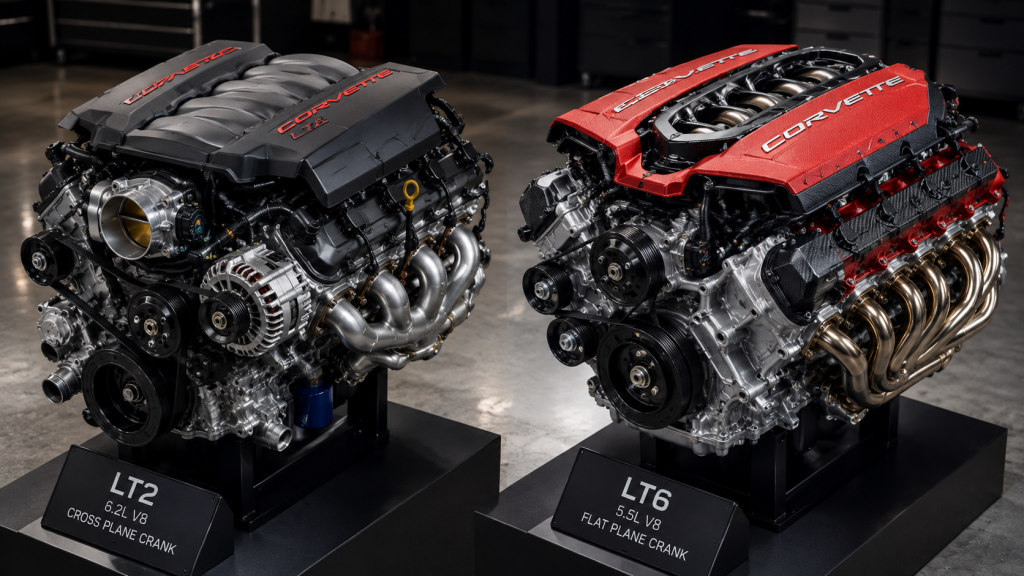
The Corvette Stingray and the Z06 share a body and a mid engine layout. They also share a badge that draws comparison the moment research begins. Corvette Stingray specs put the V8 at 490 horsepower. The Z06 pushes a flat plane crank V8 to 670 horsepower. That gap is the first number most shoppers find. However, a spec sheet only tells part of the story. The real question is whether that extra output changes how the car gets driven on a normal week. This guide breaks down the engine difference, the price gap, and the daily feel. The goal is a decision based on fit, not on the larger number printed on a window sticker. The Engine Architecture Behind the Numbers The Stingray runs a cross plane crank 6.2 liter V8. This layout produces smooth low end torque and a familiar V8 sound. The Z06 instead uses a flat plane crank 5.5 liter V8, a layout borrowed from race engineering. That design lets the engine spin past 8,000 RPM. Because the flat plane design favors high RPM output, the Z06 needs to be driven harder to show its full character. That changes how it feels in stop and go traffic. By contrast, the Stingray's cross plane V8 delivers strong torque from idle. It feels responsive without needing high RPM to reward the driver. For a shopper who drives mostly on city streets, the Stingray's engine layout matches that daily use. Given that most owners drive on public roads instead of a track, this distinction carries real weight. more Does the Z06's Extra Horsepower Matter on the Street? This question comes up constantly in early research. The direct answer is that extra horsepower only matters when a driver can use it. On public roads, traction limits and traffic mean the Stingray's 490 horsepower already exceeds what most drivers can deploy safely. The Z06's 670 horsepower becomes more relevant on a track. Higher cornering speeds and longer straights let the engine reach the RPM range where it produces peak output. Consequently, a shopper with no track plans gains little from the Z06's added horsepower beyond bragging rights. Still, some drivers value the engineering itself, the sound, and the wider Z06 body. That reason is valid even without lap times attached to it. Even so, that value is personal and cannot be measured on a spec sheet. What the Price Gap Buys The Z06 carries roughly a fifty thousand dollar premium over the Stingray once options are matched. That premium covers the flat plane engine and larger Brembo brakes. It also covers a wider body with functional aero and a stiffer suspension tune. For this reason, the price gap is not random, since each component connects to a specific track focused upgrade. Even so, a shopper who never plans to use the wider tires or the aero on a track is paying for hardware that sits unused. Instead of treating the Z06 as the obvious upgrade, it helps to map each dollar of the premium to a specific use case first. That mapping turns an abstract price gap into a concrete decision tool. Is the Stingray's Ride Feel the Smarter Daily Fit? The direct answer here depends on road quality. The Z06's stiffer suspension and wider tires transmit more road texture into the cabin. Even with the Z51 package, the Stingray keeps a softer base tune. It absorbs rough pavement with less harshness. Moreover, the Z06's wider tires can follow road grooves more directly on certain highways. Nevertheless, both cars offer a touring suspension mode that softens the ride. That mode narrows the gap when active. Beyond that, taller drivers may find the Z06's wider sills less comfortable for frequent in and out movement. The Stingray keeps a slightly easier entry by comparison. That small detail carries weight during a daily commute. Choosing the Corvette That Fits How You Drive Once the engine layout, the price gap, and the ride feel are weighed together, the decision shifts. It becomes less about which car wins on paper and more about which car matches the road ahead. A shopper who drives mostly on public roads and values smooth torque should weigh the Stingray first. Its cross plane V8 and softer suspension tune fit that daily pattern directly. A shopper who plans regular track days and wants the flat plane engine should weigh the Z06 first. Its larger brakes and aero only pay off under that kind of repeated use. Neither car is the wrong choice, and the spec sheet alone cannot settle this. The Stingray rewards a driver who wants strong torque and a comfortable ride. By contrast, the Z06 rewards a driver who has a clear plan to use its track focused hardware regularly. With that in mind, the smarter buy is the one that matches the roads a driver covers each week. That answer will land differently for each Corvette shopper, and that difference is exactly what a spec sheet alone cannot show.

LT2 vs LT6 Corvette Engine Differences Explained

The LT2 vs LT6 Corvette engine discussion starts long before horsepower numbers enter the conversation, because these two V8 layouts change how the car sounds, reacts, shifts, and communicates with the driver. Buyers researching the Corvette Stingray and Corvette Z06 usually begin with output figures, quarter mile times, or trim comparisons, but the larger distinction comes from engine architecture itself. Chevrolet engineered these powerplants with completely different personalities in mind. One delivers immediate torque with a deep, muscular cadence. The other builds intensity through rev speed, airflow, and razor-sharp response. Understanding how those traits appear behind the wheel creates a much clearer picture of which Corvette belongs in your garage. Why LT2 and LT6 Feel Different Before Full Throttle The LT2 in the Corvette Stingray uses a traditional cross plane crankshaft pushrod V8 layout. That configuration creates a smoother idle character, stronger low RPM torque delivery, and a heavier exhaust pulse rhythm. Even before aggressive acceleration, the Stingray feels settled and substantial. Small throttle inputs create immediate forward movement because torque arrives earlier in the rev range. The LT6 in the Corvette Z06 approaches engine response very differently. Chevrolet developed this naturally aspirated 5.5 liter V8 around rapid airflow movement and high RPM breathing. Instead of emphasizing low-speed shove, the LT6 builds urgency through rev speed and throttle sharpness. Press the accelerator lightly in a Z06 and the engine climbs through RPM far faster than the Stingray. Drivers notice that change immediately during merges, lane changes, and corner exits. That difference alters how the dual clutch transmission behaves as well. The Stingray transmission tuning keeps shifts calm and relaxed during casual driving. Gear changes happen lower in the RPM range because the LT2 produces strong usable torque without needing aggressive downshifts. The Z06 behaves differently because the LT6 wants to remain active higher in the rev range. Drivers may notice: more More frequent downshifts during acceleration Sharper throttle sensitivity during partial pedal inputs Faster RPM climbing between shifts Greater engine sound presence during normal driving Those differences create two distinct personalities before either car approaches maximum acceleration. What Is a Flat Plane Crank and Why Does It Matter? A flat plane crankshaft changes the firing sequence and rotational balance inside the engine. In the LT6, crankshaft journals sit 180 degrees apart instead of the cross shaped layout used in the LT2. That design changes airflow rhythm, vibration character, and exhaust pulse timing. The result is an engine that revs more freely and responds more quickly to throttle movement. Rotating mass inside the LT6 changes direction with less inertia, allowing RPM to climb rapidly. That sharper response becomes one of the defining traits of the Corvette Z06. The tradeoff appears in engine smoothness. Cross plane crank V8 engines like the LT2 naturally balance vibrations more effectively, producing the deeper rumble associated with traditional American V8 sound. Flat plane crank engines create a higher frequency exhaust note with more mechanical sharpness because firing pulses alternate differently between cylinder banks. That architecture also changes breathing efficiency at higher RPM. The LT6 uses dual overhead camshaft valvetrain engineering to support airflow stability as engine speed climbs toward its extremely high redline. The LT2 pushrod layout prioritizes compact packaging and strong torque delivery lower in the powerband. Competitor articles usually stop at “flat plane crank equals exotic sound,” but the larger mechanical story involves airflow timing, crankshaft inertia, and combustion rhythm. From the driver seat, that translates into: Faster rev transitions More urgent acceleration feel Higher pitch exhaust tone Increased sensitivity during throttle modulation More active engine personality during spirited driving Street Driving and Highway Cruising Reveal Different Priorities The Corvette Stingray and Corvette Z06 separate themselves most clearly during ordinary driving situations. Highway cruising, stoplight acceleration, parking lot maneuvering, and suburban commuting expose how differently these engines interact with daily traffic rhythm. The LT2 settles into lower RPM cruising naturally. Its torque curve supports relaxed acceleration without requiring aggressive pedal movement. During highway passing situations, the Stingray can accelerate strongly without dramatic transmission downshifts or elevated engine noise. That creates a calmer grand touring personality. The LT6 introduces more sensory intensity into every interaction. Because power builds progressively through RPM, the engine remains more active during acceleration events. Drivers hear intake sound, exhaust sharpness, and valvetrain activity more prominently throughout the rev range. This does not make the Z06 difficult to drive. Instead, it creates a more engaged relationship between driver inputs and engine reaction. Buyers considering daily ownership should evaluate: Desired exhaust volume during commuting Preference for low RPM torque versus high RPM excitement Interest in track-focused response tuning Sensitivity to sharper throttle calibration Highway cruising priorities Some drivers immediately connect with the Z06 because every acceleration event feels dramatic and urgent. Others prefer the Stingray because it balances speed with calmer drivability. Why the LT6 Sounds Completely Different The sound distinction between these Corvettes originates directly from firing order rhythm and airflow behavior. Cross plane crank V8 engines create overlapping exhaust pulses that produce the traditional deep American V8 rumble. The LT2 delivers that familiar cadence with strong low-frequency resonance and slower exhaust rhythm. The LT6 changes that acoustic structure entirely. Flat plane crank timing spaces exhaust pulses more evenly, producing a sharper, smoother, higher-frequency sound profile. As RPM climbs, the engine develops a layered mechanical tone closer to endurance racing engines than traditional pushrod V8 muscle cars. Air intake tuning contributes heavily as well. Chevrolet engineered the LT6 intake path to support sustained high RPM airflow stability. Drivers hear that airflow movement increase dramatically as revs climb, adding to the engine’s exotic character. The emotional distinction becomes substantial during acceleration: LT2 delivers heavier bass-driven acceleration sound LT6 produces sharper rising pitch intensity Stingray emphasizes torque sensation Z06 emphasizes RPM escalation and urgency That difference shapes emotional connection more than raw output numbers for many buyers. Choosing Corvette Character Instead of Chasing Numbers The LT2 vs LT6 Corvette engine debate becomes easier once buyers stop viewing the decision as “base versus upgraded.” These engines pursue entirely different emotional goals. The Corvette Stingray focuses on broad accessibility, deep torque delivery, and balanced drivability. Its pushrod V8 creates a familiar American sports car rhythm with enough refinement to feel composed during long highway drives or daily commuting. The Corvette Z06 introduces a far more intense relationship between engine speed and driver input. The flat plane crank LT6 transforms the car into something sharper, louder, and more reactive. It rewards aggressive throttle application and high RPM driving in ways the Stingray intentionally does not pursue. Neither setup replaces the other. Instead, Chevrolet engineered two separate interpretations of Corvette character: One centered around muscular torque and composure One centered around rev speed, sharpness, and sensory drama Drivers choosing between them should focus less on horsepower hierarchy and more on which engine personality matches the kind of driving they want to remember after the road straightens out.

Contact Us

Fill out this form below and we'll contact you shortly
*Required Fields