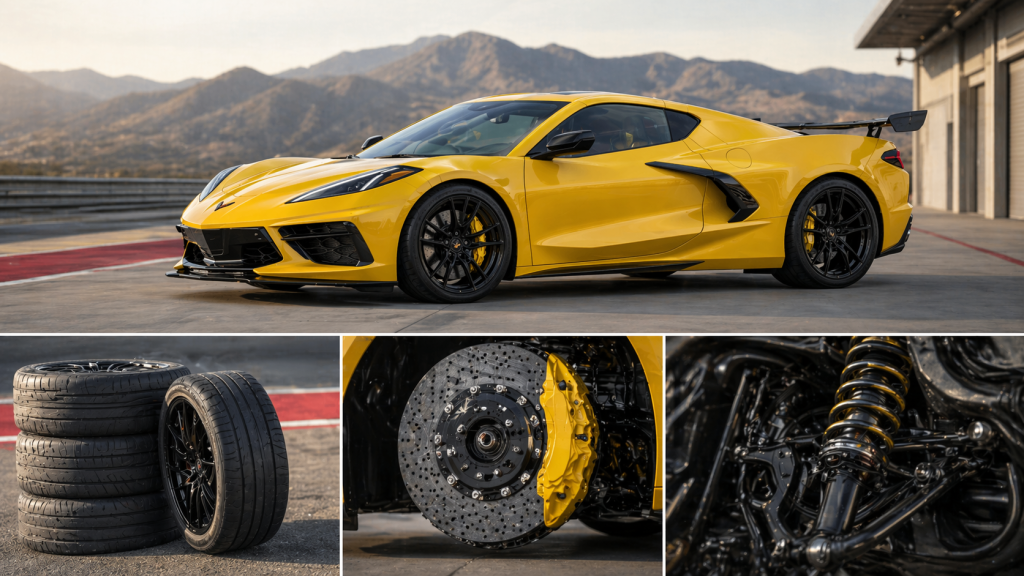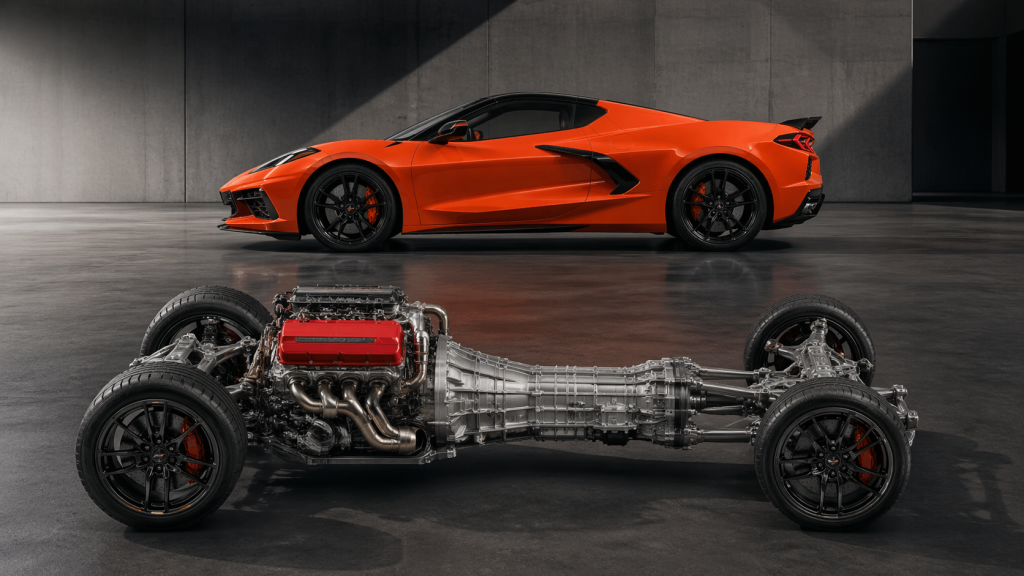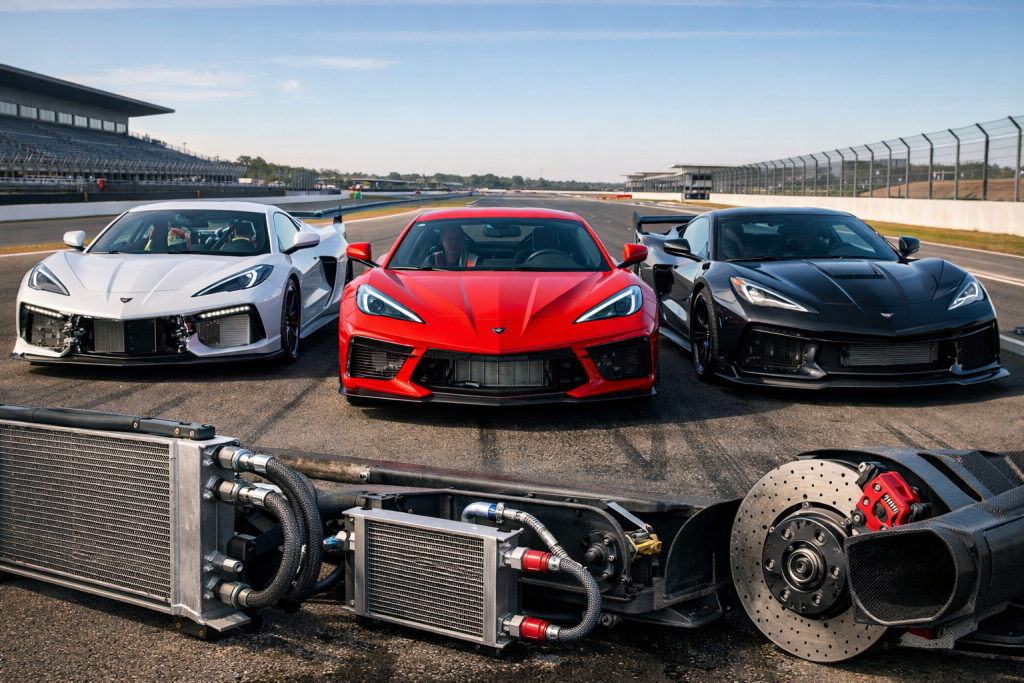

2025 Corvette Owner Guide: Break-In Procedure, Driving Modes & First-Month Performance Tips
The first month of Corvette ownership sets the foundation for how the car performs over its entire life. Modern Corvettes are built with tight tolerances and advanced materials, but mechanical components still benefit from a structured break-in period. This process is not about limiting enjoyment. It is about conditioning critical systems so they deliver consistent performance, durability, and responsiveness long term.
Understanding how to manage break-in, driving modes, and early driving habits helps owners protect their investment while preparing the Corvette for future performance use.

Why Break-In Still Matters on a Modern Corvette
Even with advanced manufacturing, internal engine and drivetrain components require controlled wear to mate surfaces properly. Break-in allows parts to establish optimal contact patterns under varying loads and temperatures.
Key systems affected during break-in include:
- Piston rings seating against cylinder walls
- Bearings establishing proper oil film behavior
- Valvetrain components synchronizing under load
- Transmission clutches and gears bedding in
Skipping or rushing this process can lead to uneven wear that impacts performance consistency.
Corvette Break-In Mileage and Load Management
The early miles are less about a fixed distance and more about how the vehicle is driven. Varying engine speed and load allows components to experience different pressures and temperatures.
Best practices during early driving include:
- Avoiding sustained high rpm operation
- Varying speed rather than using cruise control constantly
- Applying moderate throttle rather than full acceleration
- Allowing the engine to fully warm before higher loads
Gradual exposure to load helps components settle correctly.
RPM Guidance During Break-In
High engine speed places increased stress on internal components before surfaces are fully conditioned. Early operation should stay within moderate rpm ranges while still allowing the engine to experience varied use.
RPM-related considerations include:
- Avoiding extended high rpm driving
- Using the full rev range gradually over time
- Allowing engine speed to rise and fall naturally
- Avoiding aggressive downshifts early on
This controlled approach supports proper ring seating and bearing conditioning.
Transmission Break-In and Drivetrain Behavior
The Corvette’s transmission also benefits from an initial break-in period. Clutch packs and gear surfaces require controlled engagement to develop smooth operation.
Transmission-focused tips include:
- Smooth throttle inputs during shifts
- Avoiding repeated launch-style starts
- Allowing the transmission to reach operating temperature
- Letting shift behavior normalize gradually
These habits improve long-term shift quality and durability.
Thermal Cycling and Its Importance
Thermal cycling refers to allowing components to heat up and cool down repeatedly. This process stabilizes materials and reduces internal stress.
Effective thermal cycling includes:
- Driving the vehicle for moderate distances
- Allowing full warm-up before spirited driving
- Letting the vehicle cool after driving sessions
- Avoiding short trips exclusively during early ownership
Balanced use supports long-term reliability.
Understanding Corvette Driving Modes
Modern Corvettes offer multiple driving modes designed to tailor throttle response, steering, suspension, and drivetrain behavior.
Common driving mode functions include:
- Tour mode prioritizing comfort and smooth response
- Sport mode sharpening throttle and steering feel
- Track mode optimizing performance systems
- Custom modes allowing driver-defined preferences
Each mode influences how aggressively the vehicle responds.
Driving Mode Use During Break-In
During the initial ownership period, conservative modes help manage load while still allowing varied driving conditions.
Recommended early mode usage includes:
- Favoring Tour or Sport for daily driving
- Using Track mode sparingly early on
- Avoiding aggressive launch control use
- Gradually introducing performance modes over time
This approach balances enjoyment with mechanical care.
Corvette Z Mode Explained
Z Mode allows drivers to configure performance settings independently, blending comfort and aggression based on preference.
Z Mode considerations during early ownership include:
- Using moderate throttle and suspension settings initially
- Avoiding maximum engine and transmission aggressiveness
- Gradually increasing performance parameters as mileage accumulates
This customization allows drivers to ease into full performance capability.
First-Month Driving Habits That Matter
Early ownership habits shape how the Corvette feels long term. Small choices accumulate into meaningful differences.
Positive first-month habits include:
- Smooth throttle transitions
- Progressive braking rather than abrupt stops
- Steering inputs that remain controlled
- Paying attention to vehicle feedback
These behaviors support balanced component wear.
When Track Driving Should Begin
Track driving places the highest demands on the engine, transmission, brakes, and tires. It should be delayed until break-in is complete and systems are fully conditioned.
Track readiness indicators include:
- Completion of initial break-in mileage
- Normalized engine and transmission behavior
- Stable fluid temperatures under load
- Confidence in braking and handling response
Waiting ensures the vehicle performs consistently under extreme conditions.
Early Maintenance Awareness
Although major maintenance may not occur in the first month, owners should remain attentive to vehicle condition.
Early ownership checks include:
- Monitoring fluid levels
- Observing any warning messages
- Listening for abnormal noises
- Noting changes in shift behavior
Addressing concerns early supports long-term reliability.
What New Owners Should Evaluate
During the first month, owners should evaluate:
- Throttle responsiveness as mileage increases
- Shift smoothness and consistency
- Brake feel under varying loads
- Ride comfort and handling balance
This feedback helps owners understand how the vehicle evolves through break-in.
Final Perspective on First-Month Corvette Ownership
The Corvette is engineered for extreme performance, but that capability is best unlocked through disciplined early ownership. Break-in is not about restriction. It is about preparation. By managing load, using driving modes thoughtfully, and developing smooth habits, owners set the stage for years of confident performance.
A properly conditioned Corvette rewards its owner with consistency, responsiveness, and durability that can be enjoyed on the street and the track alike.
2025 Corvette Z06 vs. Z07 Aero Engineering: Downforce, Cooling & High-Speed Stability Explained
Aerodynamics is not about appearance on the Corvette Z06. It is about mechanical grip, thermal control, and stability at speeds where tires and suspension alone are no longer enough. The difference between the standard Z06 aerodynamic configuration and the Z07 performance package lies in how aggressively Chevrolet engineers use airflow to keep the car planted, cool, and predictable under sustained track loads.
Understanding the aero engineering behind the Z06 and Z07 explains why these components materially change lap consistency, braking confidence, and driver feedback rather than simply adding visual drama.

Aerodynamics as a Grip Multiplier
At high speeds, aerodynamic downforce effectively increases tire load without adding vehicle weight. This allows the tires to generate more grip in corners, under braking, and during acceleration.
Key benefits of functional downforce include:
- Increased cornering speed without relying solely on mechanical grip
- Greater braking stability from higher vertical tire load
- Improved steering precision at speed
- Reduced reliance on traction control intervention
The Z06 aero system is designed to generate meaningful downforce while maintaining balance between the front and rear of the car.
Standard Z06 Aerodynamic Configuration
The standard Z06 features an integrated aerodynamic package engineered for high performance street driving with track capability. Every component is shaped to manage airflow intentionally rather than cosmetically.
Core Z06 aero elements include:
- Front splitter designed to reduce front-end lift
- Carefully contoured underbody airflow management
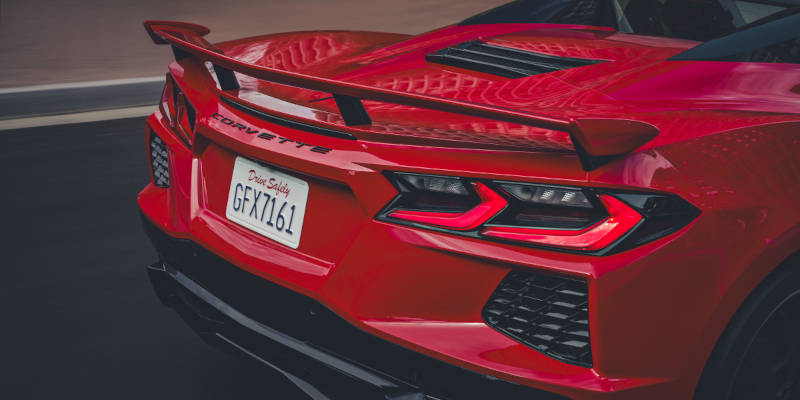
- Rear spoiler tuned for balanced rear stability
- Air extraction vents that reduce pressure buildup
This configuration delivers measurable downforce while remaining livable for regular road use.
Z07 Aero Package Overview
The Z07 package transforms the Z06 into a more track-focused machine by increasing aerodynamic load and cooling capacity. It is not a collection of isolated parts but a coordinated system.
Z07 aero upgrades include:
- Larger carbon-fiber front splitter
- Extended dive planes for front-end grip
- Tall rear wing designed for significant rear downforce
- Additional airflow management elements for cooling
These components work together to substantially increase total downforce at speed.
Downforce and High-Speed Stability
As speed increases, aerodynamic forces grow exponentially. The Z07 package is engineered to remain stable and predictable under these conditions.
High-speed stability benefits include:
- Reduced front-end lift during braking
- Improved rear stability during corner exit
- Greater confidence during high-speed direction changes
- Enhanced steering feel through consistent tire loading
This stability allows drivers to commit earlier and harder without unsettling the chassis.
Cooling as a Critical Aero Function
Aerodynamics on the Z06 and Z07 is as much about cooling as it is about grip. Track driving generates extreme heat across the engine, transmission, brakes, and tires.
Aero-assisted cooling strategies include:
- Directed airflow through heat exchangers
- Pressure reduction in wheel wells to improve brake cooling
- Venting hot air from high-pressure zones
- Maintaining airflow efficiency without excessive drag
The Z07 package further enhances cooling capacity to support repeated high-load laps.
Fixed Aero Versus Active Systems
The Corvette Z06 and Z07 rely on fixed aerodynamic components rather than active systems. This choice prioritizes predictability and reliability.
Advantages of fixed aero include:
- Consistent downforce regardless of system state
- Immediate response without actuator delay
- Reduced complexity and failure points
- Clear aerodynamic behavior at all speeds
For track use, consistency is often more valuable than adaptability.
Tradeoffs Between Z06 and Z07 Aerodynamics
While the Z07 package delivers superior track performance, it introduces tradeoffs that drivers should understand.
Considerations include:
- Increased drag at highway speeds
- More aggressive ride height sensitivity
- Reduced ground clearance in certain conditions
- Greater visual prominence of aero components
For drivers primarily using the car on public roads, the standard Z06 aero may offer a better balance.
Aero Balance and Driver Confidence
Aerodynamic balance refers to how evenly downforce is distributed between the front and rear axles. An imbalanced setup can make a car unpredictable.
Chevrolet engineers tuned Z06 and Z07 aero to:
- Maintain neutral handling at speed
- Prevent sudden oversteer or understeer
- Support stable braking zones
- Deliver consistent feedback through the steering wheel
This balance is essential for extracting performance safely.
Impact on Lap Times and Consistency
Downforce does more than reduce lap times. It improves consistency by allowing the car to behave the same way lap after lap.
Performance benefits include:
- Reduced tire overheating
- More predictable braking points
- Higher cornering repeatability
- Less reliance on electronic aids
For track drivers, consistency often matters more than a single fast lap.
Choosing Between Z06 and Z07 Aero Setups
Drivers should evaluate their intended use honestly when choosing between configurations.
The standard Z06 aero suits drivers who:
- Enjoy spirited street driving with occasional track use
- Want aerodynamic benefits without extreme tradeoffs
- Value everyday usability
The Z07 package suits drivers who:
- Plan frequent track sessions
- Want maximum grip and cooling
- Prioritize lap consistency over street comfort
Both setups are engineered for purpose rather than compromise.
Final Perspective on Corvette Z06 and Z07 Aerodynamics
The aerodynamic engineering behind the 2025 Corvette Z06 and Z07 demonstrates how airflow can be used as a functional performance tool. Rather than relying solely on power or suspension, Chevrolet leverages downforce and cooling to enhance grip, stability, and durability at speed.
For drivers who understand that true performance comes from balance and control, the difference between Z06 and Z07 aero is not cosmetic. It is structural, measurable, and central to how the car performs when pushed to its limits.
2025 Corvette Z06 LT6 Engine Deep-Dive: How the Flat-Plane Crank V8 Shapes Track Performance
The 2025 Corvette Z06 represents one of the most significant powertrain departures in Corvette history. At the center of that shift is the LT6 engine, a naturally aspirated 5.5-liter V8 engineered with a flat-plane crankshaft and designed from the outset for sustained track use. This engine does not borrow lightly from racing concepts. It applies them directly, prioritizing response, consistency, and durability at extreme engine speeds.
Understanding how the LT6 works explains why the Z06 behaves differently from traditional American V8 performance cars and why its performance feels precise rather than overwhelming.

What Makes the LT6 Engine Different
The LT6 is a clean-sheet engine developed specifically for the Z06. Unlike pushrod V8s used in previous Corvettes, the LT6 adopts a dual overhead camshaft layout with four valves per cylinder. This architecture supports airflow and valve control at very high engine speeds.
Key design characteristics include:
- Flat-plane crankshaft instead of a traditional cross-plane design
- Dual overhead camshafts for precise valve timing
- Lightweight rotating assembly to reduce inertia
- Valvetrain engineered for sustained high rpm operation
These elements work together to produce an engine that thrives near its redline rather than relying on low-end torque alone.
Flat-Plane Crankshaft Fundamentals
A flat-plane crankshaft arranges crank pins 180 degrees apart, similar to many racing and exotic engines. This differs from a cross-plane crankshaft, which spaces crank pins at 90 degrees.
Flat-plane crank advantages include:
- Even exhaust pulse spacing that improves scavenging
- Faster revving due to reduced rotating mass
- Sharper throttle response
- Improved breathing at high engine speeds
The tradeoff is increased vibration, which Chevrolet engineers addressed through careful balancing, engine mounting, and structural reinforcement.
Why the Z06 Sounds Different
The distinctive sound of the Z06 is a direct result of the flat-plane crankshaft and firing order. Evenly spaced exhaust pulses produce a higher-pitched, more exotic tone compared to the deep rumble of a cross-plane V8.
This sound is not a tuning choice. It is a byproduct of:
- Crankshaft geometry
- Exhaust pulse timing
- High engine speed operation
- Reduced overlap between firing events
The auditory character reinforces the engine’s racing lineage rather than traditional muscle car identity.
High-Revving Design and Throttle Response
The LT6 is engineered to operate at extremely high rpm, with a redline well beyond what most production V8s achieve. High engine speed capability allows the engine to produce power through airflow rather than displacement alone.
Benefits of high-revving design include:
- Linear power delivery as rpm increases
- Immediate throttle response
- Greater control when modulating power on track
- Reduced reliance on forced induction
For drivers, this translates to precision. Power builds predictably rather than arriving in a sudden surge.
Valvetrain and Internal Component Engineering
Sustaining high rpm requires more than strong pistons and rods. The LT6 uses a valvetrain engineered to maintain control under extreme conditions.
Engineering considerations include:
- Lightweight titanium intake valves
- Finger follower valvetrain design
- Precise camshaft profiles
- Robust timing chain system
These components ensure valve control remains accurate even during extended track sessions.
Lubrication and Cooling for Track Durability
Track driving places continuous load on an engine’s lubrication and cooling systems. The LT6 addresses this through advanced oil and thermal management.
Key systems include:
- Dry-sump lubrication to prevent oil starvation
- Multiple scavenging pumps for consistent oil flow
- Dedicated cooling circuits for critical components
- Optimized airflow through the engine bay
These systems allow the LT6 to maintain performance lap after lap rather than pulling power to protect itself.
Power Delivery and Track Consistency
The LT6’s naturally aspirated design delivers power in a predictable, linear manner. This consistency is critical for track driving where repeatable behavior builds driver confidence.
Track-focused advantages include:
- Immediate response to throttle inputs
- Consistent power output across sessions
- Reduced heat soak compared to turbocharged engines
- Enhanced control when exiting corners
Drivers can push the engine without guessing how it will respond.
Reliability Considerations for a High-Revving Engine
High-revving engines often raise concerns about longevity. The LT6 addresses this through materials selection, testing, and conservative operational limits relative to its design capability.
Reliability-focused engineering includes:
- Extensive endurance testing
- Reinforced block and rotating assembly
- Conservative oil and temperature thresholds
- Precision manufacturing tolerances
This allows the engine to deliver extreme performance while maintaining durability expectations.
Real-World Driving Versus Track Use
While the LT6 is track-focused, it remains usable on the street. The engine’s smooth power delivery and responsiveness make it manageable in daily driving situations.
Street driving benefits include:
- Smooth throttle modulation
- Predictable power delivery at low speeds
- Reduced reliance on boost for performance
- Mechanical connection between driver input and engine response
The engine rewards precision rather than brute force.
What Enthusiasts Should Evaluate
When evaluating the LT6, enthusiasts should consider:
- Preference for high-revving naturally aspirated power
- Track consistency over peak torque
- Throttle response versus forced induction acceleration
- Long-term durability under performance driving
The LT6 is designed for drivers who value control and repeatability.
Final Perspective on the LT6 Engine
The 2025 Corvette Z06 LT6 engine represents a philosophical shift for American performance. By embracing flat-plane crank architecture, high-revving operation, and race-derived engineering, Chevrolet created an engine that prioritizes precision, consistency, and driver confidence.
Rather than chasing peak numbers alone, the LT6 delivers performance that can be accessed repeatedly and reliably. For drivers who understand what makes an engine truly track-capable, the LT6 stands as one of the most technically significant V8s ever produced for a production Corvette.
A Corvette is a very special vehicle designed by some of America’s finest automotive engineers. It’s unwise to let an average mechanic work on your high-performance sports car. With specialist dealership service at your local Corvette dealership, you’ll keep your Corvette running smoothly for longer.
Read the rest of this entry »3 Key Services to Extend the Life of Your Corvette
Your Corvette is a fine vehicle, and you want to enjoy driving it for many years to come. As your Corvette dealership, we want to tell you about some of the long-term care services we offer that extend your vehicle’s life.
Your Corvette is an outstanding example of automotive engineering. To enjoy it at its best, you’ll need more than an occasional oil change. Regular scheduled service at your local Corvette dealership preserves its performance and avoids any unnecessary repairs.
Read the rest of this entry »
For decades, the Chevy Corvette has been America’s most coveted sports car, providing drivers with the excitement of high-performance handling, potent powertrains, and elevated sport-inspired features. The 2025 Corvette Z06 continues that legacy with modern technology and track-focused performance across its three distinct trim levels.
Read the rest of this entry »
There’s no better sight than summer sunlight glinting off the gleaming bodywork of a well-kept Corvette. If you’re looking forward to showing off your high-performance sports car this summer, get ready with seasonal maintenance at your local Corvette dealership.
Read the rest of this entry »5 Standout Features of the 2025 Corvette Z06
The newest generation of the Corvette Z06 is a legitimate supercar in every sense of the word, competing with elite European-made exotics in performance while maintaining a more approachable price point. The 2025 Corvette Z06 offers standout features like tremendous horsepower, track-inspired handling, and modern safety features.
5 Standout Features of the 2025 Corvette Z06
Incredible Horsepower and Torque
At the heart of the Z06’s performance is its precision-engineered 5.5-liter high-output DI V8 that incorporates an innovative flat-plane crank, dry sump oil system, and variable valve timing. The engine, which redlines at 8600 RPM, generates 670 horsepower and 470 foot-pounds of torque. With the optional Z07 Performance Package, the Z06 boasts a blistering 0-60 MPH time of only 2.6 seconds and a quarter-mile time of 10.6 seconds at 131 MPH.
Advanced Dual Clutch Transmission
The Z06 features an advanced 8-speed dual-clutch automatic transmission that helps deliver its power to the pavement efficiently. The gearbox offers the smooth transitions and precision of an automatic transmission with the engagement and responsiveness of a manual. Shifts occur within 100 milliseconds to continuously deliver power and torque to the wheels. The double paddle declutch lets drivers disengage the clutch by holding down both paddles.
Track-Inspired Precision Handling
Horsepower is only useful if it translates to performance, and the Z06 has handling features that give it agility in any driving conditions. Its aluminum body structure keeps the Z06 nimble, and its 5.56 performance rear axle ratio and performance Brembo antilock brakes improve handling further. The Z06’s active handling stability control automatically enhances control during sharp maneuvers by adjusting power and braking to keep the Z06 on its path.
Performance Suspension with Magnetic Selective Ride Control
The Corvette Z06 incorporates the special Z06 Performance suspension with the Magnetic Selective Ride Control as a standard feature. The damping system reads road conditions by the millisecond and can correct to changes in as little as 10 milliseconds. It employs a metal particle-infused suspension fluid that can instantly become rigid when needed, keeping all four wheels engaged and planted on the pavement.
Confidence-Inspiring Safety Features
Though the Z06 is built for speed and performance, it is also engineered to keep drivers safe under varying conditions. The standard safety features in the Z06 include all-speed traction control, lane keep assist with lane departure warning, forward collision alert, following distance indicator, performance traction management, automatic emergency braking, an HD rear vision camera, a comprehensive airbag system, and front pedestrian and bicyclist braking.
The Corvette Z06 marks the pinnacle of American supercar performance and engineering, with a powerful high-output engine, advanced transmission, and elite handling characteristics that inspire and excite. Contact Ross Downing Corvettes in Hammond, LA, today to experience the Z06 for yourself by scheduling a test drive.
Engineered to tear up streets and embarrass supercars, the 2025 Corvette Stingray represents the pinnacle of American performance. Its highlights include a naturally aspirated V8, an aerodynamic design, and a driver-focused cockpit.
Read the rest of this entry »