

Aerodynamics is not about appearance on the Corvette Z06. It is about mechanical grip, thermal control, and stability at speeds where tires and suspension alone are no longer enough. The difference between the standard Z06 aerodynamic configuration and the Z07 performance package lies in how aggressively Chevrolet engineers use airflow to keep the car planted, cool, and predictable under sustained track loads.
Understanding the aero engineering behind the Z06 and Z07 explains why these components materially change lap consistency, braking confidence, and driver feedback rather than simply adding visual drama.
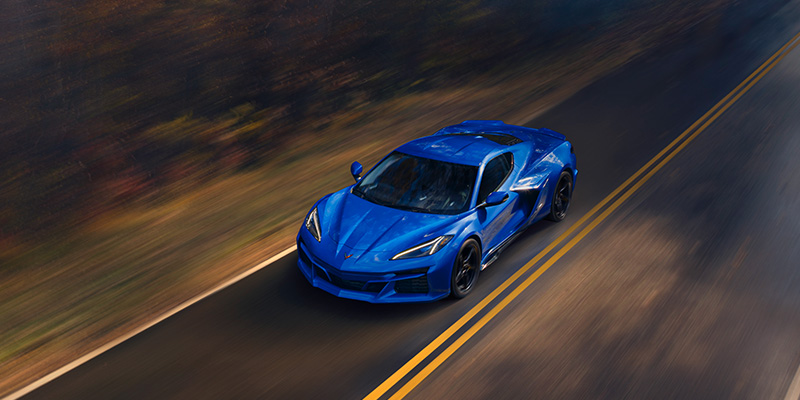
Aerodynamics as a Grip Multiplier
At high speeds, aerodynamic downforce effectively increases tire load without adding vehicle weight. This allows the tires to generate more grip in corners, under braking, and during acceleration.
Key benefits of functional downforce include:
- Increased cornering speed without relying solely on mechanical grip
- Greater braking stability from higher vertical tire load
- Improved steering precision at speed
- Reduced reliance on traction control intervention
The Z06 aero system is designed to generate meaningful downforce while maintaining balance between the front and rear of the car.
Standard Z06 Aerodynamic Configuration
The standard Z06 features an integrated aerodynamic package engineered for high performance street driving with track capability. Every component is shaped to manage airflow intentionally rather than cosmetically.
Core Z06 aero elements include:
- Front splitter designed to reduce front-end lift
- Carefully contoured underbody airflow management
- Rear spoiler tuned for balanced rear stability
- Air extraction vents that reduce pressure buildup
This configuration delivers measurable downforce while remaining livable for regular road use.
Z07 Aero Package Overview
The Z07 package transforms the Z06 into a more track-focused machine by increasing aerodynamic load and cooling capacity. It is not a collection of isolated parts but a coordinated system.
Z07 aero upgrades include:
- Larger carbon-fiber front splitter
- Extended dive planes for front-end grip
- Tall rear wing designed for significant rear downforce
- Additional airflow management elements for cooling
These components work together to substantially increase total downforce at speed.
Downforce and High-Speed Stability
As speed increases, aerodynamic forces grow exponentially. The Z07 package is engineered to remain stable and predictable under these conditions.
High-speed stability benefits include:
- Reduced front-end lift during braking
- Improved rear stability during corner exit
- Greater confidence during high-speed direction changes
- Enhanced steering feel through consistent tire loading
This stability allows drivers to commit earlier and harder without unsettling the chassis.
Cooling as a Critical Aero Function
Aerodynamics on the Z06 and Z07 is as much about cooling as it is about grip. Track driving generates extreme heat across the engine, transmission, brakes, and tires.
Aero-assisted cooling strategies include:
- Directed airflow through heat exchangers
- Pressure reduction in wheel wells to improve brake cooling
- Venting hot air from high-pressure zones
- Maintaining airflow efficiency without excessive drag
The Z07 package further enhances cooling capacity to support repeated high-load laps.
Fixed Aero Versus Active Systems
The Corvette Z06 and Z07 rely on fixed aerodynamic components rather than active systems. This choice prioritizes predictability and reliability.
Advantages of fixed aero include:
- Consistent downforce regardless of system state
- Immediate response without actuator delay
- Reduced complexity and failure points
- Clear aerodynamic behavior at all speeds
For track use, consistency is often more valuable than adaptability.
Tradeoffs Between Z06 and Z07 Aerodynamics
While the Z07 package delivers superior track performance, it introduces tradeoffs that drivers should understand.
Considerations include:
- Increased drag at highway speeds
- More aggressive ride height sensitivity
- Reduced ground clearance in certain conditions
- Greater visual prominence of aero components
For drivers primarily using the car on public roads, the standard Z06 aero may offer a better balance.
Aero Balance and Driver Confidence
Aerodynamic balance refers to how evenly downforce is distributed between the front and rear axles. An imbalanced setup can make a car unpredictable.
Chevrolet engineers tuned Z06 and Z07 aero to:
- Maintain neutral handling at speed
- Prevent sudden oversteer or understeer
- Support stable braking zones
- Deliver consistent feedback through the steering wheel
This balance is essential for extracting performance safely.
Impact on Lap Times and Consistency
Downforce does more than reduce lap times. It improves consistency by allowing the car to behave the same way lap after lap.
Performance benefits include:
- Reduced tire overheating
- More predictable braking points
- Higher cornering repeatability
- Less reliance on electronic aids
For track drivers, consistency often matters more than a single fast lap.
Choosing Between Z06 and Z07 Aero Setups
Drivers should evaluate their intended use honestly when choosing between configurations.
The standard Z06 aero suits drivers who:
- Enjoy spirited street driving with occasional track use
- Want aerodynamic benefits without extreme tradeoffs
- Value everyday usability
The Z07 package suits drivers who:
- Plan frequent track sessions
- Want maximum grip and cooling
- Prioritize lap consistency over street comfort
Both setups are engineered for purpose rather than compromise.
Final Perspective on Corvette Z06 and Z07 Aerodynamics
The aerodynamic engineering behind the 2025 Corvette Z06 and Z07 demonstrates how airflow can be used as a functional performance tool. Rather than relying solely on power or suspension, Chevrolet leverages downforce and cooling to enhance grip, stability, and durability at speed.
For drivers who understand that true performance comes from balance and control, the difference between Z06 and Z07 aero is not cosmetic. It is structural, measurable, and central to how the car performs when pushed to its limits.
Connect with us
