
Ross Downing Corvettes

Blog / Hammond Corvette Dealer

Blog

All Hammond Corvette Dealer Hammond Chevrolet Dealer Ross Downing Corvettes Service Hammond Chevrolet Service Corvette Maintenance Corvette Z06 Corvette E-Ray National Corvette Museum
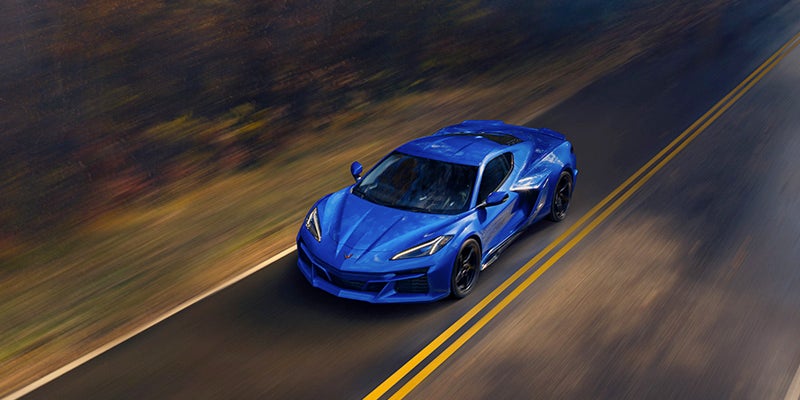
A blue sports car drives on a road with double yellow lines, viewed from above.

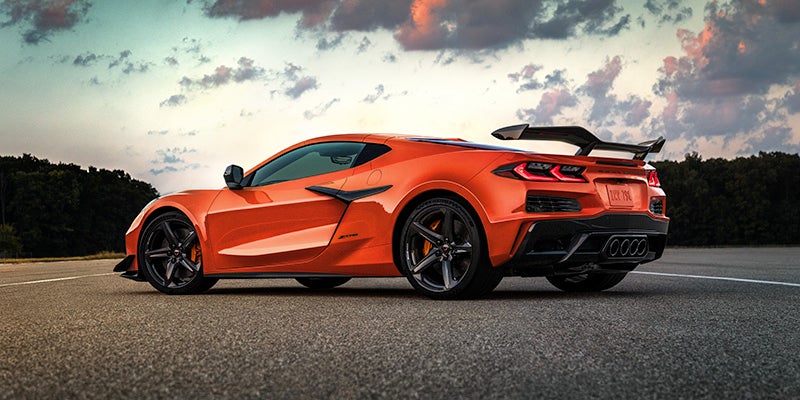
2025 Corvette Z06 vs. Z07 Aero Engineering: Downforce, Cooling & High-Speed Stability Explained

Aerodynamics is not about appearance on the Corvette Z06. It is about mechanical grip, thermal control, and stability at speeds where tires and suspension alone are no longer enough. The difference between the standard Z06 aerodynamic configuration and the Z07 performance package lies in how aggressively Chevrolet engineers use airflow to keep the car planted, cool, and predictable under sustained track loads. Understanding the aero engineering behind the Z06 and Z07 explains why these components materially change lap consistency, braking confidence, and driver feedback rather than simply adding visual drama. Aerodynamics as a Grip Multiplier At high speeds, aerodynamic downforce effectively increases tire load without adding vehicle weight. This allows the tires to generate more grip in corners, under braking, and during acceleration. Key benefits of functional downforce include: Increased cornering speed without relying solely on mechanical grip Greater braking stability from higher vertical tire load Improved steering precision at speed Reduced reliance on traction control intervention The Z06 aero system is designed to generate meaningful downforce while maintaining balance between the front and rear of the car. Standard Z06 Aerodynamic Configuration The standard Z06 features an integrated aerodynamic package engineered for high performance street driving with track capability. Every component is shaped to manage airflow intentionally rather than cosmetically. Core Z06 aero elements include: Front splitter designed to reduce front-end lift Carefully contoured underbody airflow management Rear spoiler tuned for balanced rear stability Air extraction vents that reduce pressure buildup This configuration delivers measurable downforce while remaining livable for regular road use. Z07 Aero Package Overview The Z07 package transforms the Z06 into a more track-focused machine by increasing aerodynamic load and cooling capacity. It is not a collection of isolated parts but a coordinated system. Z07 aero upgrades include: Larger carbon-fiber front splitter Extended dive planes for front-end grip Tall rear wing designed for significant rear downforce Additional airflow management elements for cooling These components work together to substantially increase total downforce at speed. Downforce and High-Speed Stability As speed increases, aerodynamic forces grow exponentially. The Z07 package is engineered to remain stable and predictable under these conditions. High-speed stability benefits include: Reduced front-end lift during braking Improved rear stability during corner exit Greater confidence during high-speed direction changes Enhanced steering feel through consistent tire loading This stability allows drivers to commit earlier and harder without unsettling the chassis. Cooling as a Critical Aero Function Aerodynamics on the Z06 and Z07 is as much about cooling as it is about grip. Track driving generates extreme heat across the engine, transmission, brakes, and tires. Aero-assisted cooling strategies include: Directed airflow through heat exchangers Pressure reduction in wheel wells to improve brake cooling Venting hot air from high-pressure zones Maintaining airflow efficiency without excessive drag The Z07 package further enhances cooling capacity to support repeated high-load laps. Fixed Aero Versus Active Systems The Corvette Z06 and Z07 rely on fixed aerodynamic components rather than active systems. This choice prioritizes predictability and reliability. Advantages of fixed aero include: Consistent downforce regardless of system state Immediate response without actuator delay Reduced complexity and failure points Clear aerodynamic behavior at all speeds For track use, consistency is often more valuable than adaptability. Tradeoffs Between Z06 and Z07 Aerodynamics While the Z07 package delivers superior track performance, it introduces tradeoffs that drivers should understand. Considerations include: Increased drag at highway speeds More aggressive ride height sensitivity Reduced ground clearance in certain conditions Greater visual prominence of aero components For drivers primarily using the car on public roads, the standard Z06 aero may offer a better balance. Aero Balance and Driver Confidence Aerodynamic balance refers to how evenly downforce is distributed between the front and rear axles. An imbalanced setup can make a car unpredictable. Chevrolet engineers tuned Z06 and Z07 aero to: Maintain neutral handling at speed Prevent sudden oversteer or understeer Support stable braking zones Deliver consistent feedback through the steering wheel This balance is essential for extracting performance safely. Impact on Lap Times and Consistency Downforce does more than reduce lap times. It improves consistency by allowing the car to behave the same way lap after lap. Performance benefits include: Reduced tire overheating More predictable braking points Higher cornering repeatability Less reliance on electronic aids For track drivers, consistency often matters more than a single fast lap. Choosing Between Z06 and Z07 Aero Setups Drivers should evaluate their intended use honestly when choosing between configurations. The standard Z06 aero suits drivers who: Enjoy spirited street driving with occasional track use Want aerodynamic benefits without extreme tradeoffs Value everyday usability The Z07 package suits drivers who: Plan frequent track sessions Want maximum grip and cooling Prioritize lap consistency over street comfort Both setups are engineered for purpose rather than compromise. Final Perspective on Corvette Z06 and Z07 Aerodynamics The aerodynamic engineering behind the 2025 Corvette Z06 and Z07 demonstrates how airflow can be used as a functional performance tool. Rather than relying solely on power or suspension, Chevrolet leverages downforce and cooling to enhance grip, stability, and durability at speed. For drivers who understand that true performance comes from balance and control, the difference between Z06 and Z07 aero is not cosmetic. It is structural, measurable, and central to how the car performs when pushed to its limits.
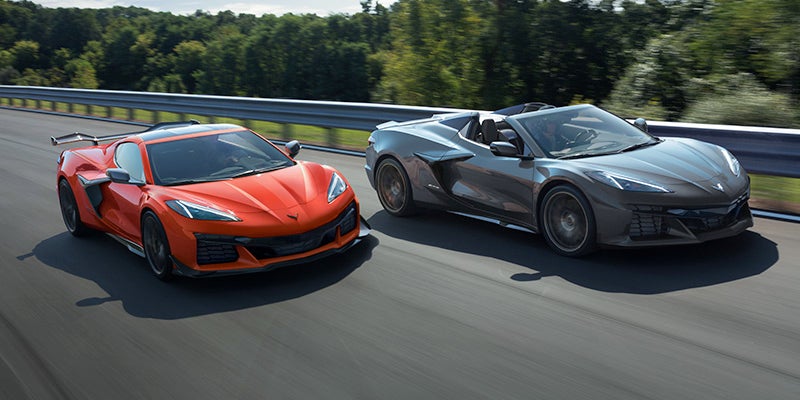
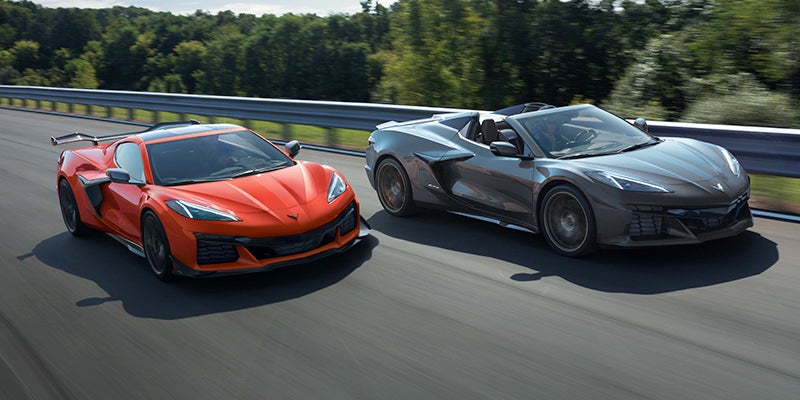
An orange Corvette coupe and a gray Corvette convertible drive side by side on a highway.

2025 Corvette Z06 LT6 Engine Deep-Dive: How the Flat-Plane Crank V8 Shapes Track Performance

The 2025 Corvette Z06 represents one of the most significant powertrain departures in Corvette history. At the center of that shift is the LT6 engine, a naturally aspirated 5.5-liter V8 engineered with a flat-plane crankshaft and designed from the outset for sustained track use. This engine does not borrow lightly from racing concepts. It applies them directly, prioritizing response, consistency, and durability at extreme engine speeds. Understanding how the LT6 works explains why the Z06 behaves differently from traditional American V8 performance cars and why its performance feels precise rather than overwhelming. What Makes the LT6 Engine Different The LT6 is a clean-sheet engine developed specifically for the Z06. Unlike pushrod V8s used in previous Corvettes, the LT6 adopts a dual overhead camshaft layout with four valves per cylinder. This architecture supports airflow and valve control at very high engine speeds. Key design characteristics include: Flat-plane crankshaft instead of a traditional cross-plane design Dual overhead camshafts for precise valve timing Lightweight rotating assembly to reduce inertia Valvetrain engineered for sustained high rpm operation These elements work together to produce an engine that thrives near its redline rather than relying on low-end torque alone. Flat-Plane Crankshaft Fundamentals A flat-plane crankshaft arranges crank pins 180 degrees apart, similar to many racing and exotic engines. This differs from a cross-plane crankshaft, which spaces crank pins at 90 degrees. Flat-plane crank advantages include: Even exhaust pulse spacing that improves scavenging Faster revving due to reduced rotating mass Sharper throttle response Improved breathing at high engine speeds The tradeoff is increased vibration, which Chevrolet engineers addressed through careful balancing, engine mounting, and structural reinforcement. Why the Z06 Sounds Different The distinctive sound of the Z06 is a direct result of the flat-plane crankshaft and firing order. Evenly spaced exhaust pulses produce a higher-pitched, more exotic tone compared to the deep rumble of a cross-plane V8. This sound is not a tuning choice. It is a byproduct of: Crankshaft geometry Exhaust pulse timing High engine speed operation Reduced overlap between firing events The auditory character reinforces the engine’s racing lineage rather than traditional muscle car identity. High-Revving Design and Throttle Response The LT6 is engineered to operate at extremely high rpm, with a redline well beyond what most production V8s achieve. High engine speed capability allows the engine to produce power through airflow rather than displacement alone. Benefits of high-revving design include: Linear power delivery as rpm increases Immediate throttle response Greater control when modulating power on track Reduced reliance on forced induction For drivers, this translates to precision. Power builds predictably rather than arriving in a sudden surge. Valvetrain and Internal Component Engineering Sustaining high rpm requires more than strong pistons and rods. The LT6 uses a valvetrain engineered to maintain control under extreme conditions. Engineering considerations include: Lightweight titanium intake valves Finger follower valvetrain design Precise camshaft profiles Robust timing chain system These components ensure valve control remains accurate even during extended track sessions. Lubrication and Cooling for Track Durability Track driving places continuous load on an engine’s lubrication and cooling systems. The LT6 addresses this through advanced oil and thermal management. Key systems include: Dry-sump lubrication to prevent oil starvation Multiple scavenging pumps for consistent oil flow Dedicated cooling circuits for critical components Optimized airflow through the engine bay These systems allow the LT6 to maintain performance lap after lap rather than pulling power to protect itself. Power Delivery and Track Consistency The LT6’s naturally aspirated design delivers power in a predictable, linear manner. This consistency is critical for track driving where repeatable behavior builds driver confidence. Track-focused advantages include: Immediate response to throttle inputs Consistent power output across sessions Reduced heat soak compared to turbocharged engines Enhanced control when exiting corners Drivers can push the engine without guessing how it will respond. Reliability Considerations for a High-Revving Engine High-revving engines often raise concerns about longevity. The LT6 addresses this through materials selection, testing, and conservative operational limits relative to its design capability. Reliability-focused engineering includes: Extensive endurance testing Reinforced block and rotating assembly Conservative oil and temperature thresholds Precision manufacturing tolerances This allows the engine to deliver extreme performance while maintaining durability expectations. Real-World Driving Versus Track Use While the LT6 is track-focused, it remains usable on the street. The engine’s smooth power delivery and responsiveness make it manageable in daily driving situations. Street driving benefits include: Smooth throttle modulation Predictable power delivery at low speeds Reduced reliance on boost for performance Mechanical connection between driver input and engine response The engine rewards precision rather than brute force. What Enthusiasts Should Evaluate When evaluating the LT6, enthusiasts should consider: Preference for high-revving naturally aspirated power Track consistency over peak torque Throttle response versus forced induction acceleration Long-term durability under performance driving The LT6 is designed for drivers who value control and repeatability. Final Perspective on the LT6 Engine The 2025 Corvette Z06 LT6 engine represents a philosophical shift for American performance. By embracing flat-plane crank architecture, high-revving operation, and race-derived engineering, Chevrolet created an engine that prioritizes precision, consistency, and driver confidence. Rather than chasing peak numbers alone, the LT6 delivers performance that can be accessed repeatedly and reliably. For drivers who understand what makes an engine truly track-capable, the LT6 stands as one of the most technically significant V8s ever produced for a production Corvette.

A mechanic checking the oil dipstick under a car hood

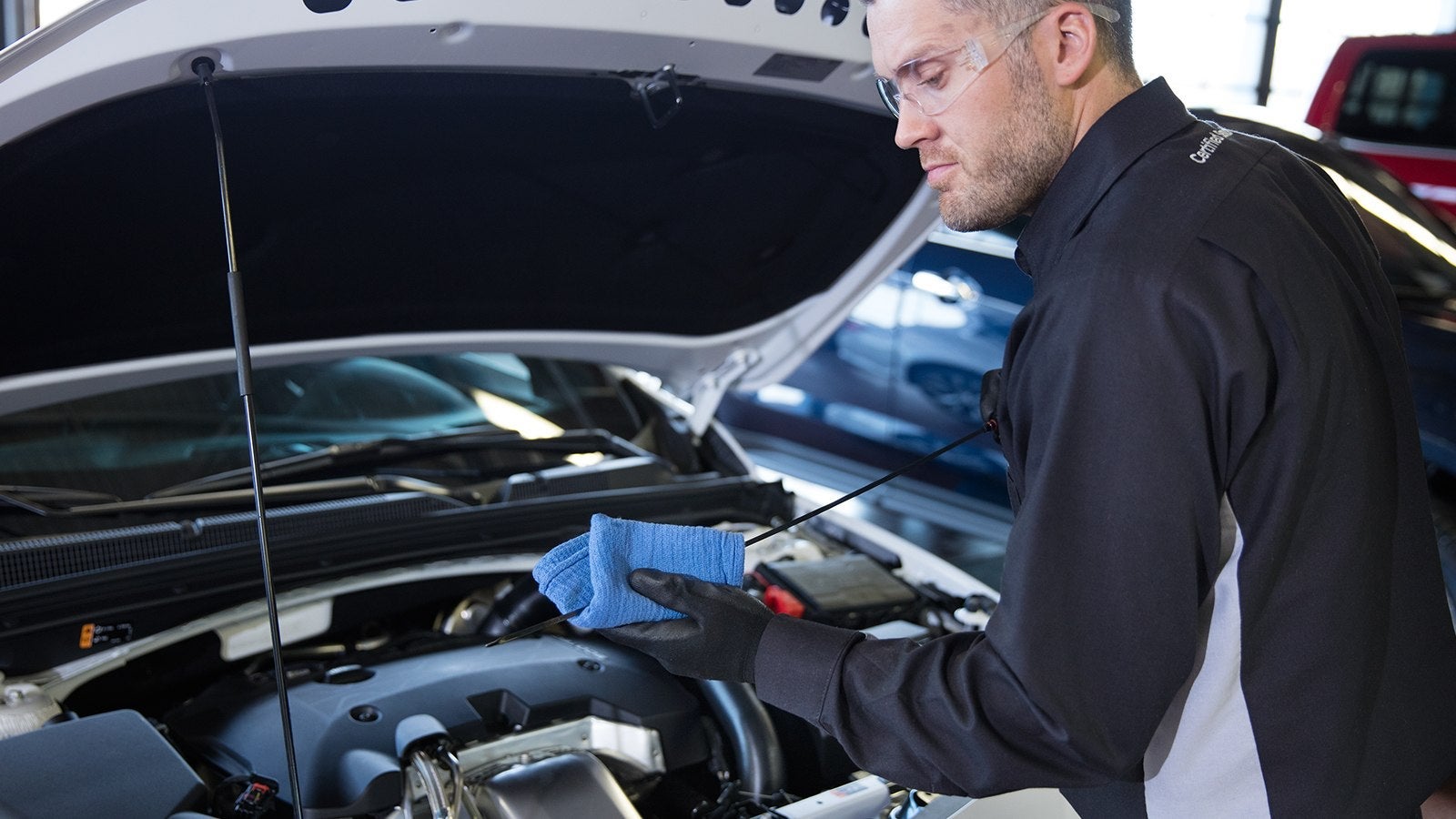
Six Reasons to Stick to a Corvette Maintenance Schedule

Your Corvette is an outstanding example of automotive engineering. To enjoy it at its best, you'll need more than an occasional oil change. Regular scheduled service at your local Corvette dealership preserves its performance and avoids any unnecessary repairs. 1. Preserve Performance The full-throated performance of the Corvette is legendary. Regular maintenance takes care of every critical system to ensure performance is never compromised. Even deviating from the schedule for a short time can have a negative effect. Routine oil changes, filters, fluid top-offs, tire rotations, and a multipoint check ensure your Corvette always delivers what you expect. 2. Maintain Value You might not have any plans to trade your Corvette in, but regular maintenance can safeguard your investment. A full service history protects your car's value, helping it holds its price for longer. An inconsistent or patchy service record suggests that the car has not enjoyed optimal care, which can dent its value. A full service history will boost the trade-in or resale value of your Corvette, ensuring you always have options. 3. Prevent Expensive Repairs If you wait until your Corvette develops a problem to visit your dealership, the repair bill may be higher than necessary. Regular maintenance gives technicians the opportunity to spot any issues as they develop. This makes it possible to conduct repairs before more extensive damage occurs, saving you money in the long run. 4. Ensure Safety You can rely on the precision handling of your Corvette, but it requires routine maintenance to stay safe. Low fluid levels or worn tires and brakes can significantly affect performance and could compromise your safety. Regular services allow technicians to identify any hazards, and to conduct the necessary repairs or replacements. 5. Protect the Warranty To enjoy the protection of a warranty, you must stick to the terms and conditions. This includes scheduling maintenance when it falls due. Missing routine services could invalidate the warranty and leave you to pay any future repair costs. 6. Enjoy Reliability When you slide behind the wheel, it's good to know that your Corvette will start without a problem. This reliability is just one of the benefits of driving what's often referred to as “America's sports car”. Maintenance ensures that every system remains in perfect working order to deliver the consistent performance that you value. Speak to Your Local Corvette Dealership The technicians at your local Chevrolet dealership live and breathe Corvettes. Whether you need advice on a general maintenance schedule or want to discuss a specific issue, you'll find experience and knowledge you can trust. With more than 45 years of experience in the industry, we can help with all your Corvette needs. Contact our team here at Ross Downing Corvettes in Hammond, LA to schedule an appointment or to get professional advice.

2025 Chevrolet Corvette Z06 standing on a road

2025 Corvette Z06 Trim Levels: Track-Focused Performance

For decades, the Chevy Corvette has been America's most coveted sports car, providing drivers with the excitement of high-performance handling, potent powertrains, and elevated sport-inspired features. The 2025 Corvette Z06 continues that legacy with modern technology and track-focused performance across its three distinct trim levels. Shared Powertrain All Z06 trim levels share the same performance-driven powertrain. It begins with the 5.5-liter V8 DI high-output engine featuring a flat plane crank, variable valve timing, and a special dry sump oil system. Together with an 8-speed dual clutch transmission with a double paddle declutch feature, the 5.5-liter V8 delivers 670 horsepower and 460 foot-pounds of torque to the Corvette's RWD drivetrain. 1LZ The base trim in the Corvette Z06 line is the 1LZ, and it offers a robust lineup of performance and safety features that set it apart from other American sports cars. For example, it includes standard driver assistance and safety features like all-speed traction control, an HD rear vision camera, lane change alert with lane departure warning, forward collision alert, automatic emergency braking, and a following distance indicator. The 1LZ has many features that would be considered optional in other models, including a Bose Premium 10-speaker audio system, IntelliBeam high beam headlamps, a 12-inch color driver information center, the Chevrolet Infotainment 3 System with an 8-inch color touchscreen and Google built in, Mulan leather seating surfaces, an active handling stability control system with traction control, and performance exhaust. 2LZ The Z06's mid-level trim offers the performance-driven features of the lower trim and additional amenities that increase comfort and connection. The 2LZ trim offers drivers enhanced interior amenities like heated and ventilated 8-way power driver and passenger GT1 bucket seats with power lumbar control and a heated, leather-wrapped performance steering wheel. There are also added technological amenities found in the 2LZ, such as a Bose Performance Series 14-speaker audio system, wireless device charging, a front view camera for easier parking, an integrated theft deterrence system, and an innovative performance data and video recorder. 3LZ At the top of the Z06 line is the 3LZ trim level, which incorporates the most advanced features of the lower two trims alongside opulent interior luxury amenities. For example, the 3LZ has upscale interior features like a sueded microfiber upper trim package, a heated and leather-wrapped carbon fiber steering wheel, GT2 front bucket seats, and luxurious Napa leather seating surfaces. The 3LZ also includes standard driver assistance features like an innovative vehicle health management system, a side blind zone alert, rear cross traffic alert, and front pedestrian and bicyclist braking. The new Z06 marks the next chapter in the evolution of the Corvette line, offering advanced technology and legendary performance. Contact Ross Downing Corvettes in Hammond, LA, to experience the Z06 and take one for a test drive today.

Prepare Your Corvette for Summer Drive

6 Tips for Keeping Your Corvette Ready for Summer Drives

There's no better sight than summer sunlight glinting off the gleaming bodywork of a well-kept Corvette. If you're looking forward to showing off your high-performance sports car this summer, get ready with seasonal maintenance at your local Corvette dealership. Keep the Tires Uniform and Well-Inflated Heat and strong summer sunlight can be tough on car tires. Hot air and heated tarmac warm the air inside each tire, which can increase the air pressure to hazardous levels or create misleading PSI readings. Check the pressure inside each tire monthly during summer; make sure the tires are cool before you take the reading. Also, try to keep your car and tires out of direct sunlight when parked, as direct UV rays can dry out the chemicals in tire rubber and lead to cracks and dry rot. Check and Replenish Each Vehicle Fluid Vehicle fluids are vital year-round and especially important during summer when coolants, motor oil, transmission fluid, and differential fluid fight to limit friction and heat. With this in mind, check all of your car's fluids at least once a month throughout the summer. Change your oil on time and flush other fluids when needed. Keep the Air-Con Working Reliably A healthy AC system not only keeps you cool comfortably during the hot summer months but also helps you stay fresh, alert, and safe on the road. Have your air conditioner inspected before summer. Its refrigerant may need to be topped up or recharged. Protect Your Luxurious Upholstery Corvettes are beautiful vehicles, inside and out. You can preserve the appearance and comfort of your seating upholstery with regular cleaning, protective treatment, seat covers, and UV-blocking shields for the windshields and window screens. Ask one of our technicians for guidance on how to preserve your Corvette's interior during summer. Wax or Treat the Body's Paintwork Any buildup of dust on your Corvette's paintwork can accelerate corrosion, so clean your car often during summer. Also, ensure the paintwork is proxltected against UV rays with a good layer of wax or the even stronger protective layer that ceramic coating provides. Clean, Secure, and Protect the Car Battery Most drivers know how the cold of winter can harm a car battery, but did you know that summer heat can be equally damaging? If your battery becomes excessively hot, its fluids will evaporate, and internal chemical reactions will speed up. This is another reason to keep your Corvette out of direct sunlight when parked. Also, check and clean your battery periodically during summer. As you do, make sure it's securely fastened in place. Schedule Seasonal Maintenance at Our Corvette Dealership We specialize in keeping Corvettes in pristine condition throughout the year. Let our factory-trained technicians service, maintain, and protect your luxury sports car this summer. For over 30 years, since 1992, we've been Louisiana's leading Corvette dealer. Visit Ross Downing Corvettes in Hammond, LA, today to arrange a convenient service schedule.

5 Standout Features of the 2025 Corvette Z06

The newest generation of the Corvette Z06 is a legitimate supercar in every sense of the word, competing with elite European-made exotics in performance while maintaining a more approachable price point. The 2025 Corvette Z06 offers standout features like tremendous horsepower, track-inspired handling, and modern safety features. 5 Standout Features of the 2025 Corvette Z06 Incredible Horsepower and Torque At the heart of the Z06's performance is its precision-engineered 5.5-liter high-output DI V8 that incorporates an innovative flat-plane crank, dry sump oil system, and variable valve timing. The engine, which redlines at 8600 RPM, generates 670 horsepower and 470 foot-pounds of torque. With the optional Z07 Performance Package, the Z06 boasts a blistering 0-60 MPH time of only 2.6 seconds and a quarter-mile time of 10.6 seconds at 131 MPH. Advanced Dual Clutch Transmission The Z06 features an advanced 8-speed dual-clutch automatic transmission that helps deliver its power to the pavement efficiently. The gearbox offers the smooth transitions and precision of an automatic transmission with the engagement and responsiveness of a manual. Shifts occur within 100 milliseconds to continuously deliver power and torque to the wheels. The double paddle declutch lets drivers disengage the clutch by holding down both paddles. Track-Inspired Precision Handling Horsepower is only useful if it translates to performance, and the Z06 has handling features that give it agility in any driving conditions. Its aluminum body structure keeps the Z06 nimble, and its 5.56 performance rear axle ratio and performance Brembo antilock brakes improve handling further. The Z06's active handling stability control automatically enhances control during sharp maneuvers by adjusting power and braking to keep the Z06 on its path. Performance Suspension with Magnetic Selective Ride Control The Corvette Z06 incorporates the special Z06 Performance suspension with the Magnetic Selective Ride Control as a standard feature. The damping system reads road conditions by the millisecond and can correct to changes in as little as 10 milliseconds. It employs a metal particle-infused suspension fluid that can instantly become rigid when needed, keeping all four wheels engaged and planted on the pavement. Confidence-Inspiring Safety Features Though the Z06 is built for speed and performance, it is also engineered to keep drivers safe under varying conditions. The standard safety features in the Z06 include all-speed traction control, lane keep assist with lane departure warning, forward collision alert, following distance indicator, performance traction management, automatic emergency braking, an HD rear vision camera, a comprehensive airbag system, and front pedestrian and bicyclist braking. The Corvette Z06 marks the pinnacle of American supercar performance and engineering, with a powerful high-output engine, advanced transmission, and elite handling characteristics that inspire and excite. Contact Ross Downing Corvettes in Hammond, LA, today to experience the Z06 for yourself by scheduling a test drive.

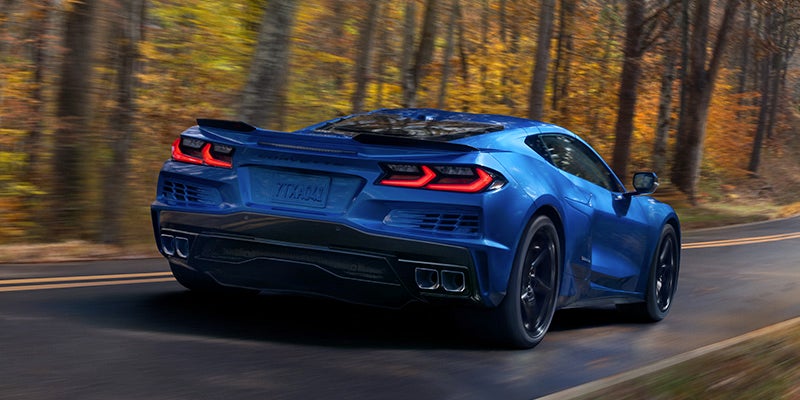
blue corvette e-ray

6 Unique Traits of the 2025 Corvette E-Ray

The 2025 Corvette E-Ray is a highly innovative hybrid sports car that combines a 6.2L V8 DI engine with an electric motor for electrified all-wheel drive and blistering acceleration. Let's delve into a few fascinating aspects of this one-of-a-kind vehicle, which is available as either a coupe or hardtop convertible. 6 Unique Traits of the 2025 Corvette E-Ray Electrified All-Wheel Drive The front wheels of the 2025 E-Ray are powered by an electrified drive with a 1.9 kWh lithium-ion battery. This additional motor gives the E-Ray intelligent eAWD for superb overall traction, agility, and grip in tight turns. The electric motor can deliver an extra 160 horsepower and 125 lb-ft of torque to the front wheels whenever you need it. Best of all, the battery is self-charging and simply picks up energy as you drive. Supercar-Level Hybrid Acceleration The 2025 E-Ray can accelerate from 0 to 60 in just 2.5 seconds. This astounding burst of speed comes chiefly from the 6.2L V8 DI engine with a performance exhaust, which delivers 495 hp and 470 lb-ft of torque. When you add instant power from the electric front-axle motor, you get 655 total horses and supercar-like performance. 8-Speed Automatic Dual-Clutch Transmission In the 2025 E-Ray, you can enjoy the rich driving engagement of a manual vehicle with the daily driving ease of an automatic with an 8-speed automatic dual-clutch transmission. The dual-clutch element provides ultra-quick shifts and unbelievable smoothness for such a powerful hybrid sports car. Electric-Only Stealth Mode One of the 2025 E-Ray's coolest features is its unique Stealth Mode. When activated, the forward electric motor can drive the car by itself in almost complete silence at speeds of up to 45 mph. You can maintain Stealth Mode for three to four miles. Performance All-Season Run-Flat Tires Although the E-Ray has supercar chops, it's also remarkably practical and can handle slippery road surfaces better than most sports cars thanks to performance Michelin Pilot Sport all-season run-flat tires. With these all-season tires and eAWD combined, the E-Ray can sustain firm traction on wet and icy tarmac with ease. Standard-performance Brembo carbon-ceramic brakes provide even more confidence in your overall road safety. Magnetic Selective Ride Control The 2025 E-Ray's super-responsive, track-ready handling owes a lot to standard Magnetic Selective Ride Control with performance traction management and adaptable drive modes. This world-class suspension system reads the road conditions every millisecond and can adapt to changes in as little as 10 to 15 milliseconds. The suspension fluid inside the dampers contains tiny metal particles that can instantly become rigid, another cutting-edge innovation. Are you ready for a thrilling test drive? Come to Ross Downing Corvettes in Hammond, LA, to get behind the wheel of the latest Corvette E-Ray and see it in action.

An orange and a gray Corvette sports car drive side by side on a highway.

Corvette Performance: Pushing the Boundaries of Speed and Power

At Ross Downing Corvette in Hammond, LA, we’re passionate about the extraordinary performance capabilities of America’s iconic sports car. The Chevrolet Corvette has consistently pushed the boundaries of what’s possible in automotive engineering, setting new standards for speed, power, and handling. Let’s dive into the impressive performance metrics of the latest Corvette lineup, exploring how each model contributes to the Corvette’s legendary status in the world of high-performance vehicles. Performance Highlights by Model Stingray: The Foundation of Excellence The Corvette Stingray, the entry point to the Corvette family, is far from basic when it comes to performance: Engine: 6.2L V8 producing up to 495 horsepower and 470 lb-ft of torque with the Z51 Performance Package 0-60 mph: An impressive 2.9 seconds Quarter-mile: 11.2 seconds Top Speed: 194 mph The Stingray’s performance showcases the Corvette’s ability to deliver supercar-level acceleration at a fraction of the cost of its exotic competitors. E-Ray: Electrifying Performance The E-Ray introduces hybrid technology to the Corvette lineup, offering: Combined output: 655 horsepower from a 6.2L V8 and electric motor 0-60 mph: A blistering 2.5 seconds All-wheel drive: For enhanced traction and all-weather capability The E-Ray’s performance demonstrates how electrification can enhance rather than compromise the Corvette’s sporting character. Z06: Track-Focused Precision The Z06 takes Corvette performance to new heights: Engine: 5.5L flat-plane crank V8 delivering 670 horsepower 0-60 mph: 2.6 seconds with the Z07 Performance Package Top Speed: 195 mph Nürburgring lap time: An impressive 7:11.826 The Z06’s naturally aspirated engine and track-focused design make it a formidable competitor on both road and circuit. ZR1: The Performance Pinnacle The ZR1 represents the zenith of Corvette performance: Engine: Twin-turbocharged 5.5L V8 producing a staggering 1,064 horsepower and 828 lb-ft of torque 0-60 mph: An astonishing 2.3 seconds with the ZTK Performance Package Quarter-mile: 9.6 seconds at 150 mph Top Speed: 233 mph, the fastest of any production Corvette Nürburgring lap time: A blistering 6:50.763 The ZR1’s performance figures put it in rarified air, competing with hypercars costing several times as much. Key Performance Features Across the Corvette range, several key technologies contribute to its exceptional performance: Advanced Transmissions: The 8-speed dual-clutch transmission provides lightning-fast shifts, contributing to the Corvette’s rapid acceleration. Aerodynamics: Especially in higher-performance models like the Z06 and ZR1, advanced aerodynamics play a crucial role. The ZR1’s available Carbon Fiber Aero Package, for instance, generates over 1,200 pounds of downforce at top speed. Magnetic Ride Control: This adaptive suspension system reads the road up to 1,000 times per second, adjusting damping for optimal handling and comfort. Performance Traction Management (PTM): This system optimizes traction for maximum acceleration, with the ZR1 featuring an advanced PTM Pro system for even greater control. Launch Control and Custom Launch Control: These features allow drivers to achieve consistent, rapid starts, with the ability to fine-tune launch parameters. Corvette vs. Competitors The Corvette’s performance capabilities often raise questions about how it compares to other high-performance vehicles. Let’s address some common comparisons: Corvette C8 vs. Mustang: The C8 Corvette Stingray outperforms the Mustang GT in acceleration, with a 0-60 mph time nearly a second faster. Corvette vs. Hellcat: While the Hellcat boasts higher horsepower, the Corvette’s superior power-to-weight ratio and traction often result in quicker acceleration times. Corvette C8 vs. Ferrari: The C8 Corvette, especially in Z06 and ZR1 guise, offers performance comparable to many Ferrari models at a fraction of the cost. Corvette vs. Shelby GT500: The Corvette ZR1’s 0-60 time of 2.3 seconds edges out the Shelby GT500’s 3.4 seconds. Corvette vs. Dodge Viper: While the Viper is no longer in production, the current Corvette lineup surpasses the Viper’s performance in most metrics. Corvette vs. Camaro: Both are impressive performers, but the Corvette, with its mid-engine layout and more focused design, generally offers superior performance. These comparisons highlight the Corvette’s ability to compete with, and often outperform, vehicles from both mainstream and exotic manufacturers. Performance Packages and Upgrades To further enhance the Corvette’s capabilities, Chevrolet offers various performance packages: Z51 Performance Package (Stingray): Includes performance suspension, larger brakes, and an electronic limited-slip differential. Z07 Performance Package (Z06): Adds carbon-ceramic brakes, a more aggressive aero package, and track-focused suspension tuning. ZTK Performance Package (ZR1): Features a high-downforce aero package and specific chassis tuning for maximum track performance. Additionally, performance enthusiasts can explore upgrades such as enhanced brake pads and rotors, performance exhaust systems, and track-focused wheel and tire combinations. Reliability and Consistency While the Corvette’s performance figures are impressive, it’s worth noting that these vehicles are designed for consistent, reliable performance. Unlike some high-strung exotic cars, Corvettes are engineered to deliver their performance repeatedly without compromising durability. This reliability, combined with relatively good fuel economy for their performance level, makes Corvettes practical choices for both daily driving and track use. The Chevrolet Corvette’s performance capabilities span an impressive range, from the accessible excellence of the Stingray to the world-beating power of the ZR1. Each model in the lineup offers a unique blend of power, handling, and technology, catering to a wide spectrum of performance enthusiasts. Whether you’re looking for a daily driver with weekend track potential or a dedicated performance machine capable of setting lap records, there’s a Corvette that fits the bill. At Ross Downing Corvette, we’re proud to offer the full range of Corvette models, each representing a different facet of American high-performance engineering. We invite you to experience the thrill of Corvette performance for yourself and discover why these vehicles continue to captivate drivers and set new standards in the sports car world.

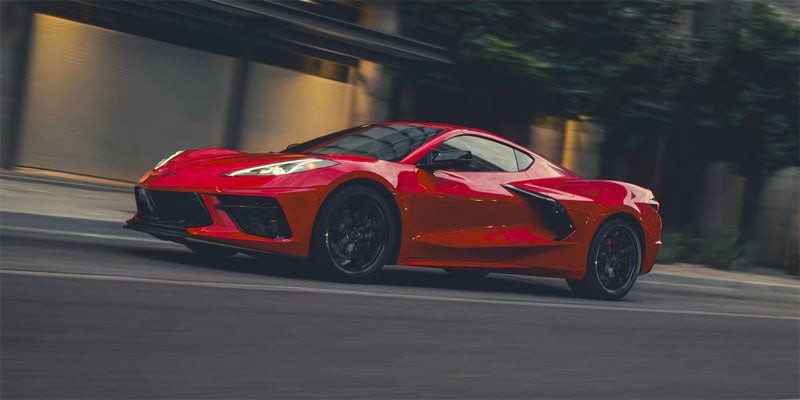
A red Chevrolet Corvette Stingray sports car driving on a city street.

2025 Chevrolet Corvette Stingray: A Comprehensive Review

The Chevrolet Corvette Stingray, an enduring symbol of American automotive excellence, continues to push the boundaries of performance, design, and technology with its 2025 model. At Ross Downing Corvette in Hammond, LA, we’re thrilled to offer an in-depth look at this remarkable vehicle that has captivated enthusiasts for generations. Performance: The Heart of the Stingray The 2025 Corvette Stingray exemplifies Chevrolet’s dedication to delivering exhilarating performance. At its core lies a potent 6.2-liter V8 engine, a powerhouse that embodies the Stingray’s racing heritage. Key performance features include: • 495 horsepower and 470 lb-ft of torque (with performance exhaust system) • 0-60 mph acceleration in just 2.9 seconds • Estimated top speed over 190 mph • Advanced 8-speed dual-clutch transmission • Available Magnetic Selective Ride Control™ 4.0 system The Stingray’s exceptional handling is further enhanced by its mid-engine layout, providing optimal weight distribution and stability. Drivers can fine-tune their experience with multiple selectable modes, including Weather, Tour, Sport, Track, and a customizable MyMode. Design: Form Meets Function The Corvette Stingray’s design harmoniously blends aesthetics with aerodynamics, its mid-engine layout contributing to both performance and visual appeal. Exterior highlights: • New color options, including vibrant Orange Metallic Tintcoat • Low, wide profile with sharp lines and sculpted surfaces • Retractable hardtop for seamless coupe-to-convertible transformation Step inside, and you’re greeted by a driver-focused cockpit rivaling more expensive supercars. The interior boasts: • High-quality materials, including available Nappa leather and carbon fiber trim • Low seating position and high center console for a cockpit-like feel • Driver-centric layout emphasizing the car’s performance-oriented nature Technology and Safety: Cutting-Edge Features The 2025 Corvette Stingray is as advanced as it is powerful, offering a suite of technology and safety features that enhance both the driving experience and overall convenience. Infotainment and connectivity: • 8-inch touchscreen display with wireless Apple CarPlay and Android Auto • Available 14-speaker Bose Performance Series sound system • Performance Data Recorder for capturing high-definition video with real-time data overlays Safety and driver assistance: • Standard features: forward collision alert, automatic emergency braking, high-definition rearview camera • Available options: blind spot monitoring, rear cross-traffic alert, head-up display The Stingray Legacy The Stingray name boasts a rich history within the Corvette lineup: • First introduced in 1963 as “Sting Ray” (two words) • Briefly dropped in 1976 during the third generation • Revived in 2014 as “Stingray” (one word) with the seventh-generation Corvette • Current model is part of the eighth-generation (C8) Corvette family Today’s C8 Stingray marks a significant departure from its predecessors with its mid-engine layout, a configuration long associated with exotic supercars. This design allows for improved weight distribution and handling characteristics that set it apart from earlier models. Corvette Stingrays are built to last, with many surpassing 200,000 miles when properly maintained. The robust V8 engine and high-quality components contribute to its potential for long-term reliability, making it not just a performance car, but a lasting investment for enthusiasts. Pricing and Value The 2025 Corvette Stingray offers compelling value, with a starting MSRP of $68,300. This price point places it well below many exotic competitors while offering comparable performance and features. Key points to consider: • Pricing can vary based on options and trim levels • Final cost depends on specific configuration and chosen options • Contact Ross Downing Corvette for up-to-date pricing and available incentives The 2025 Chevrolet Corvette Stingray continues to redefine the possibilities of a sports car. With its potent V8 engine, advanced technology, and striking design, it offers a driving experience that rivals much more expensive vehicles. Whether you’re a long-time Corvette enthusiast or new to high-performance cars, the Stingray delivers an unparalleled blend of power, sophistication, and value. At Ross Downing Corvette in Hammond, LA, we’re proud to offer this American icon to our customers. We invite you to experience the 2025 Corvette Stingray for yourself and discover why it continues to set the standard for sports cars in its class. Pricing Disclaimer: The manufacturer’s suggested retail price (MSRP) provided is for base model vehicles and does not include options, destination charges, taxes, title, license, or other fees. Actual dealer pricing may vary. Contact Ross Downing Corvette for the most current information and details on vehicle availability, exact pricing, and any applicable promotions or incentives.

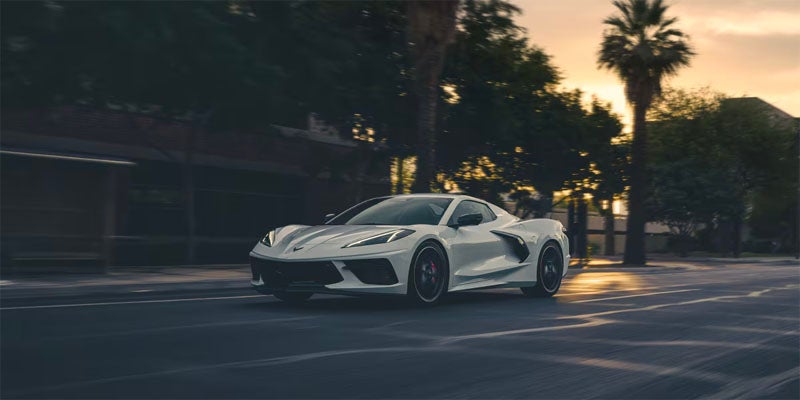
A white Corvette sports car drives on a street with palm trees and sunset light in the background.

The Evolution of Corvette Transmissions: From Traditional to Dual-Clutch

The Chevrolet Corvette, America’s iconic sports car, has undergone numerous transformations since its inception in 1953. One of the most significant aspects of its evolution has been the development and implementation of various transmission systems. At Ross Downing Corvette in Hammond, LA, we’ve witnessed firsthand how these changes have shaped the driving experience and performance of this legendary vehicle. The Journey from Traditional to Cutting-Edge Early Corvettes: Laying the Groundwork In the early days of the Corvette (C1 and C2 generations), traditional transmissions were the norm. These systems, located behind the engine, transferred power to the rear wheels through a driveshaft. The first Corvettes featured a two-speed Powerglide automatic transmission, which was soon joined by manual options to cater to enthusiasts who craved a more engaging driving experience. The Transition to Transaxles As Corvette engineers sought to improve weight distribution and handling, they turned to transaxle designs. A transaxle combines the transmission and differential into a single unit, typically located at the rear of the vehicle. This configuration offers several key advantages: Improved weight distribution Enhanced traction, especially during acceleration Better overall balance and handling characteristics The C5 Corvette, introduced in 1997, marked a significant shift with its rear-mounted transaxle design. This layout continued through the C6 and C7 generations, refining the Corvette’s performance capabilities and cementing its status as a world-class sports car. The Dual-Clutch Revolution: C8 Corvette With the introduction of the C8 Corvette in 2020, Chevrolet made a bold move by adopting a mid-engine layout and incorporating a sophisticated dual-clutch transmission (DCT). This decision represents a paradigm shift in Corvette design and performance. Understanding the Dual-Clutch Transmission A DCT operates on a fundamentally different principle compared to traditional automatics or manuals. Key features include: Two separate clutches for odd and even gears Lightning-fast shift times Pre-selection of the next gear for seamless power delivery Ability to handle high torque loads efficiently The C8 Corvette’s DCT, developed in partnership with Tremec, is a marvel of engineering. It offers eight forward speeds and can shift gears in as little as 100 milliseconds. This rapid gear change contributes to the C8’s blistering acceleration times and overall performance envelope. The DCT Case: Addressing Challenges High-performance applications like the Corvette place extreme demands on transmission systems. The DCT case in the C8 underwent significant redesigns to meet these challenges: Reinforced housing to withstand high torque loads Improved cooling systems to manage heat generation Elimination of the traditional torque tube, integrating power transfer more efficiently These changes have resulted in a more robust and reliable transmission system, capable of handling the prodigious power output of the Corvette’s V8 engine. However, it’s worth noting that some early C8 models experienced transmission issues, prompting Chevrolet to implement updates and refinements for the 2023 and 2024 model years. Comparing Transmission Types To fully appreciate the Corvette’s transmission evolution, let’s examine how different systems stack up: Traditional Automatic vs. DCT While both can offer smooth operation in daily driving, DCTs shine in performance applications: Faster shift times in DCTs lead to improved acceleration DCTs often provide better fuel efficiency due to their direct power transfer Traditional automatics may offer smoother operation at very low speeds Manual vs. DCT For purists, manual transmissions offer an unparalleled connection to the driving experience. However, DCTs bring several advantages: Consistently faster shift times than even the most skilled manual drivers No loss of power during gear changes Ability to operate in fully automatic mode for convenience CVT vs. Transaxle While Continuously Variable Transmissions (CVTs) offer smooth, stepless power delivery, they’re rarely used in high-performance applications like the Corvette. Transaxles, on the other hand, provide: Better weight distribution for improved handling Direct power transfer for enhanced performance Compatibility with high-torque engines The Driving Experience: Feel the Difference The transition from traditional transmissions to the current DCT in the C8 Corvette has significantly altered the driving experience. Drivers accustomed to older Corvette models might notice: Instantaneous power delivery during acceleration Seamless shifts that don’t interrupt the flow of power The ability to fine-tune performance through different drive modes Improved fuel efficiency without sacrificing performance While some may miss the tactile engagement of a manual gearbox, the DCT’s performance benefits are undeniable. It allows drivers to focus more on the road and less on gear selection, especially in high-performance driving scenarios. Looking to the Future As we consider the future of Corvette transmissions, several questions arise: How will transmission technology evolve to handle increasing power outputs? Will we see hybrid or all-electric Corvettes with unique power transfer systems? Can future transmissions further improve the balance between performance and efficiency? At Ross Downing Corvette, we’re excited to see how Chevrolet will continue to innovate and push the boundaries of transmission technology. The journey from the simple two-speed Powerglide to today’s advanced DCT showcases the relentless pursuit of performance and driving excellence that defines the Corvette brand. Whether you’re a long-time Corvette enthusiast or new to the world of high-performance sports cars, understanding the evolution of these transmission systems provides valuable insight into the engineering prowess behind America’s favorite sports car. As we look forward to future developments, one thing remains certain: the Corvette will continue to set the standard for performance and innovation in the automotive world.

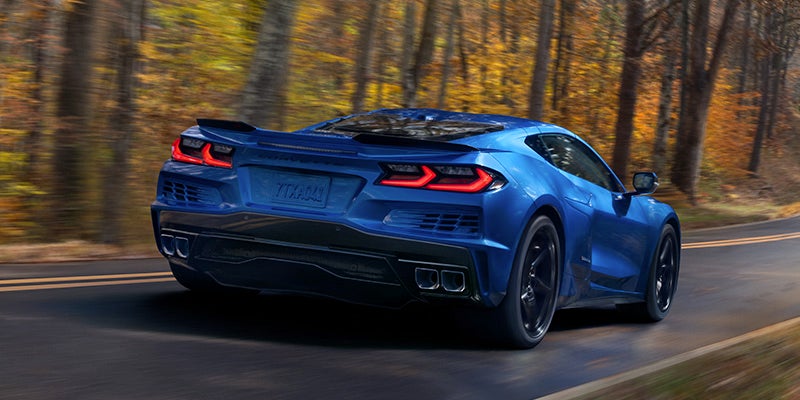
A blue sports car with a rear spoiler drives on a road bordered by autumn trees.

The Evolution of Corvette Engines: Front, Mid, and Rear Configurations

At Ross Downing Corvette in Hammond, LA, we’ve witnessed the remarkable evolution of America’s iconic sports car. The Chevrolet Corvette has undergone significant transformations throughout its history, with one of the most notable changes being the placement of its powerhouse engine. In this comprehensive exploration, we’ll delve into the intricacies of front, mid, and rear engine configurations, examining how these layouts have shaped the Corvette’s performance and design over the years. The Front-Engine Era: A Classic Beginning The Corvette’s journey began with a front-engine layout, a configuration that dominated the automotive world for decades. In this setup, the engine is positioned ahead of the passenger compartment, typically over the front axle. Advantages of Front-Engine Design: Spacious interior: With the engine up front, there’s more room for passengers and cargo. Simplified cooling: The radiator’s proximity to the engine enhances heat dissipation. Straightforward maintenance: Easy access to the engine compartment simplifies repairs and routine checks. Predictable handling: Weight over the front wheels provides familiar driving characteristics. Challenges of Front-Engine Layout: Tendency to understeer: The front-heavy weight distribution can make sharp turns more challenging. Reduced traction: Less weight over the rear wheels can limit acceleration, especially in high-powered vehicles. The front-engine Corvette, particularly models equipped with the robust 6.2L LS3 engine, delivered impressive performance. These powerplants were capable of propelling the Corvette to quarter-mile times that left enthusiasts in awe. The raw power and classic layout created a driving experience that became synonymous with American muscle. The Mid-Engine Revolution: A New Chapter for Corvette In 2020, Chevrolet made a bold move by introducing the first-ever mid-engine Corvette. This radical shift in design philosophy marked a new era for the iconic sports car. Mid-Engine Configuration Explained: In a mid-engine layout, the powerplant is positioned behind the driver but ahead of the rear axle. This placement offers several performance advantages that have made it a favorite among supercar manufacturers. Benefits of Mid-Engine Design: Optimal weight distribution: Centralizing the engine’s mass improves overall balance and handling. Enhanced responsiveness: The car pivots more easily around its center of gravity, increasing agility. Improved traction: More weight over the rear wheels enhances acceleration and cornering grip. Aerodynamic advantages: A sleeker front profile reduces drag and improves high-speed stability. Considerations for Mid-Engine Vehicles: Limited interior space: The engine’s central location can reduce passenger and cargo capacity. Complex engineering: Mid-engine designs often require more sophisticated cooling and structural solutions. Challenging spin recovery: The centralized mass can make it more difficult to correct a spin once initiated. The transition to a mid-engine layout has allowed the Corvette to compete with exotic supercars while maintaining its distinctive American character. The 2025 Chevrolet Corvette engine options showcase this new era of performance, with powerplants that push the boundaries of what’s possible in a production sports car. Rear-Engine Configuration: The Road Less Traveled While not utilized in the Corvette lineup, the rear-engine layout deserves mention as it represents another approach to sports car design. Rear-Engine Placement: In this configuration, the engine is located behind the rear axle, as seen in iconic cars like the Porsche 911. Advantages of Rear-Engine Design: Exceptional traction: The weight over the drive wheels provides outstanding grip for acceleration. Improved braking: Weight transfer during deceleration increases stopping power. Unique handling: The rear-biased weight distribution offers a distinctive driving experience. Challenges of Rear-Engine Layout: Pronounced oversteer: The rear-heavy design can make the car more prone to spinning in extreme conditions. Limited storage: Trunk space is often compromised due to the engine’s placement. Increased cabin noise: Proximity to the passenger compartment can result in more engine sound and vibration. Why Corvette Chose the Mid-Engine Path Chevrolet’s decision to move the Corvette to a mid-engine layout was driven by the pursuit of performance excellence. This change allows for: Improved weight distribution for better handling and cornering abilities. Enhanced acceleration due to increased traction at the rear wheels. A lower center of gravity, contributing to improved stability and reduced body roll. The potential for more advanced aerodynamics, crucial for high-speed performance. The Impact on Storage: From Trunk to Frunk The shift to a mid-engine design has transformed the Corvette’s storage solutions. While traditional front-engine Corvettes featured a rear trunk, the new mid-engine models introduce the concept of a “frunk” - a front trunk where the engine once resided. Frunk vs. Trunk: Location: The frunk is situated at the front of the vehicle, while the trunk remains at the rear but is now smaller due to engine placement. Purpose: Both provide storage, but the frunk offers a unique space for items that require quick access or need to be kept separate from the heat of the engine compartment. Security: Frunks can be as secure as traditional trunks, often featuring robust locking mechanisms and being out of sight from prying eyes. Creative uses for a frunk include: Storing charging cables for electric vehicles Keeping a small cooler for refreshments on long drives Housing emergency kits or tools for track days It’s worth noting that while frunks don’t typically get as warm as rear trunks in mid-engine cars, it’s always advisable to avoid storing temperature-sensitive items in any vehicle for extended periods. The Evolution of Corvette Performance The transition from front to mid-engine has significantly impacted the Corvette’s performance metrics. Let’s examine how this change has benefited various aspects of the car’s capabilities: Acceleration: The mid-engine layout provides better weight transfer to the rear wheels during launch, resulting in improved traction and faster acceleration times. The 2025 Chevrolet Corvette engine, particularly in high-performance variants like the Z06 and ZR1, showcases this advantage with blistering 0-60 mph times. Handling: With the engine’s mass centralized, the car’s polar moment of inertia is reduced, allowing for quicker direction changes and improved overall agility. This translates to faster lap times and a more responsive driving experience on both road and track. Braking: The weight distribution of a mid-engine car allows for more effective use of all four tires during braking, potentially shortening stopping distances and improving stability under hard deceleration. Aerodynamics: The mid-engine layout enables designers to create a more aerodynamically efficient front end, reducing drag and increasing downforce potential, which is crucial for high-speed stability and cornering performance. Corvette Engine Options: A New Era of Power The 2025 Chevrolet Corvette engine lineup represents the pinnacle of GM’s engineering prowess. From the base Stingray to the track-focused Z06 and the upcoming ZR1, each powerplant is tailored to deliver a specific performance profile: Stingray: Features a naturally aspirated 6.2L V8, balancing everyday drivability with impressive performance. Z06: Equipped with a high-revving 5.5L flat-plane crank V8, offering exotic car-level performance and sound. ZR1: Rumored to feature a twin-turbocharged version of the Z06 engine, promising even more extreme performance capabilities. These engines showcase Chevrolet’s commitment to pushing the boundaries of what’s possible in a production sports car, all while maintaining the Corvette’s heritage of accessible performance. The Future of Corvette Engines As we look to the horizon, the Corvette’s engine evolution continues. With advancements in technology and increasing focus on efficiency, we may see: Further refinement of the mid-engine platform to extract even more performance. The introduction of hybrid powertrains to complement the traditional internal combustion engines. Exploration of alternative fuels and propulsion methods to meet future environmental regulations while maintaining the Corvette’s performance legacy. At Ross Downing Corvette, we’re excited to be part of this journey, offering our customers in Hammond, LA, and beyond the opportunity to experience the cutting-edge technology and exhilarating performance of the latest Corvette models. The shift from front to mid-engine has not only transformed the Corvette’s performance but has also redefined what an American sports car can be. As we continue to witness the evolution of this iconic vehicle, one thing remains clear: the Corvette’s heart—its engine—will always be at the core of its identity, no matter where it’s placed within the chassis.

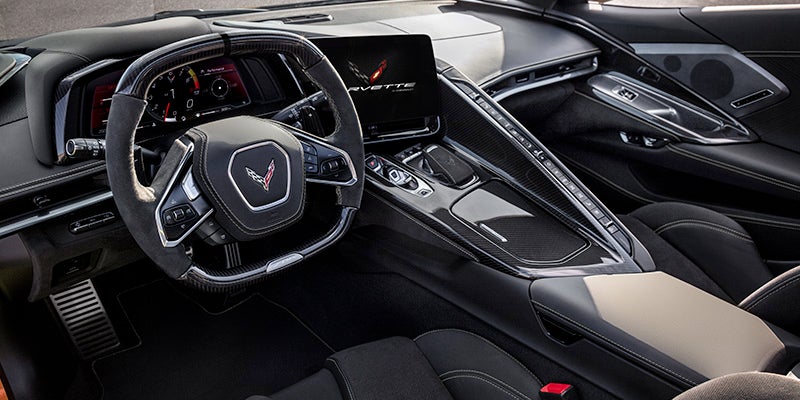
A black and tan car interior features a steering wheel and center console with the Corvette logo.

2025 Corvette Z06: The Pinnacle of American Performance

The Chevrolet Corvette Z06 stands as a testament to American automotive engineering, pushing the boundaries of performance and design. This comprehensive review delves into the specifications, features, and unique attributes that set the Z06 apart in the high-performance sports car segment. Performance Specifications Engine and Power At the heart of the Corvette Z06 lies a naturally aspirated 5.5-liter LT6 V8 engine, producing an astounding 670 horsepower and 460 lb-ft of torque. This powerplant showcases Chevrolet’s commitment to naturally aspirated performance, delivering immediate throttle response and a thrilling, high-revving character. Transmission Power is channeled to the rear wheels through an advanced 8-speed dual-clutch automated transmission. This gearbox offers lightning-fast shifts, optimizing both track performance and everyday drivability. Weight and Acceleration The 2025 Corvette Z06’s weight can vary depending on the specific configuration and options chosen. While exact figures haven’t been officially released, it’s estimated to range between 3,400 to 3,600 lbs, based on previous Z06 models and the current Stingray’s weight. Despite this weight, the Z06 demonstrates breathtaking acceleration, capable of sprinting from 0 to 60 mph in just 2.6 seconds. Furthermore, it completes the quarter-mile in a mere 10.6 seconds, crossing the line at 131 mph. These figures firmly establish the Z06 in the realm of world-class supercars. Pricing and Trim Levels The 2025 Corvette Z06 is available in three distinct trim levels: 1LZ: Starting at $153,885 2LZ: Priced around $168,885 3LZ: Top-tier trim reaching $183,885 Pricing Disclaimer: Prices mentioned are estimates based on current market data. Actual prices may vary depending on location, dealer pricing, options selected, and market conditions. Please consult with your local Chevrolet dealer for the most accurate and up-to-date pricing information. Design and Features Exterior Styling The Z06 distinguishes itself with wider fenders, larger air intakes, and aggressive styling cues that not only enhance its visual appeal but also serve functional aerodynamic purposes. Available in both coupe and convertible body styles, it offers options to suit different preferences without compromising performance. Interior Comfort and Technology Inside, the Z06 offers a driver-focused cockpit with high-quality materials and advanced technology. Features vary by trim level but may include: Premium Nappa leather upholstery Performance Data Recorder for track use Head-up display Customizable digital instrument cluster Bose Performance Series sound system (optional) Safety and Driver Assistance The Z06 comes equipped with a suite of standard safety features, including: Forward collision alert Automatic emergency braking Lane departure warning Rear cross-traffic alert Optional advanced driver assistance systems include adaptive cruise control and blind-spot monitoring, enhancing safety without compromising the car’s performance-oriented nature. Performance Enhancements Aerodynamics and Track Focus The Z06’s design prioritizes aerodynamic efficiency, with features like an adjustable rear wing and front splitter contributing to improved downforce and stability at high speeds. These elements, combined with the car’s mid-engine layout, result in exceptional cornering abilities and track performance. Supercharging vs. Natural Aspiration While previous generations of the Z06, particularly the C7, featured supercharging, the 2025 model embraces natural aspiration. This choice reflects Chevrolet’s focus on delivering a pure, responsive driving experience. The debate between supercharging and natural aspiration often centers on: Immediate power delivery and linear power curve of naturally aspirated engines Potential for higher peak power outputs with forced induction For enthusiasts seeking even more power, aftermarket supercharging options may become available, though such modifications can impact warranty coverage and long-term reliability. Market Position and Comparison The Corvette Z06 competes directly with elite sports cars like the Ferrari 296, McLaren 750S, and Porsche 911 Turbo S. Its performance capabilities, combined with its relatively accessible price point, make it a compelling alternative to these more expensive European supercars. Resale Value and Long-Term Ownership Historically, Corvette Z06 models have maintained strong resale values, particularly for well-maintained, low-mileage examples. Factors influencing the 2025 model’s future resale value may include: Limited production numbers Technological advancements Overall condition and mileage Collector interest in naturally aspirated, high-performance vehicles A True American Supercar The Chevrolet Corvette Z06 represents the zenith of American sports car engineering, offering supercar performance at a fraction of the cost of its European competitors. Its combination of raw power, advanced technology, and track-focused design solidifies its position as a genuine supercar. For enthusiasts who appreciate its blend of power, technology, and distinctly American character, the Corvette Z06 offers an exhilarating driving experience that few cars can match. Whether on the road or the track, the Z06 continues to redefine expectations for high-performance vehicles, cementing its status as an icon of American automotive excellence.

Contact Us

Fill out this form below and we'll contact you shortly
*Required Fields