
Ross Downing Corvettes

Blog / Hammond Corvette Dealer

Blog

All Hammond Corvette Dealer Hammond Chevrolet Dealer Corvette Maintenance Ross Downing Corvettes Service Hammond Chevrolet Service Corvette Z06 Corvette E-Ray

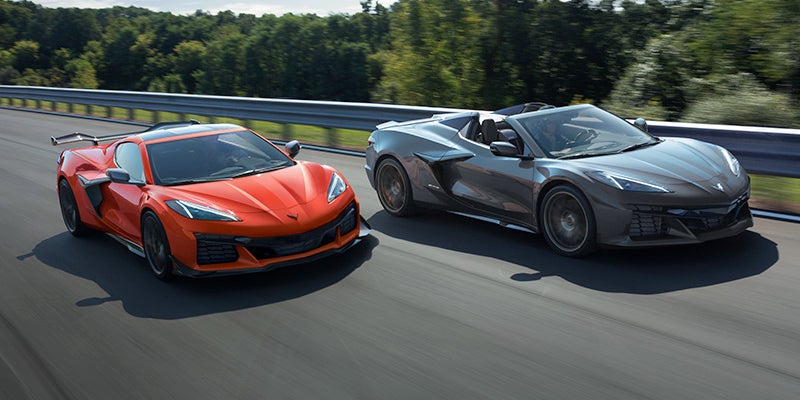
How All-Wheel Drive Transforms Corvette Performance in the 2026 E-Ray

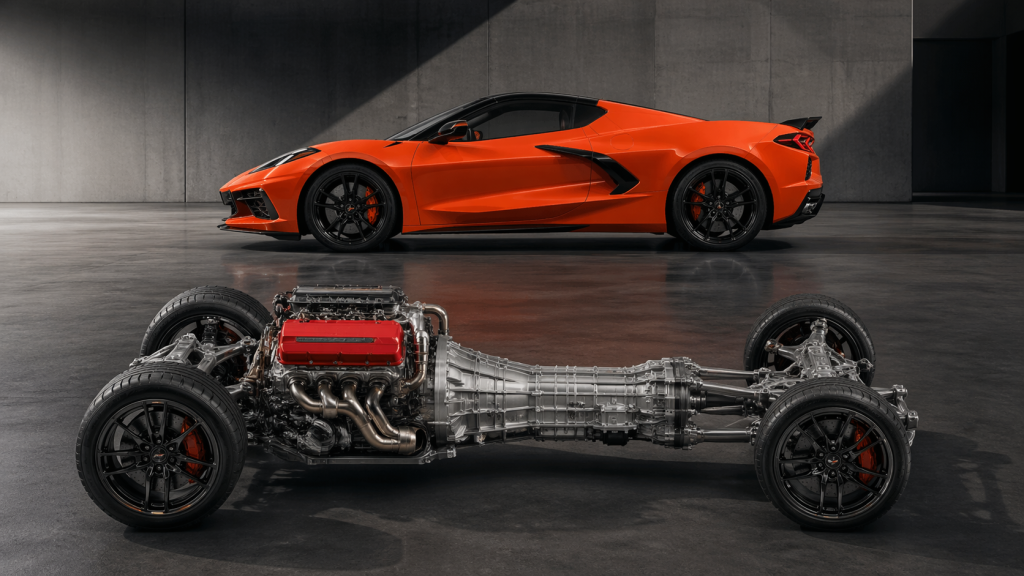
The 2026 Corvette E-Ray introduces a fundamental shift in Corvette performance by integrating an all-wheel drive system into a platform historically defined by rear-wheel drive dynamics. Many shoppers exploring the Corvette E-Ray want to understand how this hybrid AWD system actually works, how it changes acceleration and handling, and whether it enhances or alters the driving experience. The answer lies in how the Corvette E-Ray combines a traditional V8 engine with an electric motor to deliver power in a way that improves traction, responsiveness, and real-world usability without sacrificing performance identity. How the Corvette E-Ray AWD System Works Many shoppers ask how the Corvette E-Ray AWD system actually works and how a hybrid setup can power all four wheels. The 2026 Corvette E-Ray AWD system uses a dual propulsion architecture that separates power delivery between the front and rear axles. The Corvette E-Ray pairs a naturally aspirated V8 engine driving the rear wheels with an electric motor mounted on the front axle. Unlike mechanical AWD systems that rely on driveshafts and transfer cases, the Corvette E-Ray AWD system uses electronic coordination between these two power sources. This means: more The rear wheels are powered by the V8 engine through the transmission The front wheels are driven independently by the electric motor Power distribution is controlled digitally rather than mechanically Because the front and rear systems operate independently, the Corvette E-Ray hybrid powertrain can instantly adjust how much power is sent to each axle based on traction conditions, throttle input, and driving mode. For performance drivers, this setup eliminates the delay associated with traditional AWD systems. The Corvette E-Ray AWD system reacts in real time, allowing the vehicle to maintain grip during acceleration, cornering, and changing road conditions. Why Instant Electric Torque Transforms Acceleration Many performance shoppers ask whether AWD actually improves acceleration, and in the case of the 2026 Corvette E-Ray, the answer comes down to how electric torque behaves compared to a gasoline engine. Electric motors deliver maximum torque immediately from a standstill. The Corvette E-Ray front electric motor provides instant torque to the front wheels the moment the driver applies throttle, while the rear V8 builds power through its rev range. This changes launch dynamics in several key ways: The Corvette E-Ray AWD system reduces wheel spin by distributing force across all four tires The front electric motor fills the gap before the V8 reaches peak output Traction is maximized at launch, allowing more usable power to reach the ground In a rear-wheel drive Corvette, aggressive acceleration can overwhelm the rear tires, especially on less-than-ideal surfaces. The Corvette E-Ray hybrid AWD system prevents this by engaging the front wheels immediately, stabilizing the vehicle and improving forward momentum. For drivers comparing performance cars, this results in quicker and more consistent acceleration, particularly from a standstill or during rapid throttle input. How AWD Improves Cornering and Stability at Speed Beyond straight-line performance, the 2026 Corvette E-Ray AWD system plays a critical role in how the vehicle behaves through corners. Many drivers want to understand whether AWD improves handling or simply adds traction. The Corvette E-Ray traction system uses real-time torque distribution to manage how power is applied during cornering. Instead of sending equal power to all wheels, the system adjusts output based on steering angle, throttle input, and available grip. This creates a form of torque vectoring, where power is shifted to the wheels that can use it most effectively. From a mechanical standpoint: The front electric motor can increase or decrease power independently of the rear axle The system stabilizes the vehicle by reducing oversteer during aggressive cornering Power can be applied earlier when exiting a turn without breaking traction For performance driving, this translates into more predictable handling. The Corvette E-Ray AWD system allows drivers to carry speed through corners with greater confidence, as the system actively works to maintain balance and grip. Real World Traction and Everyday Driving Confidence While much of the discussion around the 2026 Corvette E-Ray focuses on performance, AWD also delivers meaningful benefits in everyday driving conditions. Many shoppers question whether AWD matters outside of track environments. The Corvette E-Ray AWD system improves traction in situations where rear-wheel drive vehicles can struggle. This includes: Wet roads where reduced grip can cause wheel slip Cold weather where tire traction is limited Uneven or imperfect road surfaces Because the Corvette E-Ray front electric motor engages instantly, the system can respond to traction loss faster than a traditional drivetrain. This improves stability during sudden acceleration or when road conditions change unexpectedly. For drivers who plan to use the Corvette beyond ideal weather conditions, the Corvette E-Ray AWD system expands usability without requiring compromises in performance capability. AWD vs Traditional Corvette RWD Driving Experience For long-time Corvette enthusiasts, one of the most important considerations is how AWD changes the driving experience compared to traditional rear-wheel drive models like the Corvette Stingray or Z06. Rear-wheel drive Corvettes are known for delivering power directly to the rear axle, creating a driving feel that emphasizes throttle control and rear-end dynamics. The 2026 Corvette E-Ray introduces a different approach by adding front axle engagement. This results in several key differences: Acceleration behavior The Corvette E-Ray AWD system provides more controlled launches with less wheel spin compared to rear-wheel drive models. Handling balance AWD reduces the likelihood of oversteer by stabilizing the front end during aggressive driving inputs. Driver confidence The Corvette E-Ray traction system allows drivers to apply power earlier and more consistently without losing control. Driving feel While rear-wheel drive emphasizes driver-managed traction, the Corvette E-Ray AWD system introduces a more composed and controlled performance experience. Rather than replacing the Corvette identity, the Corvette E-Ray expands it. The AWD system enhances performance by making power more usable, particularly in situations where traction is the limiting factor. For buyers comparing Corvette models, the decision often comes down to driving preference. Those who value raw rear-wheel dynamics may prefer traditional setups, while those seeking maximum traction, acceleration, and confidence will find the Corvette E-Ray AWD system offers a more advanced approach to performance.

Pre-Owned Chevrolet Corvette C7 vs Chevrolet Corvette C8 Performance and Ownership Differences

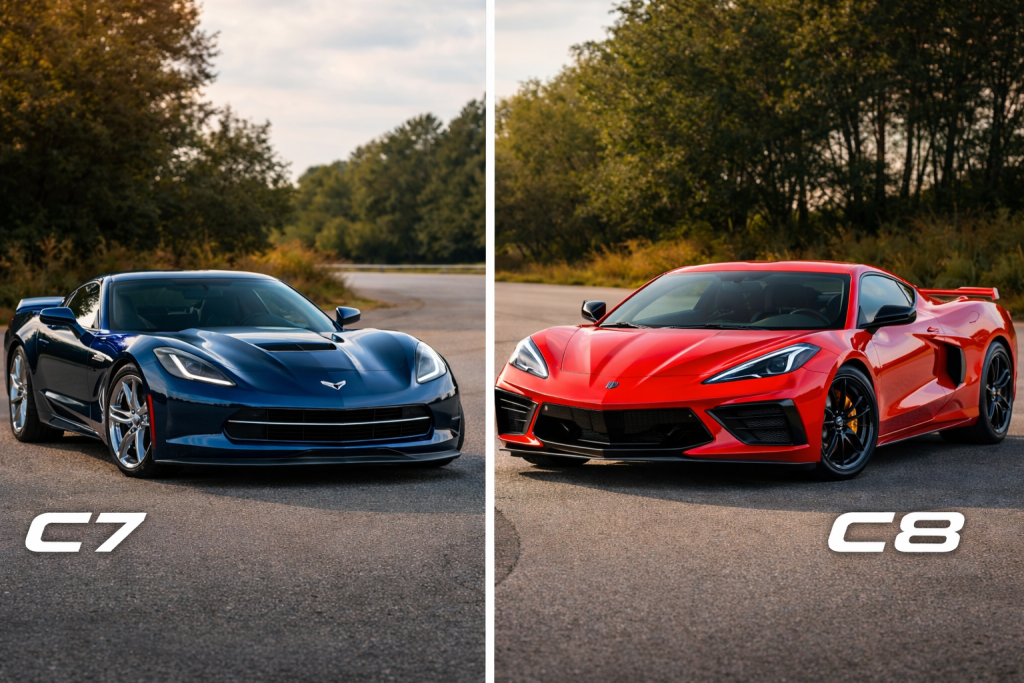
For performance shoppers exploring pre-owned Corvettes, the C7 and C8 represent two fundamentally different engineering philosophies. The C7 is the final evolution of the traditional front-engine Corvette. The C8 introduces a mid-engine layout, dual clutch transmission, and structural redesign that redefined the platform. Choosing between them requires understanding architecture, performance behavior, transmission differences, reliability considerations, and long-term ownership dynamics. Front-Engine vs Mid-Engine Architecture C7 Corvette: Front-engine layout Rear-wheel drive Rear-mounted transaxle for improved balance Traditional Corvette proportions C8 Corvette: more Mid-engine layout Rear-wheel drive in Stingray configuration Engine positioned behind driver Shorter front overhang and cab-forward design The mid-engine placement in the C8 shifts weight toward the center of the vehicle. This alters weight distribution, braking stability, and corner entry dynamics. The C7 maintains classic front-engine sports car behavior with strong rear-wheel drive engagement. Engine Differences: LT1 vs LT2 C7 Stingray: 6.2L LT1 V8 Naturally aspirated Strong low-end torque Broad power band C8 Stingray: 6.2L LT2 V8 Naturally aspirated Updated intake routing for mid-engine packaging Improved airflow efficiency Slightly higher horsepower output compared to base C7 Both engines deliver classic naturally aspirated response. The LT2 benefits from improved cooling and airflow due to mid-engine packaging. Higher trim C7 models such as Z06 and ZR1 introduce forced induction variants. However, for base model comparison, LT1 and LT2 are the direct parallels. Transmission: Manual vs Dual Clutch One of the most significant ownership differences is transmission availability. C7: 7-speed manual transmission available 8-speed automatic option C8: 8-speed dual clutch transmission only No manual option Manual transmission availability makes the C7 attractive to purists seeking driver engagement. The C8 dual clutch system delivers: Rapid gear changes Seamless acceleration Launch control optimization Enhanced performance repeatability For buyers prioritizing mechanical involvement, the C7 manual holds appeal. For those prioritizing precision and speed, the C8 dual clutch offers measurable performance advantage. 0 to 60 and Acceleration Comparison C7 Stingray: 0 to 60 in approximately low four-second range depending on configuration C8 Stingray: 0 to 60 in approximately three-second range when properly equipped Mid-engine traction improves launch stability. With more weight over the rear wheels during acceleration, the C8 delivers stronger off-the-line grip. Acceleration is not only faster but more consistent in the C8 due to dual clutch integration and improved traction geometry. Handling and Driving Dynamics C7: Front-engine weight distribution Traditional rear-drive throttle steer Predictable oversteer characteristics under load C8: Mid-engine balance More neutral cornering behavior Increased front-end grip Reduced polar moment of inertia Drivers transitioning from C7 to C8 often notice: Sharper turn-in Increased stability at speed Greater composure under heavy braking The C8’s mid-engine layout alters the sensation of rotation and weight transfer. It feels more planted and precise, especially in high-speed cornering. Interior Technology and Ergonomics C7 interior: Driver-focused cockpit Traditional horizontal dashboard layout Analog gauge integration C8 interior: Fully redesigned cabin Digital instrument cluster Large central touchscreen Driver-centric control wall separating passenger area The C8 interior reflects a generational leap in infotainment integration and digital interface design. For buyers prioritizing modern connectivity and updated cabin presentation, the C8 provides a clear advantage. Reliability Considerations by Generation C7: Mature platform by final production years LT1 engine known for durability Manual transmission reliability strong Earlier model years may require inspection for common wear items C8: First production years introduced new platform architecture Dual clutch transmission introduced new service considerations Software updates addressed early calibration refinements When evaluating reliability, service history and maintenance documentation are critical regardless of generation. Both platforms benefit from naturally aspirated engine simplicity compared to forced induction variants. Ownership Cost and Maintenance Ownership costs include: Insurance Maintenance intervals Tire replacement Brake servicing Fuel consumption C8 components such as dual clutch transmission servicing may require specialized maintenance procedures. C7 manual models may offer slightly lower long-term complexity in drivetrain components. Tire and brake costs remain performance-car specific in both generations. Used Pricing and Value Trends C7 pricing varies based on: Model year Trim level Mileage Manual versus automatic C8 pricing reflects: Mid-engine redesign demand Lower production volume in early years Performance parity with higher-priced exotic competitors C7 models may represent strong value relative to horsepower output. C8 models often command higher resale strength due to generational redesign and architecture shift. Which Pre-Owned Corvette Is Right for You Choose C7 if: You prefer front-engine dynamics You want a manual transmission You value classic Corvette proportions You prioritize mechanical simplicity Choose C8 if: You want mid-engine balance You prioritize acceleration and launch traction You value modern interior technology You seek the newest generation architecture Both generations deliver authentic Corvette performance. The C7 represents the culmination of front-engine evolution. The C8 introduces a structural transformation that redefines Corvette driving dynamics. Understanding architecture, transmission differences, and ownership implications ensures a confident decision when entering the pre-owned Corvette market.

2026 Chevrolet Corvette Z06 LT6 Engine Specs and Performance Breakdown

The 2026 Corvette Z06 is defined by its engine. While every C8 Corvette shares a mid-engine layout, the Z06 introduces the LT6, a naturally aspirated 5.5L V8 engineered with race-derived architecture. This is not a modified version of the LT2 found in the Stingray. It is a fundamentally different mechanical design built to sustain extreme RPM and deliver exotic-level response. For performance-focused buyers, understanding how the LT6 operates clarifies why the Z06 occupies a distinct tier within the Corvette lineup. LT6 Engine Architecture At the core of the Z06 is the 5.5L LT6 V8. Key Specifications: Naturally aspirated Flat-plane crankshaft Dual overhead camshaft design 32 valves Dry sump lubrication Titanium connecting rods Output: more 670 horsepower 460 lb-ft of torque 8,600 RPM redline The LT6 is one of the highest-revving naturally aspirated V8 engines ever placed in a production vehicle. Flat-Plane Crankshaft Design Most American V8 engines use a cross-plane crankshaft. The LT6 uses a flat-plane crank. Flat-plane characteristics: Even firing intervals Reduced rotational mass Faster throttle response Higher redline capability Because the crankshaft counterweights are smaller, the engine spins more freely and builds RPM rapidly. This architecture produces: Sharper throttle input response Linear power delivery at high RPM Distinct exhaust tone compared to traditional V8s The flat-plane crank also enables improved airflow efficiency at elevated engine speeds. Dual Overhead Camshaft Configuration Unlike the pushrod LT2 engine, the LT6 uses a dual overhead cam configuration. Benefits include: Independent intake and exhaust cam control Higher valve lift precision Improved high-RPM airflow Enhanced combustion efficiency The DOHC layout allows the engine to sustain performance at RPM levels well beyond traditional pushrod limits. This design is closer to international racing engines than conventional American V8 architecture. Naturally Aspirated Power Delivery The LT6 achieves 670 horsepower without turbocharging or supercharging. Advantages of naturally aspirated tuning: Immediate throttle response Linear power curve No boost lag Consistent heat management Peak power occurs high in the RPM range, encouraging drivers to utilize the upper rev band. Unlike forced induction engines that deliver peak torque early, the LT6 rewards sustained RPM engagement. 0 to 60 and Acceleration Metrics The Z06 achieves 0 to 60 mph in under three seconds when properly configured. Acceleration characteristics: Rapid high-RPM pull Aggressive mid-range transition Seamless gear changes through the eight-speed dual clutch transmission The dual clutch transmission is calibrated specifically for Z06 performance mapping, allowing near-instant gear engagement. Launch control integrates engine mapping, clutch control, and traction management to optimize initial grip. Redline and High-RPM Engineering An 8,600 RPM redline requires internal component precision. Engineering elements supporting this include: Lightweight titanium connecting rods Forged pistons Optimized intake runner geometry High-capacity oil scavenging system Dry sump lubrication ensures consistent oil pressure under sustained lateral G forces during track driving. Without this system, oil starvation could occur under extreme cornering loads. The LT6 is engineered for repeatable track use, not occasional bursts. Cooling and Aerodynamic Integration High-output engines require thermal management. Z06 enhancements include: Enlarged cooling intakes Additional heat exchangers Optimized airflow through bodywork Functional aerodynamic elements Available aerodynamic packages increase downforce, improving stability at higher speeds. Downforce management works in coordination with suspension tuning to maintain front-end grip. Chassis and Brake Enhancements The Z06 is not solely an engine upgrade. Chassis differences include: Wider track width Larger wheels and tires Enhanced suspension tuning Available carbon ceramic brake system The brake system is designed to withstand sustained track temperatures without fade. Wider rear tires maximize traction under high-RPM acceleration. How the LT6 Differs from the LT2 LT2: 6.2L pushrod V8 Cross-plane crank Lower redline Emphasis on broad torque curve LT6: 5.5L dual overhead cam Flat-plane crank 8,600 RPM redline Peak horsepower at high RPM The LT6 is not an evolution of the LT2. It is a separate engine family engineered for higher rev capability and race-inspired performance. Top Speed and Track Intent While top speed depends on aerodynamic configuration, the Z06 is engineered for high-speed track performance. The combination of: High RPM power band Aerodynamic stability Precise chassis tuning Carbon ceramic braking Positions the Z06 as a track-focused Corvette rather than a street-oriented grand tourer. Who the Z06 Is Built For The 2026 Corvette Z06 targets drivers who: Prioritize high-revving naturally aspirated performance Value track-ready engineering Seek exotic engine architecture without forced induction Demand precision throttle response The LT6 engine defines the Z06 experience. Its flat-plane crankshaft, dual overhead cam design, and extreme redline create a Corvette that performs beyond traditional pushrod expectations. Understanding the LT6 is essential to understanding why the Z06 occupies a distinct performance tier within the Corvette lineup.

2026 Chevrolet Corvette Stingray vs Chevrolet Corvette E-Ray Daily Driving Comparison: Performance, Handling, and Traction

The 2026 Corvette Stingray and E-Ray share the same mid-engine LT2 foundation, but they deliver power differently. One is a pure rear-wheel-drive expression of naturally aspirated V8 balance. The other adds an electric front axle, transforming traction strategy and launch consistency. For buyers comparing these two Corvettes as real-world sports cars, the question is not simply which is faster. It is how drivetrain architecture affects daily drivability, traction confidence, ride behavior, and handling character. Shared LT2 Foundation Both Stingray and E-Ray use the 6.2L LT2 naturally aspirated V8 mounted behind the driver. Common performance architecture: Mid-engine layout Eight-speed dual clutch transmission Lightweight aluminum structure Magnetic Ride Control availability Rear limited slip differential This shared platform means cabin ergonomics, seating position, steering layout, and base suspension geometry are fundamentally similar. Where they differ is how torque reaches the pavement. more Rear-Wheel Drive vs Electronic All-Wheel Drive Stingray: Rear-wheel drive only Power delivered exclusively to rear axle Mechanical traction management E-Ray: Rear LT2 V8 Independent front electric motor Electronic all-wheel drive system No mechanical driveshaft between axles The E-Ray’s front motor activates automatically based on traction demand and acceleration input. Torque is distributed electronically rather than mechanically. In dry conditions, both vehicles offer strong grip. In low traction scenarios such as damp pavement, the E-Ray deploys additional front axle torque to stabilize acceleration. 0 to 60 Acceleration and Launch Behavior Stingray delivers rapid acceleration through optimized rear traction and launch control calibration. E-Ray enhances launch through: Instant electric torque at the front axle Reduced rear wheelspin Improved weight transfer stability The electric motor provides immediate torque from zero RPM, eliminating lag during initial acceleration. As a result, E-Ray achieves quicker and more consistent 0 to 60 times, particularly in non-ideal surface conditions. For drivers who prioritize maximum launch performance regardless of weather, the hybrid system offers measurable advantage. Handling Character and Weight Considerations The E-Ray carries additional weight due to: Front electric motor High voltage battery system Cooling components Battery placement is centralized within the chassis to preserve balance. Handling Differences: Stingray: Slightly lighter overall weight Pure rear-drive rotation feel More traditional sports car weight transfer dynamics E-Ray: Increased front axle engagement Enhanced stability under throttle More planted acceleration out of corners The Stingray emphasizes mechanical purity and rear-drive responsiveness. The E-Ray prioritizes traction authority and stability. Drivers who enjoy throttle steering and rear bias dynamics may gravitate toward Stingray. Drivers seeking controlled power deployment in varied conditions may prefer E-Ray. Ride Comfort and Suspension Behavior Both models offer available Magnetic Ride Control. This system continuously adjusts damper stiffness based on: Road surface conditions Steering input Acceleration forces Daily ride comfort differences between Stingray and E-Ray are minimal under similar suspension configurations. The E-Ray’s additional front axle mass slightly alters front-end feedback, but suspension tuning compensates for added weight. For commuting and long-distance driving, cabin comfort and seat support remain consistent across both variants. Wet Weather and All-Season Driving One of the most significant daily driving differences appears in wet or cooler climates. Stingray: Relies on rear tire traction Requires more deliberate throttle control in reduced grip E-Ray: Deploys front torque to stabilize acceleration Reduces rear slip under throttle Improves traction exiting intersections or merging in rain Electronic all-wheel drive provides additional confidence when road conditions are inconsistent. For drivers in areas with frequent rain or seasonal temperature changes, this difference may influence decision-making more than raw performance numbers. Regenerative Braking Feel The E-Ray incorporates regenerative braking via the front motor. Under deceleration: Front motor recaptures energy Brake blending integrates mechanical and regenerative braking Chevrolet calibrates this system to maintain natural brake pedal feel. Drivers transitioning from Stingray to E-Ray may notice subtle differences in low-speed deceleration response, but braking remains linear and predictable. Fuel Economy Considerations Hybrid assistance can improve efficiency during certain driving scenarios. However, both vehicles are performance-oriented. Fuel economy differences exist but are not the primary purchasing driver for this segment. The E-Ray’s hybrid system is engineered for performance enhancement first and efficiency second. Which Corvette Is Better for Daily Driving? Choose Stingray if: You prefer traditional rear-wheel-drive dynamics You value lighter weight and mechanical purity You drive primarily in dry conditions You prioritize simplicity in drivetrain architecture Choose E-Ray if: You want all-wheel-drive traction You drive in varied weather conditions You prioritize launch consistency You value hybrid torque fill for immediate acceleration Both Corvettes deliver high-performance capability rooted in the same LT2 engine architecture. The Stingray maintains classic rear-drive engagement. The E-Ray expands usability by integrating electronic front torque and hybrid assistance. For daily driving, the choice depends on whether you prioritize traditional sports car dynamics or traction-enhanced performance versatility.

How Electric Assist Enhances Launch Control in the 2026 Chevrolet Corvette E-Ray

The 2026 Corvette E-Ray is not simply a Corvette with added electric power. It is the first electrified, all-wheel-drive Corvette engineered around torque deployment strategy. The hybrid system is designed specifically to enhance launch control performance, improve traction consistency, and deliver repeatable sub three second acceleration. Understanding how electric assist integrates with launch control requires examining system architecture, torque distribution, battery placement, and traction management logic. Core Powertrain Architecture The E-Ray combines two propulsion systems: Rear Axle: 6.2L LT2 naturally aspirated V8 Mid-mounted configuration Eight-speed dual clutch transmission Front Axle: more Electric motor driving front wheels only Independent from rear drivetrain No mechanical driveshaft connecting front and rear This layout creates an electronic all-wheel-drive system. Power is blended digitally rather than mechanically. The absence of a driveshaft reduces parasitic loss and allows instantaneous torque delivery to the front axle. Combined output exceeds 650 horsepower. More important than peak horsepower is torque response timing. Instant Electric Torque at Launch Internal combustion engines generate peak torque at specific RPM ranges. Electric motors generate maximum torque immediately from zero RPM. At launch, this difference is critical. During launch control activation: The rear LT2 V8 builds revs within programmed parameters The front electric motor delivers immediate torque to the front wheels Torque vectoring optimizes grip across both front tires This eliminates the brief delay associated with rear-wheel traction buildup in traditional rear-drive configurations. Electric assist fills the torque curve at the moment traction is most limited. Launch Control Sequence Explained When launch control is engaged: Vehicle systems verify operating temperature and traction conditions. Stability control transitions into performance calibration mode. Rear engine RPM is staged within optimal torque band. Front motor preloads torque delivery. Upon brake release, both systems deploy synchronized power. Because the front motor responds instantly, it stabilizes weight transfer and reduces wheelspin before the rear axle reaches peak torque output. This coordination produces stronger initial bite and cleaner off-the-line acceleration. eAWD and Torque Vectoring Benefits Traditional AWD systems rely on mechanical differentials and driveshafts. The E-Ray uses electronic torque vectoring. Key advantages: Instant front axle torque modulation Independent front left and right torque management No rotational inertia from mechanical coupling Rapid adaptation to changing traction surfaces If one front wheel encounters reduced grip, the system can redirect torque in milliseconds. This enhances launch stability on: Cold pavement Slightly damp surfaces Imperfect road textures Consistency is one of the most overlooked aspects of high performance acceleration. The E-Ray’s hybrid architecture improves repeatability. Battery Placement and Weight Distribution The hybrid battery is positioned centrally within the chassis, between the seats along the center tunnel. This location: Maintains low center of gravity Preserves front to rear balance Minimizes polar moment changes Additional weight from electrification is strategically placed rather than concentrated over one axle. The result is: Neutral corner entry Stable weight transfer during launch Improved traction distribution Hybrid performance in the E-Ray is engineered for dynamic balance rather than solely power output. Acceleration Metrics and Real-World Consistency The E-Ray achieves 0 to 60 mph acceleration in under three seconds. More significant than the headline number is how consistently it can reproduce that time. Electric assist: Reduces rear tire slip Minimizes power interruption from traction control intervention Maintains optimal drivetrain loading Repeated launch attempts generate less variation compared to purely rear-wheel-drive configurations. For drivers evaluating measurable performance, this consistency reflects engineering intent. Regenerative Braking Integration The front electric motor also functions as a generator under deceleration. Benefits include: Energy recapture during braking Enhanced brake balance stability Improved efficiency during normal driving Regen braking does not compromise launch performance. Instead, it supports battery readiness for repeated torque assist deployment. The system ensures adequate battery charge for performance bursts without requiring external charging. Electric Assist Versus Traditional Traction Control In a rear-drive sports car, traction control often reduces engine power to prevent wheelspin. In the E-Ray: Traction management adds controlled front torque rather than removing rear power Power is redistributed rather than limited Acceleration feels uninterrupted This difference defines the character of hybrid performance. Instead of restricting output, the system enhances grip to fully utilize it. Is the E-Ray Faster Than a Rear-Drive Corvette at Launch Under ideal dry conditions, both vehicles can produce impressive acceleration. Under variable traction: The E-Ray’s eAWD system provides measurable advantage Electric torque fills gaps in rear traction Weight transfer is more stable The hybrid architecture does not change the LT2’s character. It amplifies its launch capability. Engineering Intent Behind Electric Assist The purpose of electric assist in the E-Ray is not efficiency first. It is torque strategy. By pairing instantaneous electric torque with naturally aspirated V8 output, Chevrolet engineered: Enhanced launch traction Improved acceleration repeatability All-weather performance capability Balanced mid-engine weight distribution The result is a Corvette that maintains traditional V8 identity while expanding performance envelope through electrification. Electric assist in the 2026 Corvette E-Ray does not dilute the Corvette formula. It sharpens its launch capability with measurable engineering precision.

2026 Corvette E-Ray Performance Breakdown: Hybrid Power, AWD Traction & Acceleration

The Corvette E-Ray represents a fundamental expansion of what Corvette performance means. Rather than chasing higher peak horsepower or higher rev limits, the E-Ray focuses on how power is delivered to the pavement. Its hybrid all-wheel-drive system is not designed for fuel economy or electric cruising. It is engineered to maximize traction, sharpen response, and produce repeatable acceleration in conditions where rear-wheel-drive performance cars struggle. Understanding the E-Ray requires looking beyond combined horsepower figures and into how its hybrid and drivetrain systems interact in real driving. Hybrid Architecture and System Layout The E-Ray pairs a mid-mounted naturally aspirated V8 driving the rear wheels with a compact electric motor powering the front axle. There is no mechanical connection between the front and rear axles. Key architectural elements include: more Rear-mounted V8 driving the rear wheels through a dual-clutch transaxle Front-mounted electric motor powering the front wheels independently Battery system sized for power delivery, not range Electronic coordination replacing traditional AWD hardware This layout allows instantaneous torque delivery to the front axle without the mass or delay of a driveshaft or transfer case. Electric Front Motor and Torque Delivery The electric motor’s primary role is torque fill and traction support. Unlike hybrid systems focused on efficiency, the E-Ray uses its electric motor to supplement acceleration and stabilize the chassis under load. Performance benefits include: Immediate front axle torque at launch Reduced rear tire slip during hard acceleration Enhanced stability when exiting corners Improved responsiveness before the V8 reaches peak torque This torque delivery smooths power application rather than overwhelming the rear tires, particularly on imperfect surfaces. All-Wheel Drive Behavior and Control Strategy The E-Ray’s AWD system is fully performance-oriented. It is designed to engage aggressively during acceleration and disengage seamlessly as conditions stabilize. Key AWD characteristics include: Front motor engagement during launches and low-speed acceleration Dynamic torque modulation based on steering angle and throttle input Reduced understeer through controlled front axle assistance Predictable power delivery rather than constant AWD drag At higher speeds, the system prioritizes rear-wheel drive behavior while maintaining the ability to intervene when traction demands it. Acceleration and Launch Performance One of the E-Ray’s defining traits is launch consistency. By combining rear-wheel power with front axle torque, the E-Ray can apply full system output without excessive wheelspin. Real-world acceleration advantages include: Faster and more repeatable 0 to 60 launches Reduced reliance on traction control intervention Confidence-inspiring acceleration on cold or damp pavement Improved straight-line performance without excessive tire wear This makes the E-Ray especially effective in street driving scenarios where surface conditions vary. Weight Distribution and Chassis Impact The addition of a front motor and battery does increase overall mass, but the placement of these components improves front axle engagement and balance. Chassis effects include: More even longitudinal load distribution during acceleration Increased front-end authority during corner exit Greater stability during aggressive throttle application Reduced tendency toward rear-driven snap oversteer Rather than dulling the driving experience, the added mass is used strategically to enhance control. Track Behavior and Thermal Considerations On track, the E-Ray behaves differently than rear-drive Corvettes. It rewards smooth inputs and benefits from its ability to deploy torque across both axles. Track-relevant characteristics include: Strong corner exit traction in low-speed sections Reduced wheelspin when applying throttle early Consistent lap-to-lap acceleration behavior Thermal management designed to sustain electric assist under load The system is not intended to replace a Z06 on a road course, but it provides a unique performance profile that emphasizes usable speed. Street Usability and Real-World Performance For street driving, the E-Ray’s hybrid system offers tangible advantages without changing the Corvette’s core character. Drivers experience: Increased confidence in variable conditions Smooth, immediate throttle response Less need to modulate power manually Strong acceleration without constant electronic correction This makes the E-Ray one of the most approachable high-performance Corvettes ever built. E-Ray vs Traditional Performance Corvettes Compared to rear-wheel-drive Corvettes, the E-Ray trades some ultimate track purity for traction and acceleration advantages. The E-Ray is best suited for drivers who: Prioritize acceleration and drivability Drive aggressively on public roads Want maximum traction without sacrificing performance Value cutting-edge drivetrain technology It fills a gap between traditional Corvette performance and modern hybrid supercar behavior. Final Technical Perspective The 2026 Corvette E-Ray is not a compromise and not an efficiency experiment. It is a performance-focused hybrid that uses electric torque to solve real traction and acceleration limitations inherent in rear-wheel-drive sports cars. By combining a mid-engine V8 with an electric front axle, the E-Ray delivers a distinct performance experience centered on control, confidence, and repeatable speed rather than peak numbers alone.

2026 Corvette Ordering Guide: Trim Levels, Performance Packages & Pricing Overview

Ordering a 2026 Corvette is less about choosing a car and more about configuring a performance system. Unlike typical vehicles where trim alone defines character, the Corvette’s behavior is determined by how trims, powertrains, suspension packages, and aerodynamic options interact. For performance-focused buyers, understanding how these elements stack together is essential to building a Corvette that aligns with real driving intent rather than surface-level specifications. Corvette Trim Structure Explained The Corvette lineup is organized around core trims that establish drivetrain layout and baseline capability. Each trim then supports multiple performance paths through package selection. Primary Corvette trims include: more Stingray E-Ray Z06 Each trim uses the same mid-engine platform but applies it toward different performance goals. Stingray Configuration Strategy The Stingray is the entry point into the Corvette lineup, but its capability ceiling is far higher than many expect. Its naturally aspirated V8 and rear mid-engine balance provide a neutral foundation that responds strongly to option selection. Key Stingray ordering decisions include: Coupe versus convertible body style Suspension tuning and wheel sizing Interior seat design and material Performance exhaust and differential options For buyers focused on road use with occasional track days, a properly optioned Stingray delivers exceptional balance without unnecessary stiffness or wear costs. E-Ray Configuration Strategy The E-Ray introduces all-wheel drive through a front-mounted electric motor paired with a mid-engine V8. This changes how the Corvette deploys power and manages traction. Important E-Ray considerations: AWD torque distribution behavior Low-speed traction advantages in varied conditions Added mass versus improved launch performance Regenerative braking behavior The E-Ray appeals to drivers who want extreme acceleration and confidence across a wider range of driving environments rather than pure rear-drive track focus. Z06 Configuration Strategy The Z06 is the most track-focused Corvette trim available for 2026. Its flat-plane-crank V8 and reinforced cooling systems push the car closer to competition-level performance. Z06 buyers should evaluate: Base Z06 versus Z07 package Aero load versus street usability Brake system longevity under repeated heat cycles Tire compound selection and replacement cost The Z06 rewards precise configuration decisions more than any other Corvette trim. Performance Packages and Their Real Impact Packages often matter more than trims in how the Corvette performs. Key package categories include: Suspension and chassis tuning Aerodynamic enhancements Brake system upgrades Wheel and tire configurations Each package alters ride quality, heat tolerance, and driver feedback. Buyers should align packages with actual usage rather than theoretical performance gains. Pricing Structure and Cost Variables Corvette pricing varies widely based on configuration. Base MSRP represents only the starting point. Pricing is influenced by: Trim selection Performance and aero packages Wheel, brake, and tire options Interior materials and seat design Production constraints and allocation timing Performance-oriented options often deliver higher value retention than appearance-focused upgrades. Factory Ordering and Allocation Reality Ordering a Corvette involves both configuration and production timing. Allocation availability plays a significant role in how quickly a build moves forward. Key factors affecting delivery timelines include: Trim and engine demand Package availability Production scheduling Allocation release cycles Buyers planning a specific build should expect longer timelines for high-demand configurations. Building a Corvette With Intent The most successful Corvette builds begin with an honest assessment of how the car will be used. Buyers should determine: Street versus track priority Frequency of high-load driving Willingness to trade comfort for performance Long-term ownership and maintenance expectations This approach prevents overspending on capability that will never be accessed. Final Guidance for 2026 Corvette Buyers The 2026 Corvette lineup offers unprecedented configurability, but that flexibility requires informed decision-making. Trims establish character, packages define performance, and pricing reflects how aggressively the car is built. Buyers who approach the ordering process as a system-level decision rather than a trim checklist are more likely to end up with a Corvette that delivers satisfaction every time it is driven.

2026 Corvette Z06 vs. Z07 Package Comparison: Aero, Cooling & Track Dynamics

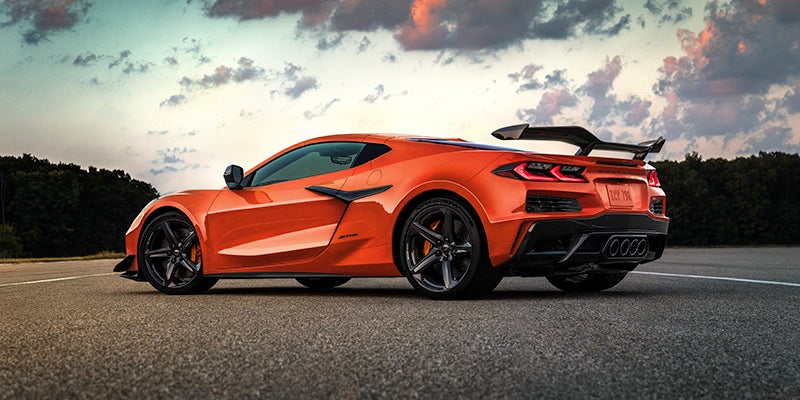
The Corvette Z06 and the Z07 package are often discussed as if they represent two different cars. In reality, the Z07 is a comprehensive performance amplification layer built on top of the Z06’s mid-engine platform. Understanding the difference requires moving past horsepower figures and into aerodynamics, thermal management, braking endurance, and chassis behavior under sustained load. For 2026, the decision between Z06 and Z06 equipped with Z07 is fundamentally a decision about how far toward dedicated track performance the driver intends to go. Core Z06 Foundation The Z06 begins with a purpose-built performance platform centered around a naturally aspirated flat-plane-crank V8 mounted in a mid-engine configuration. This engine’s high-revving character places significant thermal and airflow demands on the vehicle, which the Z06 addresses through extensive cooling architecture. Base Z06 characteristics include: more High-revving flat-plane-crank V8 delivering linear power Rear mid-engine layout optimizing weight distribution Track-capable suspension geometry Performance-focused cooling systems for engine and transmission High-grip tire compounds suitable for aggressive driving In standard form, the Z06 is already engineered for track use, but its balance still allows reasonable street drivability. What the Z07 Package Changes Fundamentally The Z07 package does not add power. Instead, it reshapes how the Z06 manages speed, heat, and aerodynamic load. Its purpose is sustained performance at the limit. The Z07 package includes three major system upgrades: Aerodynamic downforce enhancement Braking system escalation Suspension and tire specification changes Each of these alters how the car behaves during prolonged track sessions. Aerodynamics and Downforce Generation Aerodynamics are the most visually obvious Z07 difference, but their impact is often underestimated. The Z07 package adds a high-downforce aero package that dramatically increases vertical load without increasing mass. Key aerodynamic elements include: A larger front splitter generating increased front axle downforce Underbody airflow optimization A tall, fixed rear wing producing substantial rear downforce Aero balance tuned to maintain stability at high speed This added downforce improves: Front-end grip during high-speed turn-in Rear stability under throttle at speed Overall cornering limits in fast sweepers Driver confidence during late braking at high speeds The tradeoff is increased aerodynamic drag, which primarily affects top speed rather than lap time. Cooling and Thermal Management Under Load Track performance is limited by heat more often than power. The Z07 package supports sustained high-load operation by complementing the Z06’s already robust cooling systems. Benefits include: Improved airflow management through aero-assisted ducting Enhanced brake cooling channels Greater resistance to heat soak during consecutive laps More consistent power delivery over extended sessions These upgrades reduce the likelihood of thermal derating or component fatigue during aggressive driving. Braking Systems and Endurance Performance One of the most critical Z07 upgrades is the move to carbon-ceramic brakes. These are not about shorter stopping distances on the street, but about repeatability and heat tolerance. Carbon-ceramic brake advantages include: Dramatically higher resistance to brake fade Lower unsprung weight improving suspension response Consistent pedal feel under extreme heat Extended durability during track use For drivers running multiple hot laps per session, this upgrade alone can justify the Z07 package. Suspension, Tires, and Mechanical Grip The Z07 package pairs its aero and braking upgrades with stiffer suspension calibration and more aggressive tire compounds. This results in: Reduced body movement under load Faster transient response Higher lateral grip thresholds Increased feedback through the chassis However, these changes also reduce ride compliance on imperfect road surfaces, making the Z07 less forgiving in daily driving scenarios. Street vs Track Usability Tradeoffs The Z06 without Z07 offers a broader performance envelope that remains livable on public roads. The Z07 package shifts the car firmly toward track-first priorities. Z06 without Z07 suits drivers who: Attend occasional track days Drive primarily on the street Want high performance without extreme compromises Z06 with Z07 suits drivers who: Regularly track their car Prioritize lap time consistency Value downforce and brake endurance over comfort Accept increased noise, stiffness, and wear Final Perspective The choice between the 2026 Corvette Z06 and the Z06 equipped with the Z07 package is not about which is better. It is about intent. The Z06 is a highly capable track-ready performance car that remains versatile. The Z07 package transforms it into a machine optimized for sustained high-speed driving, aerodynamic grip, and braking endurance. For drivers pushing the limits on road courses, the Z07 package unlocks performance the standard Z06 cannot maintain over time. For those balancing street and track use, the base Z06 may deliver the better overall experience.

How the 2026 Mid-Engine Corvette Layout Enhances Handling & Weight Distribution

The move to a mid-engine layout was the single most consequential engineering decision in Corvette history. For 2026, every Corvette variant benefits from a chassis architecture that fundamentally reshapes how the car accelerates, turns, brakes, and communicates at the limit. This is not a styling evolution or a packaging exercise. It is a structural solution to the physical constraints that defined front-engine Corvettes for decades. By relocating the engine behind the driver and ahead of the rear axle, Chevrolet changed how mass is distributed, how weight transfers under load, and how the tires are asked to do their work. The result is a Corvette that behaves like a true modern supercar, not just in peak numbers, but in repeatable, controllable performance. Mid-Engine Corvette Models Every modern Corvette built on the C8 platform uses a mid-engine layout. This architecture places the engine behind the driver and ahead of the rear axle, forming the foundation for all current and future high-performance Corvette variants. The following Corvette models are mid-engine: more Corvette Stingray (C8) Model years 2020 to present Naturally aspirated V8 Rear-wheel drive The Stingray introduced the mid-engine platform and serves as the structural and mechanical foundation for all subsequent C8 variants. Its layout established the weight distribution, transaxle placement, and chassis balance that define modern Corvette performance. Corvette E-Ray (C8) Model years 2024 to present Mid-engine V8 paired with a front-mounted electric motor All-wheel drive The E-Ray uses the mid-engine layout to enable an electrically driven front axle without compromising rear weight bias. This configuration allows torque vectoring, improved low-speed traction, and enhanced acceleration while maintaining mid-engine balance. Corvette Z06 (C8) Model years 2023 to present Naturally aspirated flat-plane-crank V8 Rear-wheel drive The Z06 builds on the mid-engine architecture with a higher-revving engine, reinforced cooling systems, and track-focused suspension tuning. Its handling behavior relies heavily on the central mass placement enabled by the mid-engine layout. Corvette Z07 Package (Z06 option) Not a standalone model, but a performance package Retains the same mid-engine configuration The Z07 package adds high-downforce aerodynamic components, stiffer suspension calibration, and carbon-ceramic brakes. While it does not change engine placement, it pushes the mid-engine platform further toward maximum track capability. Corvette ZR1 (C8) Upcoming and confirmed for the C8 platform Expected twin-turbo V8 configuration The next-generation ZR1 will also be mid-engine, leveraging the same architecture to support significantly higher power output while maintaining chassis balance and high-speed stability. Engine Placement and Static Weight Distribution In a front-engine layout, the heaviest mass sits ahead of the front axle, forcing engineers to manage front tire overload during braking and turn-in. The mid-engine Corvette reverses that problem by concentrating mass near the center of the wheelbase. The C8 platform carries a rear-biased static weight distribution approaching 60 percent over the rear axle. This allows: Reduced front tire load during corner entry More consistent contact patch utilization across all four tires Improved steering precision under braking Less reliance on suspension tricks to mask imbalance Rather than fighting physics, the chassis works with it. Polar Moment of Inertia and Chassis Response One of the most meaningful handling gains from mid-engine architecture is reduction in polar moment of inertia. By clustering mass closer to the car’s center, the Corvette resists rotational lag when changing direction. On track and aggressive road driving, this produces: Faster yaw response during turn-in Quicker transitions in left-right sequences Reduced delay between steering input and chassis rotation More predictable correction behavior when traction limits are approached This is why the car feels lighter than its curb weight suggests when driven hard. Traction, Throttle Application, and Corner Exit Rear weight bias directly improves traction under acceleration. With more mass over the driven wheels, torque application becomes cleaner and more controllable. Real-world performance benefits include: Stronger corner exit acceleration Reduced electronic intervention during hard throttle application Greater stability when accelerating out of low-speed corners Improved launch consistency in both street and track conditions This advantage compounds as power output increases, which is why the mid-engine platform scales effectively from Stingray through Z06 and beyond. Braking Stability and Load Transfer Control During braking, weight shifts forward. In a front-engine car, this exaggerates front axle saturation. In the mid-engine Corvette, braking load transfer results in more even front-to-rear balance. This provides: Greater stability under threshold braking Reduced front tire overload during trail braking More consistent brake feel over long sessions Increased confidence entering corners at speed Drivers can brake later without destabilizing the chassis. Suspension Geometry and Packaging Freedom Removing the engine from the front axle gives engineers far greater freedom in suspension geometry design. This enables: Optimized control arm angles for camber gain Reduced understeer bias by design rather than correction Improved steering feedback due to reduced mass ahead of the wheels Lower hood line supporting better airflow management The suspension is no longer compensating for poor mass placement. It is free to do its job. Aerodynamic Balance at Speed Mid-engine placement also improves aerodynamic balance. With less mass over the nose, the Corvette requires less aggressive front downforce to remain stable. This results in: Better front-to-rear aero balance Reduced lift at high speeds More predictable high-speed cornering behavior Improved integration with underbody airflow and rear diffuser systems As speed increases, stability improves rather than degrades. Engineering Tradeoffs and Solutions Mid-engine layouts introduce challenges such as cooling complexity and rear packaging constraints. Chevrolet addressed these through: Side-mounted radiators and dedicated ducting Advanced thermal management strategies Dual-clutch rear transaxle integration Structural reinforcement around the rear subframe These solutions ensure performance gains do not compromise reliability or drivability. What Performance Drivers Should Evaluate Drivers evaluating a 2026 Corvette should focus on how the car behaves under load rather than headline specifications. Key evaluation points include: Steering feel during heavy braking Throttle response mid-corner Chassis stability during rapid transitions Consistency during repeated high-speed use These are the areas where mid-engine architecture delivers its most meaningful advantages. Final Perspective The 2026 Corvette’s mid-engine layout is the foundation of its modern performance identity. By centralizing mass, improving weight distribution, and optimizing traction, Chevrolet engineered a platform that delivers balance, predictability, and control at a level previously unattainable in a front-engine Corvette. This is not an abstract benefit. It is felt in every braking zone, every corner entry, and every throttle application at the limit.

2025 Corvette Z06 vs. Z07 Aero Engineering: Downforce, Cooling & High-Speed Stability Explained

Aerodynamics is not about appearance on the Corvette Z06. It is about mechanical grip, thermal control, and stability at speeds where tires and suspension alone are no longer enough. The difference between the standard Z06 aerodynamic configuration and the Z07 performance package lies in how aggressively Chevrolet engineers use airflow to keep the car planted, cool, and predictable under sustained track loads. Understanding the aero engineering behind the Z06 and Z07 explains why these components materially change lap consistency, braking confidence, and driver feedback rather than simply adding visual drama. Aerodynamics as a Grip Multiplier At high speeds, aerodynamic downforce effectively increases tire load without adding vehicle weight. This allows the tires to generate more grip in corners, under braking, and during acceleration. Key benefits of functional downforce include: Increased cornering speed without relying solely on mechanical grip Greater braking stability from higher vertical tire load Improved steering precision at speed Reduced reliance on traction control intervention The Z06 aero system is designed to generate meaningful downforce while maintaining balance between the front and rear of the car. Standard Z06 Aerodynamic Configuration The standard Z06 features an integrated aerodynamic package engineered for high performance street driving with track capability. Every component is shaped to manage airflow intentionally rather than cosmetically. Core Z06 aero elements include: Front splitter designed to reduce front-end lift Carefully contoured underbody airflow management Rear spoiler tuned for balanced rear stability Air extraction vents that reduce pressure buildup This configuration delivers measurable downforce while remaining livable for regular road use. Z07 Aero Package Overview The Z07 package transforms the Z06 into a more track-focused machine by increasing aerodynamic load and cooling capacity. It is not a collection of isolated parts but a coordinated system. Z07 aero upgrades include: Larger carbon-fiber front splitter Extended dive planes for front-end grip Tall rear wing designed for significant rear downforce Additional airflow management elements for cooling These components work together to substantially increase total downforce at speed. Downforce and High-Speed Stability As speed increases, aerodynamic forces grow exponentially. The Z07 package is engineered to remain stable and predictable under these conditions. High-speed stability benefits include: Reduced front-end lift during braking Improved rear stability during corner exit Greater confidence during high-speed direction changes Enhanced steering feel through consistent tire loading This stability allows drivers to commit earlier and harder without unsettling the chassis. Cooling as a Critical Aero Function Aerodynamics on the Z06 and Z07 is as much about cooling as it is about grip. Track driving generates extreme heat across the engine, transmission, brakes, and tires. Aero-assisted cooling strategies include: Directed airflow through heat exchangers Pressure reduction in wheel wells to improve brake cooling Venting hot air from high-pressure zones Maintaining airflow efficiency without excessive drag The Z07 package further enhances cooling capacity to support repeated high-load laps. Fixed Aero Versus Active Systems The Corvette Z06 and Z07 rely on fixed aerodynamic components rather than active systems. This choice prioritizes predictability and reliability. Advantages of fixed aero include: Consistent downforce regardless of system state Immediate response without actuator delay Reduced complexity and failure points Clear aerodynamic behavior at all speeds For track use, consistency is often more valuable than adaptability. Tradeoffs Between Z06 and Z07 Aerodynamics While the Z07 package delivers superior track performance, it introduces tradeoffs that drivers should understand. Considerations include: Increased drag at highway speeds More aggressive ride height sensitivity Reduced ground clearance in certain conditions Greater visual prominence of aero components For drivers primarily using the car on public roads, the standard Z06 aero may offer a better balance. Aero Balance and Driver Confidence Aerodynamic balance refers to how evenly downforce is distributed between the front and rear axles. An imbalanced setup can make a car unpredictable. Chevrolet engineers tuned Z06 and Z07 aero to: Maintain neutral handling at speed Prevent sudden oversteer or understeer Support stable braking zones Deliver consistent feedback through the steering wheel This balance is essential for extracting performance safely. Impact on Lap Times and Consistency Downforce does more than reduce lap times. It improves consistency by allowing the car to behave the same way lap after lap. Performance benefits include: Reduced tire overheating More predictable braking points Higher cornering repeatability Less reliance on electronic aids For track drivers, consistency often matters more than a single fast lap. Choosing Between Z06 and Z07 Aero Setups Drivers should evaluate their intended use honestly when choosing between configurations. The standard Z06 aero suits drivers who: Enjoy spirited street driving with occasional track use Want aerodynamic benefits without extreme tradeoffs Value everyday usability The Z07 package suits drivers who: Plan frequent track sessions Want maximum grip and cooling Prioritize lap consistency over street comfort Both setups are engineered for purpose rather than compromise. Final Perspective on Corvette Z06 and Z07 Aerodynamics The aerodynamic engineering behind the 2025 Corvette Z06 and Z07 demonstrates how airflow can be used as a functional performance tool. Rather than relying solely on power or suspension, Chevrolet leverages downforce and cooling to enhance grip, stability, and durability at speed. For drivers who understand that true performance comes from balance and control, the difference between Z06 and Z07 aero is not cosmetic. It is structural, measurable, and central to how the car performs when pushed to its limits.

2025 Corvette Z06 LT6 Engine Deep-Dive: How the Flat-Plane Crank V8 Shapes Track Performance

The 2025 Corvette Z06 represents one of the most significant powertrain departures in Corvette history. At the center of that shift is the LT6 engine, a naturally aspirated 5.5-liter V8 engineered with a flat-plane crankshaft and designed from the outset for sustained track use. This engine does not borrow lightly from racing concepts. It applies them directly, prioritizing response, consistency, and durability at extreme engine speeds. Understanding how the LT6 works explains why the Z06 behaves differently from traditional American V8 performance cars and why its performance feels precise rather than overwhelming. What Makes the LT6 Engine Different The LT6 is a clean-sheet engine developed specifically for the Z06. Unlike pushrod V8s used in previous Corvettes, the LT6 adopts a dual overhead camshaft layout with four valves per cylinder. This architecture supports airflow and valve control at very high engine speeds. Key design characteristics include: Flat-plane crankshaft instead of a traditional cross-plane design Dual overhead camshafts for precise valve timing Lightweight rotating assembly to reduce inertia Valvetrain engineered for sustained high rpm operation These elements work together to produce an engine that thrives near its redline rather than relying on low-end torque alone. Flat-Plane Crankshaft Fundamentals A flat-plane crankshaft arranges crank pins 180 degrees apart, similar to many racing and exotic engines. This differs from a cross-plane crankshaft, which spaces crank pins at 90 degrees. Flat-plane crank advantages include: Even exhaust pulse spacing that improves scavenging Faster revving due to reduced rotating mass Sharper throttle response Improved breathing at high engine speeds The tradeoff is increased vibration, which Chevrolet engineers addressed through careful balancing, engine mounting, and structural reinforcement. Why the Z06 Sounds Different The distinctive sound of the Z06 is a direct result of the flat-plane crankshaft and firing order. Evenly spaced exhaust pulses produce a higher-pitched, more exotic tone compared to the deep rumble of a cross-plane V8. This sound is not a tuning choice. It is a byproduct of: Crankshaft geometry Exhaust pulse timing High engine speed operation Reduced overlap between firing events The auditory character reinforces the engine’s racing lineage rather than traditional muscle car identity. High-Revving Design and Throttle Response The LT6 is engineered to operate at extremely high rpm, with a redline well beyond what most production V8s achieve. High engine speed capability allows the engine to produce power through airflow rather than displacement alone. Benefits of high-revving design include: Linear power delivery as rpm increases Immediate throttle response Greater control when modulating power on track Reduced reliance on forced induction For drivers, this translates to precision. Power builds predictably rather than arriving in a sudden surge. Valvetrain and Internal Component Engineering Sustaining high rpm requires more than strong pistons and rods. The LT6 uses a valvetrain engineered to maintain control under extreme conditions. Engineering considerations include: Lightweight titanium intake valves Finger follower valvetrain design Precise camshaft profiles Robust timing chain system These components ensure valve control remains accurate even during extended track sessions. Lubrication and Cooling for Track Durability Track driving places continuous load on an engine’s lubrication and cooling systems. The LT6 addresses this through advanced oil and thermal management. Key systems include: Dry-sump lubrication to prevent oil starvation Multiple scavenging pumps for consistent oil flow Dedicated cooling circuits for critical components Optimized airflow through the engine bay These systems allow the LT6 to maintain performance lap after lap rather than pulling power to protect itself. Power Delivery and Track Consistency The LT6’s naturally aspirated design delivers power in a predictable, linear manner. This consistency is critical for track driving where repeatable behavior builds driver confidence. Track-focused advantages include: Immediate response to throttle inputs Consistent power output across sessions Reduced heat soak compared to turbocharged engines Enhanced control when exiting corners Drivers can push the engine without guessing how it will respond. Reliability Considerations for a High-Revving Engine High-revving engines often raise concerns about longevity. The LT6 addresses this through materials selection, testing, and conservative operational limits relative to its design capability. Reliability-focused engineering includes: Extensive endurance testing Reinforced block and rotating assembly Conservative oil and temperature thresholds Precision manufacturing tolerances This allows the engine to deliver extreme performance while maintaining durability expectations. Real-World Driving Versus Track Use While the LT6 is track-focused, it remains usable on the street. The engine’s smooth power delivery and responsiveness make it manageable in daily driving situations. Street driving benefits include: Smooth throttle modulation Predictable power delivery at low speeds Reduced reliance on boost for performance Mechanical connection between driver input and engine response The engine rewards precision rather than brute force. What Enthusiasts Should Evaluate When evaluating the LT6, enthusiasts should consider: Preference for high-revving naturally aspirated power Track consistency over peak torque Throttle response versus forced induction acceleration Long-term durability under performance driving The LT6 is designed for drivers who value control and repeatability. Final Perspective on the LT6 Engine The 2025 Corvette Z06 LT6 engine represents a philosophical shift for American performance. By embracing flat-plane crank architecture, high-revving operation, and race-derived engineering, Chevrolet created an engine that prioritizes precision, consistency, and driver confidence. Rather than chasing peak numbers alone, the LT6 delivers performance that can be accessed repeatedly and reliably. For drivers who understand what makes an engine truly track-capable, the LT6 stands as one of the most technically significant V8s ever produced for a production Corvette.

A mechanic checking the oil dipstick under a car hood

Six Reasons to Stick to a Corvette Maintenance Schedule

Your Corvette is an outstanding example of automotive engineering. To enjoy it at its best, you'll need more than an occasional oil change. Regular scheduled service at your local Corvette dealership preserves its performance and avoids any unnecessary repairs. more 1. Preserve Performance The full-throated performance of the Corvette is legendary. Regular maintenance takes care of every critical system to ensure performance is never compromised. Even deviating from the schedule for a short time can have a negative effect. Routine oil changes, filters, fluid top-offs, tire rotations, and a multipoint check ensure your Corvette always delivers what you expect. 2. Maintain Value You might not have any plans to trade your Corvette in, but regular maintenance can safeguard your investment. A full service history protects your car's value, helping it holds its price for longer. An inconsistent or patchy service record suggests that the car has not enjoyed optimal care, which can dent its value. A full service history will boost the trade-in or resale value of your Corvette, ensuring you always have options. 3. Prevent Expensive Repairs If you wait until your Corvette develops a problem to visit your dealership, the repair bill may be higher than necessary. Regular maintenance gives technicians the opportunity to spot any issues as they develop. This makes it possible to conduct repairs before more extensive damage occurs, saving you money in the long run. 4. Ensure Safety You can rely on the precision handling of your Corvette, but it requires routine maintenance to stay safe. Low fluid levels or worn tires and brakes can significantly affect performance and could compromise your safety. Regular services allow technicians to identify any hazards, and to conduct the necessary repairs or replacements. 5. Protect the Warranty To enjoy the protection of a warranty, you must stick to the terms and conditions. This includes scheduling maintenance when it falls due. Missing routine services could invalidate the warranty and leave you to pay any future repair costs. 6. Enjoy Reliability When you slide behind the wheel, it's good to know that your Corvette will start without a problem. This reliability is just one of the benefits of driving what's often referred to as “America's sports car”. Maintenance ensures that every system remains in perfect working order to deliver the consistent performance that you value. Speak to Your Local Corvette Dealership The technicians at your local Chevrolet dealership live and breathe Corvettes. Whether you need advice on a general maintenance schedule or want to discuss a specific issue, you'll find experience and knowledge you can trust. With more than 45 years of experience in the industry, we can help with all your Corvette needs. Contact our team here at Ross Downing Corvettes in Hammond, LA to schedule an appointment or to get professional advice.

Contact Us

Fill out this form below and we'll contact you shortly
*Required Fields