

At Ross Downing Corvette in Hammond, LA, we’ve witnessed the remarkable evolution of America’s iconic sports car. The Chevrolet Corvette has undergone significant transformations throughout its history, with one of the most notable changes being the placement of its powerhouse engine. In this comprehensive exploration, we’ll delve into the intricacies of front, mid, and rear engine configurations, examining how these layouts have shaped the Corvette’s performance and design over the years.
The Front-Engine Era: A Classic Beginning
The Corvette’s journey began with a front-engine layout, a configuration that dominated the automotive world for decades. In this setup, the engine is positioned ahead of the passenger compartment, typically over the front axle.
Advantages of Front-Engine Design:
- Spacious interior: With the engine up front, there’s more room for passengers and cargo.
- Simplified cooling: The radiator’s proximity to the engine enhances heat dissipation.
- Straightforward maintenance: Easy access to the engine compartment simplifies repairs and routine checks.
- Predictable handling: Weight over the front wheels provides familiar driving characteristics.
Challenges of Front-Engine Layout:
- Tendency to understeer: The front-heavy weight distribution can make sharp turns more challenging.
- Reduced traction: Less weight over the rear wheels can limit acceleration, especially in high-powered vehicles.
The front-engine Corvette, particularly models equipped with the robust 6.2L LS3 engine, delivered impressive performance. These powerplants were capable of propelling the Corvette to quarter-mile times that left enthusiasts in awe. The raw power and classic layout created a driving experience that became synonymous with American muscle.
The Mid-Engine Revolution: A New Chapter for Corvette
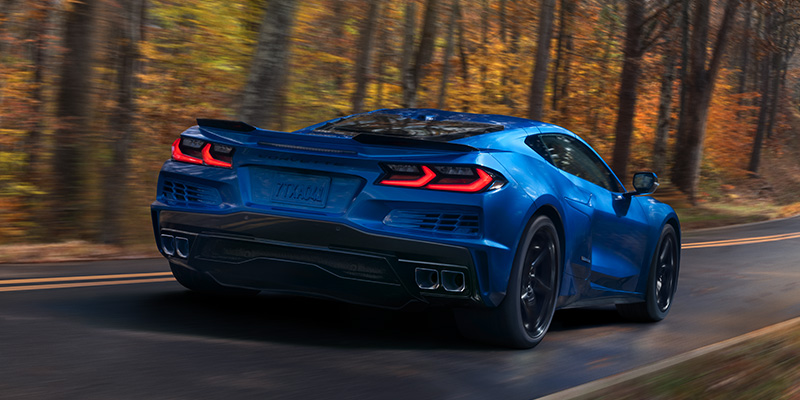
In 2020, Chevrolet made a bold move by introducing the first-ever mid-engine Corvette. This radical shift in design philosophy marked a new era for the iconic sports car.
Mid-Engine Configuration Explained:
In a mid-engine layout, the powerplant is positioned behind the driver but ahead of the rear axle. This placement offers several performance advantages that have made it a favorite among supercar manufacturers.
Benefits of Mid-Engine Design:
- Optimal weight distribution: Centralizing the engine’s mass improves overall balance and handling.
- Enhanced responsiveness: The car pivots more easily around its center of gravity, increasing agility.
- Improved traction: More weight over the rear wheels enhances acceleration and cornering grip.
- Aerodynamic advantages: A sleeker front profile reduces drag and improves high-speed stability.
Considerations for Mid-Engine Vehicles:
- Limited interior space: The engine’s central location can reduce passenger and cargo capacity.
- Complex engineering: Mid-engine designs often require more sophisticated cooling and structural solutions.
- Challenging spin recovery: The centralized mass can make it more difficult to correct a spin once initiated.
The transition to a mid-engine layout has allowed the Corvette to compete with exotic supercars while maintaining its distinctive American character. The 2025 Chevrolet Corvette engine options showcase this new era of performance, with powerplants that push the boundaries of what’s possible in a production sports car.
Rear-Engine Configuration: The Road Less Traveled
While not utilized in the Corvette lineup, the rear-engine layout deserves mention as it represents another approach to sports car design.
Rear-Engine Placement:
In this configuration, the engine is located behind the rear axle, as seen in iconic cars like the Porsche 911.
Advantages of Rear-Engine Design:
- Exceptional traction: The weight over the drive wheels provides outstanding grip for acceleration.
- Improved braking: Weight transfer during deceleration increases stopping power.
- Unique handling: The rear-biased weight distribution offers a distinctive driving experience.
Challenges of Rear-Engine Layout:
- Pronounced oversteer: The rear-heavy design can make the car more prone to spinning in extreme conditions.
- Limited storage: Trunk space is often compromised due to the engine’s placement.
- Increased cabin noise: Proximity to the passenger compartment can result in more engine sound and vibration.
Why Corvette Chose the Mid-Engine Path
Chevrolet’s decision to move the Corvette to a mid-engine layout was driven by the pursuit of performance excellence. This change allows for:
- Improved weight distribution for better handling and cornering abilities.
- Enhanced acceleration due to increased traction at the rear wheels.
- A lower center of gravity, contributing to improved stability and reduced body roll.
- The potential for more advanced aerodynamics, crucial for high-speed performance.
The Impact on Storage: From Trunk to Frunk
The shift to a mid-engine design has transformed the Corvette’s storage solutions. While traditional front-engine Corvettes featured a rear trunk, the new mid-engine models introduce the concept of a “frunk” – a front trunk where the engine once resided.
Frunk vs. Trunk:
- Location: The frunk is situated at the front of the vehicle, while the trunk remains at the rear but is now smaller due to engine placement.
- Purpose: Both provide storage, but the frunk offers a unique space for items that require quick access or need to be kept separate from the heat of the engine compartment.
- Security: Frunks can be as secure as traditional trunks, often featuring robust locking mechanisms and being out of sight from prying eyes.
Creative uses for a frunk include:
- Storing charging cables for electric vehicles
- Keeping a small cooler for refreshments on long drives
- Housing emergency kits or tools for track days
It’s worth noting that while frunks don’t typically get as warm as rear trunks in mid-engine cars, it’s always advisable to avoid storing temperature-sensitive items in any vehicle for extended periods.
The Evolution of Corvette Performance
The transition from front to mid-engine has significantly impacted the Corvette’s performance metrics. Let’s examine how this change has benefited various aspects of the car’s capabilities:
Acceleration:
The mid-engine layout provides better weight transfer to the rear wheels during launch, resulting in improved traction and faster acceleration times. The 2025 Chevrolet Corvette engine, particularly in high-performance variants like the Z06 and ZR1, showcases this advantage with blistering 0-60 mph times.
Handling:
With the engine’s mass centralized, the car’s polar moment of inertia is reduced, allowing for quicker direction changes and improved overall agility. This translates to faster lap times and a more responsive driving experience on both road and track.
Braking:
The weight distribution of a mid-engine car allows for more effective use of all four tires during braking, potentially shortening stopping distances and improving stability under hard deceleration.
Aerodynamics:
The mid-engine layout enables designers to create a more aerodynamically efficient front end, reducing drag and increasing downforce potential, which is crucial for high-speed stability and cornering performance.
Corvette Engine Options: A New Era of Power
The 2025 Chevrolet Corvette engine lineup represents the pinnacle of GM’s engineering prowess. From the base Stingray to the track-focused Z06 and the upcoming ZR1, each powerplant is tailored to deliver a specific performance profile:
- Stingray: Features a naturally aspirated 6.2L V8, balancing everyday drivability with impressive performance.
- Z06: Equipped with a high-revving 5.5L flat-plane crank V8, offering exotic car-level performance and sound.
- ZR1: Rumored to feature a twin-turbocharged version of the Z06 engine, promising even more extreme performance capabilities.
These engines showcase Chevrolet’s commitment to pushing the boundaries of what’s possible in a production sports car, all while maintaining the Corvette’s heritage of accessible performance.
The Future of Corvette Engines
As we look to the horizon, the Corvette’s engine evolution continues. With advancements in technology and increasing focus on efficiency, we may see:
- Further refinement of the mid-engine platform to extract even more performance.
- The introduction of hybrid powertrains to complement the traditional internal combustion engines.
- Exploration of alternative fuels and propulsion methods to meet future environmental regulations while maintaining the Corvette’s performance legacy.
At Ross Downing Corvette, we’re excited to be part of this journey, offering our customers in Hammond, LA, and beyond the opportunity to experience the cutting-edge technology and exhilarating performance of the latest Corvette models.
The shift from front to mid-engine has not only transformed the Corvette’s performance but has also redefined what an American sports car can be. As we continue to witness the evolution of this iconic vehicle, one thing remains clear: the Corvette’s heart—its engine—will always be at the core of its identity, no matter where it’s placed within the chassis.
Connect with us
