

The Chevrolet Corvette, America’s iconic sports car, has undergone numerous transformations since its inception in 1953. One of the most significant aspects of its evolution has been the development and implementation of various transmission systems. At Ross Downing Corvette in Hammond, LA, we’ve witnessed firsthand how these changes have shaped the driving experience and performance of this legendary vehicle.
The Journey from Traditional to Cutting-Edge
Early Corvettes: Laying the Groundwork
In the early days of the Corvette (C1 and C2 generations), traditional transmissions were the norm. These systems, located behind the engine, transferred power to the rear wheels through a driveshaft. The first Corvettes featured a two-speed Powerglide automatic transmission, which was soon joined by manual options to cater to enthusiasts who craved a more engaging driving experience.
The Transition to Transaxles
As Corvette engineers sought to improve weight distribution and handling, they turned to transaxle designs. A transaxle combines the transmission and differential into a single unit, typically located at the rear of the vehicle. This configuration offers several key advantages:
- Improved weight distribution
- Enhanced traction, especially during acceleration
- Better overall balance and handling characteristics
The C5 Corvette, introduced in 1997, marked a significant shift with its rear-mounted transaxle design. This layout continued through the C6 and C7 generations, refining the Corvette’s performance capabilities and cementing its status as a world-class sports car.
The Dual-Clutch Revolution: C8 Corvette
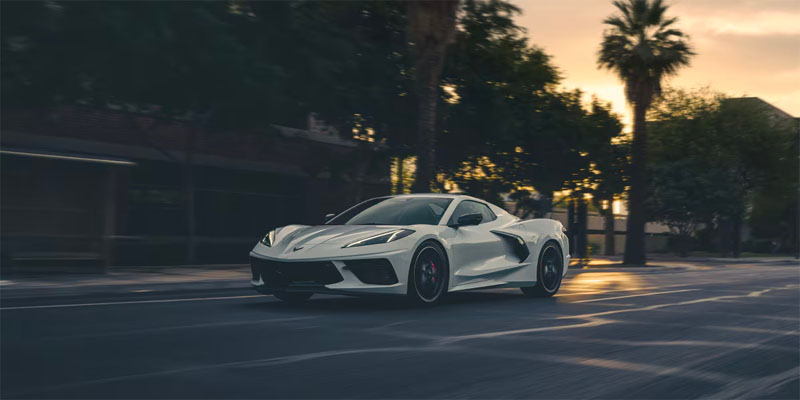
With the introduction of the C8 Corvette in 2020, Chevrolet made a bold move by adopting a mid-engine layout and incorporating a sophisticated dual-clutch transmission (DCT). This decision represents a paradigm shift in Corvette design and performance.
Understanding the Dual-Clutch Transmission
A DCT operates on a fundamentally different principle compared to traditional automatics or manuals. Key features include:
- Two separate clutches for odd and even gears
- Lightning-fast shift times
- Pre-selection of the next gear for seamless power delivery
- Ability to handle high torque loads efficiently
The C8 Corvette’s DCT, developed in partnership with Tremec, is a marvel of engineering. It offers eight forward speeds and can shift gears in as little as 100 milliseconds. This rapid gear change contributes to the C8’s blistering acceleration times and overall performance envelope.
The DCT Case: Addressing Challenges
High-performance applications like the Corvette place extreme demands on transmission systems. The DCT case in the C8 underwent significant redesigns to meet these challenges:
- Reinforced housing to withstand high torque loads
- Improved cooling systems to manage heat generation
- Elimination of the traditional torque tube, integrating power transfer more efficiently
These changes have resulted in a more robust and reliable transmission system, capable of handling the prodigious power output of the Corvette’s V8 engine. However, it’s worth noting that some early C8 models experienced transmission issues, prompting Chevrolet to implement updates and refinements for the 2023 and 2024 model years.
Comparing Transmission Types
To fully appreciate the Corvette’s transmission evolution, let’s examine how different systems stack up:
Traditional Automatic vs. DCT
While both can offer smooth operation in daily driving, DCTs shine in performance applications:
- Faster shift times in DCTs lead to improved acceleration
- DCTs often provide better fuel efficiency due to their direct power transfer
- Traditional automatics may offer smoother operation at very low speeds
Manual vs. DCT
For purists, manual transmissions offer an unparalleled connection to the driving experience. However, DCTs bring several advantages:
- Consistently faster shift times than even the most skilled manual drivers
- No loss of power during gear changes
- Ability to operate in fully automatic mode for convenience
CVT vs. Transaxle
While Continuously Variable Transmissions (CVTs) offer smooth, stepless power delivery, they’re rarely used in high-performance applications like the Corvette. Transaxles, on the other hand, provide:
- Better weight distribution for improved handling
- Direct power transfer for enhanced performance
- Compatibility with high-torque engines
The Driving Experience: Feel the Difference
The transition from traditional transmissions to the current DCT in the C8 Corvette has significantly altered the driving experience. Drivers accustomed to older Corvette models might notice:
- Instantaneous power delivery during acceleration
- Seamless shifts that don’t interrupt the flow of power
- The ability to fine-tune performance through different drive modes
- Improved fuel efficiency without sacrificing performance
While some may miss the tactile engagement of a manual gearbox, the DCT’s performance benefits are undeniable. It allows drivers to focus more on the road and less on gear selection, especially in high-performance driving scenarios.
Looking to the Future
As we consider the future of Corvette transmissions, several questions arise:
- How will transmission technology evolve to handle increasing power outputs?
- Will we see hybrid or all-electric Corvettes with unique power transfer systems?
- Can future transmissions further improve the balance between performance and efficiency?
At Ross Downing Corvette, we’re excited to see how Chevrolet will continue to innovate and push the boundaries of transmission technology. The journey from the simple two-speed Powerglide to today’s advanced DCT showcases the relentless pursuit of performance and driving excellence that defines the Corvette brand.
Whether you’re a long-time Corvette enthusiast or new to the world of high-performance sports cars, understanding the evolution of these transmission systems provides valuable insight into the engineering prowess behind America’s favorite sports car. As we look forward to future developments, one thing remains certain: the Corvette will continue to set the standard for performance and innovation in the automotive world.
Connect with us
