

Corvette ZR1 0-60 mph results reveal more when you know the setup behind each run. The quickest published time does not come from horsepower alone. Instead, the launch depends on tire grip, launch software, pavement, temperature, and timing method. Each factor changes how quickly the rear tires transfer force to the road.
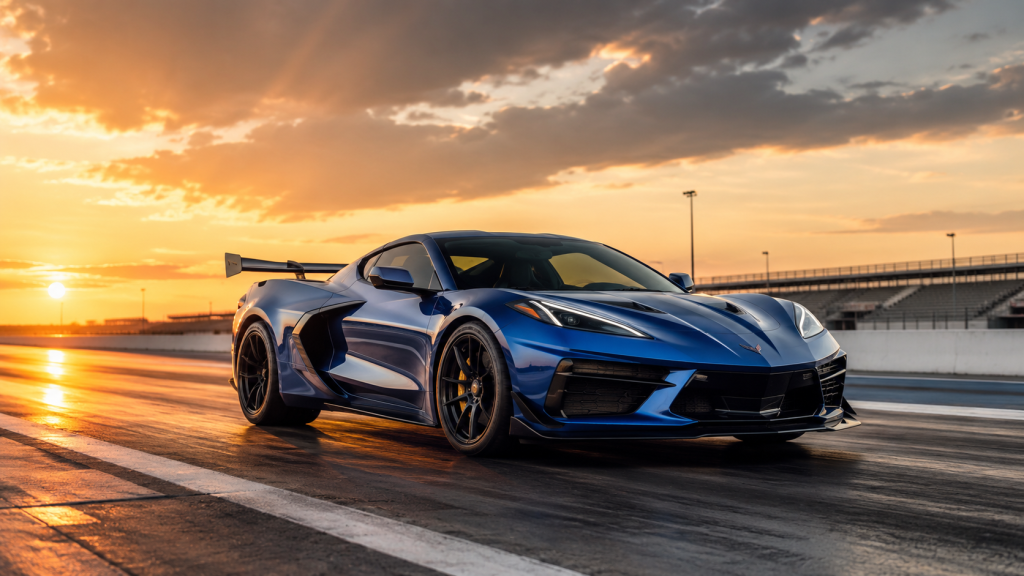
Chevrolet lists an available 2.3 second time for the ZR1 with the ZTK package. The standard version carries a published 2.5 second time. Therefore, the first step is matching each number with the correct car. That context keeps a fast result from becoming a misleading comparison.
What the Published Number Includes
Which ZR1 produced Chevrolet’s 2.3 second time? The result belongs to a ZR1 equipped with the available ZTK package. That setup includes Michelin Pilot Sport Cup 2 R tires and track focused chassis tuning. It also requires the Carbon Fiber Aero Package.
The standard ZR1 uses the same twin turbocharged LT7 V8. However, Chevrolet lists a 2.5 second time for that configuration. The two tenths do not suggest an engine output change. Instead, the package changes how the car places its power onto the pavement.
The LT7 produces 1,064 horsepower and 828 pound feet of torque. An eight speed dual clutch transmission sends that output to the rear wheels. Yet a standing start begins with available tire grip. The engine cannot use every pound foot at once without overwhelming the contact patches.
For that reason, read every published time with four details:
- Identify the tire and package fitted to the test car.
- Check whether the run used Chevrolet’s launch software.
- Look for information about pavement and timing method.
- Compare the quarter mile result with the opening sprint.
These details explain what the number represents. Moreover, they make comparisons between the standard ZR1 and ZTK equipped car more useful.
How Launch Control Manages the Start
Why not send all 1,064 horsepower to the rear tires at once? The tires would spin before moving the car forward efficiently. Therefore, a quicker launch requires measured torque delivery during the first moments.
Launch Control coordinates engine output, transmission response, and rear tire slip. The driver selects the proper drive setting and follows the vehicle procedure. Then, the car manages the start within its programmed targets.
Custom Launch Control adds driver adjustment for the launch. It lets the driver tailor starting engine speed and target slip for a suitable closed course. However, more wheelspin does not automatically create a quicker run. Too much slip turns engine output into heat instead of forward motion.
The eight speed dual clutch transmission also shapes the result. Its fast shifts reduce the time spent between gears. In addition, the transmission keeps the LT7 pulling as road speed rises. That role becomes clearer after the tires clear the most traction limited part of the run.
Chevrolet’s traction management technology adds another layer during track driving. It changes traction and stability intervention through selectable settings. Therefore, the chosen setting must match the driver’s skill, tire state, and closed course surface.
Why Tires and Pavement Change the Result
Can the same ZR1 record different times on separate surfaces? Yes. The tire contact patches can only transfer the force supported by the pavement at that moment.
Cup 2 R tires support strong dry grip once they reach a suitable temperature. However, cold rubber will not respond like warmed rubber. Pressure also rises as the tire heats. Therefore, the same tire can launch differently early and later during an event.
Pavement creates another variable. A prepared drag strip contains rubber and traction treatment across the launch area. By contrast, an ordinary road may contain dust, moisture, oil residue, or polished aggregate. Those materials reduce the force available before slip begins.
Air temperature, pavement temperature, and recent tire activity also matter. A warm, clean surface may support a stronger start than cold pavement. Still, drivers should never attempt launch testing on public roads. The ZR1’s acceleration belongs on a suitable closed course with trained support.
A useful test log should record:
- Tire type, pressure, and approximate temperature
- Surface type and visible surface state
- Air temperature and weather
- Launch setting and timing method
That information gives each number a clear setting. Consequently, later runs can be reviewed with less guesswork.
Why Do Corvette ZR1 Acceleration Tests Differ?
Independent tests may use different starting rules. One test can begin timing when the car first moves. Another may use rollout before the clock starts. Rollout removes a small part of the initial movement from the measured time.
Weather and elevation also change the run. The LT7 uses twin turbochargers, yet air density still matters. Moreover, wind can change resistance as speed builds. A headwind may have little effect at first, then become more noticeable later.
Vehicle weight can vary too. Fuel level, driver weight, test equipment, and fitted options all add mass. Because acceleration must move that mass, a heavier test car may record a slower number.
Driver procedure creates another source of variation. Launch software reduces variation, but it cannot make pavement and tires identical. Therefore, credible tests can disagree without proving that one car has a fault.
When comparing two numbers, use the same timing standard whenever possible. Then, compare tire setup, pavement, temperature, and vehicle configuration. This method gives the figure more context than a ranking alone.
What the Quarter Mile and ZR1 Build Reveal
The quarter mile shows what happens after the launch stops dominating the result. Chevrolet lists a 9.6 second run at 150 mph for the ZTK equipped ZR1. That trap speed shows how forcefully the LT7 continues pulling well beyond 60 mph.
The first part of the run depends heavily on traction. Later, engine output, shifting, aerodynamic drag, and vehicle mass take larger roles. Therefore, quarter mile data gives a wider view than the opening sprint.
Does every ZR1 build need the ZTK package? No. The package suits drivers who plan serious closed course driving. Its tires, chassis tuning, and aero equipment support that purpose. However, the standard ZR1 retains the same LT7 output and may fit a different ownership plan.
Before you build a ZR1, consider where the car will spend most of its miles. A driver focused on road travel may value the standard setup. A frequent track driver may prefer the ZTK equipment and its specialized tire choice.
The Corvette ZR1 0-60 mph figure becomes more useful once the setup behind it is clear. Therefore, compare the complete test instead of one headline number. That approach gives you a stronger view of the car you plan to own and drive.
Connect with us
