

Corvette engines for 2026 include three gasoline V8 designs spread across five distinct drivetrain configurations. Stingray, E Ray, Z06, ZR1, and ZR1X each deliver power through a different mechanical path. Therefore, choosing among them requires more than comparing peak horsepower.
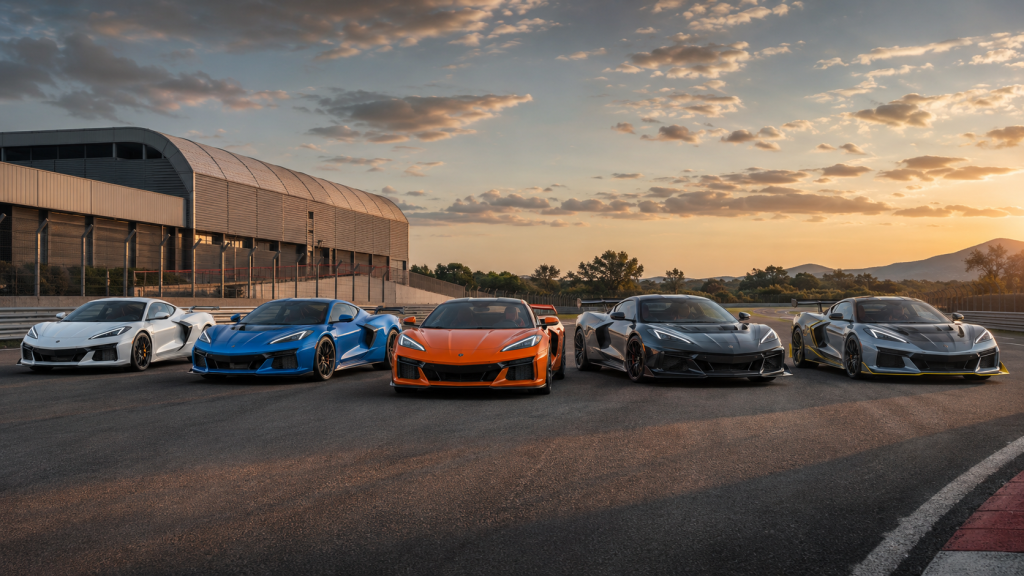
The LT2 serves Stingray and E Ray. The LT6 powers Z06, while the LT7 powers ZR1 and ZR1X. In addition, E Ray and ZR1X add front axle electric drive. That addition changes traction and total output without replacing the V8 behind the cabin.
Stingray and the LT2 V8
What makes the Stingray LT2 distinct? Its 6.2 liter displacement and cross plane crankshaft support strong torque across common road speeds. In addition, Chevrolet rates the engine at 490 horsepower and 465 pound feet of torque. The available exhaust raises those figures to 495 horsepower and 470 pound feet.
Moreover, the LT2 uses overhead valves within a compact small block layout. Therefore, the engine fits tightly behind the passenger compartment. Its larger displacement also produces a broad torque curve without requiring extreme engine speed.
A cross plane crankshaft places its crank pins at 90 degree intervals. Consequently, the firing rhythm creates the deep V8 sound linked with Stingray. The layout also adds counterweights that reduce vibration during road travel.
The LT2 reaches useful torque at lower engine speeds. Therefore, drivers do not need to chase the redline for quick response. The eight speed dual clutch transmission keeps the engine near the needed range. As a result, Stingray delivers direct acceleration during passing, highway entry, and winding road travel.
How E Ray Expands the LT2
Does E Ray replace the LT2 with a hybrid engine? No. E Ray keeps the 495 horsepower LT2 at the rear. It then adds a 160 horsepower electric motor at the front axle.
Together, both sources produce 655 horsepower. In addition, this output reaches the road through two separate axles. However, the two axles receive power from separate units. The V8 drives the rear wheels through the dual clutch transmission. The electric motor sends torque directly to the front wheels.
This layout creates electrified all wheel drive. Moreover, electric torque arrives quickly when the driver presses the accelerator. That front axle force can support a stronger launch before the rear tires carry the full task.
The battery sits within the central tunnel between the seats. Therefore, E Ray does not need a charging plug. Braking and normal driving replenish the battery for later electric assistance.
E Ray gives the LT2 a new role without changing its basic character. The V8 still supplies most of the output and sound. In addition, the front motor adds traction and low speed response.
Z06 and the LT6 Flat Plane V8
Why does the Z06 engine rev higher than the LT2? The LT6 uses a flat plane crankshaft and dual overhead camshafts. Moreover, Chevrolet rates the 5.5 liter V8 at 670 horsepower with an 8,600 rpm redline.
A flat plane crankshaft arranges its crank pins at 180 degree intervals. This design reduces rotating mass and supports quicker changes in engine speed. In addition, the exhaust pulses follow a different rhythm than those from the LT2.
Dual overhead camshafts place the camshafts above the cylinder heads. They control four valves per cylinder and support high airflow at elevated rpm. Therefore, the LT6 can keep building power near its redline.
The LT6 draws air without turbochargers. Throttle movement changes airflow directly through the intake path. Consequently, the engine responds with a sharp rise in speed and a high pitched exhaust note.
Z06 pairs this engine with wider bodywork, larger cooling paths, and track focused hardware. Still, the engine remains the center of its identity. Drivers who value high rpm response and natural aspiration will notice the LT6 most.
ZR1 and ZR1X With the LT7
Does ZR1X use a different V8 than ZR1? No. Both models use the twin turbocharged 5.5 liter LT7. Chevrolet rates that engine at 1,064 horsepower and 828 pound feet of torque.
The LT7 shares its basic bore spacing and flat plane layout with the LT6. However, Chevrolet revised major internal parts for turbocharged operation. Two turbochargers force more air into the cylinders, which permits much greater fuel flow and output.
By contrast, ZR1 sends LT7 power to the rear wheels. Therefore, tire grip and electronic torque control shape the opening phase of acceleration. Once speed rises, the engine continues pulling through the dual clutch transmission.
ZR1X adds a 186 horsepower front axle motor. Combined output reaches 1,250 horsepower through electrified all wheel drive. The electric unit adds front wheel torque while the LT7 drives the rear axle.
The difference between these two models comes from power distribution:
- ZR1 uses the LT7 and rear wheel drive.
- ZR1X uses the LT7 plus a front electric motor.
- ZR1X combines gasoline and electric output across both axles.
Thus, the LT7 remains the gasoline heart of both cars. The ZR1X electric unit adds traction and total output without creating a fourth V8.
Which 2026 Corvette Powertrain Fits Your Driving?
Which Corvette powertrain fits your plans? Start with the sound, engine response, traction layout, and roads you expect to drive. Peak horsepower matters, but the way each model delivers force matters too.
First, Stingray offers the LT2 in its simplest form. Its broad torque and familiar V8 rhythm suit drivers who want strong road manners with room for track visits.
E Ray keeps that LT2 sound while adding front axle electric force. Therefore, it suits drivers who value all wheel drive traction and quick low speed response.
By contrast, Z06 takes a different path. Its LT6 rewards engine speed, sharp response, and a distinctive flat plane sound. As a result, it speaks most clearly to drivers drawn toward high rpm track work.
ZR1 uses turbocharging to push the LT7 far beyond the naturally aspirated engines. ZR1X adds front electric drive for greater total output and traction across both axles.
Before choosing, compare these points:
- Decide whether you prefer cross plane depth or flat plane pitch.
- Consider rear wheel drive or electrified all wheel drive.
- Compare natural aspiration with twin turbocharged power.
- Match the car with your road and track plans.
The 2026 Corvette lineup gives each V8 a clear purpose. Therefore, the strongest choice is the one whose power delivery matches your own driving plans.
Connect with us
