

The 2026 Corvette E-Ray introduces a fundamental shift in Corvette performance by integrating an all-wheel drive system into a platform historically defined by rear-wheel drive dynamics. Many shoppers exploring the Corvette E-Ray want to understand how this hybrid AWD system actually works, how it changes acceleration and handling, and whether it enhances or alters the driving experience. The answer lies in how the Corvette E-Ray combines a traditional V8 engine with an electric motor to deliver power in a way that improves traction, responsiveness, and real-world usability without sacrificing performance identity.
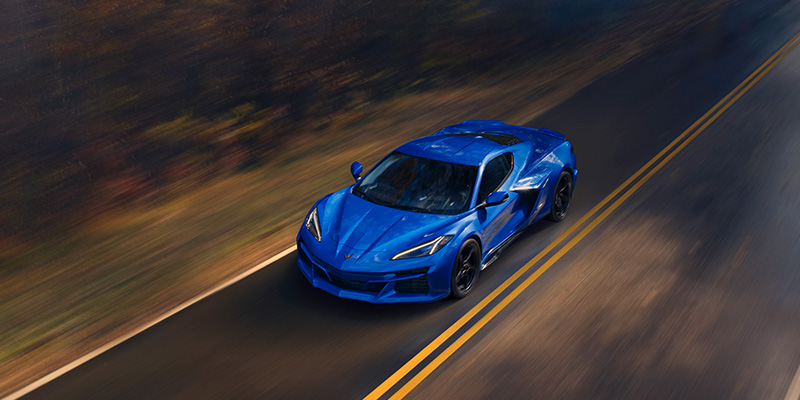
How the Corvette E-Ray AWD System Works
Many shoppers ask how the Corvette E-Ray AWD system actually works and how a hybrid setup can power all four wheels. The 2026 Corvette E-Ray AWD system uses a dual propulsion architecture that separates power delivery between the front and rear axles.
The Corvette E-Ray pairs a naturally aspirated V8 engine driving the rear wheels with an electric motor mounted on the front axle. Unlike mechanical AWD systems that rely on driveshafts and transfer cases, the Corvette E-Ray AWD system uses electronic coordination between these two power sources.
This means:
- The rear wheels are powered by the V8 engine through the transmission
- The front wheels are driven independently by the electric motor
- Power distribution is controlled digitally rather than mechanically
Because the front and rear systems operate independently, the Corvette E-Ray hybrid powertrain can instantly adjust how much power is sent to each axle based on traction conditions, throttle input, and driving mode.
For performance drivers, this setup eliminates the delay associated with traditional AWD systems. The Corvette E-Ray AWD system reacts in real time, allowing the vehicle to maintain grip during acceleration, cornering, and changing road conditions.
Why Instant Electric Torque Transforms Acceleration
Many performance shoppers ask whether AWD actually improves acceleration, and in the case of the 2026 Corvette E-Ray, the answer comes down to how electric torque behaves compared to a gasoline engine.
Electric motors deliver maximum torque immediately from a standstill. The Corvette E-Ray front electric motor provides instant torque to the front wheels the moment the driver applies throttle, while the rear V8 builds power through its rev range.
This changes launch dynamics in several key ways:
- The Corvette E-Ray AWD system reduces wheel spin by distributing force across all four tires
- The front electric motor fills the gap before the V8 reaches peak output
- Traction is maximized at launch, allowing more usable power to reach the ground
In a rear-wheel drive Corvette, aggressive acceleration can overwhelm the rear tires, especially on less-than-ideal surfaces. The Corvette E-Ray hybrid AWD system prevents this by engaging the front wheels immediately, stabilizing the vehicle and improving forward momentum.
For drivers comparing performance cars, this results in quicker and more consistent acceleration, particularly from a standstill or during rapid throttle input.
How AWD Improves Cornering and Stability at Speed
Beyond straight-line performance, the 2026 Corvette E-Ray AWD system plays a critical role in how the vehicle behaves through corners. Many drivers want to understand whether AWD improves handling or simply adds traction.
The Corvette E-Ray traction system uses real-time torque distribution to manage how power is applied during cornering. Instead of sending equal power to all wheels, the system adjusts output based on steering angle, throttle input, and available grip.
This creates a form of torque vectoring, where power is shifted to the wheels that can use it most effectively.
From a mechanical standpoint:
- The front electric motor can increase or decrease power independently of the rear axle
- The system stabilizes the vehicle by reducing oversteer during aggressive cornering
- Power can be applied earlier when exiting a turn without breaking traction
For performance driving, this translates into more predictable handling. The Corvette E-Ray AWD system allows drivers to carry speed through corners with greater confidence, as the system actively works to maintain balance and grip.
Real World Traction and Everyday Driving Confidence
While much of the discussion around the 2026 Corvette E-Ray focuses on performance, AWD also delivers meaningful benefits in everyday driving conditions.
Many shoppers question whether AWD matters outside of track environments. The Corvette E-Ray AWD system improves traction in situations where rear-wheel drive vehicles can struggle.
This includes:
- Wet roads where reduced grip can cause wheel slip
- Cold weather where tire traction is limited
- Uneven or imperfect road surfaces
Because the Corvette E-Ray front electric motor engages instantly, the system can respond to traction loss faster than a traditional drivetrain. This improves stability during sudden acceleration or when road conditions change unexpectedly.
For drivers who plan to use the Corvette beyond ideal weather conditions, the Corvette E-Ray AWD system expands usability without requiring compromises in performance capability.
AWD vs Traditional Corvette RWD Driving Experience
For long-time Corvette enthusiasts, one of the most important considerations is how AWD changes the driving experience compared to traditional rear-wheel drive models like the Corvette Stingray or Z06.
Rear-wheel drive Corvettes are known for delivering power directly to the rear axle, creating a driving feel that emphasizes throttle control and rear-end dynamics. The 2026 Corvette E-Ray introduces a different approach by adding front axle engagement.
This results in several key differences:
- Acceleration behavior
The Corvette E-Ray AWD system provides more controlled launches with less wheel spin compared to rear-wheel drive models. - Handling balance
AWD reduces the likelihood of oversteer by stabilizing the front end during aggressive driving inputs. - Driver confidence
The Corvette E-Ray traction system allows drivers to apply power earlier and more consistently without losing control. - Driving feel
While rear-wheel drive emphasizes driver-managed traction, the Corvette E-Ray AWD system introduces a more composed and controlled performance experience.
Rather than replacing the Corvette identity, the Corvette E-Ray expands it. The AWD system enhances performance by making power more usable, particularly in situations where traction is the limiting factor.
For buyers comparing Corvette models, the decision often comes down to driving preference. Those who value raw rear-wheel dynamics may prefer traditional setups, while those seeking maximum traction, acceleration, and confidence will find the Corvette E-Ray AWD system offers a more advanced approach to performance.
Connect with us
